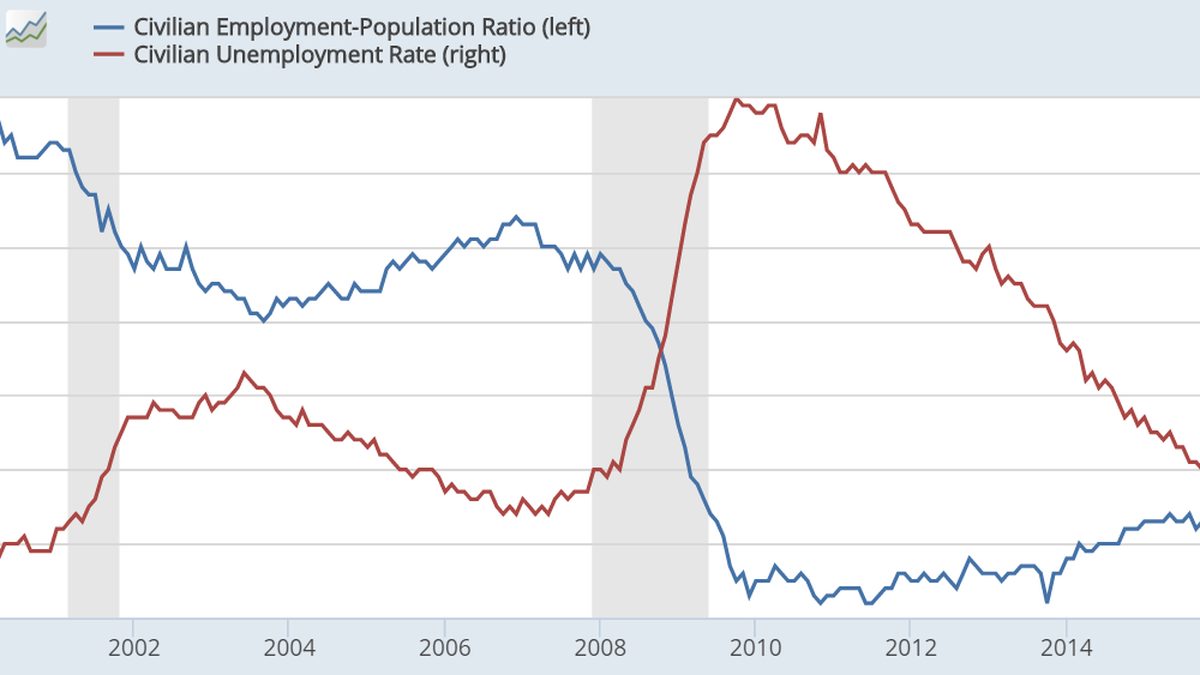
<?xml version="1.0" encoding="utf-8"?>

<feed xmlns="http://www.w3.org/2005/Atom">
  <title>CredibleNow</title>
  <subtitle>CredibleNow is an independent journal about work: finding a job, training for one, getting paid properly and handling the workplace. Practical guides written for working adults.</subtitle>
  <link rel="alternate" type="text/html" href="https://crediblenow.com/" />
  <link rel="self" type="application/atom+xml" href="https://crediblenow.com/atom.xml" />
  <id>https://crediblenow.com/</id>
  <updated>2026-09-10T00:00:00.000Z</updated>
  <icon>https://crediblenow.com/images/logo.png</icon>
  <logo>https://crediblenow.com/images/logo.png</logo>
  <rights>© 2026 CredibleNow</rights>
  <entry>
    <title>How to negotiate a counter-offer when you resign</title>
    <link rel="alternate" type="text/html" href="https://crediblenow.com/pay/how-to-negotiate-a-counter-offer-when-you-resign/" />
    <id>https://crediblenow.com/pay/how-to-negotiate-a-counter-offer-when-you-resign/</id>
    <published>2026-09-10T00:00:00.000Z</published>
    <updated>2026-09-10T00:00:00.000Z</updated>
    <author><name>CredibleNow Editorial</name><uri>https://crediblenow.com/about/</uri></author>
    <category term="Pay &amp; Benefits" />
    <category term="counter-offer" />
    <category term="resignation" />
    <category term="salary" />
    <category term="negotiation" />
    <summary type="text">Why employers counter, when accepting works and when it backfires, the conversation script, getting it in writing, and keeping faith with the new employer.</summary>
    <link rel="enclosure" type="image/jpeg" href="https://crediblenow.com/images/photos/how-to-negotiate-a-counter-offer-when-you-resign.jpg" />
    <content type="html"><![CDATA[<p><img src="https://crediblenow.com/images/photos/how-to-negotiate-a-counter-offer-when-you-resign.jpg" alt="How to negotiate a counter-offer when you resign" width="1200" height="675" /></p><p>You hand in your notice and, within a day or two, your manager asks for a word. The company would like you to stay. There is a number on the table, sometimes a promotion, sometimes a vague promise that things will change. You now have to make a decision in a few days that will shape the next several years, with two employers waiting on the answer and your own judgement clouded by the flattery of being wanted.</p>
<p>Counter-offers are common enough that you should expect one whenever you resign from a role that is hard to fill. The received wisdom, mostly from recruiters who have a financial interest in you leaving, is that you should never accept. The truth is less tidy. Some counter-offers are the best deal you will get for years. Others are a bridge that gets you across a quarter and then quietly collapses. This guide is about telling the two apart, running the conversation so you get the most from it either way, and not burning the new employer in the process.</p>
<h2>Why counter-offers happen</h2>
<p>Understanding the employer's position tells you most of what you need to know about how to negotiate.</p>
<p>Replacing you is expensive. Recruiting fees, a gap of weeks or months, the ramp-up time for a new hire and the knowledge that walks out with you add up to a large fraction of your salary, often more. Paying you a raise to stay is cheaper, at least in the short term.</p>
<p>Your resignation is often the first time the company has had to put a market price on you. Internal pay tends to drift below the market because raises track budgets rather than the going rate. When you present an outside offer, you have done the benchmarking for them, and the gap becomes visible. We explain how that drift happens at /pay/how-to-check-if-you-are-being-underpaid/.</p>
<p>Timing matters to your manager personally. Some counter-offers are less about valuing you long-term than about getting through the next three months.</p>
<p>And occasionally the counter-offer is genuine recognition that they got it wrong. Good managers do exist, and some of them will fight for a real correction when they learn that someone they rely on has been quietly underpaid.</p>
<p>The mix of these motives determines how durable a counter-offer will be. One driven by replacement arithmetic is real money but says nothing about your future there. One driven by project timing has a short shelf life. One driven by genuine recognition is the only kind worth accepting on its own, and it is the rarest.</p>
<h2>When accepting a counter-offer can work</h2>
<p>Ignore anyone who says it never does. Accepting makes sense when most of the following are true.</p>
<p>The only real reason you were leaving was money, and the counter closes the gap fully rather than partly. If you liked the work, the team and the manager, and the offer elsewhere was purely a pay upgrade, matching that pay removes the problem.</p>
<p>The counter includes a structural change, not just a number. A revised title, a new reporting line, a role you had been asking for, or an agreed scope change are signs the company is addressing why you looked, not just what you found.</p>
<p>The new job carries real risk. A startup with eight months of runway, a role that involves relocation you were ambivalent about, or a manager you met once and were not sure about: these are legitimate reasons to prefer a known quantity at improved terms.</p>
<p>You raised the pay issue before you resigned, and the company is now doing what it should have done then. This matters because it tells you the relationship can survive the episode. If your manager knew you were unhappy and did nothing until you forced it, that is a different signal.</p>
<h2>When counter-offers backfire</h2>
<p>The pattern that fails, and it fails a lot, looks like this. The person was leaving for several reasons: pay, but also a manager they had stopped trusting, a promotion that kept not arriving, a workload that had crept up over two years. The counter-offer addresses the pay. Within six months the other reasons are still there, and now the person has also used up their one dramatic move. They leave anyway, later and more tired, usually for a worse offer.</p>
<p>A few specific ways it goes wrong.</p>
<p><strong>The money is a one-off.</strong> A retention bonus paid on condition you stay twelve months is not a raise. When the year is up, you are back on the old salary with a stale market position.</p>
<p><strong>The raise comes out of next year's budget.</strong> Some managers can only fund a counter by giving you the increase you would have got in the next review cycle, early. You get the same money, on a different date, and a strong sense of having been outmaneuvered.</p>
<p><strong>The promises are verbal.</strong> "We are looking at a team lead role for you in the new year" is not a job. If it does not appear in writing with a date, treat it as a hope.</p>
<p><strong>Trust is damaged on both sides.</strong> You now know the company only paid you properly under duress. The company now knows you were prepared to leave, and a minority of employers will start planning your replacement the week you accept. That is survivable in a mature relationship. In a thin one, it is corrosive.</p>
<p>The general rule: if you can list more than one reason you were leaving, a counter-offer that fixes only pay is a delay, not a solution.</p>
<h2>Before the conversation: know your own numbers</h2>
<p>Do not walk into a counter-offer discussion without three figures written down.</p>
<p>The total value of the new offer. Base, bonus, equity if any, pension or 401(k) matching, leave, and anything else you can put a cash value on.</p>
<p>The number at which staying is worth it. Not "matching," because staying with a company that had to be forced also carries a cost. Most people who have thought about it want the counter to come in above the new offer, not level with it, to compensate for the damaged trust and the lost opportunity. Decide your figure before anyone else names one.</p>
<p>The non-financial items that would need to change. Write them down, specifically. "More recognition" is not actionable. "A title change to senior, a defined path to team lead within twelve months, and removal of the weekend on-call rotation" is.</p>
<p>If the counter cannot reach the second figure and address most of the third list, the decision is already made and the conversation is a formality.</p>
<h2>The conversation script</h2>
<p>Your manager will usually open it. You do not need to volunteer a counter-offer request when you resign; a resignation delivered cleanly, as covered at /workplace/how-to-resign-professionally-and-write-a-resignation-letter/, is enough to trigger one if the company wants to make it.</p>
<p>When the manager asks what it would take to keep you, resist the urge to answer on the spot. Say something like:</p>
<p>"I appreciate that, and I am willing to have the conversation. I want to be straight with you: the decision was not only about money. Can I take a day to put down what would genuinely need to change, and we can talk properly tomorrow?"</p>
<p>That does three things. It signals the counter has to be more than a number, it buys you time to think, and it stops you accepting a figure in the flush of being wanted.</p>
<p>In the follow-up meeting, lead with the non-financial items, then the number.</p>
<p>"There are three things that led me to look. [First item]. [Second item]. [Third item]. If those can be addressed, then on pay, the offer I have accepted is worth around [total] once benefits are included, and given that I would be turning down a firm offer to stay, I would need to be at [your figure] to make that the right decision. Is that something you can take to whoever needs to approve it?"</p>
<p>Notice that you ask whether the manager can get it approved rather than whether they agree. Managers often have no authority to commit, and you want to know that early.</p>
<p>If the response is a partial counter (say, the money but not the role change), do not negotiate item by item on the spot. Ask for the complete proposal in writing and say you will respond within an agreed time.</p>
<p>If the response includes any version of "we cannot put that in writing yet, but trust me," treat it as a no on that item.</p>
<h2>Getting it in writing, and what the writing must say</h2>
<p>A verbal counter-offer has roughly the value of a verbal promotion. Before you withdraw a resignation, you want a document (an email from someone with authority is fine; a formal contract variation is better) that sets out the following.</p>
<ul>
<li>The new salary and the date it takes effect. Not "from the next review," not "when the budget allows." A date.</li>
<li>Whether any part of it is a one-off bonus rather than a permanent change, and if so, the conditions attached.</li>
<li>Any title or role change, with a date.</li>
<li>Any agreed change to responsibilities, reporting line, hours or location.</li>
<li>Confirmation that the increase does not replace or reduce your next scheduled review.</li>
<li>Any promised future step (a promotion, a review at a set point), with what it depends on and when it will be decided.</li>
</ul>
<p>Check it against your list; if items are missing, ask for them before you respond. If the employer resists putting agreed items in writing, that tells you how much they were ever going to be honored.</p>
<p>Then, and only then, withdraw the resignation, also in writing. In most jurisdictions a resignation stands once given unless the employer agrees to treat it as withdrawn, so make that agreement explicit.</p>
<h2>Protecting the relationship with the new employer</h2>
<p>Whichever way you decide, the new employer deserves a straight answer, quickly.</p>
<p>If you are seriously considering the counter, do not let the new employer find out by silence. Tell them within a day or two that your current employer has countered and that you are taking a short time to decide. Some hiring managers will improve their offer; most will at least respect the honesty.</p>
<p>If you decide to stay, tell the new employer by phone, not just email, before you tell anyone else. A simple form of words:</p>
<p>"I wanted to speak to you directly rather than send an email. After a lot of thought I have decided to stay in my current role. That is not a reflection on the offer or the team, which I was genuinely excited about. I am sorry for the disruption this causes, and I appreciate the time you invested."</p>
<p>Do not explain the counter in detail or name the figure, and do not apologise repeatedly. You will very likely meet these people again.</p>
<p>If you decide to leave, tell your current employer promptly and gracefully, thank them for the counter, and do not use it to squeeze the new employer again unless they invited you to come back with a number. Bidding the two sides against each other is a good way to end up with neither trusting you.</p>
<h2>A note on the counter-offer you should ask for before resigning</h2>
<p>The best counter-offer is the one you get without an outside offer in hand. If the issue is mainly pay, an honest conversation with your manager, backed by market data, usually gets a similar result and leaves no scar on the relationship. If you have not yet resigned and have not yet had that conversation, have it first; the script is at /pay/how-to-ask-for-a-raise/. If the answer is no, you will resign later with a clear conscience and a stronger hand, because you will know exactly what the company was willing to do when you asked nicely.</p>
]]></content>
  </entry>
  <entry>
    <title>What does a data analyst actually do? The job behind the title</title>
    <link rel="alternate" type="text/html" href="https://crediblenow.com/careers/what-does-a-data-analyst-actually-do/" />
    <id>https://crediblenow.com/careers/what-does-a-data-analyst-actually-do/</id>
    <published>2026-09-10T00:00:00.000Z</published>
    <updated>2026-09-10T00:00:00.000Z</updated>
    <author><name>CredibleNow Editorial</name><uri>https://crediblenow.com/about/</uri></author>
    <category term="Career Paths" />
    <category term="data analyst" />
    <category term="sql" />
    <category term="excel" />
    <category term="tech careers" />
    <category term="portfolio" />
    <summary type="text">What data analysts do all day, the tools that matter (SQL, Excel, BI), portfolio projects that get interviews, the junior market honestly and where it leads.</summary>
    <link rel="enclosure" type="image/jpeg" href="https://crediblenow.com/images/photos/what-does-a-data-analyst-actually-do.jpg" />
    <content type="html"><![CDATA[<p><img src="https://crediblenow.com/images/photos/what-does-a-data-analyst-actually-do.jpg" alt="What does a data analyst actually do? The job behind the title" width="1200" height="675" /></p><p>"Data analyst" is one of the most searched job titles of the decade and one of the least understood. The course adverts show someone building a glowing dashboard. The reality is closer to a person spending Tuesday morning working out why last week's revenue number in the finance report does not match the one in the sales report, and discovering that someone changed the definition of "customer" in April.</p>
<p>That is not a complaint. Working out why the numbers disagree is the job, and it is interesting if you like puzzles. But the gap between the marketing and the work explains why so many people finish a certificate, apply to two hundred roles, and hear nothing. This guide describes what analysts actually do all day, which tools you genuinely need, what kind of portfolio gets a first interview, and an honest picture of the junior market in 2026.</p>
<h2>A realistic week</h2>
<p>A data analyst sits between the people who have questions and the systems that hold the answers. In a typical week at a mid-size company, the work looks something like this.</p>
<p>Monday is requests. A marketing manager wants to know whether the spring campaign brought in customers who stuck around. A product lead wants the sign-up funnel broken down by device. Finance wants the monthly report refreshed. Each request arrives vaguely worded, and the first real skill is turning "did the campaign work" into a question a database can answer: which customers, acquired between which dates, measured how, compared with what.</p>
<p>Tuesday and Wednesday are mostly SQL and cleaning. Pulling the data, discovering that the campaign tag was applied inconsistently, joining it to the orders table, noticing that refunds are recorded in a different table with a different customer ID format. Most analysts will tell you that half their working time goes into getting data into a state where it can be trusted. This is not a failure of the job; it is the job.</p>
<p>Thursday is building and checking. A chart, a table, a dashboard tile, a short written summary. Then sanity-checking it: does the total match the number finance already reports? If not, why not? A number that contradicts what everyone believes had better be right.</p>
<p>Friday is explaining. Presenting to the marketing manager, who wants a yes or no and is getting "the campaign brought in customers with slightly lower retention than average, but the sample is small and the attribution is fuzzy." Learning to say that clearly, and to say what you would need to be more confident, is what separates analysts who get promoted from analysts who get ignored.</p>
<h2>The tools, in order of importance</h2>
<p>There is a lot of noise about tools. Here is the honest ranking for most analyst roles.</p>
<p><strong>SQL</strong> comes first and it is not close. Nearly every analyst job involves querying a relational database or a cloud warehouse (Postgres, MySQL, SQL Server, BigQuery, Snowflake, Redshift; the dialects differ slightly but the skill transfers). You need joins, aggregation, window functions, common table expressions and the judgment to know when a query is returning nonsense. Interviews for analyst roles almost always include a live or take-home SQL exercise.</p>
<p><strong>Excel or Google Sheets</strong> comes second, and people underrate it because it is not fashionable. Stakeholders live in spreadsheets. You will be handed messy spreadsheets and expected to produce clean ones. Pivot tables, lookups, and the discipline to build a sheet someone else can follow are daily tools. Our guide to <a href="https://crediblenow.com/training/best-ways-to-learn-excel-for-work-without-a-course/">learning Excel for work</a> covers the functions that matter.</p>
<p><strong>A BI tool</strong> comes third: Tableau, Power BI, Looker, or one of the newer alternatives. Companies usually have one and expect you to learn it on the job, so knowing any of them well enough to build a clean dashboard is sufficient. Power BI is more common in corporate and finance-heavy environments; Tableau in marketing and consulting; Looker in tech companies on Google's stack.</p>
<p><strong>Python or R</strong> comes fourth, and for many analyst roles it is optional. It matters when the data is too big or too messy for a spreadsheet, when you need to automate a recurring pull, or when you are doing anything statistical. Pandas and a plotting library cover most analyst use. If you learn Python, learn it for data cleaning and automation, not for machine learning; that is a different job.</p>
<p><strong>Statistics</strong> underpins everything and is rarely tested directly. You need to understand distributions, why averages mislead, what a confidence interval is, why a correlation in a dashboard is not a cause, and how to read an A/B test. Not a degree's worth, but a good textbook's worth.</p>
<p>Then there is the AI question. Large language models now write competent SQL from a plain-English prompt, and every analyst uses them. This has not removed the job; it has shifted it. The value is no longer in typing the query. It is in knowing what question to ask, whether the tables the model picked are the right ones, and whether the answer is plausible. An analyst who cannot read SQL cannot check the SQL the model wrote, which is why the skill still matters.</p>
<h2>Portfolio projects that get interviews</h2>
<p>Hiring managers for junior analyst roles see the same three projects over and over: the Titanic survival dataset, a Netflix titles dashboard, and a COVID case tracker. They prove you completed a course. They do not prove you can do the job, because the data was clean, the question was given to you, and there was no stakeholder.</p>
<p>Projects that stand out share a few features:</p>
<ul>
<li><strong>You chose the question, and it is a business question.</strong> "Which neighborhoods in my city have the biggest gap between short-term rental supply and hotel capacity" is a question. "Exploratory analysis of Airbnb data" is not.</li>
<li><strong>The data was messy and you show how you cleaned it.</strong> A short section on what was wrong (duplicates, inconsistent dates, missing values) and what you decided to do about it is more impressive than the final chart.</li>
<li><strong>There is a written narrative.</strong> Two to four paragraphs, the kind you would send to a manager: here is what I found, here is how confident I am, here is what I would look at next. Most junior portfolios have charts and no words.</li>
<li><strong>You state the limitations.</strong> A sentence like "this dataset only covers listings active in March, so seasonal patterns are not captured" is exactly what a senior analyst would write.</li>
<li><strong>The code and data are reachable.</strong> A GitHub repository with a clear README, a SQL file or notebook, and a link to the dashboard if there is one. Reviewers spend two minutes. Make those two minutes easy.</li>
</ul>
<p>Good sources of messy, real data: city open data portals (permits, 311 calls, transit ridership), government labor and census statistics, sports results, and your own life (bank exports, a spreadsheet of every job application you sent and what happened). Two or three strong projects beat ten weak ones.</p>
<h2>The junior market, honestly</h2>
<p>The entry-level analyst market in 2026 is crowded. A large number of people completed analytics certificates and bootcamps between 2020 and 2024, and the roles did not multiply to match. Generic junior analyst postings routinely attract hundreds of applications within days. A certificate alone, including the well-known ones from Google and Microsoft, does not get you an interview; it gets you past a keyword filter and into a pile with everyone else who has the same certificate.</p>
<p>What does work, in rough order of how often we see it:</p>
<p><strong>The internal move.</strong> By far the most common way people become analysts is from inside a company, in a role that touched data: operations, customer support, finance, marketing, sales ops. They start doing the reporting nobody else wants, become the person who "knows the numbers," and move sideways into an analyst title. If you are employed anywhere, this is the highest-probability route. Volunteer for the report. Fix the spreadsheet. Ask the analytics team if you can shadow.</p>
<p><strong>The adjacent title.</strong> Reporting analyst, operations analyst, business analyst, financial analyst, marketing analyst, revenue operations, sales operations. These roles are often less contested than "data analyst," involve the same skills, and are a natural stepping stone. Do not screen them out because the title is not the one you wanted.</p>
<p><strong>Domain first, data second.</strong> An analyst with a background in healthcare, logistics, retail buying or insurance claims is worth more to an employer in that industry than a generalist with a slightly better portfolio, because they know which numbers matter. If you have a previous career, aim your applications at that industry and say so in the first line.</p>
<p><strong>Smaller companies.</strong> A 60-person company hiring its first or second analyst cares less about a pedigree and more about whether you can be trusted to build the sales dashboard without supervision. These jobs are found through direct applications, local networks and founders posting on LinkedIn, not through large job boards.</p>
<p>For a realistic view of how applicant filtering works before a human sees your application, read our piece on <a href="https://crediblenow.com/news/how-ai-screening-is-changing-the-way-you-should-apply-for-jobs/">AI screening and how to apply</a>.</p>
<h2>What junior analysts get wrong in the first year</h2>
<p>The technical mistakes are recoverable. The ones that hurt careers are about judgment.</p>
<p>Presenting a number without checking it against one the business already trusts. Answering the question that was asked instead of the one the person needed answered. Building a dashboard with fourteen filters that nobody uses. Not writing down where the data came from, so that six weeks later nobody, including you, can reproduce the result.</p>
<p>The habit that fixes most of these: before sending anything, write one sentence starting "So what this means is..." If you cannot finish the sentence, you are not done.</p>
<h2>Where the role leads</h2>
<p>A data analyst title is a starting point, not a destination, and the ladders diverge after two or three years.</p>
<p><strong>Senior analyst and analytics lead.</strong> The straightforward path: bigger questions, more autonomy, mentoring juniors, owning a domain (marketing analytics, product analytics, finance analytics).</p>
<p><strong>Analytics engineer.</strong> The fastest-growing adjacent role over the past few years. Analytics engineers build and maintain the data models that analysts query, usually with tools like dbt on a cloud warehouse, and they need solid SQL, some software engineering discipline (version control, testing) and an understanding of how the business defines its metrics. Analysts who like the cleaning-and-modeling half of the work more than the presenting half often move here, and it pays better.</p>
<p><strong>Product analyst and product management.</strong> Analysts embedded with product teams get close to decisions about what to build. Some move into product management, where the analytical instinct is valued and the data skills become a differentiator.</p>
<p><strong>Data science.</strong> Less of a default step than it was five years ago. Data science roles increasingly expect a quantitative degree and strong programming, and many companies have merged the "run experiments and build dashboards" part of data science back into analytics. It is still a route, but it needs deliberate study in statistics and machine learning.</p>
<p>Pay in words: junior analyst roles in the US and UK typically start around the median wage for all workers, sometimes a little below in smaller cities; within three to five years, a senior analyst or analytics engineer in a tech-heavy company earns well above it. Finance, tech and consulting pay most; nonprofits and the public sector pay least but often offer better hours and more interesting problems than the pay suggests.</p>
<p>If you are starting from zero, the realistic plan is this: three months of SQL and spreadsheets until you can answer a business question end to end, one messy real-world project written up properly, and applications aimed at adjacent titles and industries you already know. Then, in whatever role you land, become the person who checks the numbers before the meeting. That person gets asked to do the next analysis.</p>
]]></content>
  </entry>
  <entry>
    <title>How to answer 'what is your greatest weakness' without flinching</title>
    <link rel="alternate" type="text/html" href="https://crediblenow.com/job-search/how-to-answer-what-is-your-greatest-weakness/" />
    <id>https://crediblenow.com/job-search/how-to-answer-what-is-your-greatest-weakness/</id>
    <published>2026-09-09T00:00:00.000Z</published>
    <updated>2026-09-09T00:00:00.000Z</updated>
    <author><name>CredibleNow Editorial</name><uri>https://crediblenow.com/about/</uri></author>
    <category term="Job Search" />
    <category term="interviews" />
    <category term="interview-questions" />
    <category term="job-search" />
    <summary type="text">Why interviewers ask about your greatest weakness, the honest-plus-fix structure, six worked answers for different roles, and the answers that backfire.</summary>
    <link rel="enclosure" type="image/jpeg" href="https://crediblenow.com/images/photos/how-to-answer-what-is-your-greatest-weakness.jpg" />
    <content type="html"><![CDATA[<p><img src="https://crediblenow.com/images/photos/how-to-answer-what-is-your-greatest-weakness.jpg" alt="How to answer 'what is your greatest weakness' without flinching" width="1200" height="675" /></p><p>"What is your greatest weakness?" is the interview question people dread most and prepare for least. The usual response is to reach for something that is secretly a strength ("I'm a perfectionist," "I work too hard") and hope the interviewer does not notice. They notice. They have heard it four times that week.</p>
<p>The question is answerable, and answering it well is one of the easier ways to stand out, precisely because so many people fumble it. What follows is why interviewers ask, a structure that produces an honest answer without handing them a reason to reject you, six complete worked answers for different kinds of role, the answers that reliably backfire, and how to handle the variations.</p>
<h2>Why interviewers still ask</h2>
<p>Some interviewers ask because it is on the list. But the good ones ask for three specific reasons, and it helps to know which one you are answering.</p>
<p><strong>Self-awareness.</strong> Can you see your own work clearly? People who cannot name a weakness usually cannot take feedback either, and that is expensive to manage.</p>
<p><strong>Coachability.</strong> What have you done about it? An honest weakness with no attempt at a fix is a warning sign. A weakness you have visibly worked on is close to a strength.</p>
<p><strong>Honesty under mild pressure.</strong> The question is slightly uncomfortable by design. The interviewer wants to see whether you deflect, bluff, or answer straight. Answering straight is worth more than the content of the answer.</p>
<p>There is also a fourth, less flattering reason: some interviewers are checking that your weakness is not the job. A candidate for a bookkeeping role who says "I'm not great with detail" has ended the interview, however they phrase the fix.</p>
<h2>The honest-plus-fix structure</h2>
<p>A good answer has four parts and takes forty-five seconds to a minute. Longer and you are dwelling on it; shorter and it sounds rehearsed.</p>
<ol>
<li><strong>Name a real weakness, specifically.</strong> Not "communication," which means nothing, but "I tend to write emails that are too long when the situation is simple." Specific weaknesses sound true. Vague ones sound like evasion.</li>
<li><strong>Give one short example of how it has shown up.</strong> A sentence or two. This is what makes the interviewer believe you.</li>
<li><strong>Say what you do about it.</strong> A concrete habit, tool or approach, not "I'm working on it."</li>
<li><strong>Show it is improving, with a small piece of evidence.</strong> The point is not that the weakness is gone. The point is that you noticed, acted, and can see the difference.</li>
</ol>
<p>Then stop. Do not add a second weakness, do not circle back to reassure them, do not say "but I think that also makes me a strong candidate because." End on the evidence and let them ask the next question.</p>
<h2>Choosing the right weakness</h2>
<p>The weakness you pick has to pass five tests.</p>
<ul>
<li>It is real. You will be asked follow-ups, and an invented weakness collapses under one.</li>
<li>It is not central to the job. Delegation is a fine weakness for an individual contributor and a bad one for a team lead candidate.</li>
<li>It is a working habit, not a character flaw. "I sometimes take on too much" is a habit. "I have a temper" is a flaw, and no fix makes it safe to say.</li>
<li>It has a fix you can describe. If you do not know what to do about it, pick something else.</li>
<li>You can talk about it calmly. If naming it makes you defensive, the interviewer will see that, and the defensiveness becomes the weakness.</li>
</ul>
<p>Common weaknesses that pass all five, for most roles: reluctance to delegate; over-preparing before checking in; taking on too much and struggling to say no; impatience with slow processes; discomfort presenting to senior audiences; a tendency to go quiet in large meetings; over-long written communication; being slow to ask for help; a specific technical skill gap that is not a core requirement.</p>
<h2>Six worked answers</h2>
<p>Each follows the four-part structure. Adapt the details; keep the shape.</p>
<h3>Customer service or retail</h3>
<p>"I used to take difficult customer interactions personally. Early on, if someone was rude on a call, it would sit with me for the rest of the shift and I'd be slower and flatter with the next few customers. What changed it was a supervisor who suggested I write one line about each hard call in a notebook and then close it, literally shut the book. It sounds small, but it gave the call somewhere to go. Now I can take a rough call and be fully present for the next one, and my customer satisfaction scores in the last year have been steady rather than dipping after bad shifts."</p>
<h3>Software developer</h3>
<p>"I have a tendency to go too deep before checking in. I'll get a ticket, see three ways to solve it, and build the most elegant one, and then find out in review that the team wanted the simple one because the feature might be cut next quarter. It cost me most of a sprint once. What I do now is post a short plan in the ticket before I write code, three or four bullets, and ask for a thumbs up. It takes ten minutes and it has almost eliminated the big rewrites. My lead has commented that my pull requests have got smaller and easier to review since I started."</p>
<h3>Nurse or healthcare worker</h3>
<p>"Handing off is something I've had to work on. On a busy ward I'd rather do a task myself than ask a colleague, partly because I know it will get done to my standard. The problem is that on a bad shift that means I'm behind on everything and nobody knows what I haven't got to yet. My charge nurse pointed it out and I started using the handover board properly, flagging tasks I'm not going to reach before the second half of the shift instead of quietly carrying them. It was uncomfortable for a few weeks. Now the shift runs better and I've been asked to help newer staff do the same thing."</p>
<h3>Sales</h3>
<p>"My weakness is the admin side of selling. I'm good in front of a customer and I'm bad at updating the CRM the same day, which meant my pipeline reports used to be out of date and my manager would get surprised by deals I'd been working for weeks. I fixed it by blocking the last twenty minutes of every day for CRM updates, with the calendar reminder on, and by logging notes on my phone straight after a meeting rather than trusting memory. My pipeline accuracy is now something my manager relies on instead of double-checking, and I'm not losing follow-ups the way I was."</p>
<h3>New or aspiring manager</h3>
<p>"I give critical feedback too softly. When someone on my team is underperforming, my instinct is to cushion it so much that they leave the conversation not realizing there is a problem. That happened with one team member last year, and it took two extra months to address something that should have taken two weeks. I've since worked with my own manager on a simple structure: say the specific behavior, say the impact, say what needs to change, and stop talking. I still find it uncomfortable, but the last two feedback conversations I had were clear enough that the person could repeat back what I'd asked for, which is my test."</p>
<h3>Recent graduate or entry-level candidate</h3>
<p>"I don't yet have much practice at prioritizing when everything is urgent. At university, deadlines were spaced out and I could work through things in order. In my internship, I had three people asking for things at once and my first instinct was to do whichever was asked most recently. My supervisor showed me how to check which task actually had the nearest deadline or the biggest consequence, and I started writing a ranked list each morning and checking it with her for the first couple of weeks. By the end of the placement I was doing that on my own. I know it's something I'll keep building in a first full-time role, and I'd welcome a manager who is direct about what matters most."</p>
<p>Notice that none of these ends with a flourish. The last sentence is a piece of evidence or a realistic statement about where things stand.</p>
<h2>The answers that backfire</h2>
<p><strong>The disguised strength.</strong> "I'm a perfectionist." "I work too hard." "I care too much." Interviewers hear these as either evasion or a lack of self-awareness, and either way the honest-answer test has been failed.</p>
<p><strong>The weakness that is the job.</strong> A data analyst who is "not really a numbers person." A project manager who is "not great with deadlines." A care worker who "gets impatient." The fix does not matter.</p>
<p><strong>The character flaw.</strong> Lateness, temper, dishonesty, difficulty with authority. Even framed as historic and fixed, these raise more questions than the answer can settle in a minute.</p>
<p><strong>"I don't have one."</strong> This is the worst answer available. It says you either lack self-awareness or think the interviewer is a fool.</p>
<p><strong>The overshare.</strong> A minute on a weakness is fine. Three minutes, with two examples and a digression about your childhood, has turned the interview into a therapy session.</p>
<p><strong>The weakness with no fix.</strong> Naming a problem and shrugging is honest but not reassuring. If you have not started addressing it, the answer is incomplete.</p>
<p><strong>The obviously rehearsed one you do not believe.</strong> If you picked "public speaking" from a list and have never once been asked to present, the follow-up question ("tell me about a time that caused a problem") will expose it.</p>
<h2>Handling the variations</h2>
<p>The same structure works for the many ways this question gets dressed up.</p>
<ul>
<li><strong>"What would your current manager say you need to work on?"</strong> Same answer, framed as feedback you received and acted on. This version is actually easier because the example is built in.</li>
<li><strong>"Tell me about a time you failed."</strong> Lead with the example rather than the trait, then the lesson, then what you did differently next time. It is the same four parts in a different order.</li>
<li><strong>"What area would you most like to develop?"</strong> A gentler version. You can pick a skill gap here rather than a habit, and the fix becomes what you want from the role.</li>
<li><strong>"What is a piece of feedback that was hard to hear?"</strong> Name the feedback, be honest that it stung, then move fast to what you did about it.</li>
<li><strong>"What are your three weaknesses?"</strong> Give one full answer and two short ones. Do not give three full answers; it becomes a list of reasons not to hire you.</li>
</ul>
<p>In UK, Canadian and Australian competency-based interviews, this question often appears inside a structured scoring framework, and the interviewer is looking for evidence of self-awareness and development against a written criterion. The four-part structure maps neatly onto that, because it gives them something to write in each box.</p>
<p>If the interview is on video, the temptation to glance at notes for this question is strong. Resist it; this is one answer that should be rehearsed to the point where you do not need them. Our guide to <a href="https://crediblenow.com/job-search/how-to-prepare-for-a-video-interview/">preparing for a video interview</a> covers how to use notes for everything else.</p>
<h2>Rehearse it once, out loud</h2>
<p>Pick your weakness against the five tests, write the four parts as bullet points, and then say it out loud to a phone camera. Watch it back once. If it is over a minute, cut the example. If your voice goes up at the end as though you are asking permission, say the last sentence again flatly, as a fact. Then leave it alone and rehearse <a href="https://crediblenow.com/job-search/how-to-answer-tell-me-about-yourself/">your opening answer</a> instead; you have this one covered.</p>
]]></content>
  </entry>
  <entry>
    <title>How to read the jobs report and what it means for your search</title>
    <link rel="alternate" type="text/html" href="https://crediblenow.com/news/how-to-read-the-jobs-report-and-what-it-means-for-your-search/" />
    <id>https://crediblenow.com/news/how-to-read-the-jobs-report-and-what-it-means-for-your-search/</id>
    <published>2026-09-09T00:00:00.000Z</published>
    <updated>2026-09-09T00:00:00.000Z</updated>
    <author><name>CredibleNow Editorial</name><uri>https://crediblenow.com/about/</uri></author>
    <category term="Trends &amp; Analysis" />
    <category term="labour-market" />
    <category term="jobs-report" />
    <category term="bls" />
    <category term="ons" />
    <category term="job-search" />
    <summary type="text">What the monthly US and UK labour statistics actually measure, which figures matter to a job seeker, how to use them to target a search, and common misreadings.</summary>
    <link rel="enclosure" type="image/jpeg" href="https://crediblenow.com/images/photos/how-to-read-the-jobs-report-and-what-it-means-for-your-search.jpg" />
    <content type="html"><![CDATA[<p><img src="https://crediblenow.com/images/photos/how-to-read-the-jobs-report-and-what-it-means-for-your-search.jpg" alt="How to read the jobs report and what it means for your search" width="1200" height="675" /></p><p>On the first Friday of most months, a set of numbers drops from the US Bureau of Labor Statistics and, for a few hours, everyone from the Federal Reserve to your uncle has a view on it. Markets move, headlines declare the labor market "hot" or "cooling," and a job seeker reading over breakfast is left with a vague sense that the news is good or bad for them without knowing why. In the UK the equivalent release from the Office for National Statistics gets less fanfare but the same treatment.</p>
<p>The jobs report is genuinely useful to someone looking for work, but not in the way it is usually reported. The headline number tells you almost nothing about your own prospects. Three or four figures buried further down tell you quite a lot. This guide explains what the reports measure, which parts matter to a person rather than a bond trader, how to use them to target and time a search, and the misreadings that lead people to bad decisions.</p>
<h2>The US report: two surveys, one headline</h2>
<p>The BLS Employment Situation report combines two separate surveys that are often confused.</p>
<p><strong>The establishment survey</strong> (also called the payroll survey) asks a large sample of employers how many people were on their payrolls. It produces the headline "jobs added" figure, the breakdown by industry, average hourly earnings and average weekly hours. It is large and reliable for the total but subject to revision: the first estimate for a month is revised in each of the next two reports, and once a year the whole series is benchmarked against more complete tax records. Revisions can be large, and it is normal for a month that was reported as strong to end up modest after revision, or the reverse.</p>
<p><strong>The household survey</strong> asks a smaller sample of households whether people are working, looking for work, or neither. It produces the unemployment rate, the labor force participation rate, and the broader measures of underemployment. Because the sample is smaller, its monthly figures are noisier, and the two surveys can point in different directions in any given month.</p>
<p>Both are seasonally adjusted, meaning statisticians strip out the predictable swings (retail hiring before the holidays, construction slowing in winter, teachers leaving payrolls in summer). The adjustment is good but not perfect, and unusual weather or a holiday falling in a different survey week can distort a single month.</p>
<p>The practical consequence: never draw a conclusion from one month. Look at the three-month average of payroll gains and the direction of the unemployment rate over a quarter or two. The BLS itself says roughly this in every release, and almost nobody reads that part.</p>
<h2>The UK release: payrolls, a troubled survey, and vacancies</h2>
<p>The ONS labour market release is monthly and combines several sources.</p>
<p><strong>Payrolled employees</strong> come from HMRC's PAYE Real Time Information system, which counts people actually on payroll. This has become the most reliable headline series, though it also gets revised.</p>
<p><strong>The Labour Force Survey</strong> provides the unemployment rate, employment rate and economic inactivity. It has had well-publicized problems in recent years, with falling response rates leading the ONS to suspend and then reintroduce parts of it with caveats. A transformed survey is being phased in. Until that settles, treat the UK unemployment rate as an indication of direction rather than a precise figure, and pay more attention to the payroll and vacancy data.</p>
<p><strong>Vacancies</strong> are estimated from a survey of employers and published as a three-month rolling figure. This is the UK series most useful to a job seeker, because it measures demand directly. The fall from the 2022 peak, and whether it has stabilised, is the single most relevant trend for anyone applying for jobs there.</p>
<p><strong>Average earnings</strong> are given as regular pay (excluding bonuses) and total pay, in both cash and real (inflation-adjusted) terms. Regular real pay growth is the figure to watch if you are trying to work out whether your salary expectations are keeping up.</p>
<p>Statistics Canada and the Australian Bureau of Statistics publish comparable monthly labour force releases. The same cautions apply: watch trends, not months.</p>
<h2>The numbers that actually matter to a job seeker</h2>
<p>The headline jobs figure and the unemployment rate are national averages across every industry, region and skill level. Your search happens in one industry, one region and one skill level. Here is what to read instead.</p>
<p><strong>Industry-level payroll changes.</strong> The US establishment survey breaks employment down into sectors and subsectors: healthcare, construction, professional and business services, retail, leisure and hospitality, information, manufacturing, government and so on. A month where the economy adds a healthy number of jobs but almost all of them are in healthcare and government tells a software developer or a marketing manager something quite different from what the headline says. Find your sector's line and look at its trend over six months.</p>
<p><strong>Job openings, hires and quits.</strong> The BLS publishes a separate monthly release, the Job Openings and Labor Turnover Survey, usually referred to as JOLTS. It lags the main report by about a month but it is far more useful for a job seeker. Openings tell you how much unfilled demand exists. The hires rate tells you whether those openings are actually being filled or are sitting stale. The quits rate is the best single measure of worker confidence: people quit when they believe they can get another job. When quits fall and openings fall together, employers have more bargaining power and you should expect longer searches and less room to negotiate. When quits rise, the reverse. The ratio of openings to unemployed people is a rough measure of how competitive the market is overall.</p>
<p><strong>Weekly initial claims for unemployment insurance.</strong> Released every Thursday by the Department of Labor. Rising claims are an early warning of layoffs; the four-week average is the number to watch because the weekly figure jumps around. Continuing claims (people still receiving benefits) rising while initial claims stay flat suggests that people who lose jobs are taking longer to find new ones, which is directly relevant to how long you should budget for a search.</p>
<p><strong>Average hourly earnings and real pay growth.</strong> These tell you whether wages are outpacing inflation. If real pay is rising in your sector, employers are competing for people and you have room to negotiate. If it is flat or falling, the pressure runs the other way, and a salary expectation built on last year's market may be out of date. The method for turning this into a personal benchmark is at /pay/how-to-check-if-you-are-being-underpaid/.</p>
<p><strong>Long-term unemployment and the broader underemployment measure.</strong> The BLS publishes the share of unemployed people who have been out of work 27 weeks or more, and a broader rate (often referred to as U-6) that includes people working part-time because they cannot find full-time work and those who have stopped looking. When these rise while the headline rate stays low, the market is weaker than it looks, and the people it is weak for are those without a job in hand.</p>
<p><strong>Regional and state data.</strong> Both the BLS and the ONS publish regional breakdowns, though with a lag. If you can move, or are choosing between two cities, the regional unemployment rate and the regional vacancy trend are worth ten minutes of your time.</p>
<h2>How to use the numbers to target a search</h2>
<p>The reports will not tell you where to apply. They will tell you which way the wind is blowing, and that should change three things about how you search.</p>
<p><strong>How many applications and how much patience.</strong> In a market where openings are falling and continuing claims are rising, a search that took six weeks two years ago may take four months now. Plan your money, your expectations and your family conversations around the market you are in, not the one you remember. If you need income quickly, the realistic short-term plan at /job-search/how-to-find-a-job-fast-when-you-need-money-now/ is built for exactly this situation.</p>
<p><strong>Which sectors to aim at.</strong> If your skills transfer across industries (most do more than people think: project coordination, sales, finance, operations, HR, customer-facing roles), point your search at the sectors that are adding jobs. Someone with an operations background who applied only to technology companies in a period when technology payrolls were flat, while healthcare and logistics were hiring steadily, was making the search harder than it needed to be. Read the sector table with that question in mind.</p>
<p><strong>How hard to negotiate.</strong> A high quits rate and rising real pay in your sector are evidence you can bring to a negotiation. A low quits rate is a reason to take a solid offer rather than hold out for a perfect one.</p>
<p>There is a limited timing benefit too. Hiring has seasonal patterns that the reports confirm: activity typically picks up early in the calendar year and again in early autumn, and slows around major holidays and in late summer. If you have flexibility about when to start looking, the reports will not change that pattern, but they will tell you whether the seasonal upswing arrived or was muted.</p>
<h2>Common misreadings</h2>
<p><strong>Treating the headline as your forecast.</strong> A strong national jobs month with a weak month in your sector is a weak month for you. The reverse is also true, and more cheerful.</p>
<p><strong>Reacting to a single month.</strong> One month's figure is an estimate with a margin of error large enough to swing the sign. The revisions two months later often tell a different story. Use three-month averages.</p>
<p><strong>Reading a falling unemployment rate as good news without checking why.</strong> The rate falls when people find jobs. It also falls when people stop looking and drop out of the labor force. If the participation rate is falling too, the "improvement" is partly people giving up.</p>
<p><strong>Confusing the two US surveys.</strong> "Jobs added" comes from employers; the unemployment rate comes from households. They can disagree, and when they do, the payroll figure is usually the more reliable one for the month, while the household survey is better at catching turning points over longer periods.</p>
<p><strong>Ignoring revisions.</strong> A month reported as strong and then revised down sharply was, in reality, a weak month. If you are reading the report as a guide to the market, read the revisions to the previous two months as carefully as the new figure.</p>
<p><strong>Assuming the UK unemployment rate is precise.</strong> Given the survey problems, it is not, at least for now. Use payrolled employees and vacancies.</p>
<h2>A ten-minute monthly routine</h2>
<p>You do not need to become an economist. Once a month, do this.</p>
<ol>
<li>Open the release (the BLS Employment Situation or the ONS labour market overview; both are free and the summary pages are readable).</li>
<li>Note the three-month average for payroll growth (US) or the payrolled employee trend (UK), and the direction of the unemployment rate. Do not react to the single month.</li>
<li>Find your sector in the industry table and note whether it added or lost jobs over the past quarter.</li>
<li>Check the latest JOLTS quits rate (US) or vacancy trend (UK). Rising means more bargaining power for you; falling means less.</li>
<li>Glance at the four-week average of initial claims, and at continuing claims. Rising continuing claims means longer searches.</li>
<li>Write down one sentence about what this means for your search this month: "Sector flat, quits low, plan for a longer search and widen to adjacent industries," or "Sector hiring, real pay up, hold out for the right offer."</li>
</ol>
<p>That sentence is the whole point. The report exists to move markets and inform central banks; for you, it is a monthly reality check that keeps your expectations, your application volume and your negotiating posture matched to the market you are actually in. Most job seekers never look. The ones who do tend to spend less time being surprised.</p>
]]></content>
  </entry>
  <entry>
    <title>How to handle money between jobs without wrecking your finances</title>
    <link rel="alternate" type="text/html" href="https://crediblenow.com/pay/how-to-handle-money-between-jobs/" />
    <id>https://crediblenow.com/pay/how-to-handle-money-between-jobs/</id>
    <published>2026-09-08T00:00:00.000Z</published>
    <updated>2026-09-08T00:00:00.000Z</updated>
    <author><name>CredibleNow Editorial</name><uri>https://crediblenow.com/about/</uri></author>
    <category term="Pay &amp; Benefits" />
    <category term="unemployment" />
    <category term="budgeting" />
    <category term="benefits" />
    <category term="job-loss" />
    <category term="pay" />
    <summary type="text">Managing money between jobs: unemployment benefits by country, which bills come first, health cover, side income rules, and why not to raid retirement savings.</summary>
    <link rel="enclosure" type="image/jpeg" href="https://crediblenow.com/images/photos/how-to-handle-money-between-jobs.jpg" />
    <content type="html"><![CDATA[<p><img src="https://crediblenow.com/images/photos/how-to-handle-money-between-jobs.jpg" alt="How to handle money between jobs without wrecking your finances" width="1200" height="675" /></p><p>The gap between jobs is where a lot of long-term financial damage gets done. Not from the lost income itself, which is usually temporary, but from the decisions made in a panic during it: the retirement account cashed out, the credit card that becomes the grocery budget, the benefits claim filed three weeks late because it seemed complicated, the health insurance allowed to lapse just before something went wrong.</p>
<p>Whether you were laid off, resigned, or your contract ended, the financial playbook is roughly the same. Claim what you are entitled to on day one, rank your bills honestly, protect your health cover, earn carefully on the side, and leave the retirement money alone. Here is how to do each of those.</p>
<h2>Day one: claim what you are entitled to</h2>
<p>Unemployment benefits exist for this. They are not charity, they are insurance you or your employer paid into, and the single most common mistake is waiting to claim. Most systems pay from the date you apply, not the date you lost the job, and some have waiting periods that start only when the claim is filed.</p>
<p><strong>United States.</strong> Unemployment insurance is run by each state under federal rules. Broadly, you qualify if you lost your job through no fault of your own (layoff, redundancy, end of contract), earned enough in the "base period" before the claim, and are able and available to work. Benefits typically replace a portion of your previous wages up to a state cap, for a limited number of weeks (26 is common, though several states pay fewer). File online with your state's workforce agency as soon as your last day of work is confirmed. Do not wait for severance to run out; some states reduce or delay benefits during a severance period, but the claim should still be filed so the clock starts. If you quit voluntarily or were fired for misconduct, you may be denied, but the definitions are narrower than people assume and it is worth applying and appealing if refused.</p>
<p><strong>United Kingdom.</strong> The main benefit is Universal Credit, which is means-tested (savings over a threshold reduce or remove it) and combines support for living costs, housing and children. New-style Jobseeker's Allowance is contribution-based, depends on your National Insurance record over the previous two tax years, is not affected by savings or a partner's income, and can be claimed alongside Universal Credit. Claim both on GOV.UK the day you stop work. Universal Credit has a wait of around five weeks for the first payment, with an advance available that is repaid from later payments. Statutory redundancy pay does not bar a claim, though a large payment counts as savings for Universal Credit purposes.</p>
<p><strong>Canada.</strong> Employment Insurance regular benefits cover people who lost work through no fault of their own and have enough insurable hours in the past year (the requirement varies by regional unemployment rate). Apply through Service Canada as soon as you stop work, even if you have not yet received your Record of Employment from the employer; delaying beyond four weeks can cost you benefits.</p>
<p><strong>Australia.</strong> JobSeeker Payment is the main income support for people looking for work. It is means-tested on income and assets and has waiting periods that can be extended if you received a redundancy payment or have liquid assets above a threshold. Claim through Services Australia (Centrelink) as early as possible; you can lodge an intent to claim while gathering documents.</p>
<p>In every country, keep records of your job applications, because you will be asked to show you are looking, and check the official site for current rules rather than a forum post from three years ago.</p>
<h2>Rank your bills before you pay any of them</h2>
<p>With income reduced, the instinct is to pay whoever shouts loudest. Debt collectors shout loudest. They are almost never the priority.</p>
<p>Rank obligations by the consequence of not paying, not by who is most annoying:</p>
<ol>
<li><strong>Housing.</strong> Rent or mortgage. Losing your home makes everything else harder. If you cannot pay in full, contact the landlord or lender before the due date; mortgage lenders in particular have forbearance and payment-holiday processes that are much easier to access before you miss a payment than after.</li>
<li><strong>Utilities and phone.</strong> Heat, power, water, and the phone number that recruiters will call.</li>
<li><strong>Food and transport to interviews.</strong></li>
<li><strong>Insurance premiums that protect you from catastrophe.</strong> Health (below), car insurance if you need the car to work.</li>
<li><strong>Court-ordered payments and tax.</strong> Child support, tax installment agreements. Consequences for missing these escalate fast.</li>
<li><strong>Secured debt.</strong> Car loans, where losing the car would cost you the job you are trying to get.</li>
<li><strong>Minimum payments on unsecured debt.</strong> Credit cards, personal loans, buy-now-pay-later. Make minimums if you can, because missed payments damage your credit for years. If you cannot, this is the category to negotiate: most lenders have hardship programs that freeze interest or accept reduced payments, and in England and Wales the Breathing Space scheme can pause creditor action for 60 days.</li>
</ol>
<p>Anything not on that list, including subscriptions, memberships and non-essential spending, gets cancelled or paused on day one, not when the money runs out. Write down your monthly total for the top seven and you have your survival number, which tells you how many months your savings and benefits will cover. That number, not vague anxiety, should set the pace of your job search.</p>
<h2>Keep your health cover</h2>
<p><strong>US.</strong> Losing employer health insurance is the most dangerous gap in this whole process. You have options and a deadline for each:</p>
<ul>
<li><strong>COBRA</strong> lets you keep your former employer's plan for up to 18 months, but you pay the full premium plus an administration fee. You usually have 60 days to elect it, and coverage is retroactive to the day you lost it if you do elect, which means you can wait to see whether you need it during that window and then pay if something happens.</li>
<li><strong>Marketplace plans</strong> under the Affordable Care Act. Losing job-based coverage is a qualifying event that opens a special enrollment window, generally 60 days. With reduced income you may qualify for premium subsidies that make marketplace cover far cheaper than COBRA.</li>
<li><strong>A spouse's or parent's plan.</strong> Losing your own cover is usually a qualifying event for joining theirs, again with a deadline.</li>
</ul>
<p>Do not go uninsured for "just a few weeks". Calendar the deadlines the day your cover ends.</p>
<p><strong>UK, Canada, Australia.</strong> Public health systems mean losing a job does not mean losing basic healthcare. What you lose is any private or extended cover the employer provided (dental, physio, prescriptions in Canada). Check whether the policy can be converted to an individual one, and whether you are entitled to help with prescription or dental costs on benefits.</p>
<h2>Side income and how it interacts with benefits</h2>
<p>Earning something while you look is sensible and sometimes necessary. Gig work, freelance projects, temporary and casual roles all help. Two rules keep it from backfiring.</p>
<p><strong>Declare everything.</strong> Every unemployment system requires you to report earnings for the period in which you earned them. Most reduce benefits by some proportion of what you earn above a small disregard rather than cutting you off entirely, so part-time work usually leaves you better off overall. The exact formula differs by country and, in the US, by state. Not declaring is benefit fraud, is detected more often than people think because employers report wages, and results in repayment demands and penalties.</p>
<p><strong>Understand what counts as "available for work".</strong> Taking on a full-time temporary contract usually pauses your claim, which is fine; in many systems you can reopen it when the contract ends rather than starting from scratch. Self-employment is treated differently in different places (the UK's Universal Credit, for example, can apply a minimum income floor to self-employed claimants after a start-up period). Ask before you invoice, not after.</p>
<p>Keep side income in a separate account and set aside a portion for tax, because nobody is withholding it for you.</p>
<h2>Do not raid the retirement account</h2>
<p>This is the decision that causes the most lasting damage, and the one that feels most reasonable in the moment. The money is right there. You earned it. Why pay credit-card interest when you have thousands sitting in a retirement account?</p>
<p>Three reasons.</p>
<p><strong>The tax and penalty cost is severe.</strong> In the US, withdrawing from a 401(k) or traditional IRA before age 59½ generally means income tax on the full amount plus a 10 percent early withdrawal penalty, with limited exceptions. A 20,000 withdrawal can leave you with well under 15,000 after federal and state tax and the penalty, depending on your bracket. In the UK, pensions generally cannot be accessed before 55 (rising to 57 in 2028) except in cases of serious ill health. In Canada, RRSP withdrawals are taxed as income with withholding at source, and you permanently lose the contribution room. In Australia, superannuation is locked until preservation age except under strict hardship or compassionate grounds.</p>
<p><strong>The compounding cost is worse.</strong> Money taken out at 35 is not just the amount withdrawn; it is everything that amount would have grown to by retirement, typically several times the original sum over three decades.</p>
<p><strong>There are usually better options.</strong> In order of preference: your emergency savings, that is what they are for; reducing expenses hard; benefits and side income; a 0 percent balance-transfer card if you have good credit and a plan to clear it; a loan from family with written terms; a hardship arrangement with creditors.</p>
<p>If you are facing eviction or an unpayable medical bill and have exhausted everything else, a hardship withdrawal may be the least bad option. Get advice first and take the minimum.</p>
<h2>Severance, final pay and small things people forget</h2>
<p>If you were laid off, before this budgeting begins there is a short list of money to collect. Final wages including accrued leave (a legal requirement on termination in the UK, Canada and Australia, and in many US states). Severance, if offered; read the agreement before signing and check whether it affects your benefits claim. Expense claims still outstanding. Your retirement account, which stays yours; leave it where it is or roll it into an IRA or your next employer's plan rather than cashing it. Our guide on <a href="https://crediblenow.com/workplace/what-to-do-when-you-are-made-redundant-or-laid-off/">what to do when you are made redundant or laid off</a> covers the first 48 hours in detail.</p>
<p>One small item: ask HR in writing for confirmation of your last day and reason for leaving, because the unemployment office will want it.</p>
<h2>A 30-day money plan</h2>
<p><strong>Week 1.</strong> File the benefits claim. List the seven priority bills and calculate the survival number. Cancel non-essentials. Calendar the health cover deadline. Collect final pay and any severance paperwork. Ask HR for a written confirmation of departure.</p>
<p><strong>Week 2.</strong> Contact any lender or landlord you cannot pay in full, before the due date. Set up a separate account for side income. Register with staffing agencies if temporary work is realistic in your field.</p>
<p><strong>Week 3.</strong> Review the budget against the first benefit payment or advance. If the runway is under three months, widen the job search to roles you can start quickly and consider the bridge options in <a href="https://crediblenow.com/job-search/how-to-find-a-job-fast-when-you-need-money-now/">how to find a job fast when you need money now</a>.</p>
<p><strong>Week 4.</strong> Check that every side-income dollar has been declared, that the health cover is in place, and that the retirement account is still untouched. Recalculate the survival number with real figures.</p>
<p>Most gaps between jobs end sooner than they feel like they will in week two. The aim of the plan is to make sure that when the next offer arrives, you are accepting it because it is the right job, not because the money ran out.</p>
]]></content>
  </entry>
  <entry>
    <title>How to resign professionally and write a resignation letter</title>
    <link rel="alternate" type="text/html" href="https://crediblenow.com/workplace/how-to-resign-professionally-and-write-a-resignation-letter/" />
    <id>https://crediblenow.com/workplace/how-to-resign-professionally-and-write-a-resignation-letter/</id>
    <published>2026-09-07T00:00:00.000Z</published>
    <updated>2026-09-07T00:00:00.000Z</updated>
    <author><name>CredibleNow Editorial</name><uri>https://crediblenow.com/about/</uri></author>
    <category term="Workplace" />
    <category term="resignation" />
    <category term="notice period" />
    <category term="career advice" />
    <category term="leaving a job" />
    <summary type="text">When to resign, telling your manager first, a short letter template, notice periods in the US, UK, Canada and Australia, handovers and keeping the door open.</summary>
    <link rel="enclosure" type="image/jpeg" href="https://crediblenow.com/images/photos/how-to-resign-professionally-and-write-a-resignation-letter.jpg" />
    <content type="html"><![CDATA[<p><img src="https://crediblenow.com/images/photos/how-to-resign-professionally-and-write-a-resignation-letter.jpg" alt="How to resign professionally and write a resignation letter" width="1200" height="675" /></p><p>Resigning is a short conversation and a shorter letter, and yet people get it wrong in ways that follow them for years. They tell a colleague before their manager. They send a two-page letter explaining everything that was wrong with the company. They give notice before the new offer is actually confirmed, and then the new offer falls through. Or they leave a handover so thin that the last thing anyone remembers about them is the mess.</p>
<p>The good version is not complicated. Confirm the new job properly, tell your manager first and in person, hand over a letter that says almost nothing, work your notice like a professional, and leave people with a reason to hire you again. This guide walks through each step, with a template for the letter, what notice periods look like in the four countries most of our readers work in, and how to handle the exit interview and the counter-offer without damaging anything.</p>
<h2>Before you say a word</h2>
<p>Do not resign on a verbal offer. Wait until you have the written offer, you have signed it, and any conditions that could sink it (background check, references, right-to-work checks, a drug test in some US industries) have cleared or are clearly formalities. Offers do get withdrawn, rarely but not never, and being unemployed because you resigned a week early is a miserable, avoidable outcome. If the new employer is pressing for a start date before the checks clear, tell them you will give notice the day the offer is unconditional.</p>
<p>Check your own paperwork before you decide on a date:</p>
<ul>
<li>Your contract or offer letter, for the notice period you owe and any clauses on garden leave, non-compete or non-solicitation. Our guide to <a href="https://crediblenow.com/pay/how-to-read-a-job-offer-letter-and-employment-contract/">reading an employment contract</a> explains what those clauses mean in practice.</li>
<li>The staff handbook, for how resignation must be given (some require it in writing to a specific person), and for rules on unused vacation, bonus eligibility and repayment of training costs or relocation.</li>
<li>Bonus and equity dates. If your annual bonus pays on the 15th and you resign on the 10th, many companies will not pay it. Vesting cliffs work the same way. A week's delay in resigning can be worth a great deal of money; the new employer will usually accommodate a start date that reflects this if you ask.</li>
<li>Your personal files. Collect anything that is yours (reviews, payslips, training certificates) before you resign, because access can be cut the same day. Take nothing that belongs to the company.</li>
</ul>
<p>Then work out your last day. Count forward from the day you will give notice, add the notice period, and check it against the new start date. Give yourself at least a few days off in between if you can.</p>
<h2>Tell your manager first, and tell them in person</h2>
<p>Your manager must hear it from you before anyone else. Not from a colleague, not from a LinkedIn update, not from the letter landing in their inbox while they are in a meeting. If you are remote, a video call is fine; a phone call is acceptable; a message is not, unless your manager is genuinely unreachable and time is short.</p>
<p>Book a short one-to-one, or use an existing one. Say it in the first thirty seconds. People who try to warm up to it end up having a strange conversation about the weather.</p>
<blockquote>
<p>"I wanted to tell you in person that I've accepted another role and I'm resigning. My last day will be [date], which gives [X weeks'] notice as per my contract. I've valued working here and I want to make the handover as smooth as I can. I'll follow up with the letter today."</p>
</blockquote>
<p>Then stop talking and let them react. You do not need to justify the decision, name the new company, or disclose the salary, though there is no harm in saying where you are going if you are comfortable and it is not a direct competitor. If they ask why, give one honest, forward-looking reason ("it's a step up in scope," "it's closer to home," "it's a field I've wanted to move into") and leave the grievances out. The time for feedback is the exit interview, and even then, carefully.</p>
<h2>The letter: short, and nothing more</h2>
<p>The resignation letter is a record, not a message. It exists so that HR has a dated document confirming you resigned voluntarily and when your last day is. It is not the place for feedback, thanks to individuals, complaints, or explanations. Every sentence you add is a sentence that could be quoted back at you.</p>
<p>Here is the whole thing:</p>
<blockquote>
<p>[Your name]
[Date]</p>
<p>Dear [Manager's name],</p>
<p>Please accept this letter as formal notice of my resignation from my position as [job title] at [Company]. In line with my contract, my last working day will be [date].</p>
<p>I'm grateful for the opportunities I've had here and I'll do everything I can to ensure a smooth handover before I leave.</p>
<p>Kind regards,
[Your name]</p>
</blockquote>
<p>That is it. Send it as an email to your manager, copying HR if your company has one, on the same day as the conversation, with a subject line that says "Resignation" and your name. If your handbook requires a signed hard copy, provide one as well, but the email establishes the date.</p>
<p>What not to include: a conditional resignation ("unless you can match my new offer"), which is a negotiation and not a resignation; anything about why you are leaving; anything about anyone else.</p>
<h2>Notice periods by country, in general terms</h2>
<p>Rules differ by country, by state or province, and above all by contract, so check yours. What follows is the general shape.</p>
<p><strong>United States.</strong> There is no federal or general state law requiring an employee to give notice; most employment is at-will in both directions. Two weeks is the professional convention and the amount most employers expect. Your contract, an employment agreement for senior roles, or a collective agreement may require more. Some companies pay out unused vacation on departure and some do not; whether they must depends on the state and on written policy. A few employers will accept your resignation and walk you out the same day, particularly in sales and finance, so do not give notice on a Monday assuming you have two weeks of pay coming if your handbook says otherwise.</p>
<p><strong>United Kingdom.</strong> The statutory minimum notice an employee must give is one week once they have worked for a month or more, but almost every employment contract sets a longer period, commonly one month for most roles and three months or more for senior positions. The contract governs. Employers can place you on garden leave (paid, at home, not working, still bound by your contract) if the contract allows, and some will offer to shorten the notice by agreement. Accrued but untaken holiday must be paid on leaving. Leaving before the contractual notice ends is a breach, and while employers rarely sue over it, they can withhold a reference or, more rarely, claim losses.</p>
<p><strong>Canada.</strong> Employment standards vary by province. Several provinces set a short statutory minimum notice for employees who have passed a few months' service (typically one or two weeks); others set none. On top of that, the common law expects "reasonable" notice from an employee, and contracts often specify it. In practice two weeks is standard for most roles and longer for senior ones. Quebec's civil code has its own rules. Accrued vacation pay is generally owed on departure.</p>
<p><strong>Australia.</strong> Minimum notice for employees usually comes from the relevant modern award or enterprise agreement, or from the contract, rather than from the Fair Work Act directly (the Act's notice provisions mainly bind employers). Many awards set employee notice on a sliding scale by length of service, often one to four weeks, and some allow the employer to deduct from final pay if the required notice is not given. Untaken annual leave must be paid out. The Fair Work Ombudsman website has a tool for checking your award.</p>
<h2>Work your notice properly</h2>
<p>How you behave in the notice period is what people remember, and it is what your reference will be based on. Two mistakes are common: coasting, and the opposite, trying to finish everything at the cost of the handover.</p>
<p>Write a handover document in the first week of notice. Keep it to a page or two per major area:</p>
<ul>
<li>What you are responsible for, listed plainly, including the recurring tasks nobody else knows about (the monthly report, the supplier who only deals with you, the login for the tool).</li>
<li>The status of every live project: where it is, what is next, who the contacts are, where the files live.</li>
<li>Deadlines and dates in the next three months.</li>
<li>Known problems and things you would do if you were staying.</li>
<li>Where you have documented processes, and where you have not.</li>
</ul>
<p>Walk your replacement or your manager through it, and offer to be available for questions for a short, defined period after you leave (a couple of weeks of occasional emails is reasonable; being on call for the next quarter is not). Return equipment, clear your expenses, and say goodbye to the people who mattered individually.</p>
<p>Do not let your standards slip, do not start the new job's work on the old job's laptop, and do not take client lists, templates, code or documents. The ex-employee who took the customer spreadsheet is a story every HR department has, and it ends badly.</p>
<h2>The exit interview</h2>
<p>Most companies with an HR function will ask for an exit interview. Treat it as optional and as on the record.</p>
<p>The useful posture is honest, specific and mild. If you leave because of your manager, the exit interview is not where that gets fixed; HR is unlikely to act on one departing employee's account, and the account may reach the manager. Instead, give feedback that would help the next person: "The onboarding could use a written guide to the systems," "the on-call rota needs more people," "compensation reviews are less frequent than the market."</p>
<p>If there is something serious, harassment, discrimination, safety, fraud, raise it formally and in writing, not as a throwaway line in an exit interview. Those are grievances, and they have a process.</p>
<h2>The counter-offer</h2>
<p>Somewhere between the conversation and your last day, your manager may come back with more money, a promotion, or both. It is flattering and it is sometimes worth taking. It is also often a way of solving the manager's problem this quarter rather than yours. Before you accept anything, read our guide to <a href="https://crediblenow.com/pay/how-to-negotiate-a-counter-offer-when-you-resign/">negotiating a counter-offer when you resign</a>, which covers when they work, when they backfire, and how to handle the new employer if you change your mind.</p>
<h2>Keeping the door open</h2>
<p>The best outcome of a resignation is that everyone involved would hire you again. Concretely:</p>
<ul>
<li>Ask your manager, before you leave, whether they would be willing to act as a reference, and note their personal contact details if they agree.</li>
<li>Connect with the colleagues you respect on LinkedIn while you still share an employer; it is easier and less strange than doing it in six months.</li>
<li>Send a short, personal thank-you to two or three people who genuinely helped you.</li>
</ul>
<p>So: confirm the offer in writing, pick a date that protects your bonus, tell your manager in person and first, send the four-sentence letter the same day, write the handover in week one, and spend the rest of the notice period being the colleague you want to be remembered as.</p>
]]></content>
  </entry>
  <entry>
    <title>The rise of skills tests in hiring and how to prepare</title>
    <link rel="alternate" type="text/html" href="https://crediblenow.com/news/the-rise-of-skills-tests-in-hiring-and-how-to-prepare/" />
    <id>https://crediblenow.com/news/the-rise-of-skills-tests-in-hiring-and-how-to-prepare/</id>
    <published>2026-09-06T00:00:00.000Z</published>
    <updated>2026-09-06T00:00:00.000Z</updated>
    <author><name>CredibleNow Editorial</name><uri>https://crediblenow.com/about/</uri></author>
    <category term="Trends &amp; Analysis" />
    <category term="assessments" />
    <category term="interviews" />
    <category term="skills-tests" />
    <category term="hiring" />
    <category term="take-home" />
    <summary type="text">Why employers now add take-homes, live exercises and assessments, what each format is really testing, how to prepare for them, and when to decline unpaid work.</summary>
    <link rel="enclosure" type="image/jpeg" href="https://crediblenow.com/images/photos/the-rise-of-skills-tests-in-hiring-and-how-to-prepare.jpg" />
    <content type="html"><![CDATA[<p><img src="https://crediblenow.com/images/photos/the-rise-of-skills-tests-in-hiring-and-how-to-prepare.jpg" alt="The rise of skills tests in hiring and how to prepare" width="1200" height="675" /></p><p>A decade ago, most hiring outside software and a few professions ran on the same three steps: application, interview, references. Somewhere in the last few years a fourth step has become normal almost everywhere. You are asked to write a memo, analyze a spreadsheet, record a video answering scenario questions, sit a timed reasoning test, or spend a weekend building something the company will evaluate. Marketing coordinators get writing tests. Operations managers get case studies. Customer service candidates get situational judgement tests before a human has read their application.</p>
<p>This is a real shift and it is still moving. This article looks at why employers are doing it, what the common formats are actually measuring, how to prepare for each, and the increasingly important question of when a "test" has crossed the line into unpaid work you should decline.</p>
<h2>Why employers are adding tests</h2>
<p>Several forces are pushing in the same direction, and they reinforce each other.</p>
<p><strong>Applications have stopped being informative.</strong> AI writing tools mean a polished cover letter and a keyword-matched resume can be produced in minutes by anyone. Employers report that the top of the funnel has become both larger and less useful. A work sample is a way to find out what a person can do when the words on the application no longer tell them. We covered the application side of this at /news/how-ai-screening-is-changing-the-way-you-should-apply-for-jobs/.</p>
<p><strong>Degree requirements are being dropped.</strong> When a company stops using a degree as a filter, it needs something else to stand in for it. Skills-based hiring, in practice, often means skills-tested hiring.</p>
<p><strong>The research has been on the side of work samples for a long time.</strong> Industrial psychology has been telling employers for decades that structured tests of the actual work, along with structured interviews and general ability tests, predict job performance far better than unstructured interviews or years of experience. Schmidt and Hunter's well-known meta-analyses made this case in the 1990s; what changed is that the tooling to run such tests cheaply at scale became available.</p>
<p><strong>Mis-hires are expensive and remote work made them more likely.</strong> A bad hire discovered at month four costs many months of salary once you count recruiting, lost output and the re-hire. Managers who are hiring people they will rarely meet in person want more evidence before committing.</p>
<p>The result is that a candidate applying for a mid-level office role in 2026 should expect at least one assessment step and should not be surprised by two or three.</p>
<h2>The main formats and what they are really testing</h2>
<p>Knowing what the employer is looking for changes how you prepare. Most tests fall into one of six types.</p>
<h3>Take-home assignments</h3>
<p>A brief, a deadline of a few days to a week, and a deliverable: a marketing plan, a data analysis, a piece of code, a design, a written report. This is the format closest to real work, which makes it the most informative for the employer and the most burdensome for you.</p>
<p>What it tests: whether you can scope a problem, make sensible assumptions, produce something finished, and explain your choices. It also, unavoidably, tests how much time you are willing to give away.</p>
<p>How to prepare: read the brief twice and write down the two or three things it is really asking for. Decide on a time budget before you start and stick to it. Produce something complete and modest rather than ambitious and unfinished. Include a short note (half a page at most) on what you assumed, what you would do with more time, and what you chose not to do and why. That note shows judgement rather than just effort.</p>
<h3>Live exercises and working sessions</h3>
<p>You are given a problem in the room (or on the call) and work through it with an interviewer, sometimes alone with them watching. Pair programming, a whiteboard case, a "here is a customer complaint, draft the response now" exercise.</p>
<p>What it tests: how you think under mild pressure, whether you ask good questions, and how you take feedback. The interviewer is usually less interested in whether you reach the right answer than in watching how you get there.</p>
<p>How to prepare: practice thinking aloud. Most people go silent when they concentrate, which leaves the interviewer with nothing to assess. Narrate your reasoning, state assumptions, and when you are stuck say what you are stuck on and what you are considering. Ask a clarifying question early; it is almost always rewarded. Do not pretend to know something you do not.</p>
<h3>Situational judgement tests</h3>
<p>Multiple-choice scenarios: "A colleague misses a deadline that affects your work. What do you do?" with four or five options to rank or choose from. Common in customer service, retail, public sector, graduate schemes and healthcare recruitment.</p>
<p>What it tests: whether your instincts match the organization's stated values and the way it wants people to handle conflict, priorities and customers.</p>
<p>How to prepare: read everything the company publishes about its values and how it describes its culture, because the scoring key was written by people who believe those statements. In most SJTs the preferred answers involve taking ownership, communicating early, escalating appropriately rather than either ignoring a problem or going over someone's head, and treating customers or colleagues with respect while still following process. The extreme options (do nothing; confront angrily; go straight to senior management) are almost always scored low. Free practice tests exist for the major formats and half an hour on one will show you the pattern.</p>
<h3>Coding and technical tests</h3>
<p>Timed problems on platforms like HackerRank, Codility or a company's own system, followed sometimes by a live technical interview. Also used for data roles (SQL and analysis tasks) and some finance jobs.</p>
<p>What it tests: core competence, and increasingly, how you use AI tools. Some employers now permit or expect assistant use and assess your ability to direct and verify it; others ban it and monitor for it. Find out which before you start.</p>
<p>How to prepare: practice the platform's format, not just the skills, because unfamiliarity with the interface costs more time than most people expect. For data roles, be ready to explain your query choices as well as write them. In live sessions, the same thinking-aloud rule applies.</p>
<h3>Writing and communication tests</h3>
<p>A short written task under time limits: summarize a document, draft an email to an unhappy client, write a briefing for a manager. Increasingly common for any role where writing matters, partly because AI has made unsupervised writing samples worthless.</p>
<p>What it tests: clarity, structure, tone and the ability to work out what the reader needs. Not vocabulary, and not length.</p>
<p>How to prepare: write short. Lead with the point. Use headings if the task is more than a few paragraphs. Read it once for anything you would be embarrassed to have a manager see. If the brief specifies an audience, write for that audience and nobody else.</p>
<h3>Aptitude and psychometric tests</h3>
<p>Numerical, verbal and abstract reasoning tests, and personality inventories. Widely used in graduate recruitment and at large employers.</p>
<p>What it tests: general reasoning speed and, for personality tools, fit with a profile the employer has decided it wants. Personality tests generally have no right answers, though they often have consistency checks that catch people trying to game them.</p>
<p>How to prepare: reasoning tests reward practice more than any other format, because much of the difficulty is time pressure and question style rather than underlying ability. Two or three practice sessions on the same type of test typically improve scores noticeably. For personality inventories, answer honestly and consistently.</p>
<h3>One-way video interviews</h3>
<p>Not exactly a test but often bundled with one: recorded answers to preset questions, sometimes scored by software before a person watches. The practical setup and delivery advice at /job-search/how-to-prepare-for-a-video-interview/ covers these in detail.</p>
<h2>A preparation checklist that works for any format</h2>
<ul>
<li>Ask what the assessment is, how long it should take, and how it will be evaluated. Employers who cannot answer the third question have not thought it through, which is useful to know.</li>
<li>Ask whether AI tools are permitted. Get the answer in writing if the test is significant.</li>
<li>Find out who will see your work. A take-home reviewed by the hiring manager is worth investing in; one screened by a junior recruiter against a checklist is not.</li>
<li>Set a time budget and tell the employer what it was in your submission. It shows you can manage scope, and it protects you from the assumption that you spent a weekend on it.</li>
<li>Do the test in the conditions it will be assessed in. Practice a timed test timed.</li>
</ul>
<h2>When to decline unpaid work</h2>
<p>Here the trend has a genuine problem attached. Some "assessments" are not tests; they are free consulting. The signs are consistent enough that you can spot them.</p>
<p>The brief uses the company's real, current problem rather than a constructed one. "Write a content strategy for our Q4 launch" is not an assessment.</p>
<p>The deliverable would be usable by the company as-is. A full campaign plan, a working feature, finished designs, a client-ready report.</p>
<p>The expected time is large. There is no fixed line, but once an unpaid task exceeds about a working day, it has stopped being a sample and become a job.</p>
<p>There is no rubric, no defined scope and no named reviewer, and the deadline is tight for the amount asked.</p>
<p>The task comes early in the process, before anyone has spoken to you, and to a large pool of candidates. That is the pattern of a company crowdsourcing ideas.</p>
<p>You do not have to refuse outright. The better move is to renegotiate. A script that works:</p>
<p>"I am glad to do a work sample and I want to give you something you can assess properly. The brief as written looks like several days of work, and I want to be sure I understand the scope. Would it work to limit it to [a specific narrower piece], with a two to three hour time budget? Alternatively, I would be happy to walk through my approach live with the team, or to complete a paid trial project if you want to see finished output."</p>
<p>Most employers acting in good faith will accept one of those options or explain what they actually need. An employer who refuses all three and insists on the full unpaid deliverable has told you something about how it treats people who work for it.</p>
<p>Two situations deserve a pause before declining: a role that is a real step up with an employer you specifically want, and creative fields where speculative work has long been the norm. In both cases, never hand over editable source files or full working code until there is a contract, and put a note on anything you submit stating that it is a sample for assessment and remains your property.</p>
<h2>What this means for how you plan a search</h2>
<p>Budget for it. If each serious application now carries two to eight hours of assessment work, the volume strategy of firing off fifty applications a week does not survive. Fewer, better-targeted applications where you are willing to do the test properly beat many where you rush it. And keep a copy of everything you submit: a good take-home, with the company's details removed, becomes a sample you can show the next employer.</p>
<p>And keep some perspective. Skills tests are, on balance, good for candidates who can do the work but do not interview well, do not have the right degree, or do not have a network. The fairness problems are real, mostly around unpaid time, but the underlying shift toward judging people on what they can do rather than who they know or where they studied is one that most readers of this site should welcome. The task is to make sure you are being tested, not used.</p>
]]></content>
  </entry>
  <entry>
    <title>How to get a forklift license and turn it into a warehouse job</title>
    <link rel="alternate" type="text/html" href="https://crediblenow.com/training/how-to-get-a-forklift-licence-and-warehouse-jobs/" />
    <id>https://crediblenow.com/training/how-to-get-a-forklift-licence-and-warehouse-jobs/</id>
    <published>2026-09-05T00:00:00.000Z</published>
    <updated>2026-09-05T00:00:00.000Z</updated>
    <author><name>CredibleNow Editorial</name><uri>https://crediblenow.com/about/</uri></author>
    <category term="Training &amp; Skills" />
    <category term="forklift" />
    <category term="warehouse" />
    <category term="logistics" />
    <category term="certification" />
    <summary type="text">How forklift certification works in the US, UK and Australia, cost and duration, what warehouse employers really hire for, and the pay ladder to supervisor.</summary>
    <link rel="enclosure" type="image/jpeg" href="https://crediblenow.com/images/photos/how-to-get-a-forklift-licence-and-warehouse-jobs.jpg" />
    <content type="html"><![CDATA[<p><img src="https://crediblenow.com/images/photos/how-to-get-a-forklift-licence-and-warehouse-jobs.jpg" alt="How to get a forklift license and turn it into a warehouse job" width="1200" height="675" /></p><p>A forklift ticket is one of the cheapest, fastest credentials that moves your pay up in a real way. It takes between a day and a week depending on where you live, it often costs nothing because the employer pays, and it separates you from the general warehouse pool. It is also widely misunderstood: in the US and UK there is no such thing as a government forklift license, and a card from an online course is worth less than most people paying for one believe.</p>
<p>This guide explains how certification actually works in the US, UK, Australia and Canada, what it costs and how long it takes, the classes of truck and why one of them is worth more than the others, what warehouse employers are really screening for beyond the ticket, and the pay ladder from the floor to lead and supervisor.</p>
<h2>The United States: OSHA certification, employer by employer</h2>
<p>In the US, the relevant rule is OSHA's powered industrial truck standard (29 CFR 1910.178). It requires the employer to make sure every operator has been trained and evaluated before running a truck, and to re-evaluate operators at least every three years or after an accident, near miss, or a move to a different type of equipment. There is no state or federal license. The certification belongs to the employer, and it is specific to the types of truck and the workplace conditions the operator was evaluated on.</p>
<p>That has two practical consequences. First, a training company or an online course can give you the classroom portion and a wallet card, but any new employer still has to evaluate you on their equipment before you operate. Cards from third parties are useful as proof that you know the theory and have driven before; they are not a passport. Second, many warehouse employers and staffing agencies train and certify from scratch, for free, because they have to do the evaluation part anyway. If you are starting out, this is usually the smartest route: apply to employers or agencies that advertise "will train," get certified on their equipment, and you now have both the ticket and the experience.</p>
<p>Training must cover formal instruction, practical training with the truck, and an evaluation of you operating it in the workplace. An in-person course runs half a day to a full day and costs in the low hundreds of dollars from a training company; online-only "certifications" cover the classroom part only. You must be 18; federal child labor rules bar anyone younger from operating a forklift in non-agricultural work.</p>
<p>The classes of powered industrial truck matter because employers hire for them.</p>
<ul>
<li><strong>Class 1:</strong> electric counterbalance (sit-down or stand-up). The standard warehouse forklift.</li>
<li><strong>Class 2:</strong> electric narrow-aisle trucks: reach trucks, order pickers, turret trucks. Used in high-bay racking. Harder to operate, fewer people certified, and a pay premium follows.</li>
<li><strong>Class 3:</strong> electric pallet jacks and walkie stackers. Entry-level.</li>
<li><strong>Class 4 and 5:</strong> internal combustion counterbalance trucks for yards and loading docks.</li>
</ul>
<p>Get certified on a counterbalance truck and a reach truck and you are qualified for the bulk of distribution center work. Reach truck and order picker experience is what employers struggle to find.</p>
<h2>The United Kingdom: accredited training, not a license</h2>
<p>The UK position is similar to the US in law and different in practice. There is no statutory forklift license. Under the Provision and Use of Work Equipment Regulations 1998 and the Health and Safety Executive's Approved Code of Practice on rider-operated lift trucks (L117), employers must ensure operators are adequately trained, and they must be able to prove it. The proof is almost always a certificate from a course accredited by one of the recognized bodies: RTITB, ITSSAR, AITT or NPORS. These sit under the Accrediting Bodies Association, and a certificate from any of them is accepted across the sector.</p>
<p>Courses are graded by experience. A novice course for a counterbalance truck typically runs three to five days; an experienced-operator or refresher course is one to two days; a conversion course to a new truck type is a day or so. The industry convention is a refresher every three years, and most employers enforce it. Costs for a novice course from a commercial training provider are in the low hundreds of pounds, sometimes more in London, and it is worth asking whether an agency or employer will fund it before paying yourself. Counterbalance and reach truck are the two categories that matter for warehouse work; most training centers offer a combined course. Unlike the US, a UK accredited certificate does transfer between employers in practice, though a new employer should still familiarize you with their trucks and site.</p>
<h2>Australia: the LF high risk work licence</h2>
<p>Australia is the country where "forklift licence" means what it says. Operating a forklift requires a High Risk Work Licence, class LF, issued by your state or territory regulator (SafeWork NSW, WorkSafe Victoria, Workplace Health and Safety Queensland and so on) under a nationally consistent scheme. A separate class LO covers order-picking forklifts where the operator is raised with the load.</p>
<p>To get it: be at least 18, complete training with a registered training organisation against the national unit of competency for forklift operation, pass a written and practical assessment with an accredited assessor, and apply to the regulator with photo ID within the deadline on your assessment paperwork. Courses run from two to three days for a beginner to a single day for someone with experience, and cost a few hundred dollars, with the licence application fee on top. The licence is valid for five years, renewable, and portable across employers and states.</p>
<h2>Canada</h2>
<p>Canadian provinces require employers to ensure operators are trained and competent, with the CSA B335 standard as the common reference. As in the US, certification is employer-specific, typically valid for three years, often provided free by employers and agencies, and third-party cards are helpful rather than mandatory.</p>
<h2>Cost and duration at a glance</h2>
<table>
<thead>
<tr>
<th>Country</th>
<th>What you get</th>
<th>Time</th>
<th>Typical cost</th>
</tr>
</thead>
<tbody>
<tr>
<td>US</td>
<td>Employer-specific OSHA certification (third-party card optional)</td>
<td>Half a day to a day</td>
<td>Free through employer or agency; low hundreds of dollars at a training company</td>
</tr>
<tr>
<td>UK</td>
<td>Accredited certificate (RTITB, ITSSAR, AITT, NPORS)</td>
<td>3 to 5 days novice, 1 to 2 days refresher</td>
<td>Low hundreds of pounds; sometimes employer-funded</td>
</tr>
<tr>
<td>Australia</td>
<td>High Risk Work Licence class LF (and LO)</td>
<td>2 to 3 days plus application</td>
<td>A few hundred dollars plus licence fee</td>
</tr>
<tr>
<td>Canada</td>
<td>Employer-specific certification to CSA B335</td>
<td>Half a day to a day</td>
<td>Usually free through employer</td>
</tr>
</tbody>
</table>
<p>Whatever your route, keep a photo of every certificate and evaluation form; a folder of dated tickets is the fastest way to prove experience to the next employer.</p>
<h2>What warehouse employers actually want</h2>
<p>The ticket gets you past the first filter. It is not what gets you hired or promoted.</p>
<p><strong>Attendance.</strong> The single biggest reason warehouse workers are let go is not turning up, or turning up late. A person with an average ticket and a perfect attendance record will beat a skilled operator with a pattern of missed shifts, every time. If you have nothing else on your resume, a reference who will confirm you were reliable is worth more than any certificate.</p>
<p><strong>Passing the screens.</strong> Most large operators drug test and run background checks. If you have a conviction, ask the agency what their clients accept before you spend a day on an application that will fail at the last step.</p>
<p><strong>Safety attitude.</strong> Forklifts kill and injure people every year, and a supervisor watching a new operator is looking for the horn at intersections, the seatbelt on, the load low, the pedestrian check. Speed comes later.</p>
<p><strong>Basic literacy and numeracy.</strong> Almost every warehouse now runs on a warehouse management system with handheld scanners. You need to read a pick list, count accurately, and follow on-screen prompts. Experience with any WMS is a real plus and worth naming.</p>
<p><strong>Shift flexibility.</strong> Nights, weekends and peak season (roughly August to December for retail, with heavy overtime) are where the money and the promotions are. Someone who can only do Monday to Friday days is competing for the most oversubscribed slots.</p>
<p><strong>Reach truck or order picker experience.</strong> As noted above, this is what is scarce. If you are already certified on counterbalance, asking to be trained on reach is the fastest way to become more valuable to your current employer.</p>
<h2>Getting the first job</h2>
<p>If you need income quickly, staffing agencies that serve distribution centers are the shortest path, and many will certify you for free within your first week. Our guide to <a href="https://crediblenow.com/job-search/how-to-find-a-job-fast-when-you-need-money-now/">finding a job fast when you need money now</a> covers the agency route in detail. Large operators (the big e-commerce and retail distribution networks, third-party logistics providers, grocery chains, parcel carriers) hire in volume before peak season and run on-the-spot hiring events. Smaller warehouses and manufacturers often hire by walk-in, and they are where reach truck experience is most valued because they cannot afford long training periods.</p>
<p>On the application, list every truck type you are certified on with dates, name the WMS if you have used one, and put your attendance record in words ("no unplanned absences in 18 months") if it is good. Forklift pairs well with an OSHA 10 card in the US; both are in our roundup of <a href="https://crediblenow.com/training/free-and-cheap-certifications-that-employers-actually-recognise/">free and cheap certifications employers actually recognize</a>.</p>
<h2>The pay ladder</h2>
<p>Described in words, because rates vary too much by region and employer for a single figure to be honest.</p>
<p><strong>General warehouse associate.</strong> Picking, packing, loading by hand. The base rate, usually a little above the local minimum, more at the large e-commerce operators.</p>
<p><strong>Forklift operator.</strong> A premium over the base rate, larger on nights and larger again for reach truck and order picker. In many facilities this is the difference between a job and a living.</p>
<p><strong>Specialist roles.</strong> Receiving clerk, inventory control, cycle counter, WMS super user. Similar pay to an operator, better hours, less wear, and a route toward office and systems work.</p>
<p><strong>Lead or team lead.</strong> Runs a section of the floor on a shift, assigns work, handles the first line of problems. A modest premium, but the first real step off the floor.</p>
<p><strong>Shift supervisor.</strong> Responsible for a shift's output, safety and staffing. Salaried in many operations, with the pay jump that implies, and often the first role that comes with a bonus tied to throughput or safety. Operations manager is the step after that, usually needing a supervisory track record and sometimes a logistics qualification.</p>
<p>What moves people up is a short list: attendance, a clean safety record, cross-training on every truck class available, learning the WMS well enough to help others, volunteering for inventory counts, and being able to explain a problem clearly to someone above you. Becoming your employer's certified forklift trainer is another route, and one that pays a premium in its own right. The habits in <a href="https://crediblenow.com/workplace/your-first-90-days-in-a-new-job/">your first 90 days in a new job</a> apply as much on a warehouse floor as in an office.</p>
<h2>What to do this week</h2>
<p>In the US or Canada, apply to two staffing agencies that serve distribution centers and ask directly whether they certify on counterbalance and reach; take the one that says yes. In the UK, ask the same question of agencies first and book a combined counterbalance and reach novice course with an accredited provider only if nobody will fund it. In Australia, book the LF course with a registered training organisation, take your photo ID, and lodge the licence application the day you pass. In all four countries, the ticket is the easy part; the reference that says you turned up every shift is what you are really building.</p>
]]></content>
  </entry>
  <entry>
    <title>Overtime pay explained: who qualifies and how it is calculated</title>
    <link rel="alternate" type="text/html" href="https://crediblenow.com/pay/overtime-pay-explained-who-qualifies-and-how-it-is-calculated/" />
    <id>https://crediblenow.com/pay/overtime-pay-explained-who-qualifies-and-how-it-is-calculated/</id>
    <published>2026-09-04T00:00:00.000Z</published>
    <updated>2026-09-04T00:00:00.000Z</updated>
    <author><name>CredibleNow Editorial</name><uri>https://crediblenow.com/about/</uri></author>
    <category term="Pay &amp; Benefits" />
    <category term="overtime" />
    <category term="wages" />
    <category term="flsa" />
    <category term="employment-rights" />
    <category term="payslip" />
    <summary type="text">How overtime works in the US, UK, Canada and Australia, why exempt does not mean what people think, how to check your payslip, and what to do if you are owed.</summary>
    <link rel="enclosure" type="image/jpeg" href="https://crediblenow.com/images/photos/overtime-pay-explained-who-qualifies-and-how-it-is-calculated.jpg" />
    <content type="html"><![CDATA[<p><img src="https://crediblenow.com/images/photos/overtime-pay-explained-who-qualifies-and-how-it-is-calculated.jpg" alt="Overtime pay explained: who qualifies and how it is calculated" width="1200" height="675" /></p><p>Overtime is one of those areas of pay where almost everyone has a confident opinion and a good share of those opinions are wrong. People believe salaried staff can never get overtime, that anyone with "manager" in their title is exempt, that the UK has a legal time-and-a-half rate, or that working through lunch and answering email at night simply does not count. Each of those is wrong often enough to cost real money.</p>
<p>This guide sets out how overtime works in the US, UK, Canada and Australia in general terms, with the hedging the subject needs: thresholds change, and your contract, award or state law can override the general picture. It then shows you how to check a payslip against your actual hours, and what to do if the numbers do not match.</p>
<h2>The United States: time-and-a-half after 40 hours, unless you are exempt</h2>
<p>The federal rule comes from the Fair Labor Standards Act. Covered, non-exempt employees must be paid at least one and a half times their regular rate for every hour over 40 in a workweek. Three things in that sentence trip people up.</p>
<p><strong>It is per workweek, not per day or per pay period.</strong> Federal law does not care if you worked 14 hours on Tuesday; it cares whether you passed 40 in the seven-day week your employer has defined. If you are paid every two weeks, 50 hours one week and 30 the next still earns 10 hours of overtime, because averaging across weeks is not permitted. Some states add daily overtime on top. California is the best-known example, with overtime after eight hours in a day and a higher rate after twelve, and a handful of other states have their own daily rules.</p>
<p><strong>The regular rate is not always your hourly rate.</strong> It includes most non-discretionary payments for the week: shift differentials, production bonuses, commissions, and attendance bonuses that were promised in advance. If you earn a base rate plus a guaranteed weekly bonus, your overtime should be calculated on the combined figure, not the base alone. Employers get this wrong constantly, often through payroll software defaults rather than intent.</p>
<p><strong>Exempt is a legal status, not a job title.</strong> To be exempt from overtime under the main "white collar" exemptions, an employee generally has to meet all of three tests: be paid on a salary basis (a fixed amount that does not go down when the work does), earn at least a minimum salary level set by the Department of Labor, and perform duties that fit one of the exempt categories (broadly executive, administrative, professional, outside sales, and certain computer roles). The salary threshold has been changed, challenged in court and changed back within the last few years, so check the current figure on the Department of Labor's Wage and Hour Division site rather than trusting a number you read somewhere last year. What has not changed is the principle: a salary alone does not make you exempt, and neither does a title. A "shift manager" who spends most of the day doing the same work as the crew and has no real authority over hiring or scheduling will often fail the duties test regardless of what the offer letter said.</p>
<p>We go through what exempt status means in practice at /pay/salary-vs-hourly-what-changes-when-you-move-to-salaried-work/.</p>
<p>One more federal point: "off the clock" work counts. If your employer knows or should know you are working (setting up before a shift, answering work messages at home, staying late to finish a task), those hours are hours worked, whether or not anyone told you to do them.</p>
<h2>The United Kingdom: no statutory overtime rate, but limits on hours and a wage floor</h2>
<p>Britain is the outlier. There is no legal requirement to pay a premium rate for overtime. What you get for extra hours is whatever your contract or a collective agreement says, and many contracts say nothing beyond a line that "reasonable additional hours may be required."</p>
<p>That does not make overtime a free-for-all. Three rules apply.</p>
<p><strong>The National Minimum Wage and National Living Wage must be met across all hours worked.</strong> If you are salaried and regularly work far more than your contracted hours, your effective hourly rate can fall below the legal minimum. That is unlawful even if each individual extra hour was "unpaid" by contract. Divide your pay for the pay reference period by every hour you actually worked and compare it to the current rate on GOV.UK.</p>
<p><strong>The Working Time Regulations cap average hours.</strong> You cannot be required to work more than an average of 48 hours a week, usually measured over 17 weeks, unless you have signed an opt-out. The opt-out must be voluntary and you can withdraw it with notice. These rules do not give you money for overtime, but they give you the right to refuse it beyond the limit.</p>
<p><strong>Contractual overtime terms are enforceable.</strong> If your contract says overtime is paid at a set rate, or is compulsory, or is voluntary, those terms bind both sides. Separately, case law over the past decade has moved toward including regular overtime in holiday pay for at least part of the statutory entitlement. If you routinely work overtime and your holiday pay is based on basic hours alone, it is worth asking about.</p>
<h2>Canada: provincial rules, most commonly time-and-a-half after 40 or 44 hours</h2>
<p>Employment standards in Canada are mostly provincial, with federally regulated sectors (banking, telecoms, interprovincial transport and a few others) under the Canada Labour Code. The general shape is consistent: overtime at one and a half times the regular wage after a weekly threshold, with some provinces also setting a daily threshold.</p>
<p>The thresholds differ. Some provinces trigger overtime after 40 hours a week; others use 44. Several add daily overtime after eight hours. Some allow averaging agreements that let employers spread hours over several weeks with the employee's written consent, and some permit banked time off in lieu at the overtime rate. Exemptions exist for managers and some professionals, tested on actual duties rather than title, much as in the US.</p>
<p>Check your own province's employment standards page rather than relying on a national summary. The point to hold onto is that overtime is a statutory right for most non-managerial employees, that averaging requires your agreement, and that a claim can be made without a lawyer.</p>
<h2>Australia: awards and enterprise agreements set the rates</h2>
<p>In Australia, minimum overtime entitlements for most employees come from the modern award or enterprise agreement that covers their job, on top of the National Employment Standards. Awards typically pay a higher rate (often expressed as a percentage of the ordinary rate) for a first block of overtime hours and a higher rate again beyond that, with different treatment for weekends and public holidays. The specifics depend on the award, and there are dozens of them, so the first step is always to find out which award or agreement covers you. The Fair Work Ombudsman has a tool for this and publishes pay guides for each award.</p>
<p>Award-free employees (typically some senior or specialised roles) may have no overtime entitlement beyond their contract, though the National Employment Standards still limit ordinary hours to 38 a week plus "reasonable" additional hours. Some awards allow annualised salaries that fold expected overtime into a fixed amount, but if the salary turns out to be less than you would have earned under the award, the difference is owed.</p>
<h2>How to check your payslip against your hours</h2>
<p>Whatever country you are in, the checking process is the same, and it takes about twenty minutes per pay period once you have a system.</p>
<ol>
<li>
<p><strong>Keep your own record of hours.</strong> A note on your phone at the end of each shift is enough: start time, finish time, unpaid breaks. Include work done outside the workplace if it was expected or accepted. In a dispute your contemporaneous record carries real weight, especially if the employer's records are missing or vague.</p>
</li>
<li>
<p><strong>Identify the workweek and pay period.</strong> Your employer should be able to tell you when the workweek starts. Pay periods that do not line up with workweeks are a common source of undercounting.</p>
</li>
<li>
<p><strong>Total the hours per week, not per pay period.</strong> Count hours over the weekly threshold that applies to you (40 federal in the US, your provincial figure in Canada, your award's ordinary hours in Australia, your contractual hours in the UK). Add any daily overtime where your jurisdiction has it.</p>
</li>
<li>
<p><strong>Work out the correct rate.</strong> In the US, include non-discretionary bonuses and differentials in the regular rate before multiplying. In Australia, use the award's overtime percentages for the relevant blocks. In Canada, use the provincial multiplier. In the UK, use the contractual rate, then separately check that total pay divided by total hours clears the minimum wage.</p>
</li>
<li>
<p><strong>Compare to the payslip.</strong> Look for an overtime line, the hours it shows, and the rate. If the payslip shows no overtime line at all and you have exceeded the threshold, or the hours are lower than your record, or the rate is your base rate rather than the premium, you have found a discrepancy.</p>
</li>
<li>
<p><strong>Check what has been deducted.</strong> Some employers automatically deduct a meal break whether or not you took it. If you worked through it, that is unpaid working time.</p>
</li>
</ol>
<h2>What to do if you are owed money</h2>
<p>Start inside the company. Most underpayment is error rather than policy, and a clear, unemotional message to payroll or your manager resolves a good share of cases. Something like:</p>
<p>"I have been checking my hours against my payslips for the past few pay periods. For the week beginning [date] I recorded [X] hours, which is [Y] hours over the threshold, but my payslip shows [Z] hours of overtime. Could you check the calculation and let me know what I have missed, or arrange an adjustment?"</p>
<p>Attach your record. Keep the tone as if you assume it is a mistake; that leaves the employer room to fix it without anyone losing face.</p>
<p>If the internal route fails, each country has a free enforcement route that does not require a lawyer.</p>
<p>In the US, the Department of Labor's Wage and Hour Division takes complaints and can recover back wages; many state labor departments do the same. Federal claims generally reach back two years, or three if the violation was willful, so delay costs you money. Retaliation for making a complaint is itself unlawful.</p>
<p>In the UK, ACAS early conciliation is the compulsory first step before an employment tribunal claim for unlawful deduction from wages, and tribunal time limits are short (three months less one day from the last deduction). Minimum wage underpayment can also be reported to HMRC, which enforces it directly.</p>
<p>In Canada, the provincial employment standards branch (or the federal Labour Program for federally regulated workers) investigates complaints and can order payment. Time limits vary by province, and some cap how far back a claim can reach.</p>
<p>In Australia, the Fair Work Ombudsman handles underpayment complaints and can pursue employers directly.</p>
<p>One practical caution: if your colleagues are in the same position, a group complaint is stronger and harder to dismiss as one person's grievance. Discussing pay with co-workers is protected in the US and lawful in the UK, Canada and Australia.</p>
<h2>The habit that matters more than the rules</h2>
<p>Every rule above depends on one thing you control: knowing how many hours you actually worked. Employers who underpay overtime rely on the fact that most people do not keep track. Start a record this week, even a rough one. Check it against your next payslip. If the numbers match, you have lost twenty minutes. If they do not, you have found the one piece of evidence that turns "I think I am owed something" into a claim that gets paid.</p>
]]></content>
  </entry>
  <entry>
    <title>How to say no at work without damaging your reputation</title>
    <link rel="alternate" type="text/html" href="https://crediblenow.com/workplace/how-to-say-no-at-work-without-damaging-your-reputation/" />
    <id>https://crediblenow.com/workplace/how-to-say-no-at-work-without-damaging-your-reputation/</id>
    <published>2026-09-03T00:00:00.000Z</published>
    <updated>2026-09-03T00:00:00.000Z</updated>
    <author><name>CredibleNow Editorial</name><uri>https://crediblenow.com/about/</uri></author>
    <category term="Workplace" />
    <category term="workload" />
    <category term="communication" />
    <category term="managers" />
    <category term="career advice" />
    <summary type="text">Scripts for turning down extra work, unrealistic deadlines, pointless meetings and tasks outside your role, plus how to tell when a no is a real career risk.</summary>
    <link rel="enclosure" type="image/jpeg" href="https://crediblenow.com/images/photos/how-to-say-no-at-work-without-damaging-your-reputation.jpg" />
    <content type="html"><![CDATA[<p><img src="https://crediblenow.com/images/photos/how-to-say-no-at-work-without-damaging-your-reputation.jpg" alt="How to say no at work without damaging your reputation" width="1200" height="675" /></p><p>The people who never say no at work are not, as a rule, the ones who get promoted. They are the ones who become quietly indispensable at things nobody values, miss the deadlines that mattered because they were busy with the ones that did not, and eventually burn out or leave. Meanwhile the colleague who declined the third project and delivered the first two brilliantly gets the raise.</p>
<p>But a badly delivered no does real damage. It reads as unhelpful, or precious, or as a sign that you are not up to it. The skill is not saying no; it is saying no in a way that leaves the other person feeling that you have helped them make a better decision. This guide gives you the framing that does that, scripts for the four situations where it comes up most, and an honest look at when a no really is a career risk and you should say yes anyway.</p>
<h2>Why a plain no lands badly</h2>
<p>When someone asks you to do something, they have usually already decided it needs doing. A flat "no" or "I don't have capacity" answers a question they were not asking. From their side, the work still exists; you have just removed yourself as the solution and handed the problem back with nothing attached.</p>
<p>The alternative is the trade-off frame. Instead of declining, you make the cost of saying yes visible and ask them to choose. "I can do that, and it means the X report moves from Thursday to Monday. Which would you rather?" You have not refused anything. You have shown them that their request competes with something they also care about, and given them the decision. Nine times out of ten they either withdraw the request, move the deadline, or take the trade-off knowingly, and in all three cases you look like someone who understands priorities rather than someone who dodges work.</p>
<p>Three habits make this work consistently.</p>
<p>First, know what is on your plate well enough to name the trade-off instantly. If you cannot say what would slip, you cannot use the frame. A simple weekly list of commitments with dates, kept where you can see it, is enough.</p>
<p>Second, avoid answering in the same breath as the request. "Let me check what that displaces and come back to you by lunch" buys time and signals that you took it seriously. The exception is someone who will read any delay as a yes; with them, answer on the spot.</p>
<p>Third, offer something. Not always the thing they asked for, but a smaller version, a later date, a different person, or a first step. A no with an alternative attached is remembered as help.</p>
<h2>Extra work</h2>
<p>The most common situation: a manager or colleague asks you to take on another task, project or client on top of a full load.</p>
<p>For your manager, the trade-off frame is the whole answer, because your manager owns your priorities and is the right person to choose:</p>
<blockquote>
<p>"Happy to take it on. Right now I'm on [A] for Friday and [B] for the end of the month. If [new task] is the priority, I'd suggest [B] moves to the following week, or someone else picks up [A]. Which works best for you?"</p>
</blockquote>
<p>For a colleague or another team, the frame is slightly different, because they do not own your priorities and you should not let them reset them:</p>
<blockquote>
<p>"I'd like to help. My commitments this week are already set with [manager], so I can't fit it in before [date]. If it's more urgent than that, it's worth raising with [manager] so they can decide what to move."</p>
</blockquote>
<p>That second script does two things. It routes the decision to the right person, and it stops the pattern where other teams learn that you are the person who never says no and start sending everything your way.</p>
<p>If you are early in a job and still establishing a reputation, you will want to say yes more often than this, and that is reasonable. Our guide to <a href="https://crediblenow.com/workplace/your-first-90-days-in-a-new-job/">your first 90 days in a new job</a> explains why the pattern you set in the first quarter tends to stick; the trade-off frame is still worth using from the start, even when the answer you steer toward is yes.</p>
<h2>Unrealistic deadlines</h2>
<p>Here the request is not "do more" but "do it faster than is possible." A deadline you accept and miss costs you more than a deadline you push back on and meet, so the no is worth the momentary discomfort.</p>
<p>Do not argue that the deadline is unrealistic; that is an opinion, and it invites the reply "well, just try." Instead, break the work down and let the numbers make the argument:</p>
<blockquote>
<p>"To do this properly it's about three days of work: a day to pull the data, a day for the analysis, half a day for review and revisions. Thursday gives me a day and a half. I can do one of three things: deliver a first cut on Thursday with the review stage skipped, deliver the full version on Monday, or drop [other task] and do it all by Thursday. What matters most here?"</p>
</blockquote>
<p>Notice the shape. Three options, all of which are yeses of some kind, and a question that hands the choice back. Most people, faced with this, either take the later date or accept the rough version. The ones who insist on everything by Thursday have at least been told, in writing, what they are getting.</p>
<p>Always follow up an in-person version of this conversation with a short email confirming what was agreed. "As discussed, I'll send a first cut on Thursday without the review stage, and the full version Monday." If the Thursday cut is later criticized for being rough, the email is your answer.</p>
<h2>Meetings</h2>
<p>Meetings are where saying no is easiest and where people do it least, because declining an invitation feels like a snub. It is not. Most meeting organizers would rather have the right five people than the polite twelve.</p>
<p>For a meeting you can see no reason to attend:</p>
<blockquote>
<p>"Thanks for the invite. I don't think I'll add much here, so I'll drop off to protect some time for [project]. If it turns out you need input from me, send me the notes or the one question and I'll turn it round quickly."</p>
</blockquote>
<p>For a recurring meeting that has stopped being useful:</p>
<blockquote>
<p>"I've been in the weekly [X] meeting for a few months and I'm rarely needed. Would it work if I came every other week, or only when there's an agenda item that touches [my area]? Happy to keep reading the notes."</p>
</blockquote>
<p>For a meeting where you are needed for one item:</p>
<blockquote>
<p>"I'm needed for the [item] discussion. Could that go first so I can drop after fifteen minutes?"</p>
</blockquote>
<p>The organizer's reaction is almost always relief. The exception is the manager who treats attendance as a proxy for commitment; see the section on career risk below.</p>
<h2>Tasks outside your role</h2>
<p>This is the trickiest category, because "not my job" is the one phrase guaranteed to damage your reputation, even when it is true. Being asked to take the minutes again, cover the front desk, or fix everyone's spreadsheets is annoying, and the pattern of who gets asked is often not random. But refusing outright costs you, and always agreeing means it becomes your job by default.</p>
<p>The middle path is to agree once, visibly, and then reset:</p>
<blockquote>
<p>"I'll do it this time. Going forward, could we rotate it? I've done the notes the last three sessions and it's starting to eat into the analysis work."</p>
</blockquote>
<p>If the task is a genuine skills mismatch rather than a chore:</p>
<blockquote>
<p>"I can have a go, but this is really [specialism] work and I'd do it slowly and probably not as well as [team or person]. Would it be quicker to route it to them, and I can help with the [part that is in my area]?"</p>
</blockquote>
<p>If it is outside your role in a way that matters for your grade or pay (you are being asked to manage people, own a budget, or carry a responsibility that belongs to a higher band), do not quietly absorb it. Do it, keep a record of what you did, and raise it at the next review as evidence for a regrade. Doing the bigger job for the smaller pay for two years is not loyalty; it is an unnegotiated pay cut.</p>
<h2>The manager who keeps piling it on</h2>
<p>Sometimes the problem is not any single request but the pattern: everything is urgent, everything lands on you, and every no is treated as a problem with your attitude. The scripts above still work, but they need to be backed by a bigger conversation, ideally in a one-to-one and ideally with a written list:</p>
<blockquote>
<p>"I want to make sure I'm working on what matters most to you. Here's everything I have on at the moment with the dates. It's more than I can deliver well, so I'd like you to help me rank it. Whatever's at the bottom, I'll flag to the people expecting it so there are no surprises."</p>
</blockquote>
<p>This is the trade-off frame applied to the whole workload rather than one request. It is very hard for a manager to refuse to prioritize, and if they do, that refusal is itself information. If the pattern persists and the manager will not engage, our guide to <a href="https://crediblenow.com/workplace/how-to-deal-with-a-bad-manager/">dealing with a bad manager</a> covers the options, including when a record of the conversations becomes important.</p>
<h2>When a no is a career risk</h2>
<p>Honesty requires saying that sometimes the right answer is yes even though you would rather it were no. The trade-off frame reduces the cost of declining but does not eliminate it, and there are situations where the cost is real.</p>
<ul>
<li><strong>You are new, and the person asking is deciding what they think of you.</strong> In the first few months, a visible willingness to help is part of the job. Use the frame to make the cost visible, but lean toward yes.</li>
<li><strong>The request comes from someone with direct power over your next review, and it is a one-off.</strong> Declining a one-time ask from the person who writes your appraisal is rarely worth it. Declining a pattern of asks from them is a different, bigger conversation.</li>
<li><strong>It is a genuine crisis.</strong> Outages, client emergencies, a colleague's sudden absence. Everyone is expected to bend during a real crisis. The word to watch is "real": if every week is a crisis, that is a management failure, not an emergency.</li>
<li><strong>Your no would land on a junior colleague instead.</strong> If the work does not disappear but rolls downhill, think about whether you are protecting your time or just your position.</li>
<li><strong>The culture punishes it.</strong> Some workplaces, particularly some professional-services and early-stage companies, treat any no as a signal of low commitment. You can still use the frame there, but you should understand what you are trading, and you may decide the culture is the thing to change, by leaving.</li>
</ul>
<p>None of these mean never say no. They mean that a no is a spend from an account of goodwill, and you should know roughly what the balance is before you make it.</p>
<h2>The one line to practice</h2>
<p>If you take a single thing from this, make it this sentence, because it covers nearly every case:</p>
<blockquote>
<p>"I can do that. Here's what it would displace. Which would you rather?"</p>
</blockquote>
<p>Say it out loud a few times. It sounds odd the first time and completely natural by the fifth. The next time someone adds to your list, use it before you have had a chance to feel guilty, and notice how often the other person, given the choice, takes the thing off your plate themselves.</p>
]]></content>
  </entry>
  <entry>
    <title>How to become a bookkeeper without an accounting degree</title>
    <link rel="alternate" type="text/html" href="https://crediblenow.com/careers/how-to-become-a-bookkeeper-without-an-accounting-degree/" />
    <id>https://crediblenow.com/careers/how-to-become-a-bookkeeper-without-an-accounting-degree/</id>
    <published>2026-09-02T00:00:00.000Z</published>
    <updated>2026-09-02T00:00:00.000Z</updated>
    <author><name>CredibleNow Editorial</name><uri>https://crediblenow.com/about/</uri></author>
    <category term="Career Paths" />
    <category term="bookkeeping" />
    <category term="accounting" />
    <category term="remote work" />
    <category term="certification" />
    <category term="self-employment" />
    <summary type="text">The certificates worth having (AIPB, NACPB, QuickBooks ProAdvisor, UK AAT), the software to learn, how to get a first job or client, and where bookkeeping ends.</summary>
    <link rel="enclosure" type="image/jpeg" href="https://crediblenow.com/images/photos/how-to-become-a-bookkeeper-without-an-accounting-degree.jpg" />
    <content type="html"><![CDATA[<p><img src="https://crediblenow.com/images/photos/how-to-become-a-bookkeeper-without-an-accounting-degree.jpg" alt="How to become a bookkeeper without an accounting degree" width="1200" height="675" /></p><p>Bookkeeping is one of the last office skills you can learn in months, practice from a kitchen table, and get paid for without a degree or a license. Every business that sells anything has transactions that need recording, reconciling and reporting, and most small businesses are terrible at it. That gap is the job.</p>
<p>It is not a get-rich-quick field and the AI-will-replace-bookkeepers headlines have a point about the most mechanical parts of the work. But the person who can look at a set of books, spot that a supplier has been paid twice, and explain to an anxious cafe owner why their bank balance and their profit are different numbers is not going anywhere. This guide covers the credentials worth having, the software you must know, how people actually get their first job or first client, and the line you should not cross into accounting.</p>
<h2>What a bookkeeper does, and does not do</h2>
<p>A bookkeeper records what happened. Sales invoices, supplier bills, bank transactions, payroll, expenses. They categorize each item to the right account, reconcile the bank and credit card statements so the books match reality, chase unpaid invoices, and produce the basic reports: profit and loss, balance sheet, aged receivables and payables. In a small business they often run payroll and file sales tax or VAT returns too.</p>
<p>An accountant interprets what happened and takes responsibility for it. In the US, a Certified Public Accountant signs audited financial statements, represents clients before the IRS, and gives tax advice. In the UK, chartered accountants (ICAEW, ACCA, CIMA) do the equivalent. Accountants make year-end adjustments, handle depreciation policy, prepare corporate tax returns and advise on structure.</p>
<p>The line matters for two reasons. Legally, in most places anyone can call themselves a bookkeeper, but holding yourself out as an accountant or giving tax advice without the right credential can get you into trouble. Commercially, the smartest bookkeepers position themselves as the accountant's best friend rather than a competitor: you keep the books clean all year so the accountant can do the year-end in a fraction of the time. Accountants refer clients to bookkeepers they trust. That referral pipeline is worth more than any advertising.</p>
<h2>The credentials that carry weight</h2>
<p>None of these are legally required in the US, but they answer the question every client and employer will ask: how do I know you know what you are doing?</p>
<p><strong>AIPB Certified Bookkeeper (CB).</strong> The American Institute of Professional Bookkeepers credential is the oldest and, among accountants, the most recognized. It requires passing a four-part exam covering adjusting entries, error correction, payroll, depreciation, inventory and internal controls, plus two years of full-time bookkeeping experience (or the part-time equivalent). Because of the experience requirement, most people take it after a year or two in the field rather than before.</p>
<p><strong>NACPB Certified Public Bookkeeper (CPB).</strong> The National Association of Certified Public Bookkeepers offers a license with exams in accounting fundamentals, payroll, QuickBooks and business tax basics. It has an experience requirement too, though it can be met with a mix of education and work, and it requires annual continuing education. Employers do not strongly prefer one over the other; pick the one whose study materials suit you.</p>
<p><strong>QuickBooks Online ProAdvisor.</strong> This is free. You create a QuickBooks Online Accountant account, take the training modules, and pass the certification exam. It is the credential small businesses actually search for, because most of them use QuickBooks and Intuit's ProAdvisor directory sends them to certified bookkeepers. If you do one thing this month, do this.</p>
<p><strong>Xero Advisor certification.</strong> Also free, also useful, and more important outside the US, especially in the UK, Australia and New Zealand where Xero has a large share of small business accounting.</p>
<p><strong>UK: AAT.</strong> The Association of Accounting Technicians is the standard route. The Level 2 Certificate in Bookkeeping can be completed in a few months of part-time study; Level 3 adds more depth and lets you apply for AAT bookkeeping membership (AATQB), which is a recognized professional status. The Institute of Certified Bookkeepers (ICB) is the alternative body. One UK-specific point: if you offer bookkeeping services to the public, you must be supervised for anti-money laundering purposes, either through a professional body like AAT or ICB or by registering directly with HMRC. Working without supervision is an offense, so sort this out before you take your first client.</p>
<p><strong>Canada and Australia.</strong> Canada has the Certified Professional Bookkeeper designation through CPB Canada. In Australia, if you want to charge for preparing or lodging Business Activity Statements you must be a registered BAS agent with the Tax Practitioners Board, which requires a Certificate IV in accounting and bookkeeping plus supervised experience. Basic bookkeeping without BAS work does not require registration.</p>
<h2>The software skills, ranked</h2>
<p>Bookkeeping in 2026 is software work. In rough order of how often they appear in job ads and client requests:</p>
<ol>
<li><strong>QuickBooks Online.</strong> Non-negotiable in the US. Know how to set up a chart of accounts, categorize bank feed transactions, reconcile, run reports, handle sales tax and fix a mess someone else made.</li>
<li><strong>Xero.</strong> The UK, Australian and increasingly US alternative. Similar concepts, different interface.</li>
<li><strong>Excel or Google Sheets.</strong> For everything the accounting software cannot do: cleaning exported data, building a cash flow forecast, checking a reconciliation. You need lookups, pivot tables and conditional formatting, not macros. Our guide to <a href="https://crediblenow.com/training/best-ways-to-learn-excel-for-work-without-a-course/">learning Excel without a course</a> covers what matters.</li>
<li><strong>Payroll software.</strong> Gusto, ADP, QuickBooks Payroll and Paychex in the US; Xero Payroll, BrightPay and Sage in the UK. Payroll is where bookkeepers get sued and where good ones earn a premium.</li>
<li><strong>Receipt and bill capture tools.</strong> Dext (formerly Receipt Bank), Hubdoc and Bill.com. Clients love these because they stop shoeboxes of receipts.</li>
<li><strong>Desktop QuickBooks and Sage 50.</strong> Still used by older firms and some industries. Worth knowing exists; not worth learning first.</li>
</ol>
<p>Learn the concepts before the buttons. If you understand debits and credits, accruals versus cash, and why a balance sheet balances, you can pick up any of these tools in a week. If you only know which button to press in QuickBooks, the first client on Xero will expose you.</p>
<h2>How to learn the fundamentals cheaply</h2>
<p>A community college introductory accounting course, taken for credit or audited, is the best value in this field. One semester of financial accounting covers double-entry, the accounting cycle, adjusting entries and financial statements, which is most of what a bookkeeper needs. Online equivalents exist on the major course platforms, and the AIPB and NACPB both sell self-study workbooks that map directly to their exams.</p>
<p>Then practice on fake books. QuickBooks and Xero both offer sample companies with messy data. Reconcile them. Break them and fix them. Set up a small business from scratch (a landscaper, a bakery, a freelance designer) and run three months of invented transactions through it. This is the equivalent of a coding portfolio, and it means you can answer interview questions with "here's how I'd handle that" rather than theory.</p>
<h2>Getting the first job</h2>
<p>Employed bookkeeping roles come under many titles: bookkeeper, accounts assistant, accounts payable or receivable clerk, finance assistant, junior accountant. Small accounting firms, property management companies, medical and dental practices, construction firms and nonprofits are the biggest hirers of people without degrees, because they need someone reliable in the seat and cannot pay CPA rates.</p>
<p>Three things get a first job:</p>
<ul>
<li><strong>A ProAdvisor or Xero certificate on the resume.</strong> It is a proxy for "I have done the training and I will not need hand-holding on the software."</li>
<li><strong>Evidence of accuracy and reliability from any previous job.</strong> Cash handling, inventory counts, order processing, scheduling, anything where mistakes had consequences. Bookkeeping employers hire for temperament as much as knowledge.</li>
<li><strong>A short, specific cover note.</strong> Two paragraphs: what you have learned, what you have practiced on, why this kind of business. A generic application to fifty firms gets fifty silences.</li>
</ul>
<p>Temp and staffing agencies that specialize in accounting support are a good door. A three-month AP clerk contract at a mid-size company is real experience and often converts to permanent.</p>
<h2>Getting the first clients</h2>
<p>If you would rather work for yourself, the first client is the hardest and the tenth is easy. Some patterns that work:</p>
<p><strong>Start with a niche you already understand.</strong> If you spent years in restaurants, hospitality bookkeeping is your pitch: you know tip reporting, food cost percentages and the chaos of a Saturday night close. Tradespeople, e-commerce sellers, therapists in private practice, real estate agents and freelance creatives are all groups with predictable, messy books and an aversion to doing them.</p>
<p><strong>Approach accountants, not business owners, first.</strong> A local CPA or accounting firm that does year-end work for small businesses sees dozens of clients with terrible books every January. Offer to take the ongoing bookkeeping for their smaller clients at a rate that makes their life easier. One good accountant relationship can fill a practice.</p>
<p><strong>Price monthly, not hourly.</strong> A fixed monthly fee for a defined scope (up to a certain number of transactions, bank reconciliation, monthly reports, quarterly sales tax) is easier for clients to budget and rewards you for being efficient. Start below what established bookkeepers charge and raise rates as your capacity fills. Hourly billing punishes you for getting faster.</p>
<p><strong>Use an engagement letter from day one.</strong> Scope, fee, what the client must provide and by when, what happens if records arrive late, and a clear statement that you do not provide tax or legal advice. Templates are available from AIPB, NACPB, AAT and ICB. This document is the difference between a professional and a helpful friend.</p>
<p><strong>Get professional liability insurance</strong> (errors and omissions cover in the US, professional indemnity in the UK). It is not expensive at the start and some clients and referring accountants will ask for it.</p>
<h2>Remote and part-time reality</h2>
<p>Bookkeeping is genuinely remote-friendly. Bank feeds, cloud accounting and receipt capture apps mean you rarely need to touch paper. Many self-employed bookkeepers never meet their clients in person. Employed remote bookkeeping roles exist, but they are competitive: a fully remote junior role gets applications from everywhere, so hybrid or local jobs are often an easier way in, with remote as a later negotiation.</p>
<p>There are also outsourced bookkeeping firms that hire remote bookkeepers on an hourly or per-client basis. These are a reasonable way to get volume and experience quickly. Read the contracts carefully: some pay poorly for the responsibility, and some classify you as a contractor while managing you like an employee.</p>
<p>Part-time works well too. A practice of eight to twelve small clients, each taking a few hours a month, is a common shape for people fitting bookkeeping around caring responsibilities or another job.</p>
<h2>Where the money goes over time</h2>
<p>In words: a first employed bookkeeping role pays a little above general administrative work. With payroll competence, a certification and three or four years, an employed bookkeeper in the US or UK earns a solid middle income, more in high-cost cities and more still in specialized industries. Self-employed bookkeepers with a full roster of clients can earn more than employed ones, at the cost of doing their own sales, admin and tax.</p>
<p>The ceiling rises if you move up the ladder: bookkeeper to senior bookkeeper to controller or finance manager at a growing company, or into specialized work like nonprofit fund accounting, construction job costing or e-commerce inventory accounting. Some bookkeepers go on to the AAT Level 4 or a CPA path; many decide they like the work as it is and simply raise their rates.</p>
<p>The realistic first step, this week: open a free QuickBooks Online Accountant account, start the ProAdvisor training, and pick one industry you already know well enough to talk to. The credential takes a few weeks; the industry knowledge is something you already have.</p>
]]></content>
  </entry>
  <entry>
    <title>How to become a paralegal: training, specialties, and the day job</title>
    <link rel="alternate" type="text/html" href="https://crediblenow.com/careers/how-to-become-a-paralegal/" />
    <id>https://crediblenow.com/careers/how-to-become-a-paralegal/</id>
    <published>2026-09-01T00:00:00.000Z</published>
    <updated>2026-09-01T00:00:00.000Z</updated>
    <author><name>CredibleNow Editorial</name><uri>https://crediblenow.com/about/</uri></author>
    <category term="Career Paths" />
    <category term="paralegal" />
    <category term="legal-careers" />
    <category term="certificate" />
    <category term="office-jobs" />
    <summary type="text">Certificate versus degree, whether you need either, what paralegals actually do, main specialties, routes to law school or legal operations, and a typical day.</summary>
    <link rel="enclosure" type="image/jpeg" href="https://crediblenow.com/images/photos/how-to-become-a-paralegal.jpg" />
    <content type="html"><![CDATA[<p><img src="https://crediblenow.com/images/photos/how-to-become-a-paralegal.jpg" alt="How to become a paralegal: training, specialties, and the day job" width="1200" height="675" /></p><p>Paralegal is one of the more accessible professional careers: no law degree, no bar exam, and in most places no license at all. It is also a job that people enter with wildly different expectations, from "I will basically be a junior lawyer" to "it is legal admin", and both groups end up disappointed for opposite reasons.</p>
<p>Here is what the training options actually are, whether you need any of them, what the work involves day to day, which specialties exist and how they differ, and where the career leads if you want it to lead somewhere.</p>
<h2>What a paralegal actually does</h2>
<p>A paralegal does substantive legal work under the supervision of a lawyer. The word "substantive" is doing a lot of work in that sentence. Paralegals draft documents, organize and analyze evidence, research law and facts, prepare filings, manage the flow of a case, and communicate with clients, courts and opposing firms. What they cannot do, in the US and most other places, is give legal advice, represent a client in court, or sign off on legal work in their own name. Doing so is the unauthorized practice of law, and it is the one line you never cross.</p>
<p>In practice, a litigation paralegal's week might include summarizing depositions, building a chronology of events from thousands of emails, preparing exhibit binders for a hearing, drafting discovery requests for the attorney to review, and calendaring every deadline in the case. A corporate paralegal's week might involve forming companies, maintaining minute books, preparing closing documents for a deal, and running the checklist for a merger. A real estate paralegal orders title searches and prepares closing statements. An immigration paralegal assembles visa petitions and tracks filing windows.</p>
<p>The common thread is that paralegals are the people who make sure the work is complete, organized, on time and correctly filed. Lawyers argue and advise; paralegals make it possible. In a well-run firm, a good paralegal is treated as indispensable, and paid accordingly. In a badly run firm, they are treated as a secretary with extra duties. Knowing the difference before you accept a job is most of the battle.</p>
<h2>Do you need a certificate or a degree at all?</h2>
<p>In most of the US, no. There is no licensing requirement for paralegals. California is the exception: its Business and Professions Code sets minimum education or experience standards for anyone using the title, along with continuing education. A few other states have voluntary certification or registration schemes, and some have created limited licensed roles (variously called licensed paralegal practitioners or similar) who can handle specific matters like family law and debt collection without a lawyer.</p>
<p>What employers want varies more by firm size than by state. Large law firms and corporate legal departments generally want a bachelor's degree in any subject, and often prefer a paralegal certificate on top. Small firms and solo practices are more flexible and will train someone with a good associate degree, or even a sharp legal secretary with no formal training. Government agencies tend to have fixed requirements, usually a degree or a certificate plus experience.</p>
<p>So the honest answer is: you can get into the field without a credential, particularly at a small firm, but the credential opens more doors and gets you to better-paid work faster.</p>
<h2>The three training routes</h2>
<p><strong>A post-degree certificate.</strong> If you already have a bachelor's degree, the fastest route is a paralegal certificate program, typically three to twelve months, full- or part-time. Programs approved by the American Bar Association are the most widely recognized; approval is not required, but larger employers do notice it. Content covers legal research and writing, civil procedure, contracts, torts, ethics, and usually an elective or two in a specialty. Cost ranges from very affordable at a community college to expensive at a private university, for what is often a similar curriculum. Check the ABA approval status and the job placement help, not the brand.</p>
<p><strong>An associate degree in paralegal studies.</strong> Two years at a community college. The right choice if you do not have a degree and want the most direct path. It combines general education with the legal coursework above, and usually includes an internship. Many programs are ABA-approved.</p>
<p><strong>A bachelor's degree in paralegal studies or legal studies.</strong> Four years. Justified if you are starting from scratch and want the broadest options, including a later move to law school. Not necessary if you already have a degree in something else; the certificate route is faster and cheaper.</p>
<p>Alongside these, voluntary professional certifications exist. The Certified Paralegal credential from NALA and the exams run by the National Federation of Paralegal Associations both signal competence and are valued by some employers, particularly in the South and Midwest for NALA. They are add-ons, not entry tickets. For a wider look at which certificates are worth your money, see <a href="https://crediblenow.com/training/free-and-cheap-certifications-that-employers-actually-recognise/">our guide to certifications employers recognize</a>.</p>
<h2>What the day is actually like</h2>
<p>The rhythm depends entirely on the type of practice.</p>
<p><strong>Litigation</strong> runs on court deadlines. Long quiet stretches of document review and organization are punctuated by intense weeks before a filing, a deposition or a trial, when twelve-hour days and weekend work are normal. The 4:45pm crisis, when a partner discovers a filing is due at 5:00 and something is missing, is a genuine feature of the job. Most litigation paralegals develop a system for preventing it and a tolerance for the times the system fails.</p>
<p><strong>Transactional work</strong> (corporate, real estate, finance) runs on deal timelines. It is calmer week to week but has its own crunch around closings and quarter-ends. The work is more checklist-driven and more predictable.</p>
<p><strong>Specialty practices</strong> like immigration, family law, estate planning and personal injury involve much more client contact. You are often the person the client speaks to most, which suits people who like helping individuals and wears down people who do not.</p>
<p>In private practice, most paralegals record billable hours, just as lawyers do. A common expectation is somewhere in the range of 1,400 to 1,800 hours a year, and your value to the firm is partly measured in it. Corporate legal departments and government roles do not bill, which is one reason they are popular with people leaving firms.</p>
<p>Technology is now central. Litigation paralegals spend much of their time in e-discovery platforms, reviewing and coding documents, and building databases. Knowing the major platforms is a hiring advantage and a specialty in itself.</p>
<h2>Specialties and which suit whom</h2>
<ul>
<li><strong>Litigation.</strong> The largest specialty and the most common entry point. Suits people who are organized under pressure and can hold a complex set of facts in their head. Highest stress, widest range of employers.</li>
<li><strong>Corporate and transactional.</strong> Entity formation, governance, contracts, mergers. Calmer, detail-heavy, well paid in large firms and in-house departments. Suits people who like process and dislike courtrooms.</li>
<li><strong>Real estate.</strong> Title, closings, leases. Steady in normal times, exposed to property cycles.</li>
<li><strong>Intellectual property.</strong> Patent and trademark prosecution, docketing. Highly technical, strict deadlines, often requires a science background for patent work. Among the best paid.</li>
<li><strong>Immigration.</strong> Petition preparation, deadline tracking, heavy client contact. Emotionally demanding, meaningful, and growing.</li>
<li><strong>Family law and estate planning.</strong> Small-firm work with intense client relationships. Suits people with patience and empathy.</li>
<li><strong>Personal injury.</strong> Medical records, demand letters, settlement tracking. High volume, often commission-adjacent pay structures at plaintiff firms.</li>
<li><strong>Government and public interest.</strong> Prosecutors' offices, public defenders, legal aid, agencies. Lower pay, better hours, strong benefits, real purpose.</li>
</ul>
<p>You do not have to choose at the start. Most people find their specialty through their first job or two. But if you know you cannot handle unpredictable hours, avoid litigation; if you know you need to see the human impact of your work, avoid pure corporate.</p>
<h2>What it pays</h2>
<p>In words, because it varies a lot by city and firm: the Bureau of Labor Statistics puts the median pay for paralegals and legal assistants modestly above the median for all occupations, in the same range as many roles that require a bachelor's degree. The spread is wide. A paralegal at a large firm in a major city, in a specialty like IP or corporate, with ten years' experience, can earn what many junior lawyers earn. A paralegal at a small-town family law practice earns much less. Government pay is in between with better benefits.</p>
<p>One thing to check before accepting a firm job: whether paralegals are classified as exempt from overtime. Many are not, and are paid overtime for the long weeks, which in litigation adds up. Some firms classify them as exempt and pay a flat salary regardless. The difference over a trial year is substantial; <a href="https://crediblenow.com/pay/salary-vs-hourly-what-changes-when-you-move-to-salaried-work/">our piece on salaried versus hourly work</a> explains what exempt actually means.</p>
<h2>Where the career goes</h2>
<p>Paralegal is both a career and a launch pad, and it is worth deciding early which you want it to be.</p>
<p><strong>Senior and managing paralegal.</strong> In larger firms there is a real ladder: senior paralegal, paralegal manager, director of paralegal services. These roles supervise teams, manage workflow and budgets, and are well paid.</p>
<p><strong>Legal operations.</strong> A fast-growing field in corporate legal departments, focused on managing outside counsel spend, technology, contracts and process. Paralegals who understand both the law and the systems move into it naturally, and it pays well.</p>
<p><strong>Contract management, compliance and e-discovery.</strong> Adjacent professions where paralegal experience is directly relevant. E-discovery project management in particular has become its own career with its own certifications.</p>
<p><strong>Law school.</strong> Some paralegals go on to become lawyers, and they arrive with a much clearer idea of what the job involves than most law students. Paralegal experience does not shorten law school, but it does help with admissions essays, with summer jobs, and with not being surprised by the work. It is worth being honest about the reasons, though: if you want to be a paralegal because you could not decide about law school, three years in a firm will settle the question either way.</p>
<p><strong>Career changers in.</strong> Paralegal is also a common landing point for people leaving other careers in their thirties and forties, particularly from nursing (into medical malpractice or personal injury), finance (into corporate), and administration. The certificate route makes it feasible in under a year; <a href="https://crediblenow.com/careers/how-to-change-careers-at-40/">our guide to changing careers at 40</a> covers how to frame the move.</p>
<h2>Outside the US</h2>
<p>In the UK, "paralegal" is unregulated and covers everything from a graduate doing document review to an experienced fee earner running their own caseload. The structured route to a recognized qualification is through CILEX, the Chartered Institute of Legal Executives, whose qualifications can lead to Chartered Legal Executive status and, ultimately, rights to practice in specific areas. Many UK law graduates work as paralegals for a year or two while seeking a training contract.</p>
<p>In Canada, Ontario is unusual: paralegals are licensed by the Law Society of Ontario, complete an accredited program and an exam, and can independently represent clients in small claims court, tribunals and some provincial offences matters. Elsewhere in Canada the role is closer to the US model.</p>
<p>In Australia, paralegals are unregulated, and the role is often filled by law students and graduates. Formal training is through diploma and certificate programs, and many people enter through legal secretary roles.</p>
<h2>Your first step</h2>
<p>Before you pay for any program, spend a week reading job adverts for paralegals in the city where you plan to work, and note two things: what credentials they actually ask for, and which specialties come up most. If most adverts at firms you would want to join say "bachelor's degree and ABA-approved certificate preferred", that is your answer. If they say "experience with a named e-discovery platform" repeatedly, that is a skill you can start learning now. The adverts, not the program brochures, tell you what the local market pays for.</p>
]]></content>
  </entry>
  <entry>
    <title>How to work with a difficult colleague without losing your cool</title>
    <link rel="alternate" type="text/html" href="https://crediblenow.com/workplace/how-to-work-with-a-difficult-colleague/" />
    <id>https://crediblenow.com/workplace/how-to-work-with-a-difficult-colleague/</id>
    <published>2026-08-31T00:00:00.000Z</published>
    <updated>2026-08-31T00:00:00.000Z</updated>
    <author><name>CredibleNow Editorial</name><uri>https://crediblenow.com/about/</uri></author>
    <category term="Workplace" />
    <category term="workplace conflict" />
    <category term="colleagues" />
    <category term="communication" />
    <category term="career advice" />
    <summary type="text">Scripts for the credit-taker, blocker, gossip and passive-aggressive colleague, when to involve your manager, protecting your record and checking if it is you.</summary>
    <link rel="enclosure" type="image/jpeg" href="https://crediblenow.com/images/photos/how-to-work-with-a-difficult-colleague.jpg" />
    <content type="html"><![CDATA[<p><img src="https://crediblenow.com/images/photos/how-to-work-with-a-difficult-colleague.jpg" alt="How to work with a difficult colleague without losing your cool" width="1200" height="675" /></p><p>Most jobs are made or ruined by two or three people, and one of them is rarely your manager. It is the colleague who presents your idea as theirs in the meeting you were not invited to, or the one whose "quick question" about your work reaches the director before it reaches you, or the one who agrees to everything in the room and then does none of it.</p>
<p>You cannot fire them, you probably cannot avoid them, and complaining about them makes you look like the problem. What you can do is diagnose the behavior, respond in ways that change the incentives, keep a record that protects you, and know exactly when to escalate. This guide covers the four types that come up most, with wording you can use, and ends with the uncomfortable check every one of us should run: whether the difficult colleague is, this time, you.</p>
<h2>Start by separating the person from the pattern</h2>
<p>Before you label anyone, watch for three or four weeks and write down specific incidents. Not "Sam is undermining me" but "Tuesday: Sam told the client the delay was due to my team, without checking; the delay was caused by procurement." Specific incidents do two things. They tell you whether there is a pattern or just a bad fortnight, and they give you something concrete to say if you ever need to raise it.</p>
<p>Also ask what the person is getting out of the behavior. Almost nobody is difficult for fun. Credit-takers are usually anxious about their own standing. Blockers are often protecting something they are afraid of losing. Gossips trade information because it is the only currency they have. Passive-aggressive colleagues have usually learned that direct disagreement is punished where they work. Understanding the motive does not excuse the behavior, but it points to the response most likely to change it.</p>
<h2>The credit-taker</h2>
<p>This colleague summarizes your analysis in the leadership meeting as if they did it, thanks "the team" for work that was yours, or quietly moves their name to the top of the deck. Sometimes it is deliberate. Often it is a habit of speaking in the first person about anything they were near.</p>
<p>The fix is to make attribution automatic rather than something you have to fight for.</p>
<ul>
<li>Send work directly to the people who need it, copying the credit-taker rather than routing it through them. Put your name in the document, on the first slide, in the file name.</li>
<li>Talk about your work before they can. A two-line update to your manager on Friday ("finished the pricing model, here's the summary") means the version of events is already on record when the meeting happens on Monday.</li>
<li>In the meeting, add rather than accuse. "To build on that, when I ran the numbers the thing that surprised me was..." reclaims ownership in a sentence, without a scene.</li>
</ul>
<p>If it keeps happening, say something in private, once, calmly:</p>
<blockquote>
<p>"In the steering meeting you presented the forecast without mentioning I built it. I'd like to be named on work I do. Can we agree that going forward?"</p>
</blockquote>
<p>Most credit-takers are embarrassed enough by this to stop. The ones who are not have told you they are doing it on purpose, and that moves you to the escalation section below.</p>
<h2>The blocker</h2>
<p>The blocker is the person whose sign-off you need and never get. They raise a new concern each time you address the last one. They "just want to make sure we've thought about" a scenario nobody has raised before. Nothing they say is unreasonable in isolation; the effect is that nothing ships.</p>
<p>Blockers usually have a fear underneath: of being blamed if it goes wrong, of losing control of a process they built, or of a change that makes their role less central. The strategy is to make saying yes safer than saying no.</p>
<ul>
<li>Ask for the full list of concerns in one go, in writing: "So we can plan properly, could you send me everything you'd need to see before signing off?" A list can be worked through. An endless drip cannot.</li>
<li>Time-box the decision and say who owns the risk: "We need a decision by Thursday. If there are no further concerns by then, I'll proceed and take responsibility for the outcome."</li>
<li>Give them a visible role in the success. If their name is on the project as a reviewer, the incentive flips.</li>
<li>Bring the decision to a forum where the blocker has to state their objection in front of others. Vague concerns tend to evaporate when they have to be specific in public.</li>
</ul>
<p>If a blocker sits outside your team and their approval is genuinely required, the escalation is not "they're being difficult," it is "this decision has been pending for three weeks and the deadline is at risk; can you help me get it unstuck." Frame it as a process problem and let your manager draw their own conclusions.</p>
<h2>The gossip</h2>
<p>The gossip knows who is leaving, who is on a warning, and what you said in your one-to-one, or a version of it. They are often warm and easy to talk to, which is exactly the problem.</p>
<p>The rule is simple and hard to keep: give them nothing. Not a complaint about your manager, not a comment on a colleague, not your salary, not your job search. Assume anything you say to them will be repeated with your name attached. Be friendly, be boring.</p>
<p>When they bring you something, do not engage with the content:</p>
<blockquote>
<p>"I'd rather not get into that. How's the Henderson project going?"</p>
</blockquote>
<p>Said pleasantly, twice, and you will drop off their route. If gossip about you specifically is circulating and it is damaging, go to the source rather than the network: "I heard there's a story going round that I'm looking for another job. That's not right, and I'd appreciate it if you didn't pass it on." You do not need to prove they started it. You need them to know you are paying attention.</p>
<p>Where gossip crosses into something more serious, such as spreading information about someone's health, relationships or protected characteristics, it is no longer a personality issue but potentially a conduct or harassment matter, and it belongs with your manager or HR.</p>
<h2>The passive-aggressive colleague</h2>
<p>This one agrees in the meeting and then misses the deadline, sends the two-word email that somehow lands like a slap, replies "fine" when it is not, or offers "help" that is actually a public correction. Confronting them directly produces "I don't know what you mean, I was just trying to help."</p>
<p>Passive aggression thrives in ambiguity, so the tactic is to remove it. Everything specific, everything written.</p>
<ul>
<li>After any verbal agreement, send a one-line confirmation: "Thanks, so you'll have the draft to me by Wednesday noon." Now the deadline is a fact, not a memory.</li>
<li>When the barbed email arrives, respond to the content only, flatly and briefly. Do not match the tone and do not decode it. If they wanted to say something, they can say it plainly.</li>
<li>If a pattern of missed commitments builds, address the behavior, not the attitude: "The last three handovers have come after the agreed date. What's getting in the way, and what would make the dates workable?" This gives them a way to raise the real grievance, which is often something legitimate they did not feel able to say.</li>
</ul>
<p>You will not fix a passive-aggressive colleague's personality. You can make it very hard for them to hurt your work.</p>
<h2>When to involve your manager</h2>
<p>The general rule: try direct conversation first, once, and go to your manager when the behavior is affecting delivery, when it involves conduct rather than style, or when you have tried and it has not changed.</p>
<p>When you do go, bring the incident list, not the feelings. Lead with the impact on the work:</p>
<blockquote>
<p>"I want to flag something that's affecting the project. On three occasions in the last month [specific incidents]. I've raised it directly with [name] and it hasn't changed. I'm not asking you to take sides, but I'd like your advice on how to handle it, and I wanted you to be aware in case it comes up."</p>
</blockquote>
<p>That framing asks for help rather than punishment, gives your manager a heads-up before the other person's version arrives, and shows you tried to resolve it yourself. Managers dislike being asked to referee, but they dislike being blindsided more.</p>
<p>If the manager is part of the problem, or the difficult colleague is more senior than you, the calculation changes. Our guide to <a href="https://crediblenow.com/workplace/how-to-deal-with-a-bad-manager/">dealing with a bad manager</a> covers that ground, including when HR is the right route and when it is not.</p>
<h2>Protecting your own record</h2>
<p>Difficult colleagues rarely get you fired directly. They get you a reputation for being "hard to work with," which is fatal at promotion time and impossible to disprove because it is never said to your face. The defense is a record that speaks for itself.</p>
<ul>
<li>Keep your own written log of what you delivered and when, and send a short weekly summary to your manager. This is the single most protective habit in any workplace.</li>
<li>Confirm agreements by email. Confirm deadlines by email. Confirm scope changes by email. Not aggressively, just consistently.</li>
<li>Keep your side clean. No sarcasm in writing, no venting in chat channels, no "per my last email." Assume every message you send will be read aloud in a meeting you are not in.</li>
<li>Build relationships across the organization, not just in your team. When five people know you as reliable and pleasant, one person's whisper campaign has nowhere to land.</li>
<li>If you have to say no to a difficult colleague's demand, do it in the way that protects you. Our piece on <a href="https://crediblenow.com/workplace/how-to-say-no-at-work-without-damaging-your-reputation/">saying no at work</a> has scripts for exactly that.</li>
</ul>
<h2>The check: is it you?</h2>
<p>Every office has someone who has had a "difficult colleague" in every team they have ever worked in. Statistically, some of them are the constant.</p>
<p>Run this honestly. Do you find the same type of person difficult everywhere you go? Are you the one who sends the "just checking" email, or who corrects people in meetings, or who "needs to be kept in the loop" on things that are not yours? Have two different people, in two different jobs, given you feedback about tone? Do you describe most of your colleagues in terms of their flaws?</p>
<p>None of that makes you a villain. It might mean your standards are high and you have never been taught to hold them without bruising people, which is one of the most common developmental notes in mid-career reviews. If you recognize yourself, ask one trusted colleague, someone who has no reason to flatter you, a direct question: "Is there anything about how I work with people that I should know?" Then say thank you and do not argue with the answer.</p>
<h2>What to do this week</h2>
<p>Pick the one colleague who costs you the most sleep. Write down the last three specific incidents, with dates. Decide which type they are closest to and choose one tactic from that section, just one. Try it for two weeks and note what changes.</p>
<p>Then decide whether the situation is improving, tolerable, or worth an escalation. Most difficult-colleague problems are tolerable once you stop taking them personally and start managing the mechanics. A few are not, and for those, the record you have been keeping is what makes the conversation with your manager short, calm and effective.</p>
]]></content>
  </entry>
  <entry>
    <title>Gig work and worker classification: what changes are coming</title>
    <link rel="alternate" type="text/html" href="https://crediblenow.com/news/gig-work-and-worker-classification-what-changes-are-coming/" />
    <id>https://crediblenow.com/news/gig-work-and-worker-classification-what-changes-are-coming/</id>
    <published>2026-08-28T00:00:00.000Z</published>
    <updated>2026-08-28T00:00:00.000Z</updated>
    <author><name>CredibleNow Editorial</name><uri>https://crediblenow.com/about/</uri></author>
    <category term="Trends &amp; Analysis" />
    <category term="gig economy" />
    <category term="worker classification" />
    <category term="independent contractors" />
    <category term="employment law" />
    <summary type="text">How the US DOL rule and ABC test, UK worker status and the EU platform work directive are shifting, and what it means for drivers, couriers and freelancers.</summary>
    <link rel="enclosure" type="image/jpeg" href="https://crediblenow.com/images/photos/gig-work-and-worker-classification-what-changes-are-coming.jpg" />
    <content type="html"><![CDATA[<p><img src="https://crediblenow.com/images/photos/gig-work-and-worker-classification-what-changes-are-coming.jpg" alt="Gig work and worker classification: what changes are coming" width="1200" height="675" /></p><p>Whether you are an employee or an independent contractor is not a detail on a tax form. It decides whether you are owed a minimum wage and overtime, whether you can claim unemployment benefits when the work dries up, whether your employer pays into your social security or pension, whether you are covered if you are injured, and in many places whether you can join a union. For app-based drivers and couriers, freelancers, and a growing number of people in ordinary jobs relabeled as "contractors", that line has been moving for several years, in different directions in different countries.</p>
<p>This article sets out where the main tests stand in the US, the UK and the EU, with notes on Canada and Australia, then translates them into what changes for a rideshare driver, a courier and a freelancer with a handful of clients, and what you can do now whichever way the rules settle.</p>
<h2>Why the tests keep changing</h2>
<p>Every jurisdiction faces the same problem. Platforms designed their businesses around contractor status because it removes most employment costs and obligations. Regulators and courts look at the reality of the work, in which the platform sets the price, allocates the jobs, monitors performance and can deactivate the worker, and see something that looks a lot like employment. The result is a decade of litigation, legislation, ballot measures and reversals.</p>
<p>The direction of travel is toward more rights for platform workers, but rarely through full employee status. The more common outcome is a third category or a set of minimum standards (a pay floor, some insurance, protection against arbitrary deactivation) that leaves contractor status in place. Whether that is a fair compromise or a way of locking in second-class status depends on who you ask.</p>
<h2>United States: federal rules and the ABC test</h2>
<p>At federal level, the question of who counts as an employee under the Fair Labor Standards Act (the law behind minimum wage and overtime) is governed by an "economic reality" test, and the Department of Labor's interpretation of that test has swung with each administration. A 2021 rule under the previous Republican administration emphasized two "core factors", control over the work and opportunity for profit or loss, which made contractor status easier to defend. A 2024 rule under the Biden administration replaced it with a six-factor test giving equal weight to factors including how integral the work is to the business and the worker's investment and skill, which tilted toward employee status. As of this writing the department has signaled that it will not rely on the 2024 rule in its own enforcement and is working toward replacing it, so the federal test is best described as unsettled. Courts apply their own versions of the economic-reality test regardless, so the rule matters most for the department's enforcement priorities.</p>
<p>The Internal Revenue Service and the National Labor Relations Board apply their own tests for tax and union purposes, so it is entirely possible to be a contractor for one purpose and an employee for another.</p>
<p>State law is where the sharpest lines are. California's AB5, in force since 2020, wrote the "ABC test" into statute: a worker is an employee unless the hiring business can show (A) the worker is free from its control, (B) the work is outside the usual course of the business, and (C) the worker is customarily engaged in an independent trade doing that kind of work. Prong B catches platforms, since driving is plainly within a rideshare company's usual course of business. Massachusetts and New Jersey use versions of the same test, and several other states apply it for unemployment insurance purposes.</p>
<p>The platforms' response in California was Proposition 22, a 2020 ballot measure that carved app-based drivers and couriers out of AB5 in exchange for a guaranteed earnings floor for engaged time, a healthcare stipend for those working enough hours, and some insurance. The California Supreme Court upheld Prop 22 in 2024, so in the state with the strictest test, the largest group of gig workers is exempt from it. Massachusetts reached a 2024 settlement with the major rideshare companies that set a minimum pay rate and some benefits without resolving classification, and Minnesota, New York City and Seattle have set minimum pay rates by statute or ordinance. The pattern is minimum standards rather than reclassification.</p>
<p>AB5 also hit freelancers: writers, musicians, photographers and consultants found clients dropping them rather than risk liability, and the legislature added dozens of exemptions over the following years.</p>
<h2>United Kingdom: the three-tier system</h2>
<p>The UK is different from the US in having three statuses rather than two: employee, "worker", and self-employed. Workers sit in the middle. They do not get unfair dismissal protection or statutory redundancy pay, but they do get the National Minimum Wage, paid holiday, rest breaks, protection from unlawful deductions and whistleblowing protection, and they are entitled to be auto-enrolled into a pension.</p>
<p>The landmark case is Uber BV v Aslam, decided by the Supreme Court in 2021, which held that Uber drivers were workers, not self-employed contractors, because of the degree of control the platform exercised over fares, routes, acceptance rates and ratings. The court also said that what matters is the reality of the relationship, not what the contract calls it. Uber subsequently gave UK drivers holiday pay and pension enrolment, though disputes over how "working time" is calculated continue.</p>
<p>The line is not straight. In 2023 the Supreme Court held that Deliveroo riders were not workers, mainly because their contracts allowed them to send a substitute to do their deliveries, and genuine substitution rights are inconsistent with worker status. Two apps, two answers, based on contract terms that most riders never read.</p>
<p>The current government's Employment Rights Bill, which has been working through Parliament, is mostly about employee rights (day-one protection from unfair dismissal, changes to zero-hours contracts, statutory sick pay), but the government has also said it will consult on moving to a simpler two-tier framework of workers and the genuinely self-employed. Treat it as a proposal until legislation is published.</p>
<p>Freelancers working through their own limited company also face the separate IR35 tax rules, under which medium and large clients now decide themselves whether an engagement must be taxed as employment.</p>
<h2>The European Union: the platform work directive</h2>
<p>The EU adopted its Platform Work Directive in 2024, and member states have until late 2026 to write it into national law. Two parts matter for workers.</p>
<p>The first is a legal presumption of employment. Where the facts indicate control and direction by the platform, national law must presume the worker is an employee, and it is up to the platform to prove otherwise. The final text left it to each member state to define what triggers the presumption, which was a compromise from earlier drafts that listed specific criteria, so the strength of the presumption will vary from country to country. Spain, which passed its own "Rider Law" in 2021 presuming delivery couriers to be employees, offers a preview of what a strong version looks like, including some platforms leaving the market or shifting to subcontracting.</p>
<p>The second part applies to everyone on a platform regardless of status: rules on algorithmic management. Platforms must tell workers what automated systems are used to allocate work, set pay and evaluate performance; must have a human review significant decisions such as deactivation; and may not process certain categories of personal data. This is the first legislation anywhere to regulate the algorithm rather than just the contract, and its influence is likely to spread beyond gig work into any job managed by software.</p>
<h2>Canada and Australia</h2>
<p><strong>Canada.</strong> Employment law is mostly provincial. Ontario passed the Digital Platform Workers' Rights Act in 2022, which sets a minimum wage for time actively spent on assignments (not waiting time), requires transparency about how pay is calculated and how work is assigned, and restricts deactivation without notice; its provisions came into force in 2025. British Columbia brought in rules for app-based drivers and couriers in 2024 covering minimum earnings for engaged time, expense compensation and workers' compensation coverage. Neither province reclassified gig workers as employees.</p>
<p><strong>Australia.</strong> The Fair Work Legislation Amendment (Closing Loopholes) Act 2024 created a new category of "employee-like" workers on digital platforms and gave the Fair Work Commission power to set minimum standards for them, including pay, insurance and deactivation protections. It also restored a "whole of relationship" test for distinguishing employees from contractors, reversing High Court decisions that had prioritized the written contract. What the category means in cash terms is still being worked out through the first minimum-standards orders.</p>
<h2>What it means in practice</h2>
<p><strong>For rideshare and delivery drivers.</strong> In most places, the realistic near-term outcome is minimum pay for engaged time, some insurance, and a process before deactivation, rather than employee status. Check how "engaged time" is defined where you work; waiting between jobs is usually excluded and can be a third of your hours. Keep your own log of hours, mileage and earnings; it is what every successful claim and every rate-setting process has been built on. If you are in the UK and your app has been found to engage workers, check that you are actually receiving holiday pay and pension contributions.</p>
<p><strong>For couriers and warehouse or logistics contractors.</strong> Contract terms matter enormously. A genuine, exercisable right to send a substitute has decided cases against worker status in the UK and is a strong factor elsewhere. If your "substitution right" exists only on paper, note that; if you have never been allowed to use it, that is evidence.</p>
<p><strong>For freelancers with several clients.</strong> The tests are mostly not aimed at you, but you are affected by clients' caution. Protect your status with the things that genuinely indicate independence: your own business entity or registration, multiple clients, your own equipment, the ability to set your rates and decline work, marketing to the public, and contracts that describe deliverables rather than hours. In the US, be aware that a client converting you to W-2 employment is not necessarily a bad thing; it brings unemployment insurance and, if you are salaried, the protections we cover in <a href="https://crediblenow.com/pay/salary-vs-hourly-what-changes-when-you-move-to-salaried-work/">salary versus hourly work</a>.</p>
<p><strong>For anyone told they are a contractor in an ordinary job.</strong> If you work fixed hours, at the business's premises, using its tools, doing its core work, under its supervision, with no other clients, you are very likely misclassified in every jurisdiction discussed here, whatever the contract says. In the US you can file with your state labor department or the federal Department of Labor's Wage and Hour Division; in the UK, an employment tribunal claim for holiday pay or minimum wage can be brought without a lawyer; in Canada and Australia, the provincial employment standards office or the Fair Work Ombudsman is the starting point. Back pay for holiday, overtime or minimum wage can be substantial.</p>
<h2>What to do now</h2>
<p>Rules will keep moving, but three things are worth doing this month whatever happens.</p>
<p>Write down your actual working arrangement: hours, who sets them, how work is allocated, whether you can refuse, what equipment you use, how many clients you have. Compare it honestly against the tests above. If the reality is employment, you have a decision to make about whether to raise it, and evidence if you do.</p>
<p>Sort out the protections that classification denies you. Contractors in most countries can buy income protection, contribute to a personal pension or IRA, and set aside tax; the unemployment safety net that employees rely on is not there for you, and our guide to <a href="https://crediblenow.com/pay/how-to-handle-money-between-jobs/">handling money between jobs</a> covers what to do instead.</p>
<p>Read the contract you signed, especially any clause on substitution, exclusivity and termination. Those three clauses have decided more classification cases than any statute. If you do not have a copy, ask for one in writing. A company that will not provide it has told you something useful.</p>
]]></content>
  </entry>
  <entry>
    <title>How to prepare for a video interview (and the one-way kind)</title>
    <link rel="alternate" type="text/html" href="https://crediblenow.com/job-search/how-to-prepare-for-a-video-interview/" />
    <id>https://crediblenow.com/job-search/how-to-prepare-for-a-video-interview/</id>
    <published>2026-08-27T00:00:00.000Z</published>
    <updated>2026-08-27T00:00:00.000Z</updated>
    <author><name>CredibleNow Editorial</name><uri>https://crediblenow.com/about/</uri></author>
    <category term="Job Search" />
    <category term="interviews" />
    <category term="video-interview" />
    <category term="job-search" />
    <category term="remote" />
    <summary type="text">Camera, lighting, sound, background and notes, a tech checklist, what changes compared with meeting in person, and how to handle one-way recorded interviews.</summary>
    <link rel="enclosure" type="image/jpeg" href="https://crediblenow.com/images/photos/how-to-prepare-for-a-video-interview.jpg" />
    <content type="html"><![CDATA[<p><img src="https://crediblenow.com/images/photos/how-to-prepare-for-a-video-interview.jpg" alt="How to prepare for a video interview (and the one-way kind)" width="1200" height="675" /></p><p>A video interview is not an in-person interview through a screen. The interviewer sees a rectangle about the size of a playing card, hears whatever your laptop microphone picks up, and forms most of their first impression before you have answered a question. People who are excellent in a room regularly come across as flat, distracted or under-prepared on camera, and they rarely find out why.</p>
<p>The good news is that almost all of it is fixable in an afternoon with equipment you already own. This guide covers the setup (camera, light, sound, background), the things that genuinely change when the interview is remote, how to use notes without looking like you are reading, a checklist to run the day before, and how to handle the one-way recorded format that many employers now use as a first screen.</p>
<h2>What actually changes when it is on video</h2>
<p>Three things, and they drive everything else in this article.</p>
<p>First, your energy reads lower than it feels. A screen flattens expression and removes body language below the shoulders. If you speak at your normal in-person level you will look tired. Turn it up a notch: sit forward slightly, gesture where you naturally would, and let your face do more work than usual. It feels like overacting; on the other end it looks normal.</p>
<p>Second, lag kills the natural back-and-forth. You cannot interject, and a half-second delay makes it hard to tell when the other person has finished. Pause a beat longer than you would in a room before answering. When you finish an answer, stop cleanly rather than trailing off, so the interviewer knows the floor is theirs.</p>
<p>Third, your environment is part of the interview. In an office, the company controls the room. At home, you do, and the interviewer will read the room whether they mean to or not. A tidy, well-lit, quiet frame says you took this seriously. The reverse says the reverse.</p>
<h2>Camera</h2>
<p>The camera should be at eye level. A laptop on a desk puts the camera below your chin, which is the least flattering angle available and makes it look like you are talking down to the interviewer. Put the laptop on a stack of books or a box until the lens is level with your eyes.</p>
<p>Frame yourself from mid-chest up with a little space above your head, about an arm's length from the screen. Too close is unsettling; too far and your expressions vanish.</p>
<p>Eye contact is the hard part. Looking at the interviewer's face on screen means looking below the camera, so to them you appear to be looking down. The fix is to look at the lens when you are speaking, particularly at the start and end of answers, and let yourself look at the screen while listening. Two tricks help: drag the video window as close to the camera as possible and shrink it, and put a small sticky-note arrow next to the lens for the first few practice runs. It feels strange for about a week and then becomes automatic. A built-in laptop camera is fine; what matters more than the camera is the light.</p>
<h2>Lighting</h2>
<p>Face the light. The single biggest improvement most people can make is turning their desk so that a window is in front of them rather than behind. A window behind you turns you into a silhouette and no camera can recover from it.</p>
<p>If there is no window or the interview is in the evening, put a lamp behind and slightly to one side of the laptop, pointing at your face, with a lampshade or a sheet of paper to soften it. Overhead lighting alone leaves shadows under your eyes and makes everyone look ten years older. A ring light is a cheap upgrade and worth it if you are doing a lot of interviews, but a desk lamp does most of the same job. Test it with a photo from the laptop camera at the time of day the interview will happen; your face should be evenly lit and the brightest thing in the frame.</p>
<h2>Sound</h2>
<p>Sound is the thing people neglect and the thing interviewers notice most. Bad video is tolerable. Bad audio makes people stop listening.</p>
<p>Use headphones with a microphone, or wired earbuds, rather than the laptop's built-in mic and speakers. This puts the microphone near your mouth, cuts echo, and stops the software fighting feedback. A cheap wired headset outperforms an expensive laptop's built-in mic. If you dislike how a big headset looks on camera, small earbuds are fine. Hard rooms with bare walls echo; curtains, a rug or a bookshelf will make you sound warmer.</p>
<p>Before the interview: close the windows, turn off anything that hums, put your phone on silent and out of reach, and set your computer to Do Not Disturb so a calendar reminder does not chime in the middle of your best answer. Then record a thirty-second test on the platform you will use and listen back with your eyes closed.</p>
<h2>Background</h2>
<p>Plain is best. A wall, a bookshelf, a tidy corner of a room. The interviewer should see you, not your laundry.</p>
<p>Avoid virtual backgrounds unless the employer asks for one. They flicker at the edges when you move, they hide your hands, and they hint that you are hiding something even when you are not. Background blur is less bad but has the same edge problems. A real, tidy background beats both. Check the frame once for anything you would not want a stranger to see, then leave it alone.</p>
<h2>Notes: the one real advantage of video</h2>
<p>You can have notes in a video interview and nobody can see them. Use this, carefully.</p>
<p>The right notes fit on a single sheet taped to the wall beside the camera or propped just below the screen. They contain:</p>
<ul>
<li>Four or five story headlines (the situation and the result, three words each) covering your best examples, so you can pull the right one when asked about a time you handled conflict, failed, led something, or fixed something.</li>
<li>The three points you most want to make about your fit for this job.</li>
<li>Your questions for them, written out in full.</li>
<li>The interviewer's name and title, and the name of the company. Nerves do strange things.</li>
</ul>
<p>The wrong notes are a script. Reading an answer is obvious within two sentences: your eyes track left to right, your voice goes flat, and the pauses disappear. Headlines only. If you cannot deliver an answer from a three-word prompt, you have not practiced it enough, and the fix is practice rather than more notes.</p>
<p>For the opening question, which is nearly always some form of "tell me about yourself," it is worth having a rehearsed answer that needs no notes at all. Our guide to <a href="https://crediblenow.com/job-search/how-to-answer-tell-me-about-yourself/">answering "tell me about yourself"</a> has the structure and sample answers.</p>
<h2>The tech checklist</h2>
<p>Run this the day before, not the morning of.</p>
<ol>
<li>Confirm the platform (Zoom, Teams, Google Meet, or a recruiter's own system) and install or update the app. Do not rely on the browser version unless that is all the employer provides.</li>
<li>Open the meeting link once to check it works and to see whether it asks for a login you do not have.</li>
<li>Set your display name to the name on your application, not a nickname or a family member's account.</li>
<li>Restart the computer and let updates finish. An operating system that decides to update at the scheduled time is a real and avoidable disaster.</li>
<li>Test camera, microphone and speakers inside the app itself, not just in system settings.</li>
<li>Do a five-minute test call with a friend on the same platform. Ask them about your audio, your framing and your light.</li>
<li>Plug in the charger. Battery saver modes throttle webcams.</li>
<li>If you can, use a wired ethernet connection. If not, sit close to the router and ask anyone else in the house to stay off video streaming for an hour.</li>
<li>Set up a backup: your phone with the app installed and the meeting link, and a phone hotspot in case the home internet drops.</li>
<li>Get the recruiter's phone number in case you need to tell them you are having trouble.</li>
<li>Close every other application, especially chat apps that pop notifications and anything else that uses the camera.</li>
<li>Know how to share your screen and how to mute, in case either is needed.</li>
</ol>
<p>On the day, be in position ten minutes early with the camera on.</p>
<h2>When something goes wrong live</h2>
<p>Something will, eventually. The interviewer has seen it all before and cares far more about how you handle it than about the fact it happened.</p>
<p>If the connection freezes or drops, wait ten seconds, then rejoin from the same link. If that fails, switch to the phone backup. Once you are back, say something simple: "Apologies, my connection dropped. I heard you up to the question about the project timeline; shall I pick up from there?" Then carry on. Do not spend a minute apologizing. If there is noise you cannot control (a delivery, a dog, a child), a one-line acknowledgement and the mute button is enough.</p>
<h2>One-way recorded interviews</h2>
<p>A growing share of first-round screening is done through platforms where you record answers to preset questions with no interviewer present. You see a question, get a short period to think (often thirty seconds to a couple of minutes), then record an answer against a time limit. Some platforms allow one or two retakes per question; some allow none. Employers use them to screen volume quickly and to compare candidates on identical questions. It is worth knowing that scoring candidates on facial expressions drew heavy criticism and the major vendors have stepped back from it; what is usually being assessed is what you say and how clearly you say it, watched by a person or read from a transcript.</p>
<p>These are harder than live interviews for most people, because there is no reaction to feed off. Treat it like a broadcast.</p>
<ul>
<li>Read every instruction on the landing page. Note the time limits, the number of retakes, and whether you can see the questions in advance. Some platforms let you do an unlimited practice question; use it more than once.</li>
<li>Set up exactly as you would for a live interview. Same light, sound, framing, eye contact.</li>
<li>Use the thinking time to jot three headline words, not to draft a paragraph.</li>
<li>Look at the lens for the whole answer. There is no face to look at, so there is no excuse.</li>
<li>Start strong. The first ten seconds are what a reviewer skimming forty recordings will actually watch. Answer the question directly in the first sentence and then give the example.</li>
<li>Keep energy high and finish inside the limit with a clean final sentence. Being cut off mid-word is the most common failure.</li>
</ul>
<p>Practice by recording yourself answering five common questions on your phone, watching them back, and doing them again. Most people need two rounds to stop looking at the screen instead of the lens.</p>
<h2>Do a full dress rehearsal</h2>
<p>Two days before, sit down at the interview time, in the interview clothes, with the lamp on and the notes on the wall, and have a friend run a twenty-minute mock interview on the same platform. Record it. Watch it back once with the sound off, looking at framing, light and where your eyes go, and once with the sound on, listening for pace and clarity. Fix the two worst things and leave the rest.</p>
<p>After the interview itself, the follow-up works the same as it would in person; our piece on <a href="https://crediblenow.com/job-search/how-to-follow-up-after-a-job-interview/">following up after a job interview</a> covers the timing and wording.</p>
]]></content>
  </entry>
  <entry>
    <title>What your employer benefits are actually worth in cash terms</title>
    <link rel="alternate" type="text/html" href="https://crediblenow.com/pay/what-your-employer-benefits-are-actually-worth/" />
    <id>https://crediblenow.com/pay/what-your-employer-benefits-are-actually-worth/</id>
    <published>2026-08-27T00:00:00.000Z</published>
    <updated>2026-08-27T00:00:00.000Z</updated>
    <author><name>CredibleNow Editorial</name><uri>https://crediblenow.com/about/</uri></author>
    <category term="Pay &amp; Benefits" />
    <category term="benefits" />
    <category term="health-insurance" />
    <category term="pension" />
    <category term="401k" />
    <category term="job-offer" />
    <summary type="text">How to value employer benefits in cash terms: health insurance, pension matching, paid leave and stock plans, the common traps, and how to compare two offers.</summary>
    <link rel="enclosure" type="image/jpeg" href="https://crediblenow.com/images/photos/what-your-employer-benefits-are-actually-worth.jpg" />
    <content type="html"><![CDATA[<p><img src="https://crediblenow.com/images/photos/what-your-employer-benefits-are-actually-worth.jpg" alt="What your employer benefits are actually worth in cash terms" width="1200" height="675" /></p><p>Two offers land in the same week. One pays 72,000 with "a comprehensive benefits package". The other pays 78,000 with benefits that are, on a quick glance, roughly similar. Most people take the 78,000. Sometimes that is right. Quite often the lower-salary offer is worth several thousand more once you price the employer's health contribution, a generous retirement match and an extra week of paid leave.</p>
<p>Benefits are compensation. Employers know it: in the US, the Bureau of Labor Statistics reports that benefits make up roughly 30 percent of total compensation costs for private-sector employers on average. Most candidates never do the arithmetic. This guide shows you how, item by item, and then how to put two offers side by side on the same basis.</p>
<h2>The principle: value benefits at what they would cost you</h2>
<p>The right value for any benefit is not what it costs the employer. It is what you would pay to replace it, or the cash you would receive if it were paid out instead. That is a personal number, not a universal one. A retirement match is worth its full value to someone who will contribute enough to receive it, and nothing to someone who cannot afford to contribute at all this year. Employer health cover is worth a great deal to someone with a family and a chronic condition, and much less to a 24-year-old who would otherwise stay on a parent's plan.</p>
<p>So for every item below, the question is the same: what would this cost you to buy yourself, or what would you do without it?</p>
<h2>Health insurance (mostly a US question)</h2>
<p>In the US, employer health insurance is usually the single biggest benefit and the one with the widest variation between employers. Four numbers determine its value:</p>
<p><strong>The employer's share of the premium.</strong> Ask for the monthly premium for the plan tier you would choose (single, employee plus spouse, family) and how much of it the employer pays. Employers commonly cover a large majority of the single premium and a smaller share of family coverage. The gap between two employers on family cover alone can be many thousands a year.</p>
<p><strong>The deductible and out-of-pocket maximum.</strong> A low premium with a high deductible shifts cost onto you in any year you actually use care. If you know you will hit the deductible (regular prescriptions, an ongoing condition, a planned pregnancy), the plan with the higher premium and lower deductible is often cheaper overall.</p>
<p><strong>HSA or FSA contributions.</strong> If the plan is a high-deductible plan paired with a health savings account, check whether the employer contributes to the HSA. An employer HSA contribution is cash, and it is one of the most tax-advantaged forms of pay available.</p>
<p><strong>Network and coverage.</strong> Whether your doctors are in network and whether things like dental, vision, mental health and fertility treatment are included.</p>
<p>To value it: take the annual premium the employer pays on your behalf for your tier, add any HSA contribution, and adjust for the deductible difference if you expect to use care. That figure is what you would have to earn, before tax, to buy equivalent cover on the individual market, which is usually more expensive than the employer's group rate anyway.</p>
<p>Outside the US, employer health cover is a supplement rather than the main event. In the UK, private medical insurance is a taxable benefit worth a few hundred to a couple of thousand pounds a year depending on cover level, and it mainly buys faster access to specialists. In Canada and Australia, extended health and dental plans cover what the public system does not, and their value is similarly modest but real.</p>
<h2>Retirement matching: the closest thing to free money</h2>
<p>An employer retirement contribution is cash that goes into an account in your name. It is worth valuing carefully because the formula is usually more complicated than the headline.</p>
<p><strong>US 401(k) match.</strong> "We match 50 percent up to 6 percent" means: if you contribute 6 percent of salary, the employer adds 3 percent. On a 70,000 salary, that is 2,100 a year, but only if you put in your 4,200. Check the vesting schedule too. Many employers vest matching contributions over several years; leave before you vest and you forfeit part or all of the match. A generous match with a long vesting period is worth less than it looks if you expect to move on in two years. Some employers make a non-elective contribution regardless of what you put in; that is worth its full value with no condition.</p>
<p><strong>UK workplace pension.</strong> Auto-enrolment sets a legal minimum total contribution of 8 percent of qualifying earnings, of which the employer must pay at least 3 percent. Many employers pay more, and some offer matching above the minimum (for example, "we will match up to 6 percent if you contribute 6 percent"). Because pension contributions attract tax relief, and because salary sacrifice arrangements also save National Insurance, an extra 3 percent of employer contribution is worth more than 3 percent of gross pay would be. Value it at the employer's contribution plus the tax saving.</p>
<p><strong>Canada and Australia.</strong> In Canada, group RRSP or defined-contribution pension matching works similarly to a 401(k) match. In Australia, the Superannuation Guarantee requires employers to contribute a set percentage of ordinary earnings (currently 12 percent); check whether the salary quoted is inclusive or exclusive of super, because that difference alone changes the offer materially.</p>
<p>To value a match: multiply your salary by the employer's maximum contribution percentage, assuming you will contribute enough to get it. If you genuinely will not, be honest and value it lower. Then discount for vesting if you might leave early.</p>
<h2>Paid leave</h2>
<p>Paid time off is easy to value: divide your salary by your working days and multiply by the days of leave. On 65,000 with 260 working days, each day is worth 250, so the difference between 15 and 25 days of leave is 2,500 a year. That is before counting the value of actually resting, which is real but which we will leave off the spreadsheet.</p>
<p>Things that change the value:</p>
<ul>
<li><strong>Statutory minimums.</strong> In the UK, full-time workers are entitled to 5.6 weeks (28 days including bank holidays), so "25 days plus bank holidays" is generous and "20 days including bank holidays" is illegal. In Australia the minimum is four weeks of annual leave. In the US there is no federal minimum; some states now mandate paid sick leave, and paid vacation is entirely at the employer's discretion.</li>
<li><strong>Accrual versus front-loaded.</strong> If leave accrues monthly, you cannot take a two-week holiday in your second month.</li>
<li><strong>Carry-over and payout.</strong> Leave that expires at year end and cannot be paid out is worth less than leave you can bank. Check what happens to accrued leave when you resign; in most of the UK, Canada and Australia it must be paid out, and in the US it depends on state law and company policy.</li>
<li><strong>"Unlimited" leave.</strong> Value this at whatever people on the team actually take, which you find out by asking them. Unlimited policies also mean no accrued leave to pay out when you leave.</li>
<li><strong>Parental leave.</strong> If you are planning a family in the next few years, the difference between statutory minimum and a fully paid four or six months is one of the largest single benefit values in this whole article. Check the eligibility period; many policies require a year's service.</li>
</ul>
<h2>Stock plans and equity</h2>
<p>An employee stock purchase plan (ESPP) that lets you buy company shares at a discount (often around 15 percent, with a lookback feature) is worth roughly that discount on whatever you contribute, minus the tax, if you sell straight away. It is a genuine benefit but only if you have the cash flow to participate.</p>
<p>Restricted stock units at a public company are worth their market value at vesting, spread over the vesting period, so a four-year 40,000 grant is roughly 10,000 a year of extra pay before tax, with share-price risk. Options and equity at private companies should be valued at little or nothing for comparison purposes, whatever the pitch, and treated as upside. We cover the questions to ask about equity in <a href="https://crediblenow.com/pay/how-to-read-a-job-offer-letter-and-employment-contract/">how to read a job offer letter and employment contract</a>.</p>
<h2>The smaller items that add up</h2>
<p>Individually minor, collectively worth listing:</p>
<ul>
<li><strong>Life insurance and disability cover.</strong> Employer group life cover of two to four times salary would cost a few hundred to a thousand or more to buy privately depending on age. Long-term disability cover is expensive to buy individually and valuable if you ever need it.</li>
<li><strong>Commuting, parking and transit.</strong> A paid parking space in a city center or a pre-tax transit benefit can be worth over a thousand a year.</li>
<li><strong>Training and tuition.</strong> A tuition reimbursement program is worth its cap only if you will use it. If you were planning a qualification anyway, it is worth its full value.</li>
</ul>
<h2>Common traps</h2>
<p><strong>Valuing the headline, not the terms.</strong> "Great health plan" with a 6,000 deductible; "6 percent match" that vests over five years; "unlimited PTO" in a team where nobody takes more than ten days. Always read the terms.</p>
<p><strong>Assuming the benefits start on day one.</strong> Health cover waiting periods, match eligibility after a year, parental leave after twelve months. A benefit you cannot use for a year is worth less than one you can.</p>
<p><strong>Forgetting tax.</strong> Some benefits are tax-free or tax-advantaged (US employer health premiums and HSA contributions, pension contributions everywhere); others are taxable (UK private medical insurance, company cars, some allowances). A tax-free benefit is worth more than the same amount of salary.</p>
<p><strong>Ignoring the exit.</strong> Unvested match, unpaid accrued leave, clawbacks on signing bonuses and relocation. Ask what you keep if you leave after 18 months.</p>
<h2>A worked comparison</h2>
<p>Two illustrative offers for the same person, single, no dependents, planning to contribute enough to get any match. Figures are for the method, not from any real employer.</p>
<table>
<thead>
<tr>
<th>Item</th>
<th>Offer A</th>
<th>Offer B</th>
</tr>
</thead>
<tbody>
<tr>
<td>Base salary</td>
<td>72,000</td>
<td>78,000</td>
</tr>
<tr>
<td>Realistic bonus</td>
<td>3,000</td>
<td>0</td>
</tr>
<tr>
<td>Employer health premium paid (single)</td>
<td>7,200</td>
<td>4,800</td>
</tr>
<tr>
<td>Employer HSA contribution</td>
<td>1,000</td>
<td>0</td>
</tr>
<tr>
<td>Retirement match (fully vested)</td>
<td>6% = 4,320</td>
<td>3% = 2,340</td>
</tr>
<tr>
<td>Paid leave</td>
<td>25 days = 6,920</td>
<td>15 days = 4,500</td>
</tr>
<tr>
<td>Life and disability cover (replacement cost)</td>
<td>800</td>
<td>800</td>
</tr>
<tr>
<td>Transit benefit</td>
<td>1,200</td>
<td>0</td>
</tr>
<tr>
<td><strong>Total annual value</strong></td>
<td><strong>96,440</strong></td>
<td><strong>90,440</strong></td>
</tr>
</tbody>
</table>
<p>Offer A pays 6,000 less in salary and is worth about 6,000 more in total, and that is before adjusting for the tax advantage of the health and HSA items. It would be a different table for someone who did not plan to contribute to retirement, or who needed family health cover, which is exactly why you have to build your own.</p>
<h2>Build your own table this week</h2>
<p>Take every offer you are considering, or your current job and one alternative, and fill in the rows above using the actual plan documents, not the recruiter's summary. Ask HR for the benefits guide, the summary plan description for health cover, the retirement plan's match and vesting schedule, and the leave policy. It takes an hour and it is the only way to see the real number. Then, if the lower-salary offer wins on total value, you have both the evidence to accept it with confidence and a very good argument for asking the higher-salary employer to improve their benefits before you decide.</p>
]]></content>
  </entry>
  <entry>
    <title>How to get into healthcare without a degree: six real routes</title>
    <link rel="alternate" type="text/html" href="https://crediblenow.com/training/how-to-get-into-healthcare-without-a-degree/" />
    <id>https://crediblenow.com/training/how-to-get-into-healthcare-without-a-degree/</id>
    <published>2026-08-25T00:00:00.000Z</published>
    <updated>2026-08-25T00:00:00.000Z</updated>
    <author><name>CredibleNow Editorial</name><uri>https://crediblenow.com/about/</uri></author>
    <category term="Training &amp; Skills" />
    <category term="healthcare" />
    <category term="nursing" />
    <category term="certifications" />
    <category term="career-change" />
    <summary type="text">CNA, phlebotomy, medical assistant, pharmacy tech, EMT and sterile processing: training length, costs, what the work is like, and ladders into nursing.</summary>
    <link rel="enclosure" type="image/jpeg" href="https://crediblenow.com/images/photos/how-to-get-into-healthcare-without-a-degree.jpg" />
    <content type="html"><![CDATA[<p><img src="https://crediblenow.com/images/photos/how-to-get-into-healthcare-without-a-degree.jpg" alt="How to get into healthcare without a degree: six real routes" width="1200" height="675" /></p><p>Healthcare is one of the few sectors that consistently hires people without degrees into jobs with real career ladders. The training is short, measured in weeks or months rather than years, the credentials are regulated so employers trust them, and the demand is structural: an aging population needs more hands than the system has. The catch is that the entry jobs are hard physical and emotional work, and several of them pay poorly until you climb.</p>
<p>This guide covers the six routes people ask us about most: certified nursing assistant, phlebotomist, medical assistant, pharmacy technician, EMT, and sterile processing technician. For each we give the training length, a cost band, what the work actually involves, where it leads, and the trade-offs. The details are US-based, with UK, Canadian and Australian equivalents near the end.</p>
<h2>Certified nursing assistant (CNA)</h2>
<p><strong>Training:</strong> Federal rules require at least 75 hours of training, and many states require more, commonly 100 to 180. Programs run four to twelve weeks, and end with a state competency exam and placement on the state nurse aide registry.</p>
<p><strong>Cost:</strong> From a few hundred dollars at a community college to around two thousand at a private school. Many nursing homes train CNAs free or reimburse the cost: federal rules require a nursing facility to reimburse training costs for anyone who becomes employed there within twelve months of completing the program, so ask about this before you pay.</p>
<p><strong>The work:</strong> Personal care. Bathing, feeding, toileting, repositioning and lifting residents or patients, taking vital signs, and being the person who notices that something is wrong. In nursing homes staffing ratios are often thin and the physical load is heavy. In hospitals the role is often titled patient care technician and adds tasks such as blood draws and EKGs.</p>
<p><strong>Pay:</strong> Near the bottom of healthcare, often close to what retail and warehouse work pays in the same area, with hospital roles paying more than nursing homes.</p>
<p><strong>Ladder:</strong> The best in this list. CNA hours are a prerequisite or an advantage for many LPN and RN programs, hospital employers commonly fund nursing school for CNAs, and the experience tells you whether you can handle bedside care before you spend two years on a nursing degree.</p>
<h2>Phlebotomist</h2>
<p><strong>Training:</strong> A few weeks to a few months, including a clinical component where you perform a required number of successful draws. National certification from the NHA (CPT), ASCP (PBT) or similar is what employers ask for. A few states, including California, Washington, Louisiana and Nevada, require state certification or licensure on top.</p>
<p><strong>Cost:</strong> Typically several hundred to around two thousand dollars, with community college programs at the cheaper end.</p>
<p><strong>The work:</strong> Drawing blood, labeling and processing samples, and dealing with people who are anxious, difficult to draw, or both. Settings include hospital labs, outpatient draw stations, plasma donation centers and mobile work. It is fast, repetitive, and skill-based: good phlebotomists are valued because bad ones cause complaints.</p>
<p><strong>Pay:</strong> Low to moderate, generally a step above CNA work, with hospital and specialty roles paying more.</p>
<p><strong>Ladder:</strong> Medical laboratory technician (an associate degree), then medical laboratory scientist. Phlebotomy is also a common route into patient care technician roles.</p>
<h2>Medical assistant (MA)</h2>
<p><strong>Training:</strong> Certificate programs of nine to twelve months, or an associate degree over two years. Certification matters: the CMA from the AAMA requires graduation from an accredited program, while the CCMA from the NHA and the RMA from AMT are alternatives with different eligibility routes. Check which one the employers near you list.</p>
<p><strong>Cost:</strong> The widest range on this list. Community college certificates can cost a few thousand dollars; for-profit programs charge many times that for the same credential. This is the route where people most often overpay.</p>
<p><strong>The work:</strong> The clinical and administrative backbone of outpatient clinics. Rooming patients, taking vitals and histories, giving injections, drawing blood in some states, handling referrals and prior authorizations, and working in the electronic health record all day. Less lifting than CNA work, more variety, more patient conversation.</p>
<p><strong>Pay:</strong> Moderate for the sector, usually above CNA and phlebotomy, with specialty practices and large health systems at the top.</p>
<p><strong>Ladder:</strong> Practice management, clinical coordination, medical coding, or nursing. Many MAs go on to LPN or RN programs, and the outpatient experience is a good fit for clinic nursing.</p>
<h2>Pharmacy technician</h2>
<p><strong>Training:</strong> A few months. The Pharmacy Technician Certification Board's CPhT is the main national credential, with ExCPT as an alternative, and most states require registration or licensure. Some chains train on the job and pay for the exam.</p>
<p><strong>Cost:</strong> Low. Exam fees plus a short course, or nothing if an employer trains you.</p>
<p><strong>The work:</strong> Retail pharmacy is customer-facing, fast, and involves a great deal of insurance troubleshooting. Hospital pharmacy is quieter, more technical, involves compounding and unit dosing, and pays better. Accuracy is everything; the job is one where a small error matters.</p>
<p><strong>Pay:</strong> Low in retail, moderate in hospitals, with sterile compounding and specialty pharmacy paying most.</p>
<p><strong>Ladder:</strong> Lead technician, sterile compounding certification, pharmacy purchasing, or pharmacy school for those who later complete a degree.</p>
<h2>Emergency medical technician (EMT)</h2>
<p><strong>Training:</strong> A single course of roughly 120 to 150 hours, often one semester at a community college, followed by the National Registry (NREMT) cognitive and skills exams and state licensure.</p>
<p><strong>Cost:</strong> Low to moderate, commonly a few hundred to a couple of thousand dollars including textbooks and exam fees.</p>
<p><strong>The work:</strong> Responding to emergencies, assessing and stabilizing patients, and transporting them. A large share of EMT work is interfacility transport rather than dramatic 911 calls, and private ambulance companies are the biggest employers. Shifts are long, the pay is low relative to the responsibility, and the job is physically demanding and emotionally exposed. People do it because they love it or because it leads somewhere.</p>
<p><strong>Pay:</strong> Low, often the lowest on this list relative to the training and stress, with fire department and hospital-based roles paying more.</p>
<p><strong>Ladder:</strong> Advanced EMT, then paramedic (a program of well over a thousand hours, often an associate degree). EMT certification is also a standard step toward firefighting, emergency room technician roles, nursing and physician assistant programs, all of which value the patient-contact hours.</p>
<h2>Sterile processing technician</h2>
<p><strong>Training:</strong> A few months. The CRCST from the Healthcare Sterile Processing Association is the main certification and requires 400 hours of hands-on experience, which can be completed after passing the exam on a provisional basis. A handful of states, including New York and New Jersey, require certification to work.</p>
<p><strong>Cost:</strong> Low to moderate; short courses plus the exam.</p>
<p><strong>The work:</strong> Behind the scenes. Cleaning, decontaminating, inspecting, assembling and sterilizing surgical instruments and trays. No patient contact, which is why some people choose it and others avoid it. It is detail-heavy, on your feet, and exposed to heat, chemicals and sharps. Surgeons depend on the department completely.</p>
<p><strong>Pay:</strong> Moderate, generally comparable to medical assistant work, with lead and supervisor roles above.</p>
<p><strong>Ladder:</strong> Surgical technologist (an associate degree in most places), lead or educator roles, or infection prevention.</p>
<h2>The six routes at a glance</h2>
<table>
<thead>
<tr>
<th>Role</th>
<th>Training time</th>
<th>Cost band</th>
<th>Patient contact</th>
<th>Where it leads</th>
</tr>
</thead>
<tbody>
<tr>
<td>CNA</td>
<td>4 to 12 weeks</td>
<td>Free to low</td>
<td>Constant, physical</td>
<td>LPN, RN, hospital PCT</td>
</tr>
<tr>
<td>Phlebotomist</td>
<td>Weeks to months</td>
<td>Low</td>
<td>Brief, frequent</td>
<td>Lab technician</td>
</tr>
<tr>
<td>Medical assistant</td>
<td>9 months to 2 years</td>
<td>Low to high</td>
<td>Moderate, clinical</td>
<td>Nursing, practice management</td>
</tr>
<tr>
<td>Pharmacy tech</td>
<td>Months</td>
<td>Very low</td>
<td>Retail: high; hospital: low</td>
<td>Lead tech, compounding</td>
</tr>
<tr>
<td>EMT</td>
<td>One semester</td>
<td>Low to moderate</td>
<td>Intense, emergency</td>
<td>Paramedic, fire, nursing</td>
</tr>
<tr>
<td>Sterile processing</td>
<td>Months</td>
<td>Low to moderate</td>
<td>None</td>
<td>Surgical tech, supervision</td>
</tr>
</tbody>
</table>
<p>"Low" here means hundreds of dollars to about two thousand; "high" means the five-figure tuition some for-profit MA programs charge, which is rarely justified when a community college offers the same credential.</p>
<h2>Ladders into nursing</h2>
<p>Every route above can lead to nursing, but the paths differ.</p>
<p>The <strong>licensed practical nurse</strong> (LPN, or LVN in California and Texas) program takes twelve to eighteen months at a community college or technical school and is the fastest route to a nursing license. From there, LPN-to-RN bridge programs take around a year. The <strong>associate degree in nursing</strong> (ADN) takes two years at a community college and leads directly to the RN exam; a bachelor's can be added later, often online and often employer-funded.</p>
<p>Two practical points. First, many nursing programs are competitive and give preference to applicants with healthcare experience, which is where CNA, MA or EMT work pays off twice. Second, hospitals fund nursing school for existing employees far more readily than for strangers. Getting hired as a CNA or patient care tech at a hospital with a tuition program, then applying to nursing school as an employee, is one of the cheapest routes to an RN license that exists. Ask HR about it at the interview stage, not after.</p>
<h2>Outside the US</h2>
<p>In the <strong>UK</strong>, the entry role is healthcare assistant (HCA), at NHS Band 2 or 3, with no formal qualification required to start; you complete the Care Certificate in your first weeks. Level 2 and 3 healthcare support worker apprenticeships formalize it. The ladder runs through the nursing associate role (a Level 5 foundation degree, usually as an apprenticeship) to registered nurse degree apprenticeships, all funded and paid. Phlebotomy, pharmacy assistant and sterile services roles also start at Band 2 or 3 with on-the-job training. Paramedic practice is degree-level, but emergency care assistant roles with ambulance trusts are not.</p>
<p>In <strong>Canada</strong>, personal support worker (Ontario) or health care aide (western provinces) certificates take a few months at a college, and several provinces have subsidized them heavily in recent years. Pharmacy assistants are unregulated; pharmacy technicians are regulated and require a longer program. Primary care paramedic is a college diploma, and medical laboratory assistant programs run for about a year. Practical nursing diplomas take two years and bridge to the BScN.</p>
<p>In <strong>Australia</strong>, the entry point is a Certificate III in Individual Support (aged care and disability) or Health Services Assistance, which leads to assistant in nursing roles. The Diploma of Nursing (18 to 24 months at TAFE) produces enrolled nurses, with bridging into the bachelor's degree for registration as a registered nurse.</p>
<h2>Choosing between them</h2>
<p>Four honest questions. How much patient contact do you want, from constant and physical (CNA) to none (sterile processing)? Can you work nights, weekends and twelve-hour shifts, which most of these require at least sometimes? How quickly do you need a paycheck, which favors CNA, pharmacy tech and employer-trained roles over MA programs? And where do you want to be in five years, because the answer to that decides whether you want the fastest entry or the best ladder.</p>
<p>If you are still unsure, the CNA route has the lowest cost, the shortest training and the clearest ladder, and it will tell you within a month whether bedside care is something you can do for a living. Call the nearest community college this week and ask for the next CNA or phlebotomy start date. Most run several intakes a year.</p>
]]></content>
  </entry>
  <entry>
    <title>The best ways to learn Excel for work without paying for a course</title>
    <link rel="alternate" type="text/html" href="https://crediblenow.com/training/best-ways-to-learn-excel-for-work-without-a-course/" />
    <id>https://crediblenow.com/training/best-ways-to-learn-excel-for-work-without-a-course/</id>
    <published>2026-08-21T00:00:00.000Z</published>
    <updated>2026-08-21T00:00:00.000Z</updated>
    <author><name>CredibleNow Editorial</name><uri>https://crediblenow.com/about/</uri></author>
    <category term="Training &amp; Skills" />
    <category term="excel" />
    <category term="skills" />
    <category term="self-study" />
    <category term="office" />
    <summary type="text">The 20 functions that cover most office work, pivot tables, a four-week self-study plan with practice tasks, free resources, and how to prove it on a resume.</summary>
    <link rel="enclosure" type="image/jpeg" href="https://crediblenow.com/images/photos/best-ways-to-learn-excel-for-work-without-a-course.jpg" />
    <content type="html"><![CDATA[<p><img src="https://crediblenow.com/images/photos/best-ways-to-learn-excel-for-work-without-a-course.jpg" alt="The best ways to learn Excel for work without paying for a course" width="1200" height="675" /></p><p>"Proficient in Excel" is the most over-claimed line on the average resume, and hiring managers know it. Most people who write it can format a table and add up a column. The people who get hired for it can take a messy export, clean it, join it to another list, summarize it with a pivot table and turn it into something a manager can read. That gap is about three weeks of deliberate practice wide, and you do not need to pay anyone to close it.</p>
<p>Here is what "good at Excel" means in an office, the twenty functions that cover most of the work you will ever be asked to do, why pivot tables are the highest-value hour you can spend, a four-week self-study plan with concrete tasks, the free resources worth your time, and how to prove the skill on a resume in a way that survives a practical test.</p>
<h2>What "good at Excel" means at work</h2>
<p>There are roughly three levels, and job postings rarely say which they mean.</p>
<p><strong>Level one: can use.</strong> Enter data, format cells, sort and filter, write basic formulas, print something that fits on a page. Most people are here.</p>
<p><strong>Level two: can build.</strong> Combine data from different sheets with lookups, clean messy imports, use conditional logic, build pivot tables and charts, and produce a report that someone else can refresh. This is what "proficient" should mean, and it is what most administrative, finance, operations, HR, sales support and analyst roles actually need.</p>
<p><strong>Level three: can automate.</strong> Power Query, data models, and macros where nothing else will do. Useful in finance and analytics roles; overkill for most others.</p>
<p>Aim for a solid level two. It covers the overwhelming majority of office work, and it is what practical hiring tests check.</p>
<h2>The 20 functions that cover most office work</h2>
<p>Learn these, in this order, and you will be able to do most of what is asked of you. Everything else can be looked up when you need it.</p>
<table>
<thead>
<tr>
<th>Function</th>
<th>What it does</th>
<th>Typical use</th>
</tr>
</thead>
<tbody>
<tr>
<td>SUM, AVERAGE</td>
<td>Totals and means of a range</td>
<td>Every report you will ever build</td>
</tr>
<tr>
<td>COUNTA</td>
<td>Counts non-empty cells</td>
<td>How many rows have a value</td>
</tr>
<tr>
<td>COUNTIFS</td>
<td>Counts rows meeting one or more conditions</td>
<td>Orders per region per month</td>
</tr>
<tr>
<td>SUMIFS</td>
<td>Adds values meeting one or more conditions</td>
<td>Revenue by product where status is "paid"</td>
</tr>
<tr>
<td>IF</td>
<td>Returns one thing or another based on a test</td>
<td>Flag overdue invoices</td>
</tr>
<tr>
<td>IFERROR</td>
<td>Replaces errors with something sensible</td>
<td>Hide #N/A from failed lookups</td>
</tr>
<tr>
<td>AND, OR</td>
<td>Combine conditions inside IF</td>
<td>Flag rows that are both late and over a threshold</td>
</tr>
<tr>
<td>XLOOKUP</td>
<td>Finds a value in one list and returns a match from another</td>
<td>Pull a customer's email onto an order list</td>
</tr>
<tr>
<td>VLOOKUP</td>
<td>The older lookup you will still meet in existing files</td>
<td>Reading and fixing inherited spreadsheets</td>
</tr>
<tr>
<td>INDEX and MATCH</td>
<td>The flexible lookup that works in every version</td>
<td>When XLOOKUP is unavailable or the lookup is two-way</td>
</tr>
<tr>
<td>TRIM</td>
<td>Removes stray spaces</td>
<td>Cleaning imported names and codes</td>
</tr>
<tr>
<td>LEFT, RIGHT, MID</td>
<td>Pull part of a text string</td>
<td>Extract a year from a reference number</td>
</tr>
<tr>
<td>TEXTJOIN</td>
<td>Joins text with a separator</td>
<td>Build a full name or an address line</td>
</tr>
<tr>
<td>TEXT</td>
<td>Formats a number or date as text</td>
<td>"Mar 2026" labels from a date</td>
</tr>
<tr>
<td>TODAY, EOMONTH</td>
<td>Current date and month-end dates</td>
<td>Age of an invoice, reporting periods</td>
</tr>
<tr>
<td>NETWORKDAYS</td>
<td>Working days between two dates</td>
<td>Turnaround times excluding weekends</td>
</tr>
<tr>
<td>ROUND</td>
<td>Rounds to a set number of decimals</td>
<td>Stop pennies drifting in totals</td>
</tr>
<tr>
<td>UNIQUE</td>
<td>Lists the distinct values in a range</td>
<td>Every customer who ordered this quarter</td>
</tr>
<tr>
<td>FILTER</td>
<td>Returns rows meeting a condition, as a live list</td>
<td>Open tickets assigned to one person</td>
</tr>
<tr>
<td>SORT</td>
<td>Sorts a range by formula</td>
<td>Ranked lists that update themselves</td>
</tr>
</tbody>
</table>
<p>XLOOKUP, UNIQUE, FILTER and SORT need Excel 2021 or Microsoft 365; on older versions, INDEX and MATCH and Remove Duplicates do the same jobs more slowly. Learn to combine them (IFERROR around XLOOKUP, TRIM inside a lookup); that is where real fluency shows.</p>
<h2>Pivot tables: the highest-value hour</h2>
<p>If you learn one thing beyond formulas, learn pivot tables. They turn a list of ten thousand transactions into "sales by region by month" in about six clicks, with no formulas, and they are what separates people who report from people who retype.</p>
<p>The trick is that pivot tables need clean data: one header row, one record per row, no merged cells, no subtotals in the middle, no blank columns, consistent data types (dates as dates, numbers as numbers). Most pivot table frustration is really data layout frustration. Get into the habit of converting any list to a Table (Ctrl+T) first; it names the range, expands automatically, and feeds the pivot cleanly.</p>
<p>From there: drag a field to Rows, another to Columns, a number to Values, and you have a cross-tab. Right-click a date to group it by month or quarter. Add a Slicer for a clickable filter. Refresh when the source changes. That is ninety percent of what anyone does with them.</p>
<h2>The habits that matter as much as the functions</h2>
<p>Fluency is mostly a set of small habits that make you fast and make your work trustworthy.</p>
<ul>
<li><strong>Keyboard first.</strong> Ctrl+arrow to jump to the edge of data, Ctrl+Shift+arrow to select to it, Ctrl+T for a table, F2 to edit a cell, F4 to toggle absolute references, Alt+= for AutoSum, Ctrl+Shift+L to toggle filters.</li>
<li><strong>Absolute references.</strong> Understand what the dollar signs do ($A$1 versus A1 versus $A1) before you copy a formula anywhere. Most broken spreadsheets come down to this.</li>
<li><strong>Flash Fill, Text to Columns, Remove Duplicates.</strong> The three built-in tools that do most cleaning without formulas.</li>
<li><strong>Freeze Panes, Conditional Formatting, Data Validation.</strong> Headers that stay put, cells that go red when late, dropdowns that stop people typing "Yes," "yes" and "Y" in the same column.</li>
</ul>
<h2>A four-week self-study plan</h2>
<p>Thirty to forty-five minutes a day, five days a week. Each week has a project, because you will not remember a function you have not used on something you care about. If you are doing this alongside a full-time job, our guide on <a href="https://crediblenow.com/training/how-to-learn-a-new-skill-while-working-full-time/">learning a new skill while working full-time</a> has the scheduling side.</p>
<p><strong>Week one: the basics and a personal budget.</strong> Download three months of transactions from your bank as a CSV. Open it, convert it to a Table, fix the date column, add a Category column, and use SUMIFS to total spending by category by month. Add COUNTIFS for the number of transactions. Freeze the header row, apply conditional formatting to anything over a threshold, and make it printable on one page. By Friday you should be comfortable moving around the sheet without the mouse.</p>
<p><strong>Week two: logic and lookups.</strong> Make two sheets: a customer list (ID, name, email, region) and an order list (order ID, customer ID, amount, date, status). Use XLOOKUP (and then INDEX and MATCH, for practice) to pull the customer name and region onto every order. Wrap the lookup in IFERROR. Add an IF column that flags orders over thirty days old and unpaid, using TODAY. Use COUNTIFS to find customers with more than three orders. Invent the data or use a public sample; the structure is what matters.</p>
<p><strong>Week three: cleaning messy data.</strong> Find or make a deliberately messy file: names in one column with inconsistent capitalization and extra spaces, dates stored as text, phone numbers in three formats, duplicate rows. Clean it using TRIM, PROPER, LEFT and MID, Text to Columns, Flash Fill and Remove Duplicates. Then rebuild a full name column with TEXTJOIN and a reporting-month column with TEXT and EOMONTH. Save a before and after.</p>
<p><strong>Week four: pivot tables, charts and a one-page report.</strong> Take a sales dataset of a few thousand rows (Microsoft's sample "Financial Sample" workbook or any retail dataset from Kaggle works). Build a pivot showing revenue by product by month, group dates by quarter, add a slicer for region, and put a chart next to it. Then build a one-page summary sheet that pulls the key numbers from the pivot with formulas, so that refreshing the data updates everything. Add UNIQUE and FILTER to list the top customers dynamically. Keep all four files.</p>
<h2>Free resources that are actually worth the time</h2>
<p>You do not need a course. You need a reference, a few explainers, and data to practice on.</p>
<ul>
<li><strong>Excel itself.</strong> The Insert Function dialog explains every argument, and the Help pane links to Microsoft's own tutorials, which are decent and free. Excel for the web is free with a Microsoft account and has almost everything you need for level two.</li>
<li><strong>ExcelJet.</strong> The best free function reference on the internet, with short worked examples for every function above and a shortcut list worth printing.</li>
<li><strong>YouTube.</strong> Leila Gharani, ExcelIsFun and MyOnlineTrainingHub all have long-running channels with clear, specific videos; search the exact task rather than watching a beginner series end to end.</li>
<li><strong>Public data.</strong> Your own bank exports, government open-data portals in the US, UK, Canada and Australia, and Kaggle datasets give you realistic, messy practice material.</li>
<li><strong>Your public library.</strong> Many library systems offer free access to LinkedIn Learning with a library card, which includes structured Excel courses if you decide you want one after all.</li>
</ul>
<p>Google Sheets shares most of these functions and is fine for early practice, but do the final weeks in Excel if that is what your target employers use; the pivot table and keyboard differences are enough to trip you up in a test.</p>
<h2>How to prove it on a resume</h2>
<p>Do not write "proficient in Excel." Write what you built, and name the tools.</p>
<p>In the experience section, as a bullet under a real job or a project: "Built a monthly sales dashboard in Excel (pivot tables, XLOOKUP, slicers, conditional formatting) that replaced a manual report and cut preparation time from a day to under an hour." If you have no work example yet, use the week-four project and describe it honestly as a personal project.</p>
<p>In the skills line, list the specific capabilities rather than the software: "Excel: pivot tables, XLOOKUP/INDEX-MATCH, SUMIFS/COUNTIFS, data cleaning, charts, Tables and structured references." A hiring manager who knows Excel reads that and believes you; a keyword filter matches on it.</p>
<p>Be ready for a test. A growing number of employers give a short practical Excel exercise for roles that mention it, often thirty minutes with a messy dataset and three or four questions. The four-week plan above is built to match what those tests ask. Our piece on <a href="https://crediblenow.com/news/the-rise-of-skills-tests-in-hiring-and-how-to-prepare/">the rise of skills tests in hiring</a> covers the formats and how to approach them.</p>
<p>A portfolio file you can talk through beats a certificate in most interviews, though the Microsoft Office Specialist Excel exams are a recognized, relatively cheap option if you want one. And if the spreadsheet work turns out to be what you enjoy, it is the foot in the door to analytics roles; <a href="https://crediblenow.com/careers/what-does-a-data-analyst-actually-do/">what a data analyst actually does</a> starts, for most people, with Excel.</p>
<h2>Start with something you already do by hand</h2>
<p>Tonight, open a blank workbook and rebuild one thing you currently do manually: a rota, a budget, a tracking list, an expense claim. Make it a Table, add one SUMIFS and one conditional format, and save it. Tomorrow add a lookup. The plan above is the structure, but the real driver is having a file you use every week that gets a little smarter each time you open it.</p>
]]></content>
  </entry>
  <entry>
    <title>What to do when you are made redundant or laid off</title>
    <link rel="alternate" type="text/html" href="https://crediblenow.com/workplace/what-to-do-when-you-are-made-redundant-or-laid-off/" />
    <id>https://crediblenow.com/workplace/what-to-do-when-you-are-made-redundant-or-laid-off/</id>
    <published>2026-08-20T00:00:00.000Z</published>
    <updated>2026-08-20T00:00:00.000Z</updated>
    <author><name>CredibleNow Editorial</name><uri>https://crediblenow.com/about/</uri></author>
    <category term="Workplace" />
    <category term="redundancy" />
    <category term="layoffs" />
    <category term="severance" />
    <category term="employment rights" />
    <category term="job loss" />
    <summary type="text">The first 48 hours after a layoff: what to check in a severance agreement before signing, your rights in the US, UK and Canada, benefits, and the restart.</summary>
    <link rel="enclosure" type="image/jpeg" href="https://crediblenow.com/images/photos/what-to-do-when-you-are-made-redundant-or-laid-off.jpg" />
    <content type="html"><![CDATA[<p><img src="https://crediblenow.com/images/photos/what-to-do-when-you-are-made-redundant-or-laid-off.jpg" alt="What to do when you are made redundant or laid off" width="1200" height="675" /></p><p>Most people find out in a meeting that lasts less than fifteen minutes. There is a manager, often someone from HR, a document, and a sentence that begins "as you know, the business has been reviewing." Then your access is cut, and you are staring at a dead laptop screen with no idea what to do next.</p>
<p>The next 48 hours matter more than they should, because decisions made in shock tend to be bad ones, and because the paperwork you are handed was written by the employer's lawyers for the employer's benefit. This guide covers those first two days, what to check before you sign, your rights in the US, UK and Canada (Australian readers should start with the Fair Work Ombudsman's redundancy pages), benefits, telling people, and restarting the search.</p>
<h2>The first 48 hours</h2>
<p><strong>Do not sign anything in the meeting.</strong> You may be asked to sign a severance or settlement agreement on the spot. Say: "I'd like to take this away and read it properly. When do you need it back?" Every employer expects this. Anyone who pressures you to sign immediately is telling you the document is not in your favor.</p>
<p><strong>Ask for everything in writing.</strong> The reason, the effective date, what you are being paid and when, what happens to your benefits, and who your contact is from now on. Anything promised verbally (a reference, a bonus, extended notice) should be confirmed by email before the day ends.</p>
<p><strong>Save what you are entitled to before your access goes.</strong> Your contract, payslips, performance reviews, your own contact list. Do not take confidential company material; that is the fastest way to lose a severance package. Your own employment records are yours.</p>
<p><strong>Write down what was said.</strong> Who was in the room, what reason was given, whether others in your role were affected, whether the word "redundancy" or "performance" was used. If there is a dispute later, this note is the most valuable thing you will have.</p>
<p><strong>Tell your household, then stop.</strong> The people who share your finances need to know today. Nobody else does. You will announce it better in a week, when you know what you want to say.</p>
<p>Then, that evening or the next morning, do the money sums. Our guide to <a href="https://crediblenow.com/pay/how-to-handle-money-between-jobs/">handling money between jobs</a> walks through it; the short version is: how many months can you cover with what is in the bank plus the severance? That number decides how much room you have to be choosy.</p>
<h2>What to check before you sign a severance agreement</h2>
<p>Read the whole document twice. Then check these specifically.</p>
<ul>
<li><strong>The money.</strong> Is the payment what you were promised, and is it separate from what you are already owed (notice, unused vacation, earned commission or bonus)? Employers sometimes present statutory entitlements as if they were generosity. Anything you are legally owed is not part of the deal; it is the floor.</li>
<li><strong>The release of claims.</strong> Nearly every agreement asks you to waive your right to sue. That is normal, but if you think the selection was discriminatory, or related to a complaint you made, pregnancy, leave or a health condition, get advice before you waive anything.</li>
<li><strong>Non-disparagement.</strong> A clause saying you will not speak badly of the company is common. Check whether it is mutual, and ask for it to be if not.</li>
<li><strong>Non-compete and non-solicit.</strong> Check whether the agreement adds new restrictions or restates ones in your contract. A new non-compete is a real cost, and in some jurisdictions (California most notably) may not be enforceable at all.</li>
<li><strong>The reference.</strong> Ask for an agreed reference to be attached, even a bare confirmation of dates and title. It stops a future employer getting an ambiguous answer from someone who was not involved.</li>
<li><strong>Equity, bonus, pension.</strong> What happens to unvested options or shares, any bonus for the current year, and pension contributions through the notice period. These are often the largest numbers on the table and the ones people forget to ask about.</li>
<li><strong>Confidentiality.</strong> Check that the clause does not stop you discussing the terms with a lawyer, a union, a benefits agency or a regulator. It should not, and in most places cannot.</li>
<li><strong>Timing.</strong> In the US, if you are 40 or older, the Older Workers Benefit Protection Act gives you at least 21 days to consider an agreement waiving age-discrimination claims (45 days in a group layoff) and seven days after signing to revoke it. In the UK, a settlement agreement is only valid if you have had independent legal advice on it, and the employer normally contributes to the cost. In Canada, taking the document to an employment lawyer before signing is routine.</li>
</ul>
<p>If anything is unclear, ask in writing. A one-line email ("Can you confirm whether the payment in clause 4 is in addition to my statutory notice?") creates a record and often gets a clearer answer than the document.</p>
<h2>Your statutory rights: United States</h2>
<p>The US has less statutory protection than the UK or Canada, which makes the severance agreement more important, not less.</p>
<p>There is no federal requirement to pay severance; what you get is whatever your contract, your employer's policy or the negotiation produces. Final pay rules are set by state; some require the final paycheck immediately on termination, others by the next regular payday.</p>
<p>The federal WARN Act requires employers with 100 or more employees to give 60 days' written notice of a plant closing or a mass layoff (broadly, 50 or more employees at a single site, subject to the Act's thresholds). If you got less notice than that in a large layoff, you may be owed pay for the shortfall. Several states, including New York, New Jersey and California, have their own versions with lower thresholds, longer notice or, in New Jersey's case, a severance requirement.</p>
<p>Health insurance: under COBRA, employees of companies with 20 or more staff can generally continue their employer's health plan for up to 18 months, paying the full premium plus up to a 2% administration charge. It is expensive but keeps existing cover intact. Compare it with a marketplace plan; losing job-based coverage opens a special enrollment window there.</p>
<p>Unemployment insurance is run by each state. Apply the week you finish, not the week the severance runs out; some states delay benefits during a severance period, others do not, and the clock generally starts from your claim date.</p>
<h2>Your statutory rights: United Kingdom</h2>
<p>In the UK, "redundancy" means a specific legal situation: the role is disappearing, not the person. A redundancy has to be genuine and the selection fair; if it is not, you may have an unfair dismissal claim.</p>
<p><strong>Statutory redundancy pay</strong> applies if you have at least two years' continuous service. It is calculated on age and length of service: half a week's pay for each full year worked under the age of 22, one week's pay for each year between 22 and 40, and one and a half weeks' pay for each year from 41. Length of service is capped at 20 years and weekly pay is capped at a figure raised each April, so check gov.uk for the current amount. Your contract may provide more. The first £30,000 of a genuine redundancy payment is tax-free.</p>
<p><strong>Notice.</strong> Statutory minimum notice is one week after one month's service, then one week per complete year up to a maximum of twelve weeks. Your contract may give more. You either work the notice or are paid in lieu of it.</p>
<p><strong>Consultation.</strong> Your employer must consult you before making you redundant, and where 20 or more redundancies are proposed at one establishment within 90 days, collective consultation is required, starting at least 30 days before the first dismissal (45 days if 100 or more). No consultation at all is a warning sign.</p>
<p><strong>Fair selection.</strong> If you were chosen from a pool, the criteria should be objective and applied consistently. Selection based on a protected characteristic, or on having raised a complaint, is unlawful.</p>
<p><strong>Challenging it.</strong> If you believe the redundancy is unfair, the route is usually an internal appeal, then ACAS early conciliation, then a tribunal claim, which must be started within three months less one day of dismissal. The qualifying period for unfair dismissal claims has been the subject of recent legislation, so check the current rule when you read this.</p>
<h2>Your statutory rights: Canada</h2>
<p>Canada layers three things: employment standards legislation (the floor), your contract, and the common law, which often entitles you to considerably more than the statutory minimum.</p>
<p>Most employees are covered by provincial legislation. In Ontario, for example, the Employment Standards Act requires notice or pay in lieu after three months' service, rising by one week per year to a maximum of eight weeks, plus severance pay (one week per year, up to 26 weeks) for employees with five or more years' service at employers with a payroll of at least $2.5 million. Other provinces have their own scales. Federally regulated workers (banks, airlines, telecoms, rail) fall under the Canada Labour Code.</p>
<p>The common law is where it gets interesting. Unless your contract contains a valid clause limiting you to the statutory minimum, courts assess "reasonable notice" based on age, length of service, the nature of the role and the availability of similar work, and awards of many months are not unusual for long-serving employees. This is why the standard advice in Canada is: do not sign the first offer, and spend an hour with an employment lawyer. The difference between the first offer and a negotiated one is frequently large.</p>
<p>Employment Insurance is federal. Apply as soon as you stop working, even before your Record of Employment arrives; waiting more than four weeks can cost you benefits.</p>
<h2>Benefits, pensions and the things that quietly lapse</h2>
<p>Beyond health cover, check life insurance and income protection (often tied to employment and gone the day you leave), employer pension contributions through the notice period, and professional memberships the employer paid.</p>
<p>Retirement accounts deserve a warning. In the US, cashing out a 401(k) early carries tax and usually a penalty; rolling it over preserves it. Raiding retirement savings to cover a few months is one of the most expensive decisions people make after a layoff, and rarely necessary once you have applied for the benefits you are entitled to.</p>
<h2>Telling people</h2>
<p>Wait until you have read the agreement and know your dates. Then tell close family, then the professional contacts most likely to help, then everyone else if you want to.</p>
<p>You do not owe anyone the full story. A line that works in nearly every conversation: "My role was made redundant as part of a restructure at [company]. I finished on [date] and I'm now looking for [type of role]. If you hear of anything, I'd be glad to know." It is factual, not bitter, and it tells people what to do for you.</p>
<h2>Restarting the search</h2>
<p>Give yourself a week. Not a month, and not zero. A week to sort the paperwork, apply for benefits, tell people, and sleep. Then start, with a plan.</p>
<p>Redundancy is one of the easiest gaps to explain, because it was not your decision. Say it plainly: "The team was restructured and my role was eliminated." Our guide to <a href="https://crediblenow.com/job-search/how-to-explain-a-gap-in-your-employment-history/">explaining a gap in your employment history</a> covers the wording for resumes and applications.</p>
<p>If the money sums from day one were tight, prioritize speed. Our <a href="https://crediblenow.com/job-search/how-to-find-a-job-fast-when-you-need-money-now/">14-day plan for finding a job fast when you need money now</a> is built for this situation, and there is no shame in a bridging role while you search for the right one.</p>
<h2>Your list for the first week</h2>
<ol>
<li>Do not sign on the day. Read the agreement twice; get advice if anything is unclear or the selection feels unfair.</li>
<li>Get every verbal promise in writing.</li>
<li>Work out how many months you can cover.</li>
<li>Apply for unemployment or employment insurance the week you finish.</li>
<li>Sort health cover before the current cover ends.</li>
<li>Ask for an agreed reference.</li>
<li>Take the week. Then start.</li>
</ol>
<p>The most common regret people describe afterward is signing too fast. Everything else on this list can be fixed later. That one cannot.</p>
]]></content>
  </entry>
  <entry>
    <title>Entry-level jobs and AI: what is really happening to first jobs</title>
    <link rel="alternate" type="text/html" href="https://crediblenow.com/news/entry-level-jobs-and-ai-what-is-really-happening-to-first-jobs/" />
    <id>https://crediblenow.com/news/entry-level-jobs-and-ai-what-is-really-happening-to-first-jobs/</id>
    <published>2026-08-19T00:00:00.000Z</published>
    <updated>2026-08-19T00:00:00.000Z</updated>
    <author><name>CredibleNow Editorial</name><uri>https://crediblenow.com/about/</uri></author>
    <category term="Trends &amp; Analysis" />
    <category term="ai" />
    <category term="entry-level" />
    <category term="graduates" />
    <category term="labour-market" />
    <category term="career-change" />
    <summary type="text">Is AI shrinking junior roles or is that a convenient story? What the evidence shows, which entry jobs are changing, and how graduates should respond.</summary>
    <link rel="enclosure" type="image/jpeg" href="https://crediblenow.com/images/photos/entry-level-jobs-and-ai-what-is-really-happening-to-first-jobs.jpg" />
    <content type="html"><![CDATA[<p><img src="https://crediblenow.com/images/photos/entry-level-jobs-and-ai-what-is-really-happening-to-first-jobs.jpg" alt="Entry-level jobs and AI: what is really happening to first jobs" width="1200" height="675" /></p><p>Ask a recent graduate how the job hunt is going and you will hear a version of the same story: hundreds of applications, a handful of automated rejections, one or two interviews, and a growing suspicion that the jobs they trained for are being done by software. Ask a chief executive and you may hear the mirror image, sometimes stated with pride: the company is not hiring juniors this year because AI handles the work they used to do.</p>
<p>Both stories are partly true and both are being told with more confidence than the evidence supports. This piece is an attempt to separate what is actually known about AI and entry-level work from what is being claimed, to identify which first jobs are changing and how, and to set out what someone at the start of a career, or restarting one, should do differently as a result. It is analysis of a trend that is still unfolding, and where we are uncertain we say so.</p>
<h2>What is known</h2>
<p>Start with the parts that are well established.</p>
<p>The market for new graduates has been weak for several years. In the US, the Federal Reserve Bank of New York's tracking of labor market outcomes for recent college graduates has shown their unemployment rate running above the rate for all workers, a reversal of the historical pattern in which a degree bought you a lower rate than the average. Underemployment (graduates in jobs that do not require a degree) has stayed high. In the UK, graduate vacancy trackers from the Institute of Student Employers and similar bodies have reported flat or falling graduate recruitment among large employers, and the Office for National Statistics has recorded a sustained fall in job vacancies from their 2022 peak.</p>
<p>Postings for junior roles in specific fields have fallen hard. Indeed's Hiring Lab data on software development postings shows them running well below pre-pandemic levels since 2023 and not recovering with the rest of the market. Similar patterns have been reported for customer support, some marketing and content roles, and junior positions in professional services.</p>
<p>Certain employers have said, on the record, that they are reducing junior hiring because of AI. Firms in technology, consulting, law and finance have made public statements to that effect, and some have paired them with announcements of flat or reduced graduate intakes. Those statements are real even if the causal claim inside them is untested.</p>
<p>And there is some early academic work. A widely discussed 2025 study by researchers at Stanford, using payroll data from a large US provider, found that employment for workers in their early twenties in occupations most exposed to generative AI had declined since late 2022, while employment for older workers in the same occupations and for young workers in less exposed occupations had not. The authors were careful about causation and the finding has been debated, but it is the most direct evidence so far that something specific is happening at the junior end of AI-exposed work.</p>
<h2>What is claimed but not established</h2>
<p>Now the parts that get repeated as fact and are not.</p>
<p><strong>That AI is the main cause of the weak graduate market.</strong> The timing is suggestive but confounded. The same period saw interest rates rise sharply, which hit the technology and professional services sectors that had over-hired in 2021 and 2022. Companies that cut junior intakes in 2023 were mostly reversing a hiring binge, and many said so at the time. Offshoring of junior work to lower-cost countries accelerated in parallel. Untangling AI from those forces is genuinely hard, and most economists who have tried say the AI-specific effect is real but smaller than the headlines.</p>
<p><strong>That whole occupations are disappearing.</strong> They are not, at least not yet. Employment in accounting, law, software and marketing remains large and mostly stable. What is changing is the composition of the work and, at the margin, how many people at the bottom rung are needed to do it.</p>
<p><strong>That the effect is uniform.</strong> It is not. The evidence is concentrated in a narrow set of desk-based, text-heavy, process-heavy junior roles. Entry-level jobs in healthcare, the trades, logistics, hospitality, education and care are largely unaffected by generative AI and several are short of people.</p>
<p><strong>That companies know what they are doing.</strong> Some of the "we don't need juniors" claims will age badly. A firm that stops training juniors does not have mid-level staff in four years, and several industries have run this experiment before with offshoring and regretted it. There are already signs of employers quietly restarting graduate programs after finding that the work did not do itself. Whether this becomes a broad correction is one of the open questions.</p>
<h2>Which entry roles are changing, and how</h2>
<p>The useful question is not "is AI taking jobs" but "what did the first job in this field consist of, and how much of it can now be done faster by a tool in the hands of someone more senior."</p>
<p><strong>Junior software development.</strong> The classic first job (implement a well-specified feature, write tests, fix small bugs) is the work that coding assistants do best. Employers still hire juniors, but fewer of them, and they expect new hires to arrive able to use the tools and to review what the tools produce. The market for bootcamp graduates with no other background has thinned badly; our honest read of that is at /training/are-coding-bootcamps-still-worth-it/.</p>
<p><strong>Customer support and service.</strong> First-line chat and email support was already being automated before generative AI; it has accelerated. The remaining human roles skew toward escalation, complex cases and voice, which are harder for a new entrant to step into.</p>
<p><strong>Paralegal and legal research.</strong> Document review, first-draft research memos and contract summaries are exactly what current tools handle competently. Law firms have not stopped hiring paralegals, but the junior work is shifting toward checking, client contact and process management.</p>
<p><strong>Content, copywriting and junior marketing.</strong> Volume content production has been hit hardest, and freelance rates for generic writing have fallen. What is left values judgement, brand knowledge, distribution and measurement more than raw drafting.</p>
<p><strong>Data and financial analysis.</strong> The mechanical parts (cleaning data, building standard reports, first-pass reconciliation) are increasingly tool-assisted. The junior analyst role is not vanishing, but the expectation has moved toward interpretation and communication earlier in a career. We set out the day-to-day at /careers/what-does-a-data-analyst-actually-do/.</p>
<p>Across these, the common pattern is that the tasks used to be how juniors learned the job. A trainee lawyer who never does document review, or a developer who never writes boilerplate, misses the repetitions that build judgement. Employers have not solved this. The ones who are thinking about it are redesigning junior roles around supervised use of tools; the ones who are not are simply hiring fewer people and hoping.</p>
<h2>The roles that are not changing much</h2>
<p>It is worth stating plainly, because graduates in particular tend to forget it: most entry-level jobs in the economy involve a body in a place doing something physical or interpersonal. Nursing assistants, apprentice electricians, warehouse leads, chefs, early-years educators, HVAC technicians, care workers, truck drivers. Several of these fields report shortages, offer paid training, and lead to careers that pay comparably with the desk jobs graduates are chasing. The shift in employer attitudes toward degree requirements, covered at /news/skills-based-hiring-is-growing-what-it-means-for-people-without-degrees/, cuts both ways: it opens doors for people without degrees and it reminds people with degrees that the paper is worth less on its own than it was.</p>
<p>None of this means a graduate in English should retrain as a plumber. It means the map of "safe" first jobs has changed, and the desk job is no longer automatically the safer choice.</p>
<h2>How to position yourself if you are starting out</h2>
<p>The advice below is drawn from what employers who are still hiring juniors say they want, filtered through some skepticism about what they say versus what they do.</p>
<p><strong>Be visibly fluent with the tools, and visibly able to check them.</strong> The junior who can produce a first draft with an AI assistant and then explain what is wrong with it is more useful than either the junior who refuses to use the tools or the one who trusts them. In applications and interviews, describe specific work where you used a tool, found its errors and fixed them. That story is currently rare and it lands.</p>
<p><strong>Bring evidence of finished work, not potential.</strong> Employers that have cut junior intakes are hiring fewer, more proven people. A portfolio, a project with real users, a published analysis, a contribution to someone else's project: anything that shows you can complete something without supervision. This matters more than grades and more than the name on the degree.</p>
<p><strong>Target smaller employers and less glamorous sectors.</strong> The graduate schemes at big consultancies, banks and tech firms are where the cuts are concentrated and where the competition is worst. Mid-sized companies, regional firms, public bodies and unfashionable industries still need juniors, often cannot afford senior hires, and get far fewer applications.</p>
<p><strong>Use internships, co-ops and placements aggressively.</strong> Work-integrated routes have always been the reliable path into a first job. In a market where employers are nervous about untested hires, a placement that lets them see you work is worth more than ever. Apply early and be willing to take one that is not perfect.</p>
<p><strong>Treat the first job as an apprenticeship, whatever it is called.</strong> The roles that survive are the ones where you learn to exercise judgement. Ask in interviews how juniors are trained and what they are expected to be doing in two years. An employer with a clear answer is worth taking a lower salary for. One that shrugs is telling you it plans to use you until the tools improve.</p>
<p><strong>Build the skills that are hard to automate and easy to see.</strong> Speaking clearly in a meeting, writing an email that gets a decision, managing a small project to a deadline, handling a difficult customer. These are not soft skills, they are the parts of junior work that employers report are hardest to replace, and they are learnable in almost any job, including part-time and service work you might be doing to pay the rent.</p>
<h2>If you are a career changer rather than a graduate</h2>
<p>Career changers have an advantage that is easy to overlook: they already have the judgement and workplace skills that new graduates lack, and what they need is the domain knowledge and tool fluency. In a market that is short of juniors who can be trusted, someone with ten years in another field who has retrained credibly is often a better bet for an employer than a 22-year-old, particularly at a smaller company. Lead your application with what you have done, and treat the new skills as the thing you have added, not as the thing you are.</p>
<h2>What to watch over the next couple of years</h2>
<p>Three signals will tell you whether this is a structural change or a cyclical dip with a good story attached.</p>
<p>Whether graduate intakes at large employers recover as interest rates and the broader market settle. If they do, the AI story was overstated. If they stay down while general hiring recovers, it was not.</p>
<p>Whether the "we don't need juniors" firms start reporting mid-level shortages and reopen training routes. Early signs of this exist; whether they become a trend is the open question.</p>
<p>Whether junior roles are being redesigned rather than removed: new titles, new training structures, apprenticeship models in desk-based industries. That would suggest employers are adapting rather than just cutting.</p>
<p>In the meantime, the practical position for someone starting out is unchanged by any of the debate: apply widely, favor employers who can say how they train people, show finished work, and learn the tools well enough to be the person who catches their mistakes. That was good advice before anyone was worried about AI. It is now the whole game.</p>
]]></content>
  </entry>
  <entry>
    <title>How to explain a gap in your employment history, honestly</title>
    <link rel="alternate" type="text/html" href="https://crediblenow.com/job-search/how-to-explain-a-gap-in-your-employment-history/" />
    <id>https://crediblenow.com/job-search/how-to-explain-a-gap-in-your-employment-history/</id>
    <published>2026-08-18T00:00:00.000Z</published>
    <updated>2026-08-18T00:00:00.000Z</updated>
    <author><name>CredibleNow Editorial</name><uri>https://crediblenow.com/about/</uri></author>
    <category term="Job Search" />
    <category term="employment-gap" />
    <category term="resume" />
    <category term="interviews" />
    <category term="career-break" />
    <summary type="text">Honest ways to explain caring, illness, redundancy, travel and prison on a resume and in interviews, plus what employers can legally ask in the US and the UK.</summary>
    <link rel="enclosure" type="image/jpeg" href="https://crediblenow.com/images/photos/how-to-explain-a-gap-in-your-employment-history.jpg" />
    <content type="html"><![CDATA[<p><img src="https://crediblenow.com/images/photos/how-to-explain-a-gap-in-your-employment-history.jpg" alt="How to explain a gap in your employment history, honestly" width="1200" height="675" /></p><p>A gap in your work history is not the problem. An unexplained gap is, and so is one explained with three apologetic paragraphs when it needed one sentence. Employers see gaps constantly. Time out for children, a parent's illness, a redundancy that took a year to recover from, a long trip, a spell in prison. What they are checking is not whether you have been continuously employed since school. It is whether you can account for your time plainly and whether you are ready to work now.</p>
<p>The rule that covers almost every situation: one sentence of explanation, one sentence of readiness, then move on. This guide gives you the wording for each of the common reasons, for the resume and the interview, and sets out what employers in the US and UK can and cannot legally ask, because that changes what you need to volunteer.</p>
<h2>The general principles</h2>
<p><strong>Do not hide it.</strong> Stretching the dates of the job before or after, or leaving off dates altogether, is the thing that actually costs people offers. Reference checks and background checks compare dates. A discovered fudge looks far worse than a gap.</p>
<p><strong>Do not over-explain.</strong> The instinct is to justify. Resist it. The more detail you give, the more it sounds like you think it is a problem. One sentence on the reason, one on why you are ready now.</p>
<p><strong>Frame it as finished.</strong> Whatever the reason, the employer wants to hear that it is over or under control. "My father's care is now settled" or "I've been fully fit for eight months" does the work.</p>
<p><strong>Show something recent.</strong> A course, a certificate, volunteering, freelance work, even a self-directed project. Anything dated within the last few months that shows your skills are current. This does more than any explanation.</p>
<h2>On the resume</h2>
<p>A few layout choices make gaps less prominent without hiding them.</p>
<p><strong>Use years, or month and year, consistently.</strong> If your history is in years only, a seven-month gap disappears on its own. If a job listing or application form demands months, give them.</p>
<p><strong>Give the gap an entry.</strong> For anything over about six months, a single line in the experience section reads as confident:</p>
<blockquote>
<p><em>Career break, 2023 to 2024.</em> Full-time carer for a parent following a stroke. Managed medical appointments, care arrangements and benefits paperwork. Returned to work-ready in September 2024; completed a refresher bookkeeping course in October.</p>
</blockquote>
<p>Two lines, no apology, one recent thing. On LinkedIn, use the built-in "career break" entry type, which does the same job.</p>
<p><strong>Avoid the functional resume.</strong> Some advice suggests dropping the chronological list entirely and organizing the page by skills. Recruiters recognize this format instantly as an attempt to hide something. Stick with reverse chronological and explain the gap in a line; if your work history is thin overall, <a href="https://crediblenow.com/job-search/how-to-write-a-resume-with-no-experience/">how to write a resume with no experience</a> shows how to fill the page honestly.</p>
<h2>Caring for children or relatives</h2>
<p>The most common gap and the easiest to explain, because most hiring managers have either done it or watched a colleague do it.</p>
<p>Resume line: "Career break for full-time childcare, 2021 to 2024."</p>
<p>Interview answer: "I took three years out when my children were small. They're both in school now, I have childcare in place for the hours in the listing, and I'm looking to get back to full-time work. During the break I kept my hand in with the bookkeeping for my partner's business and I did a Xero certification this spring."</p>
<p>The unspoken question behind a caring gap is usually about availability and commitment. Answer it before it is asked: childcare is arranged, the hours are workable. Do not explain your family logistics in detail, and you do not need to say anything about your plans for more children. Employers in the US, UK, Canada and Australia are not permitted to base decisions on that, and an interviewer who asks is telling you something about the employer.</p>
<h2>Illness, injury and mental health</h2>
<p>You are not required to name the condition, and in most cases you should not. What the employer needs is that you were unable to work, that you are now able to, and that it will not recur in a way that affects the job.</p>
<p>Resume line: "Career break for health reasons, 2024. Fully recovered; available from January 2025."</p>
<p>Interview answer: "I had a health issue in 2024 that meant I couldn't work for about eight months. I've been fully fit since the autumn and my doctor has signed me off for any kind of work. I spent the last two months of the break doing an online course in [X] to get back up to speed."</p>
<p>If the condition is ongoing and you will need adjustments, the law in both the US and the UK gives you some protection, covered below. The practical advice is to raise adjustments after the offer, not during the interview, unless you need one for the interview itself.</p>
<p>For mental health specifically, "health reasons" is enough. You can be more specific if you choose, but you cannot un-say it. Decide in advance.</p>
<h2>Redundancy or layoff</h2>
<p>This is the gap employers are least bothered by. The wording is short and should place the reason with the company, not with you.</p>
<p>Resume: no separate line needed if the gap is under a year; the end date of the last role and a start date for the next explain themselves. If longer, "Job search following redundancy" or "following site closure" is fine.</p>
<p>Interview answer: "The company closed the Leeds office in March and made the whole team redundant. I took a couple of months to sort things out and have been looking for the right role since. In the meantime I've done [course/freelance/volunteer thing]."</p>
<p>Do not criticize the old employer, even if it is deserved. Do not say you were "let go" without context; it sounds like a euphemism for being fired. Use "made redundant" (UK, Australia) or "laid off" or "the role was eliminated" (US, Canada). If you are in the middle of this now, <a href="https://crediblenow.com/workplace/what-to-do-when-you-are-made-redundant-or-laid-off/">what to do when you are made redundant or laid off</a> covers the first weeks.</p>
<h2>Travel, a sabbatical or just needing a break</h2>
<p>Less common, and more open to misreading, because some interviewers will wonder whether you will do it again. So the framing should be: it was planned, it is done, here is what it gave me.</p>
<p>Resume: "Career break, 2024: nine months' planned travel in South East Asia and Australia, including three months' paid work in hospitality in Melbourne."</p>
<p>Interview answer: "I'd been working for eight years without a proper break and planned a year of travel, which I'd saved for. I did it, worked some of the way, and I'm back and settled. It was a one-off; I'm now looking for somewhere I can stay and build something."</p>
<p>If the honest reason is burnout, you can say "I needed a break after a very intense few years" without dramatizing it. The reassurance they want is that you have recovered and have learned something about pacing, so give them that in a sentence.</p>
<h2>Prison and criminal records</h2>
<p>The hardest gap, and the one where the law matters most. Two separate questions: what do you have to disclose, and how do you frame it when you do.</p>
<p><strong>In the US</strong>, there is no national rule preventing private employers from asking about criminal history, but a large number of states and cities have "ban the box" laws that stop employers from asking on the initial application form, and in some cases delay the question until after a conditional offer. The federal Fair Chance to Compete for Jobs Act does the same for federal agencies and contractors. Background checks are widespread, so assume the record will surface, and plan to be the one who tells them.</p>
<p><strong>In the UK</strong>, the Rehabilitation of Offenders Act 1974 means that once a conviction is "spent" (after a period that depends on the sentence), you do not have to disclose it for most jobs, and an employer cannot lawfully refuse you for it. Exceptions apply to roles that require a standard or enhanced DBS check, mainly work with children and vulnerable adults and some regulated professions. If a conviction is unspent and you are asked, you must answer honestly.</p>
<p>Canada has record suspensions (formerly called pardons), and Australia has spent conviction schemes that vary by state. In all four countries, lying about a conviction when asked is a lawful reason for dismissal later.</p>
<p>Framing, when you do disclose: brief, factual, past tense, followed by what you did with the time and since.</p>
<p>Resume line: many people leave the years of the sentence as an unlabelled gap and disclose when asked. If you completed education or training inside, list it with dates as you would any other course.</p>
<p>Interview answer: "I served a two-year sentence, which ended in 2024. I completed a Level 2 in plastering while I was inside and I've been working with a charity's employment program since release. It's behind me and I'm looking for a stable job where I can prove that."</p>
<p>Charities that specialize in this exist in every country and can tell you exactly what applies to your record and which employers actively hire people with convictions. Use them.</p>
<h2>What employers can legally ask</h2>
<p><strong>In the US</strong>, no federal law stops an employer asking about a gap in employment. What they cannot do is use the answer to discriminate on a protected ground. Under the Americans with Disabilities Act, employers may not ask disability-related questions or require a medical exam before making a conditional job offer, so "were you ill?" is off limits even if "what were you doing that year?" is not. Questions about pregnancy or plans for children fall foul of the Pregnancy Discrimination Act and Title VII. Criminal history questions depend on state and local law, as above.</p>
<p><strong>In the UK</strong>, section 60 of the Equality Act 2010 means employers generally must not ask about your health or disability before offering you a job, with limited exceptions (for example, to arrange adjustments for the interview itself or where a health requirement is intrinsic to the job). So an employer can ask what you did during a gap; they cannot press you on a health condition. Spent convictions are protected as described above.</p>
<p>Practically, this means that "I took time out for health reasons and I'm now fully fit" is a complete answer, and you can politely decline to go further: "I'd rather not go into the details, but it's fully resolved and my doctor's confirmed I'm fit for work."</p>
<p>If an interviewer asks something they should not, you do not have to make a scene. Answer the legitimate part ("I'm fully available for the hours in the listing") and skip the rest.</p>
<h2>Building the answer for your interview</h2>
<p>Put together your gap answer in three parts before any interview:</p>
<ol>
<li><strong>The fact.</strong> One sentence, plain, past tense. "I was out of work for 14 months caring for my father."</li>
<li><strong>The status now.</strong> One sentence. "That's settled and I've been available since May."</li>
<li><strong>The evidence.</strong> One sentence on something recent. "Since then I've completed a forklift refresher and done six weeks of agency shifts."</li>
</ol>
<p>Then say all three out loud and time it. Under 20 seconds is the target. If it comes up in the opening question, weave the status line into your present-tense introduction; our guide to <a href="https://crediblenow.com/job-search/how-to-answer-tell-me-about-yourself/">answering 'tell me about yourself'</a> shows where it fits.</p>
<p>The interviewer will almost always move on faster than you expect. The candidates who struggle with gaps are rarely the ones with the longest gaps. They are the ones who have never said the sentence out loud before the interview started.</p>
]]></content>
  </entry>
  <entry>
    <title>How to check if you are being underpaid, step by step</title>
    <link rel="alternate" type="text/html" href="https://crediblenow.com/pay/how-to-check-if-you-are-being-underpaid/" />
    <id>https://crediblenow.com/pay/how-to-check-if-you-are-being-underpaid/</id>
    <published>2026-08-14T00:00:00.000Z</published>
    <updated>2026-08-14T00:00:00.000Z</updated>
    <author><name>CredibleNow Editorial</name><uri>https://crediblenow.com/about/</uri></author>
    <category term="Pay &amp; Benefits" />
    <category term="salary" />
    <category term="pay-research" />
    <category term="raises" />
    <category term="benchmarking" />
    <summary type="text">Where to find reliable salary data, how to adjust it for your location and experience, the clues inside your own company, and what to do once you know.</summary>
    <link rel="enclosure" type="image/jpeg" href="https://crediblenow.com/images/photos/how-to-check-if-you-are-being-underpaid.jpg" />
    <content type="html"><![CDATA[<p><img src="https://crediblenow.com/images/photos/how-to-check-if-you-are-being-underpaid.jpg" alt="How to check if you are being underpaid, step by step" width="1200" height="675" /></p><p>Most people who suspect they are underpaid are working from a feeling. A colleague let slip a number at a leaving drinks. A job ad for something that looks like your role listed a range that started above your salary. A friend in another city seems to be doing better on what sounds like the same work. Feelings like these are often right, but they are a bad basis for a conversation with your manager and a worse basis for quitting.</p>
<p>The fix is to turn the feeling into a number you can defend. That takes an afternoon, not a week, and the method is the same whether you are a payroll clerk, a site engineer or a marketing lead. This guide covers where salary data comes from and how much to trust it, how to adjust for location and experience, how to read the signals your own employer gives off, and what to do with the answer, including the case where you are paid about right.</p>
<h2>Start with the job, not the title</h2>
<p>Titles are close to meaningless for benchmarking. A "manager" at one company runs a team of twelve; at another the title is a courtesy given to someone with no reports. "Analyst" covers everything from data entry to building financial models that decide whether a factory gets built.</p>
<p>Before you look up a single number, write down what you actually do in four or five lines. Include the size of what you are responsible for (budget, headcount, client accounts, number of sites), the tools or qualifications the job needs, and who you report to. Then find the two or three titles the wider market uses for that combination. If you search for your own title and the postings that come up describe a different job, you are benchmarking the wrong thing.</p>
<h2>The sources, ranked by how much to trust them</h2>
<p>No single source is reliable on its own. The approach that works is to gather three or four and look for where they overlap.</p>
<p><strong>Government wage statistics.</strong> In the US, the Bureau of Labor Statistics publishes occupational employment and wage estimates by occupation and metro area, with percentile breakdowns. In the UK, the Office for National Statistics publishes the Annual Survey of Hours and Earnings, which gives median pay by occupation and region. Statistics Canada and the Australian Bureau of Statistics publish equivalents. These are the most trustworthy numbers you will find, because they come from employer payroll data rather than self-reporting. Their weakness is that they lag by a year or more, and the occupational categories are broad. Use them as a floor and a sanity check, not a final answer.</p>
<p><strong>Job postings with published ranges.</strong> Since pay transparency laws spread across US states such as Colorado, California, New York and Washington, and since the EU directive started pushing employers toward disclosure, a large share of postings now carry a salary range. This is the most current data available and it reflects what employers are willing to pay to hire, which is usually higher than what they pay people already in the seat. Read twenty postings for your role in your region and note the bottom, middle and top of each range. Ignore ranges so wide they are meaningless (a posting offering "60,000 to 180,000" is telling you nothing). We cover how to read and use these ranges in more detail at /news/pay-transparency-laws-explained-and-how-to-use-them/.</p>
<p><strong>Crowdsourced salary sites.</strong> Glassdoor, Payscale, Levels.fyi and similar sites are self-reported. They skew toward people who are motivated to report (often those who are pleased with their pay or annoyed about it), toward larger employers, and toward tech and professional roles, where the samples are big enough to be useful. For a maintenance technician in a mid-sized town, the same sites might have eight data points, three of them from 2019. Treat crowdsourced figures as one input, and weight them by how many entries sit behind the number.</p>
<p><strong>Recruiters and staffing agencies.</strong> A recruiter who places people in your field sees real offers every week. Most will tell you the going rate for a fifteen-minute call, because it costs them nothing and you might become a placement. Ask a specific question: "What are you seeing for someone with five years in this role in this city?" Agency recruiters have an incentive to say the market is hot, so discount slightly.</p>
<p><strong>Union pay scales and public sector bands.</strong> If a union covers your occupation anywhere nearby, its published scale is hard evidence of what the work is worth, even if you are not a member. Public sector job postings almost always publish bands, which tell you something about the private sector floor.</p>
<h2>Adjusting for location</h2>
<p>Pay for the same job varies enormously by place, and most people adjust in the wrong direction. The instinct is to compare your salary to the highest number you can find, which is usually from a big expensive city. That is not a benchmark, it is a wish.</p>
<p>The right comparison is to your own labor market: the area where you could realistically take another job without moving. For most people that is a metro area or a commuting radius. On job postings, check where the job is actually based, not where the company is headquartered.</p>
<p>Remote work complicates this. Some employers pay a single national rate for remote roles; others adjust by the employee's location, sometimes with published tiers. If you are remote and your employer pays a location-adjusted rate, you are competing with everyone in your tier, not everyone in the country. If you are remote and could apply to companies that pay a flat national rate, your benchmark just moved up, and that is a legitimate point to raise.</p>
<h2>Adjusting for experience and scope</h2>
<p>Salary data usually gives a median and sometimes percentiles. Where you sit in that range depends mostly on three things.</p>
<p>Years doing this specific job, not years working. Ten years in a warehouse followed by one year as a logistics coordinator makes you a second-year coordinator for pay purposes, however unfair that feels.</p>
<p>Scope. Managing four people is different from managing forty. Handling a client book worth a certain amount is different from handling one ten times larger. If your scope is well above what the typical posting describes, you belong in the upper part of the range.</p>
<p>Scarce skills or credentials. A specific certification, a second language the employer needs, or experience with a system the company is migrating to can push you up a band on its own.</p>
<p>Be honest with yourself here. Three years in the role with standard scope puts you near the middle of the range, not the top. Being at the 20th percentile with eight years and expanded scope is a real problem.</p>
<h2>Reading the clues inside your own company</h2>
<p>Your employer leaks information about its pay structure constantly. Most people never think to collect it.</p>
<p><strong>Job postings for your own team.</strong> If your company advertises a role at your level and the range starts above your salary, you have the single most powerful piece of evidence there is. New hires being paid more than existing staff for the same work is common (it even has a name, pay compression), and it is the thing managers find hardest to defend.</p>
<p><strong>Pay bands, if they exist.</strong> Larger employers usually have formal bands or grades, even if they do not publish them. HR may tell you your band and where you sit in it if you ask directly. Some jurisdictions require employers to disclose a range on request. Knowing you are at the bottom of a band you have been in for four years is useful.</p>
<p><strong>What people are hired at.</strong> In most countries it is legal for colleagues to discuss pay with each other, and in the US the National Labor Relations Act protects most private-sector employees' right to do so. Employers may discourage it; they generally cannot prohibit it. A couple of honest conversations with peers you trust, framed as "I am trying to work out whether I am in the right band, would you be willing to compare notes," is normal adult behavior.</p>
<p><strong>Raise history.</strong> If your raises have tracked inflation or come in below it for several years while the market rate has risen, you have drifted down the range without anyone deciding to underpay you. This is the most common way people end up underpaid: through neglect, not decision.</p>
<h2>A simple worksheet</h2>
<p>Fill this in before you decide anything.</p>
<table>
<thead>
<tr>
<th>Item</th>
<th>Your entry</th>
</tr>
</thead>
<tbody>
<tr>
<td>Role as the market describes it (two or three titles)</td>
<td></td>
</tr>
<tr>
<td>Your local labor market (metro or region)</td>
<td></td>
</tr>
<tr>
<td>Government median for this occupation in this region</td>
<td></td>
</tr>
<tr>
<td>Range across 15 to 20 recent postings (low, mid, high)</td>
<td></td>
</tr>
<tr>
<td>Crowdsourced median, with number of entries</td>
<td></td>
</tr>
<tr>
<td>Recruiter or professional body figure, if obtained</td>
<td></td>
</tr>
<tr>
<td>Your realistic percentile given experience and scope</td>
<td></td>
</tr>
<tr>
<td>Your benchmark figure (where the sources overlap at that percentile)</td>
<td></td>
</tr>
<tr>
<td>Your current base salary</td>
<td></td>
</tr>
<tr>
<td>Gap as a percentage</td>
<td></td>
</tr>
<tr>
<td>Internal evidence (posting ranges, band position, peer figures)</td>
<td></td>
</tr>
</tbody>
</table>
<p>A gap of under about five percent is within the noise of the data and not worth a difficult conversation on its own. Five to fifteen percent is a solid case for a raise request. Above fifteen percent, the market is telling you something your employer is unlikely to fix in a single adjustment, and you should be thinking about your options as well as your case.</p>
<p>Remember to compare total compensation, not just base. A lower salary with a strong pension match, a bonus that actually pays out and generous leave can beat a higher headline number.</p>
<h2>What to do with the answer</h2>
<p><strong>If the gap is small or nonexistent.</strong> This is more common than people expect, and it is genuinely useful to know. You can stop wondering, and your next raise conversation can be about performance and scope rather than catch-up. If you still want more money, the route is more responsibility or a move, not a benchmarking argument.</p>
<p><strong>If the gap is moderate.</strong> Ask for a raise, with the evidence in hand. Lead with your contribution, then bring the market data in as support rather than as a threat. Managers respond badly to "Glassdoor says I should earn more" and well to "I have taken on X and Y this year, and the market rate for this scope in this city is around Z; I would like us to close that gap." The full script, timing around budget cycles, and what to do if the answer is no are at /pay/how-to-ask-for-a-raise/.</p>
<p><strong>If the gap is large.</strong> You can still ask, and sometimes the company would rather adjust than recruit. But many employers will not move someone twenty percent in one step, and a half-fix leaves you still underpaid and now visibly unhappy. Start applying in parallel. An actual offer is the only benchmark nobody can argue with, and the negotiation techniques at /pay/how-to-negotiate-salary-for-a-new-job/ apply from the moment you get one.</p>
<p><strong>If the evidence points to unequal pay for equal work.</strong> Being paid less than a colleague of a different sex or race for substantially the same work is potentially a legal matter, not a benchmarking one. Equal pay law exists in the US, UK, Canada and Australia. Document what you know and get advice (an employment lawyer, or ACAS in the UK) before raising it internally.</p>
<h2>One thing to do this week</h2>
<p>Pull up fifteen postings for your role in your area and write down the ranges. Just look at the numbers next to your own salary. Half the people who do this exercise find out they are roughly fine and can stop worrying. The other half get the one thing a pay conversation needs most, which is a number they did not make up.</p>
]]></content>
  </entry>
  <entry>
    <title>How to become an HVAC technician: training, EPA 608 and pay</title>
    <link rel="alternate" type="text/html" href="https://crediblenow.com/careers/how-to-become-a-hvac-technician/" />
    <id>https://crediblenow.com/careers/how-to-become-a-hvac-technician/</id>
    <published>2026-08-13T00:00:00.000Z</published>
    <updated>2026-08-13T00:00:00.000Z</updated>
    <author><name>CredibleNow Editorial</name><uri>https://crediblenow.com/about/</uri></author>
    <category term="Career Paths" />
    <category term="hvac" />
    <category term="trades" />
    <category term="apprenticeships" />
    <category term="certification" />
    <summary type="text">The routes into HVAC work, what the EPA 608 test covers, how the seasons shape the workload, pay progression in plain words and what the first year is like.</summary>
    <link rel="enclosure" type="image/jpeg" href="https://crediblenow.com/images/photos/how-to-become-a-hvac-technician.jpg" />
    <content type="html"><![CDATA[<p><img src="https://crediblenow.com/images/photos/how-to-become-a-hvac-technician.jpg" alt="How to become an HVAC technician: training, EPA 608 and pay" width="1200" height="675" /></p><p>Heating, ventilation, air conditioning and refrigeration is one of the few trades where the work cannot be offshored, cannot be automated in any near future, and gets more necessary every summer. The US Bureau of Labor Statistics projects faster-than-average growth for HVACR mechanics and installers through the early 2030s, and anyone who has tried to get a condenser replaced in July knows why the phones do not stop.</p>
<p>It is also a trade with a low barrier to entry and a high barrier to being good. You can be on a truck as a helper within weeks. Becoming the technician who can diagnose a heat pump that only fails on the third defrost cycle takes years. This guide covers the realistic ways in, the one federal certification you cannot skip, what the seasons do to your paycheck, and what the first year actually feels like.</p>
<h2>What the job is, in practice</h2>
<p>HVAC splits into two broad roles that most people drift between early on.</p>
<p><strong>Installers</strong> put new systems in: rooftop units, split systems, ductwork, line sets, thermostats. Install work is physical, often outdoors or in attics, and tends to run in crews. You learn brazing, sheet metal, refrigerant charging and basic electrical quickly because you do it every day.</p>
<p><strong>Service technicians</strong> diagnose and repair systems that already exist. Service work is more solitary, more mental, and more customer-facing. You are the person in a stranger's basement at 6pm explaining why their furnace is throwing a pressure-switch code. Service techs need a stronger grip on electrical troubleshooting, refrigeration theory and, increasingly, the control boards and communicating thermostats that modern equipment runs on.</p>
<p>There is a third branch, <strong>commercial refrigeration</strong> (supermarket racks, walk-in coolers, ice machines), which pays well and has fewer people chasing it, partly because the on-call demands are heavier. A supermarket losing a rack at 2am on a Saturday is a phone call you will receive.</p>
<h2>The three training routes</h2>
<p>There is no single required path, and people succeed from all three of these. Which suits you depends on money, time and how you learn.</p>
<h3>Trade school or community college</h3>
<p>A certificate program typically runs six to twelve months; an associate degree runs two years. You will get classroom refrigeration theory, electrical fundamentals, hands-on lab time with real equipment, and usually preparation for the EPA 608 exam (more on that below). Costs vary widely: a community college certificate might cost a few thousand dollars, while a private for-profit HVAC school can charge several times that for a similar outcome. Ask any school for its job placement rate, who its employer partners are, and whether you sit the EPA 608 before you leave.</p>
<p>The advantage is that you arrive at your first employer already useful. The disadvantage is that you pay to learn things an apprenticeship would have paid you to learn.</p>
<h3>Apprenticeship</h3>
<p>Union apprenticeships in HVAC run through the United Association (plumbers, pipefitters and HVACR service technicians) and the Sheet Metal Workers (SMART), depending on the region and whether the work is service or installation. These are typically four to five years, combine paid on-the-job hours with evening or block classroom instruction, and lead to journeyman status. Pay starts as a percentage of journeyman rate and steps up every six or twelve months. Non-union apprenticeships also exist through contractor associations and larger employers, and many are registered with the US Department of Labor, which matters because a registered apprenticeship produces a credential that travels.</p>
<p>Applying to a union program usually means an aptitude test, an interview, and sometimes a wait list. Apply to more than one local if you can, and apply in the window they announce rather than assuming they take rolling applications. Our broader guide to <a href="https://crediblenow.com/training/how-to-get-a-job-in-the-trades-apprenticeships-explained/">trade apprenticeships</a> covers the process in more detail.</p>
<h3>Straight to an employer as a helper</h3>
<p>Plenty of residential companies will hire someone with a clean driving record, the ability to lift equipment and a good attitude, then train them in the field. You will start on installs and learn by watching a lead. The pay is lower and the training is only as good as the company. Some firms run structured in-house programs with classroom time; others will keep you as a low-paid helper indefinitely if you let them.</p>
<p>If you take this route, set a checkpoint. If after twelve months you have not been given the chance to charge a system, wire a condenser, or run a service call with supervision, you are cheap labor rather than a trainee, and it is time to move.</p>
<h2>EPA Section 608: the one certification you cannot skip</h2>
<p>Federal law in the US requires anyone who buys, handles or works with refrigerants to hold EPA Section 608 certification. Without it, you cannot legally open a sealed refrigerant circuit, and no reputable employer will let you touch one.</p>
<p>The exam has a core section plus three type sections:</p>
<ul>
<li><strong>Type I</strong> covers small appliances (window units, domestic refrigerators).</li>
<li><strong>Type II</strong> covers high-pressure systems, which is most residential and light commercial air conditioning.</li>
<li><strong>Type III</strong> covers low-pressure systems, mainly large chillers.</li>
<li><strong>Universal</strong> means you passed all three, and it is what most employers want to see.</li>
</ul>
<p>The test is administered by EPA-approved organizations, including many trade schools, supply houses and online proctored providers. It is a multiple-choice exam covering ozone depletion, the Clean Air Act rules, recovery and recycling procedures, safety, and the specifics of each system type. The core and Type II sections are where most people fail on the first go, usually because they skipped the regulatory material and only studied the technical parts. Study both. The certification does not expire.</p>
<p>Two things worth knowing in 2026. First, the industry is in the middle of a refrigerant transition: under the AIM Act, new residential and light commercial equipment sold in the US now uses lower-global-warming-potential refrigerants, many of which are classed as mildly flammable (A2L). Employers increasingly expect new technicians to have A2L handling training on top of 608, and several manufacturers and industry bodies offer short courses. Second, EPA 608 is not a state license. Some states license HVAC contractors (Texas, Florida and North Carolina are examples), some license technicians, and some have no state-level licensing at all and leave it to cities and counties. Check your state before you assume you are done.</p>
<p>Outside the US, the picture is different. In the UK, anyone handling fluorinated refrigerants needs an F-Gas qualification, and working on gas boilers requires Gas Safe registration; the common training route is a Level 2 or Level 3 diploma in refrigeration, air conditioning and heat pump technology. In Canada, refrigeration and air conditioning mechanic is a Red Seal trade with provincial apprenticeship programs, and refrigerant handling requires an ozone depletion prevention (ODP) card in most provinces. In Australia, you need an ARCtick licence from the Australian Refrigeration Council to handle refrigerants, and the standard qualification is a Certificate III in air conditioning and refrigeration.</p>
<h2>Voluntary certifications that actually help</h2>
<p>After 608, the certification most employers recognize is <strong>NATE</strong> (North American Technician Excellence), which has specialty exams in areas like air conditioning, heat pumps and gas furnaces. It is not legally required, but it shows up in job ads and on the trucks of companies that want to charge premium rates. HVAC Excellence offers a parallel set of credentials. Manufacturer training programs are often free through a distributor and worth taking for brands you work on often.</p>
<p>Get a year on the truck before chasing these; a NATE certificate with no service hours behind it mostly signals that you are good at tests.</p>
<h2>What the seasons do to the work</h2>
<p>HVAC is seasonal in a way that catches new entrants out. In most of the US, summer is a sprint: ten and twelve hour days, six-day weeks, mandatory on-call rotations, and a company that cannot hire enough people. Late fall and winter bring heating calls, which in northern states are just as intense. The shoulder months (roughly April and October, depending where you are) can be quiet enough that some residential companies cut hours or lay off helpers.</p>
<p>The better companies sell maintenance agreements and schedule tune-ups in the slow months to keep technicians busy, and commercial contractors have steadier work year-round. If you interview with a residential company, ask directly: "What does a slow week in October look like for a first-year tech?" The answer tells you a lot about how they run the business.</p>
<p>The physical side is real. Attics in Texas in August are dangerous, not just unpleasant. Crawlspaces, rooftops in wind and lifting condensers that weigh as much as you do are ordinary Tuesday tasks. The technicians still working at 55 are the ones who used a dolly when a younger colleague would have carried it.</p>
<h2>Pay, and how it climbs</h2>
<p>Pay in words rather than numbers, because it moves by region and by year. A first-year helper or installer at a residential company typically earns a little above the local going rate for entry-level warehouse or delivery work.</p>
<p>Within two to three years, a competent service technician with a Universal 608 and some diagnostic confidence earns comfortably above the median wage for all US workers, and considerably more in high-cost metros. Union journeyman rates in large cities, with benefits and pension contributions, are higher still. Commercial refrigeration and controls specialists sit at the top of the range because fewer people can do the work.</p>
<p>Two things distort HVAC pay compared with other trades. First, overtime: summer hours can add a large slice to annual earnings, which is great until you burn out. Second, sales incentives: many residential service companies pay technicians a commission or "spiff" on equipment and add-ons they sell during a call. This can be lucrative and it can also be corrosive, because a tech under pressure to hit a number may recommend a replacement the customer does not need. When you interview, ask how much of a typical technician's pay comes from commission. If it is most of it, you are being hired as a salesperson who can also fix things.</p>
<p>Longer term, the ladder runs from lead technician to service manager, estimator or project manager. Many technicians start their own companies after eight to ten years, which is where the trade's real money is, along with the headaches of running a business.</p>
<h2>What the first year is actually like</h2>
<p>Expect to be tired, to feel slow, and to be corrected in front of customers. The lead you are paired with will do the diagnosis in four minutes while you are still finding the disconnect. That is normal. The useful first-year habits are simple:</p>
<ul>
<li>Carry a notebook or a phone note and write down every fault code, every fix and every question you did not want to ask out loud. Look them up that night.</li>
<li>Learn to read a wiring diagram before you learn to replace parts. Parts-swapping is how helpers stay helpers.</li>
<li>Ask to ride along on service calls even if you are hired as an installer. The transition from install to service is where pay and autonomy jump.</li>
<li>Get your Universal 608 in the first three months if you do not already have it. Employers notice who bothered.</li>
</ul>
<p>The technicians who get good fastest are the ones who treat every call as a small experiment: what did the system tell us, what did we assume, and were we right? That habit, more than any certificate, is what separates a ten-year technician from someone with ten one-year experiences.</p>
<p>If you are deciding between this and another trade, the case for HVAC is steady demand, a fast start and a clear ladder to running your own business; the case against is the summer grind and the physical wear. Talk to two working technicians, one residential and one commercial, before you enroll anywhere.</p>
]]></content>
  </entry>
  <entry>
    <title>The skilled trades shortage: what it is and how to use it</title>
    <link rel="alternate" type="text/html" href="https://crediblenow.com/careers/what-is-a-skilled-trades-shortage-and-what-it-means-for-you/" />
    <id>https://crediblenow.com/careers/what-is-a-skilled-trades-shortage-and-what-it-means-for-you/</id>
    <published>2026-08-11T00:00:00.000Z</published>
    <updated>2026-08-11T00:00:00.000Z</updated>
    <author><name>CredibleNow Editorial</name><uri>https://crediblenow.com/about/</uri></author>
    <category term="Career Paths" />
    <category term="trades" />
    <category term="labor-market" />
    <category term="apprenticeship" />
    <category term="career-choice" />
    <summary type="text">Why retirements outpace new entrants in the trades, which trades and regions are short, what employers now offer, and how to use it if you are choosing a path.</summary>
    <link rel="enclosure" type="image/jpeg" href="https://crediblenow.com/images/photos/what-is-a-skilled-trades-shortage-and-what-it-means-for-you.jpg" />
    <content type="html"><![CDATA[<p><img src="https://crediblenow.com/images/photos/what-is-a-skilled-trades-shortage-and-what-it-means-for-you.jpg" alt="The skilled trades shortage: what it is and how to use it" width="1200" height="675" /></p><p>Every few weeks a headline announces that the country is short of electricians, plumbers, welders or truck drivers, and that a six-figure job is waiting for anyone willing to pick up a tool. Some of that is true. Some of it is trade associations lobbying for immigration and training money. And some of it is misleading in a way that matters if you are 19, or 40, and deciding whether to bet your next five years on it.</p>
<p>This piece explains what the shortage actually is, where it is real and where it is not, what employers are doing about it, and how to turn it into a better start if you are choosing a path now.</p>
<h2>What "shortage" means and why it exists</h2>
<p>A skilled trades shortage means employers cannot fill openings for qualified tradespeople at the wages they are currently offering, and the pipeline of new entrants is smaller than the number leaving. The second half of that sentence is the important part.</p>
<p>The main driver is demographic. The generation that filled the trades in the 1970s and 1980s is retiring, and it is a large generation. Trade work is physical, so people leave it earlier than they leave office work, often in their late fifties. The Bureau of Labor Statistics has noted for years that the construction and installation trades skew older than the workforce as a whole.</p>
<p>Behind them, the pipeline was hollowed out over about thirty years. High schools in the US, the UK and Canada cut vocational programs through the 1990s and 2000s as the message became that everyone should go to university. Parents and guidance counselors steered capable students away from the trades. Then the 2008 financial crisis gutted construction, hundreds of thousands of workers left the industry, and apprenticeship intakes collapsed for several years. A cohort that should have been entering their prime years now simply does not exist in the numbers it should.</p>
<p>Demand, meanwhile, went up. Housing shortfalls in most English-speaking countries, an aging building stock that needs repair, electrification of heating and transport, data center construction, and in the US, federal infrastructure and semiconductor spending have all added work that needs the same hands.</p>
<p>So you have a large group leaving, a small group arriving, and more work than before. That is the shortage. It is real. It is also not uniform.</p>
<h2>Which trades are genuinely short</h2>
<p>Not all trades are equal here. The ones consistently reported as tight, by employers, apprenticeship bodies and government statistics, share three features: they require a license or long formal training, they cannot be done remotely or automated, and their workforce is old.</p>
<ul>
<li><strong>Electricians.</strong> Probably the clearest case. Licensing keeps supply constrained, demand is rising with electrification, solar, batteries and EV charging, and the workforce is aging. The Bureau of Labor Statistics projects faster-than-average growth for the occupation over the coming decade. See <a href="https://crediblenow.com/careers/how-to-become-an-electrician/">our full guide to becoming an electrician</a>.</li>
<li><strong>Plumbers, pipefitters and steamfitters.</strong> Same dynamics as electricians. Industrial pipefitting in particular is short of experienced people.</li>
<li><strong>HVAC and refrigeration technicians.</strong> Heat pump adoption and tightening refrigerant rules are adding technical complexity, and the workforce is aging quickly.</li>
<li><strong>Welders.</strong> Shortages here are concentrated in specific certifications (pipe welding, structural, some alloys) and in specific places (shipyards, energy, heavy manufacturing). General welding is less tight.</li>
<li><strong>Diesel and heavy equipment technicians.</strong> Fleets and construction companies report long vacancies. The work is increasingly electronic, which is thinning out the pool of people who can do it.</li>
<li><strong>Electrical linemen.</strong> A small, very well-paid, dangerous trade with a serious pipeline problem. Utilities are competing hard for apprentices.</li>
<li><strong>Commercial truck drivers.</strong> A different shape of shortage: high turnover and difficult conditions rather than a lack of licensed people. Read the fine print before assuming it is a straightforward opportunity; <a href="https://crediblenow.com/training/how-to-become-a-truck-driver-cdl-training-costs-and-pay/">our CDL guide</a> explains why.</li>
<li><strong>Elevator mechanics, instrumentation technicians, industrial maintenance.</strong> Small trades, hard to get into, extremely well paid once you are in, and short of people.</li>
</ul>
<p>Trades that are less short, despite the headlines, include general construction labor, residential carpentry in some markets, and painting. These have lower barriers to entry, so supply responds faster, and they are more exposed to housing cycles.</p>
<p>The pattern to notice: the shortage is most acute for experienced, licensed people, not for entry-level applicants. A first-year apprentice does not fill the gap left by a retiring master plumber. That distinction explains a lot of the confusing signals you will see, where employers say they cannot hire and apprentices say they cannot get a start.</p>
<h2>Which regions</h2>
<p>In the US, the tightest markets are where construction is booming: the Sun Belt states, particularly Texas, Arizona, Florida and the Carolinas; anywhere with data center or semiconductor plant construction; and areas rebuilding after storms and fires. Rural and remote areas are short of almost every trade, often acutely, because young tradespeople leave for cities.</p>
<p>In the UK, the Construction Industry Training Board's forecasts have repeatedly flagged a need for tens of thousands of additional workers a year, with electricians, plumbers and heating engineers among the most cited. The push to install heat pumps and retrofit housing has made the gap in heating and electrical trades more visible.</p>
<p>In Canada, BuildForce Canada and provincial trade bodies have warned for years about retirements outpacing new registrations, with particular pressure in Ontario, British Columbia and Alberta. Red Seal trades are portable across provinces, which is worth knowing if you are willing to move to where the work is.</p>
<p>In Australia, housing targets and infrastructure programs have produced well-documented shortages in electrical, plumbing and carpentry trades, and the country has actively recruited tradespeople from abroad.</p>
<h2>What employers are actually offering</h2>
<p>When employers genuinely cannot hire, the offer changes. Here is what has become common in tight trades and regions.</p>
<p><strong>Paid training with no upfront cost.</strong> Registered apprenticeships have always paid a wage, but employers are now competing on it: higher starting percentages of journeyman rate, faster step increases, and paid classroom time. Some contractors are funding pre-apprenticeship programs to build their own pipeline. For how apprenticeships are structured across trades and countries, see <a href="https://crediblenow.com/training/how-to-get-a-job-in-the-trades-apprenticeships-explained/">our apprenticeships guide</a>.</p>
<p><strong>Signing and retention bonuses.</strong> More common for licensed journeymen than for entrants, but some large contractors and utilities now offer them to apprentices who complete a year.</p>
<p><strong>Tool allowances, vehicle, and phone.</strong> Small things that add up, especially early on when a starter tool set costs real money.</p>
<p><strong>Faster progression.</strong> Contractors short of foremen are promoting people with five years' experience into roles that used to need ten. This is a genuine opportunity and also a warning: make sure you are actually ready before you accept.</p>
<p><strong>Better conditions.</strong> Four-day schedules on some sites, more predictable hours, better safety culture, and in some cases real efforts to make sites more welcoming to women and to people from outside the traditional trades background. The good employers know that retention, not recruitment, is their real problem.</p>
<p><strong>Relocation packages and remote-area premiums.</strong> Mining, energy and utilities in remote regions pay substantially above urban rates and often cover travel and accommodation.</p>
<p>What employers are mostly not offering is easy money for beginners. Starting apprentice pay remains modest everywhere. The shortage raises the ceiling and shortens the climb; it does not remove the first two years.</p>
<h2>The caveats</h2>
<p>A few things the headlines leave out.</p>
<p>The trades are cyclical. Construction follows interest rates and housing. A tight market in 2026 does not guarantee one in 2030. The trades that hold up best in a downturn are maintenance and repair (things break regardless), industrial, utilities, and anything tied to public infrastructure spending. Pure new-build residential is the most exposed.</p>
<p>The shortage is regional in ways that matter for your life. If you are unwilling to move, the shortage in the next state over is not your opportunity.</p>
<p>The physical cost is real and unevenly distributed. Some trades (electrical, HVAC, instrumentation) are easier on the body over a career than others (roofing, concrete, drywall). Choosing a trade partly on what your knees will look like at 55 is not cowardice; it is planning.</p>
<p>And "shortage" does not mean the door is wide open. Union electrical and plumbing apprenticeships are still competitive, with aptitude tests and waiting lists, because the training capacity is limited. The shortage is of trained people, and training capacity is the bottleneck.</p>
<h2>How to use it if you are choosing now</h2>
<p>If you are picking a trade in a shortage market, a few rules will serve you well.</p>
<p><strong>Pick a trade with a licensing moat and an old workforce.</strong> Electrical, plumbing, HVAC, elevator, lineman, instrumentation. The license keeps wages up; the retirements keep demand up. Trades with neither feature will not benefit from the shortage in the same way.</p>
<p><strong>Prefer trades with a maintenance side.</strong> Every trade above has one. It is what keeps you employed when new construction stops.</p>
<p><strong>Ask directly about the shortage in your interview.</strong> "How many journeymen have you lost to retirement in the last three years, and how are you replacing them?" tells you whether this employer is training people or just hoping. An employer with a plan will be pleased you asked.</p>
<p><strong>Negotiate.</strong> Apprentices historically took what they were given. In a tight market you can reasonably ask about tool allowances, the timing of pay steps, and whether classroom time is paid. Journeymen can and should shop offers.</p>
<p><strong>Be prepared to move, at least once.</strong> The single biggest lever you have is geography. A journeyman willing to spend two years in a remote or booming region can bank money and experience that would take five years at home.</p>
<p><strong>Get the license, then the specialization.</strong> The shortage is sharpest for people who can do specific, technical things: medical gas piping, fire alarm systems, industrial controls, high-voltage work, EV infrastructure. Once licensed, add one of these. It is the difference between being one of many and being the person the contractor cannot afford to lose.</p>
<h2>What to do this week</h2>
<p>Look up the apprenticeship intake dates for the two trades on the list above that appeal to you most, in the region where you actually intend to live. Then call one local contractor in each and ask a simple question: are you hiring apprentices, and what happened to the last three you took on? The answer to the second question, more than any headline, will tell you what the shortage looks like where you are.</p>
]]></content>
  </entry>
  <entry>
    <title>How to handle a performance improvement plan and come out ahead</title>
    <link rel="alternate" type="text/html" href="https://crediblenow.com/workplace/how-to-handle-a-performance-improvement-plan/" />
    <id>https://crediblenow.com/workplace/how-to-handle-a-performance-improvement-plan/</id>
    <published>2026-08-10T00:00:00.000Z</published>
    <updated>2026-08-10T00:00:00.000Z</updated>
    <author><name>CredibleNow Editorial</name><uri>https://crediblenow.com/about/</uri></author>
    <category term="Workplace" />
    <category term="performance review" />
    <category term="pip" />
    <category term="hr" />
    <category term="employment rights" />
    <category term="job loss" />
    <summary type="text">What a PIP is and is not, how to read the document, recovering while preparing to leave, keeping a record, negotiating an exit and how US and UK rights differ.</summary>
    <link rel="enclosure" type="image/jpeg" href="https://crediblenow.com/images/photos/how-to-handle-a-performance-improvement-plan.jpg" />
    <content type="html"><![CDATA[<p><img src="https://crediblenow.com/images/photos/how-to-handle-a-performance-improvement-plan.jpg" alt="How to handle a performance improvement plan and come out ahead" width="1200" height="675" /></p><p>A performance improvement plan lands in a meeting you were not expecting, usually with HR in the room, and it comes with a document that reads like a legal notice because, in part, it is one. The next hour is a blur. The next week is spent swinging between "I can fix this" and "I should quit before they fire me."</p>
<p>Both instincts are half right. This guide explains what a PIP actually is, how to read the one you have been given, the two-track approach that protects you whichever way it goes, how to document without becoming paranoid, when and how to negotiate an exit instead, and how your position differs depending on whether you are in the US, the UK or elsewhere. Employment law varies a great deal by country and by state or province, so treat the legal parts here as orientation and get specific advice for your situation if the stakes are high.</p>
<h2>What a PIP is, and what it is not</h2>
<p>Formally, a PIP is a written document that says your performance is below expectations, sets out specific goals, gives you a period (typically 30, 60 or 90 days) to meet them, and describes what happens if you do not. It usually includes scheduled check-ins with your manager and a role for HR.</p>
<p>Informally, PIPs come in two kinds.</p>
<p>The first kind is genuine. A manager believes you can do the job, has seen a real dip, and is using the structure to force a correction. These PIPs tend to have goals you recognize as fair, a manager who seems uncomfortable rather than cold, and no recent history of conflict. People do pass them, less often than HR would like you to believe, and the ones who pass usually treated the plan as a project rather than a punishment.</p>
<p>The second kind is procedural. The decision to remove you has been made, or nearly made, and the PIP exists to create a documented, defensible process. Signs include goals that are vague or impossible in the timeframe, a manager who has stopped giving you real work, a plan that arrived shortly after you raised a complaint or took leave, or a wider pattern of the company managing people out this way.</p>
<p>You will not know for certain which kind you have. That is why the strategy has two tracks.</p>
<h2>How to read the document</h2>
<p>Take the document home and read it three times. Then answer these questions in writing, for yourself:</p>
<ul>
<li><strong>Are the goals specific and measurable?</strong> "Improve communication with stakeholders" is not measurable. "Send a written weekly status update to the project sponsor by Friday 3pm" is. If the goals are vague, your first move is to ask, in writing, for them to be made specific. A manager who refuses has told you something.</li>
<li><strong>Are they achievable in the time given?</strong> Closing four enterprise deals in 30 days when the sales cycle is 90 days is not a goal, it is a trap. Say so, politely, in writing, and propose what would be realistic.</li>
<li><strong>Who decides whether you have met them?</strong> Your manager alone, or your manager plus HR, or a skip-level? Ask.</li>
<li><strong>What are you being asked to sign?</strong> In most cases, signing acknowledges receipt, not agreement. Check the wording. If it says you agree with the assessment, you can usually write "signed to acknowledge receipt only" beside your signature, or ask HR to confirm in an email that signing does not mean agreement.</li>
<li><strong>Does anything in the plan contradict your last review or recent praise?</strong> If you were rated as meeting expectations four months ago, that inconsistency matters. Note it.</li>
</ul>
<p>Within a couple of days, send your manager and HR something like:</p>
<blockquote>
<p>Thank you for the plan. I want to give myself the best chance of meeting it, so I would appreciate clarification on a few points: [list two or three specific questions about goals, measurement and timing]. I would also like to confirm that my signature acknowledges receipt of the document rather than agreement with all of its contents. I am committed to addressing the concerns raised.</p>
</blockquote>
<p>It shows good faith, forces specificity, and puts on record that you engaged constructively from day one.</p>
<h2>Track one: recover</h2>
<p>If there is any realistic chance the PIP is genuine, work it as if it is. Even if you end up leaving, the record of a serious effort helps in negotiations and, more importantly, keeps your own head straight.</p>
<p>Treat the plan as a project with a weekly cadence. Each week, send your manager a short written update against each goal: what you did, the evidence, what you need from them. Ask for feedback in the check-in and write down what they said afterward, in a follow-up email that begins "To confirm what we discussed." If they say you are on track, that is now in writing. If they say you are not, you have specifics to work with.</p>
<p>Ask for what you need, in writing: access to a system, a clearer brief, time with a stakeholder, relief from a competing workload. A documented request that was refused is relevant later.</p>
<p>And look after yourself in the basic ways: sleep, exercise, someone to talk to outside work. People under a PIP tend to work until midnight, which produces exactly the frazzled, error-prone performance the plan was supposedly about. If the stress is affecting your health, see a doctor.</p>
<h2>Track two: prepare</h2>
<p>At the same time, quietly, start the exit preparation. A PIP is the clearest warning an employer gives, and a person who is prepared negotiates from a much stronger position than a person who is desperate.</p>
<ul>
<li>Update your resume this week. Our guide to <a href="https://crediblenow.com/job-search/how-to-explain-a-gap-in-your-employment-history/">explaining a gap in your employment history</a> is worth reading now, before you need it.</li>
<li>Reactivate your network gently. Coffee with former colleagues, a few recruiter conversations, a LinkedIn profile refresh. You do not have to announce anything.</li>
<li>Look at your finances: how many months could you cover, what would you cut, what does unemployment insurance look like where you live. Our article on <a href="https://crediblenow.com/pay/how-to-handle-money-between-jobs/">handling money between jobs</a> covers the basics.</li>
<li>Read your employment contract and the staff handbook for anything on notice, severance, bonus eligibility dates, equity vesting and the return of equipment.</li>
<li>Keep personal copies of your own reviews, praise emails and the PIP correspondence in a way that does not breach company policy. Forward nothing confidential or client-related to yourself.</li>
</ul>
<h2>Documentation without paranoia</h2>
<p>The record you keep should be boring and factual. A single document, dated entries, what happened and who said it. The PIP meeting, each check-in, any change to the goals, any request you made and the answer, any incident where you were treated differently from colleagues. No adjectives.</p>
<p>The purpose is to have a clear account if things become contested, and to notice patterns such as goals shifting halfway through or a check-in cancelled three weeks running.</p>
<p>If anything in your record suggests the PIP followed closely on something legally protected, pay attention. In most jurisdictions that includes raising a formal complaint about discrimination or harassment, whistleblowing, taking parental or medical leave, requesting a disability accommodation, or being pregnant. A PIP that appears a fortnight after any of those is worth a conversation with an employment lawyer, and many offer a free or fixed-fee initial consultation.</p>
<h2>Negotiating an exit instead</h2>
<p>Sometimes the honest assessment is that the PIP will not be passed, or that you no longer want to work for people who put you on it. In that case, a negotiated exit is often better for both sides than running out the clock.</p>
<p>The offer you can make is simple: rather than spending 60 days on a process neither side believes in, you will resign or accept termination on an agreed date in exchange for a severance payment, a neutral reference, an agreed leaving statement, and continuation of health cover where relevant. In return the employer gets a clean, quiet exit and a signed release of claims.</p>
<p>How to raise it: ask HR for a confidential conversation. Say that you have thought about the plan, that you want to explore whether a mutually agreed separation might suit everyone better, and ask what the company would be prepared to offer. If they say no, you are still on the plan and have lost nothing.</p>
<p>What to negotiate if they say yes: the amount (weeks of pay per year of service is a common frame), whether you resign or are terminated (this affects unemployment eligibility and how you describe it later), any bonus or vesting dates that fall just after the proposed exit, and reference wording. Do not sign anything on the day it is handed to you. Read our guide to <a href="https://crediblenow.com/workplace/what-to-do-when-you-are-made-redundant-or-laid-off/">what to do when you are laid off</a> for the severance checklist, most of which applies here.</p>
<h2>How your position differs by country</h2>
<p><strong>United States.</strong> Most employment is at-will, meaning an employer generally does not need a reason or a process to end it, and there is no legal requirement to offer a PIP at all. A PIP is therefore mainly a company policy choice and a risk-management step. Your protections come from anti-discrimination and anti-retaliation law, from any contract or union agreement, and from the bargaining weight of a possible claim. Severance is not legally required in most cases, but it is routinely negotiated in exchange for a release. State rules on final pay and unused vacation vary.</p>
<p><strong>United Kingdom.</strong> Poor performance is handled under a capability procedure, and employers are expected to follow a fair process in line with the ACAS Code of Practice: clear standards, a reasonable chance to improve, support and training, warnings, and a right to be accompanied at formal meetings. A PIP is typically one stage of that process. An employee who is dismissed without a fair process may have a claim for unfair dismissal; the length of service required to bring such a claim has been the subject of recent legislation and is changing, so check the current position on the ACAS or GOV.UK websites. Negotiated exits are usually done through a settlement agreement, which requires you to take independent legal advice (the employer normally pays a contribution toward it), and the discussion leading to it can be held as a "protected conversation" that cannot be referred to in most later claims.</p>
<p><strong>Canada and Australia.</strong> In Canada, outside Quebec, dismissal without just cause generally requires reasonable notice or pay in lieu, and courts set a high bar for cause on performance grounds, so a PIP is often part of building that case. In Australia, unfair dismissal protections under the Fair Work Act apply after a minimum employment period, and employers are generally expected to warn an employee and give a real chance to improve first; the Fair Work Ombudsman's guidance is the starting point.</p>
<p>In every country, an employment lawyer's initial consultation is cheap relative to what is at stake.</p>
<h2>The week-one checklist</h2>
<ol>
<li>Read the plan three times. Write down every goal that is vague, unmeasurable or unrealistic.</li>
<li>Send the clarification email. Confirm that signing means receipt, not agreement.</li>
<li>Start the record: one document, dated entries, facts only.</li>
<li>Set up a weekly written update against each goal and send the first one this week.</li>
<li>Update your resume, reactivate a few contacts, and check your contract for notice, severance, bonus and vesting terms.</li>
<li>If the PIP followed protected activity, book a consultation with an employment lawyer.</li>
</ol>
<p>Whatever happens over the next two or three months, you want to reach the end of it with a clear record, a resume that is ready, and a decision you made rather than one that was made for you. The worst part is usually the first week.</p>
]]></content>
  </entry>
  <entry>
    <title>The four-day week: what the trials found and who is actually doing it</title>
    <link rel="alternate" type="text/html" href="https://crediblenow.com/news/the-four-day-week-what-the-trials-found-and-who-is-actually-doing-it/" />
    <id>https://crediblenow.com/news/the-four-day-week-what-the-trials-found-and-who-is-actually-doing-it/</id>
    <published>2026-08-07T00:00:00.000Z</published>
    <updated>2026-08-07T00:00:00.000Z</updated>
    <author><name>CredibleNow Editorial</name><uri>https://crediblenow.com/about/</uri></author>
    <category term="Trends &amp; Analysis" />
    <category term="four-day week" />
    <category term="working hours" />
    <category term="wellbeing" />
    <category term="workplace trends" />
    <summary type="text">What the Iceland, UK and other four-day week pilots found, 100-80-100 versus compressed hours, which industries suit it, and how to propose one at work.</summary>
    <link rel="enclosure" type="image/jpeg" href="https://crediblenow.com/images/photos/the-four-day-week-what-the-trials-found-and-who-is-actually-doing-it.jpg" />
    <content type="html"><![CDATA[<p><img src="https://crediblenow.com/images/photos/the-four-day-week-what-the-trials-found-and-who-is-actually-doing-it.jpg" alt="The four-day week: what the trials found and who is actually doing it" width="1200" height="675" /></p><p>The four-day week has been "about to go mainstream" for most of a decade. It has not gone mainstream. It has, though, moved from a stunt to a settled option that a meaningful number of employers offer, that several governments have piloted, and that a large body of trial data now describes in some detail. If you are wondering whether it could work where you work, or whether to take a job that offers it, that data is worth understanding, because it says something more specific than "people liked having Fridays off".</p>
<p>This piece explains the different models (they are not interchangeable), what the main pilots actually measured and found, which kinds of organizations have made it stick, and how to put a proposal together that a skeptical manager might accept.</p>
<h2>The models, because the label hides a lot</h2>
<p>"Four-day week" covers at least four arrangements with very different consequences.</p>
<p><strong>100-80-100.</strong> One hundred percent of pay, 80 percent of the hours, in exchange for a commitment to 100 percent of the output. A 40-hour week becomes 32. This is the model the major pilots tested and the one campaigners mean when they use the term. It is a genuine reduction in working time.</p>
<p><strong>Compressed hours.</strong> The same 37 to 40 hours squeezed into four longer days, typically four tens. Pay and hours are unchanged. This is common in healthcare, manufacturing, policing and some public services, and Belgium wrote a right to request it into law in 2022. It suits some people well and exhausts others, particularly those with caring responsibilities that do not compress.</p>
<p><strong>Flexible fifth day.</strong> Employees work four days but are available or on light duty on the fifth, or the fifth day is a "no meetings, work if you must" day. Often a halfway house adopted by firms nervous about full 100-80-100.</p>
<p><strong>Staggered or rota-based.</strong> The organization stays open five or more days, but each employee works four, with days off rotated across the team. This is how customer-facing businesses and shift-based workplaces do it, and it is the model that scales beyond small professional firms.</p>
<p>There are further variants (nine-day fortnights, annualized hours with summer Fridays off, reduced hours with a small pay cut), but when you see a claim about the four-day week, first ask which of these is meant.</p>
<h2>What the main trials did and found</h2>
<p><strong>Iceland, 2015 to 2019.</strong> The Reykjavik city council and the national government ran trials covering around 2,500 public-sector workers, in offices, preschools, hospitals and social services. Hours were cut, usually from 40 to 35 or 36, at full pay. Researchers reported that productivity and service provision held steady or improved in most workplaces, and wellbeing and stress measures improved. The trials led to unions negotiating permanent reduced-hours arrangements covering a large majority of the working population. This is the most consequential result anywhere, though note it was a reduction to a 35-hour week rather than a strict four-day, 32-hour week.</p>
<p><strong>New Zealand, 2018.</strong> The trust and estate company Perpetual Guardian ran an eight-week 100-80-100 trial that attracted worldwide attention. The company reported unchanged output and improved engagement and made the arrangement permanent. It was a single employer with a few hundred staff, and its founder became a prominent campaigner, so treat it as an early demonstration rather than proof.</p>
<p><strong>Microsoft Japan, 2019.</strong> A one-month trial in August that closed the office on Fridays, reported as a productivity gain of around 40 percent measured by sales per employee. It was widely quoted and rarely qualified: one summer month, in a country where August is already slow, with meetings cut and shortened at the same time. The company did not adopt it permanently.</p>
<p><strong>United Kingdom, 2022.</strong> The largest coordinated pilot to date, run by 4 Day Week Global and the think tank Autonomy with researchers from Cambridge and Boston College. About 60 companies and roughly 2,900 employees moved to a 100-80-100 model for six months. The participating firms were mostly small: marketing agencies, software companies, consultancies, a fish-and-chip shop, a brewery, a few charities and manufacturers. The findings, published in early 2023, were that company revenue was broadly flat to slightly up over the period, sick days and resignations fell, and employees reported lower stress and burnout and better sleep. The large majority of companies continued after the trial and many made it permanent. Follow-up work a year later found most were still on four days.</p>
<p><strong>Other pilots.</strong> 4 Day Week Global ran parallel pilots in the US, Ireland, Australia and South Africa with similar designs and broadly similar results. Portugal ran a government-backed pilot in 2023. Germany ran one in 2024 involving a few dozen firms. Scotland's government piloted the model in a small number of public bodies. South Cambridgeshire District Council in England ran a well-documented trial that, despite political opposition, reported improvements in recruitment and most service measures and was made permanent.</p>
<h2>What the trials measured, and the caveats</h2>
<p>The pilots mostly tracked three things: business metrics chosen by each company (revenue, output, customer satisfaction, error rates), staff wellbeing surveys before and after, and HR data on sickness absence and turnover. On those measures, the results are consistent and positive.</p>
<p>The caveats are real, and anyone proposing a four-day week should know them before a finance director raises them.</p>
<p>Companies chose to join. Firms that expected it to fail, or whose work obviously could not compress, did not sign up. The participants skew small, knowledge-based and already flexible. Results from a 30-person design agency say little about a 3,000-person hospital.</p>
<p>Six months is short. Some of the productivity gain came from a one-off clear-out of wasted meetings and processes that any change program might have produced. Whether output holds at year three is less documented, though the follow-ups so far are encouraging.</p>
<p>"Productivity" in knowledge work is hard to measure, and the studies leaned on self-report and company-chosen metrics. The Iceland results, which drew on public-sector service data, are more solid on that front.</p>
<p>Some firms reverted, usually because customer demands or growth made coverage hard, or because the intensity of compressing five days of work into four wore people down. That last point deserves emphasis: a badly run 100-80-100 week can become a compressed week in disguise, and the burnout it was meant to relieve returns. Our piece on <a href="https://crediblenow.com/workplace/how-to-recognise-and-recover-from-burnout/">recognizing and recovering from burnout</a> describes the warning signs.</p>
<h2>Who is actually doing it</h2>
<p>Outside trials, the pattern is clear. The employers that have adopted a genuine four-day week permanently are concentrated in a few types: small and mid-sized professional services and creative firms (agencies, consultancies, software studios), technology companies with strong recruiting competition, a scattering of manufacturers that reorganized shifts, some charities and nonprofits, and a small number of public bodies, mostly local government. Several UK firms, including a bank and a number of agencies, have run on four days for years and use it explicitly as a hiring tool.</p>
<p>Governments have largely stopped short of mandating it. Belgium gave workers a legal right to request a compressed four-day week. Some emirates in the UAE moved public-sector staff to a four-and-a-half or four-day week. Tokyo's metropolitan government introduced a four-day option for its staff. Bills to shorten the standard working week have been introduced in the US Congress and in several state legislatures without passing. The UK government has not legislated, though it has said employers are free to adopt it, and the trend in the UK public sector is toward local experiments rather than national policy.</p>
<p>Where it does not appear, and probably will not in the 100-80-100 form: hospitals and care homes, retail and hospitality, transport, construction sites, and any workplace where output is closely tied to hours on the floor. Those sectors can and do run compressed and rota-based four-day patterns, which are a different bargain.</p>
<h2>Which industries suit it</h2>
<p>The work that compresses well shares a few features. Output is measured by results rather than presence. Much of the week is meetings, email and coordination that can be cut. Customer contact can be scheduled or covered by a rota. The team is experienced enough to manage its own time.</p>
<p>The work that resists it: continuous operations, roles where response time is the product, work with hard daily volumes (a claims processor handling a fixed queue), and teams so lean that one absent day means nothing gets covered. In those settings the honest options are compressed hours, a rota, or a nine-day fortnight, all of which are worth proposing but which are not a reduction in working time.</p>
<h2>How to propose one at your workplace</h2>
<p>Managers say no to four-day weeks for predictable reasons: coverage, fairness between teams, client perception, and the fear that output drops and nobody can prove it either way. A proposal that answers those four in advance has a real chance, especially as a pilot.</p>
<p>Start with the model. Propose 100-80-100 if your team's work suits it; propose a rota-based version if it does not. Do not propose a compressed week unless people actually want ten-hour days.</p>
<p>Set the pilot terms. Three to six months, a fixed start and review date, and an explicit statement that the company can end it at the review if the metrics are not met. A pilot with an exit is far easier to approve than a policy.</p>
<p>Name the metrics before you start. Pick three the business already tracks (tickets resolved, revenue per head, project milestones hit, customer response times) and one wellbeing measure (a short survey or sickness absence). Agree what "success" means in numbers.</p>
<p>Solve coverage on paper. Show the calendar: who is off which day, how urgent requests are handled, what clients are told. For a customer-facing team, propose staggered days rather than a closed Friday.</p>
<p>Propose the productivity changes that pay for the day. Meeting-free blocks, a cap on meeting length, fewer status updates, clearer handovers. This is the part most proposals skip and the part that determines whether the fifth day is genuinely freed or just quietly reabsorbed.</p>
<p>Offer a written proposal of a page or two, then ask for a meeting. If the first response is "not now", ask what evidence would change the answer and offer to gather it. If your employer already allows hybrid work, the same case-building approach applies, and our guide to <a href="https://crediblenow.com/workplace/how-to-ask-for-remote-or-hybrid-work/">asking for remote or hybrid work</a> covers how to frame a proposal in your manager's terms.</p>
<h2>A realistic expectation</h2>
<p>For most people, the near-term outcome is not a 32-hour week at full pay. It is a pilot in one team, a compressed or staggered pattern, or a job move to one of the firms that already offers it. If the last of those appeals, ask in interviews how long the arrangement has been in place, whether it is written into contracts, and what happened during the last busy period. An employer that has run four days for three years through a bad quarter is offering something real. One that announced it last spring is still running a trial, whatever the job ad says.</p>
]]></content>
  </entry>
  <entry>
    <title>How to write a cover letter that actually gets read</title>
    <link rel="alternate" type="text/html" href="https://crediblenow.com/job-search/how-to-write-a-cover-letter-that-gets-read/" />
    <id>https://crediblenow.com/job-search/how-to-write-a-cover-letter-that-gets-read/</id>
    <published>2026-08-06T00:00:00.000Z</published>
    <updated>2026-08-06T00:00:00.000Z</updated>
    <author><name>CredibleNow Editorial</name><uri>https://crediblenow.com/about/</uri></author>
    <category term="Job Search" />
    <category term="cover-letter" />
    <category term="applications" />
    <category term="job-search" />
    <category term="writing" />
    <summary type="text">When a cover letter still matters, a three-paragraph structure, opening lines that are not 'I am writing to apply', a full sample, and a ten-minute routine.</summary>
    <link rel="enclosure" type="image/jpeg" href="https://crediblenow.com/images/photos/how-to-write-a-cover-letter-that-gets-read.jpg" />
    <content type="html"><![CDATA[<p><img src="https://crediblenow.com/images/photos/how-to-write-a-cover-letter-that-gets-read.jpg" alt="How to write a cover letter that actually gets read" width="1200" height="675" /></p><p>Most cover letters are never read. Some are read closely, by the one person who decides whether you get an interview. The trouble is that you cannot tell which kind of application you are sending until it is too late, so the sensible approach is to write a letter that costs you ten minutes per job and does real work when somebody does open it.</p>
<p>That means dropping the version most people write: a page that restates the resume in paragraph form, opens with "I am writing to apply for the position of", and closes with "I look forward to hearing from you." Nobody reads that letter twice. What follows is when a cover letter still matters, a three-paragraph structure that respects the reader's time, opening lines that do not sound like everyone else's, a complete sample, and a routine for adapting a master letter to a new job in ten minutes.</p>
<h2>When a cover letter still matters</h2>
<p>Be honest about the odds. At a large employer using an applicant tracking system, a recruiter screening two hundred applications is looking at resumes, and the cover letter field is often a box they never click. The letter matters a great deal in a different set of situations, and they are more common than people think.</p>
<ul>
<li><strong>Small and mid-sized employers.</strong> When the hiring manager reads applications personally, which is normal at a firm with fifty staff, the letter is often the first thing they open. It tells them whether you understood the job.</li>
<li><strong>Career changers and anyone with a gap.</strong> Your resume raises a question your letter can answer in two sentences. Without the letter, the reader has to guess, and guessing tends to go against you. If that is your situation, our guide to <a href="https://crediblenow.com/job-search/how-to-explain-a-gap-in-your-employment-history/">explaining a gap in your employment history</a> covers the wording.</li>
<li><strong>Roles where writing is part of the job.</strong> Communications, marketing, customer support, policy, sales, anything client-facing. Here the letter is a work sample, and a lazy one is disqualifying.</li>
<li><strong>UK and Australian public sector and many charities.</strong> These often require a supporting statement addressing selection criteria, and it is scored. Skip it and you fail the sift regardless of your resume.</li>
</ul>
<p>The rule that follows: if there is a field for a letter, fill it. If it is optional and you have nothing to explain, keep it to a paragraph. If you have something to explain, or the employer is small, or the job involves writing, treat the letter as the most important page you send.</p>
<h2>What the reader actually wants to know</h2>
<p>A resume answers "can this person do the job." A cover letter answers "why this person, for this job, at this company," and it should not try to answer anything else.</p>
<p>The hiring manager reading your letter has three questions in their head, roughly in this order. Can you do the work? Do you actually want this job, or did you fire the same letter at forty employers? Will you be a pleasant person to sit next to? A letter that leaves them with a clear yes on all three has done its job. A letter that is about you (what you are looking for, what you hope to gain, how passionate you are) has answered none of them.</p>
<h2>The three-paragraph structure</h2>
<p>Keep it under 300 words. It should fit on one screen without scrolling, because that is how it will be read.</p>
<p><strong>Paragraph one: the hook and the fit.</strong> Two or three sentences. Name the job, say why you are a fit in one specific line, and make the reader want the second paragraph. This is where the opening line lives (more on that below).</p>
<p><strong>Paragraph two: the evidence.</strong> This is the heart of the letter. Take the one or two requirements the job posting cares most about and put a concrete achievement against each. Numbers if you have them, plain description if you do not. "Handled inbound support for a 4,000-customer software product and cut the average first-response time from a day to under three hours" beats "excellent customer service skills" every time. If you are changing careers, this is where you draw the line from what you did to what they need.</p>
<p><strong>Paragraph three: why here, and the close.</strong> One or two sentences on why this employer rather than a competitor, which has to be specific enough that it could not be pasted into another letter. Then a short close: you are available for a conversation, here is how to reach you, thank you. No "I look forward to hearing from you at your earliest convenience." Just stop. Sign off with "Kind regards" and your name, with your phone number and email underneath.</p>
<h2>Opening lines that are not "I am writing to apply"</h2>
<p>The first sentence decides whether the second one gets read. "I am writing to apply for the position of Operations Coordinator as advertised on Indeed" tells the reader nothing they did not already know, and it tells them you did not think about it. Try one of these patterns instead.</p>
<p><strong>The result opener.</strong> Lead with the achievement most relevant to the job. "Last year I moved a three-person admin team off paper purchase orders and onto a shared system that cut approval times from a week to two days, which is why the Operations Coordinator role caught my eye."</p>
<p><strong>The problem opener.</strong> Show that you understand what the job is for. "A logistics company adding a second warehouse needs someone who can keep suppliers, drivers and the finance team on the same page while the process is still being built. That is the work I have been doing for four years."</p>
<p><strong>The connection opener.</strong> If you were referred, say so in the first line, with the name. Referrals move applications to the top of piles; do not bury one in paragraph three.</p>
<p><strong>The direct-fit opener.</strong> Sometimes plain is best. "You are looking for a bookkeeper who is comfortable with Xero, multi-currency invoicing and a client base of small trades businesses. That is a fair description of my last three years."</p>
<p>What to avoid: jokes, quoting the company's mission statement back at them, "Dear Sir or Madam" when the hiring manager's name is on the posting or findable on LinkedIn in thirty seconds, and any sentence that starts with "I am passionate about."</p>
<h2>A full sample letter</h2>
<p>Here is a complete letter for an operations coordinator role at a regional logistics firm, written by a fictional applicant with four years of administrative experience at a manufacturing company. Replace the specifics with your own; keep the shape.</p>
<blockquote>
<p>Dear Ms. Okafor,</p>
<p>A logistics business opening a second depot needs someone who can keep suppliers, drivers and the finance team working from the same information while the new processes are still being written. That has been my job for the past four years at a mid-sized manufacturing company, and it is why your Operations Coordinator posting stood out.</p>
<p>In my current role I run purchasing and scheduling admin for a plant with about 120 staff. Two things from that work map directly onto your posting. First, I moved our purchase order process from email and spreadsheets onto a shared system, which cut the average approval time from around a week to two days and ended the monthly scramble to reconcile invoices. Second, I am the person drivers and suppliers call when something has gone wrong, and I have learned to sort out a late delivery or a missing document without pulling in a manager unless it genuinely needs one. Your posting asks for someone comfortable with a warehouse management system and with multi-site coordination; I have used two WMS platforms and I already coordinate between our plant and an off-site storage facility.</p>
<p>I am applying to you specifically because your company is growing while most of the regional carriers around here are shrinking, and I would rather help build something than manage a decline. I am available for a call any weekday, and I can give notice as soon as an offer is agreed.</p>
<p>Kind regards,</p>
<p>Daniel Reyes
555-0142 | <a href="mailto:daniel.reyes@example.com">daniel.reyes@example.com</a></p>
</blockquote>
<p>That is just under 300 words. It does not mention a degree, a hobby, a career goal, or how hardworking the writer is. It answers the three questions and stops.</p>
<h2>The ten-minute adaptation routine</h2>
<p>Write one master letter properly, over an hour or two, in the structure above. Then for every subsequent application, change exactly five things and nothing else.</p>
<ol>
<li><strong>The addressee.</strong> Find a name. The hiring manager is often on the posting; if not, the head of the relevant department on LinkedIn is a reasonable guess, and "Dear Hiring Manager" is the fallback.</li>
<li><strong>The opening sentence.</strong> Rewrite it for this job, using one of the patterns above. This is the one sentence that must be new every time.</li>
<li><strong>The requirement in paragraph two.</strong> Reread the posting, find the one requirement it repeats or lists first, and make sure your evidence paragraph addresses it by name. Swap out an example if the one in your master letter does not fit.</li>
<li><strong>The why-here sentence.</strong> One specific reason for this employer.</li>
<li><strong>The file name and a final read.</strong> Save as Firstname-Lastname-Cover-Letter.pdf. Then read the whole thing once, out loud, checking that the company name is right everywhere. The single most common cover letter disaster is the previous employer's name surviving into the new letter.</li>
</ol>
<p>If it is taking more than ten minutes, you are rewriting rather than adapting, and the master letter needs work.</p>
<h2>Mistakes that get a letter binned</h2>
<ul>
<li><strong>Repeating the resume.</strong> If a paragraph could be replaced by "see attached," delete it.</li>
<li><strong>Making it about what you want.</strong> "This role would be a great opportunity for me to develop" is a sentence about you. The reader is not hiring in order to develop you.</li>
<li><strong>Length.</strong> A full page of dense text will be skimmed at best. Under 300 words, white space between paragraphs.</li>
<li><strong>Format problems.</strong> Send a PDF unless the portal demands otherwise. If you are applying by email, put the letter in the body of the email and attach the resume; an email that says "please find attached my cover letter and resume" makes the reader open two files to learn anything.</li>
</ul>
<p>If the employer uses automated screening, the letter is rarely what the software scores, but it is what the human reads once the software has done its sorting. Our piece on <a href="https://crediblenow.com/news/how-ai-screening-is-changing-the-way-you-should-apply-for-jobs/">how AI screening is changing the way you should apply</a> covers what happens before a person sees anything.</p>
<h2>A note for UK, Canadian and Australian readers</h2>
<p>The advice above holds, with one adjustment. Public sector, university and charity applications in the UK and Australia frequently ask for a supporting statement or a response to selection criteria instead of, or as well as, a letter. Those are scored against a list. Use the criteria as subheadings, give a concrete example under each, and do not write it as a flowing letter, however elegant. Canadian federal government applications work similarly. In those cases the three-paragraph structure is for the covering email; the statement follows their format, not yours.</p>
<h2>Where to start tonight</h2>
<p>Pick the job you most want from your current list and write the master letter for that one, properly, with the three-paragraph structure and a real opening line. Read it out loud. Then use it as the base for everything else. The first letter takes an hour. Every one after that takes ten minutes, and the ones that get read will do far more for you than the forty generic ones that did not.</p>
]]></content>
  </entry>
  <entry>
    <title>How to become a welder: training, certification and pay</title>
    <link rel="alternate" type="text/html" href="https://crediblenow.com/training/how-to-become-a-welder-training-certification-and-pay/" />
    <id>https://crediblenow.com/training/how-to-become-a-welder-training-certification-and-pay/</id>
    <published>2026-08-04T00:00:00.000Z</published>
    <updated>2026-08-04T00:00:00.000Z</updated>
    <author><name>CredibleNow Editorial</name><uri>https://crediblenow.com/about/</uri></author>
    <category term="Training &amp; Skills" />
    <category term="welding" />
    <category term="trades" />
    <category term="apprenticeships" />
    <category term="certification" />
    <summary type="text">MIG, TIG and stick explained, training via community college, union apprenticeship or employer, how AWS certification really works, and pay in words.</summary>
    <link rel="enclosure" type="image/jpeg" href="https://crediblenow.com/images/photos/how-to-become-a-welder-training-certification-and-pay.jpg" />
    <content type="html"><![CDATA[<p><img src="https://crediblenow.com/images/photos/how-to-become-a-welder-training-certification-and-pay.jpg" alt="How to become a welder: training, certification and pay" width="1200" height="675" /></p><p>Welding is one of the few trades you can start learning on a Saturday for the cost of a used machine and a hood, and one of the few where a two-year commitment can put you in a job that pays more than many degrees. It is also physically hard, often dirty, sometimes dangerous, and the best-paid versions of it involve living out of a truck. Both of those things are true at once.</p>
<p>This guide covers the main welding processes and which to learn first, the realistic training routes in the US, UK, Canada and Australia, how certification actually works (it is not what most people assume), what pay progression looks like described in words rather than invented numbers, and the health and travel realities that decide whether you will still be doing this at fifty.</p>
<h2>The processes, and which one to learn first</h2>
<p>"Welder" covers several distinct skills, and employers hire for specific ones.</p>
<p><strong>MIG (GMAW, wire feed).</strong> A spool of wire feeds through the torch and shielding gas protects the weld. It is the easiest process to learn, the fastest for production work, and the most common in fabrication shops, manufacturing, automotive and light structural work. A capable person can lay a usable MIG bead within a few hours and a good one within a few months. It is where most people start and where most factory welding jobs sit.</p>
<p><strong>Stick (SMAW, arc).</strong> A flux-coated electrode, no gas, and a machine you can run off a generator. Stick works outdoors, in wind, on rusty or painted steel, and in awkward positions. It is the process of construction sites, pipelines, structural steel, shipyards, farm repairs and most field work. Harder to learn than MIG, and the harder positions (overhead, vertical up) take real practice.</p>
<p><strong>TIG (GTAW).</strong> A tungsten electrode, a separate filler rod fed by hand, and a foot pedal controlling heat. Slow, precise, clean, and the hardest of the three to master. TIG is what you use on aluminum, stainless steel, thin material, aerospace parts, food-grade and pharmaceutical pipework, and high-end pipe. It is also where the highest hourly rates in the trade tend to sit, because good TIG welders are scarce.</p>
<p>If you want a shop job fast, learn MIG. If you want field and construction work, learn stick. If you want the top of the pay scale, learn TIG, but expect it to take longest. Most decent programs teach all three and let you specialize once you know what you enjoy.</p>
<h2>Training routes</h2>
<h3>Community and technical college</h3>
<p>In the US, a community college welding certificate typically runs from one semester to a year, and an associate degree in welding technology takes about two. Costs vary by state and residency, but in-state community college tuition is generally the cheapest booth time available anywhere, and financial aid applies. The single question to ask any program is how many hours a week you will actually spend under the hood. Programs that are heavy on classroom theory and light on arc time produce graduates who cannot pass a weld test. Twenty or more hours a week of practical welding is a good sign; under ten is a warning.</p>
<p>Look for programs that teach to the codes employers actually use (AWS D1.1 for structural, ASME Section IX for pipe) and that can tell you, without evasion, where last year's graduates went. Private welding schools exist too, faster and several times the price; ask the same questions and be more skeptical of placement claims.</p>
<h3>Union apprenticeship</h3>
<p>If you want structural, pipe or industrial welding, a union apprenticeship is usually the best-paid route in and the one that ends with the strongest credentials. The relevant unions in the US are the United Association (plumbers, pipefitters and welders), the Ironworkers, the Boilermakers, and in some regions the Sheet Metal Workers. Apprenticeships are four to five years, you are paid from day one at a rising percentage of the journeyman rate, and the training is free or close to it.</p>
<p>Getting in means applying to your local when it opens applications, taking an aptitude test, passing a drug test, and interviewing. Our guide to <a href="https://crediblenow.com/training/how-to-get-a-job-in-the-trades-apprenticeships-explained/">how apprenticeships work in the trades</a> covers the process, including the non-union alternatives through contractor associations.</p>
<h3>Employer training</h3>
<p>Many fabrication shops and manufacturers will hire someone with no welding experience as a helper or fitter and train them on MIG. Pay starts low, the training is narrow, and you learn one shop's way of doing things, but you are earning while you learn and you find out quickly whether you like the work. The risk is getting stuck: three years of MIG on the same bracket does not make you a welder in the sense the wider market means. If you go this route, add a community college evening class in stick and TIG within the first year.</p>
<h3>Outside the US</h3>
<p>In the <strong>UK</strong>, the standard path is a Level 2 or Level 3 welding diploma at a further education college, or a welding apprenticeship (Level 2 General Welder, Level 3 Plate or Pipe Welder) with an employer, paid at least the apprentice minimum wage. Welder qualification to the BS EN ISO 9606 standard is the equivalent of American coding and is tested through approved bodies. In <strong>Canada</strong>, welder is a Red Seal trade: an apprenticeship of roughly three years with in-school blocks, ending in the interprovincial exam that makes your ticket portable across provinces, plus Canadian Welding Bureau (CWB) tickets that employers require for structural work. In <strong>Australia</strong>, the route is a Certificate III in Engineering (Fabrication Trade) through an apprenticeship with a TAFE component, with welder qualification to AS/NZS ISO 9606 for coded work.</p>
<h2>How certification actually works</h2>
<p>This is the part most beginners misunderstand. There is no general "welding license." What exists is qualification testing: you weld a test piece in a specific process, position, material and thickness, an inspector bends it, cuts it up or x-rays it, and if it passes you are qualified for that process, position and material, on that employer's or code's terms.</p>
<p>The <strong>AWS Certified Welder</strong> program is the best-known independent version in the US. It is a performance test, not a course: you turn up at an AWS Accredited Test Facility, weld the test coupon to a specified procedure (say, a 3G vertical plate in stick, or a 6G pipe in TIG), and if it passes you are entered in the AWS registry. There is no prerequisite training, the fee is modest, and to keep it current you submit a maintenance form every six months confirming you are still welding that process. Let it lapse and you retest.</p>
<p>Positions are coded by number and letter. For plate, 1G is flat, 2G horizontal, 3G vertical and 4G overhead. For pipe, 5G is fixed horizontal and 6G is fixed at 45 degrees, which is the one that matters: pass 6G and you have covered every position at once, which is why it is the pipe welder's gold standard.</p>
<p>One thing to know: most employers run their own weld tests to their own welding procedure specifications, regardless of what cards you hold. Your AWS certificate gets you the interview; their test gets you the job. Wherever you are, the practical advice is the same: qualify in the position and process your target employers actually use, and keep a folder of every test you have passed.</p>
<h2>Pay progression, in words</h2>
<p>The US Bureau of Labor Statistics puts the median annual wage for welders, cutters, solderers and brazers in the high $40,000s in its May 2023 figures, and that median hides a very wide spread. Here is what the spread looks like in practice.</p>
<p><strong>Entry-level shop welding</strong> (MIG in a fabrication or manufacturing shop) pays a little above general warehouse and production rates, sometimes not by much. It is a starting point, not a destination.</p>
<p><strong>Structural and construction welding</strong> (stick on sites, often through a union) pays considerably more, with overtime, and union scale in a major city can be double the shop rate once you are through the apprenticeship.</p>
<p><strong>Pipe welding</strong>, particularly TIG root and stick fill on process pipe, refineries, power plants and pipelines, is the next step up. Certified pipe welders are in short supply, and employers pay for it.</p>
<p><strong>Industrial travel work</strong> (shutdowns, turnarounds, new plant construction) pays the pipe welder rate plus per diem for living costs, with long weeks of overtime. Twelve-hour days, six or seven days a week, for a few months, then time off. This is where welders earn six figures, and it is why the trade has a reputation for high pay: the people earning it are working very long hours away from home.</p>
<p><strong>Rig welding</strong> (your own truck and machine, hired out as a contractor to pipeline and oilfield work) has the highest day rates in the trade and the highest costs and risk. It is a business, not a job.</p>
<p>Beyond the hood, the routes up are welding supervisor, inspector (via the AWS Certified Welding Inspector credential), or running your own shop.</p>
<h2>Health and travel realities</h2>
<p>Welding is a career in which you can do serious damage to yourself if you are careless, and modest cumulative damage even if you are not.</p>
<p><strong>Fumes.</strong> The International Agency for Research on Cancer classifies welding fume as carcinogenic to humans. Stainless steel produces hexavalent chromium; all steel welding produces manganese; galvanized metal gives off zinc fumes that cause "metal fume fever." Ventilation and fume extraction are the employer's responsibility, but a fitted respirator under the hood is yours, and the welders who last are the ones who wear it even when the older hands mock them.</p>
<p><strong>Eyes and skin.</strong> Arc flash burns the cornea and the ultraviolet light burns exposed skin; a proper hood and covered forearms sort it out.</p>
<p><strong>Body.</strong> Overhead and out-of-position work is hard on the neck, shoulders and back. Kneeling for hours wears knees. Grinding wrecks hearing without ear protection. Burns are routine. By forty, most welders have a list.</p>
<p><strong>Travel.</strong> Shop welding is a regular-hours job near home. Field and industrial welding often is not. Shutdown and construction work means weeks or months away, motels or camps, and a family life organized around rotations. Plenty of welders love this and plenty burn out on it; be honest with yourself about which you are before you chase the travel money. Expect drug testing at hiring and randomly thereafter; failing it closes most of the industrial route.</p>
<h2>A realistic first two years</h2>
<p>Year one: get into a community college or apprenticeship program with heavy booth time, learn MIG and stick to the point of passing a 3G plate test, and take any helper or shop job you can get alongside the training. Year two: add TIG, take your first AWS or employer qualification test, and move to whichever employer will put you on the work you want next (structural if you want to travel, TIG if you want precision, pipe if you want the top of the scale). By the end of year two your pay should have moved well clear of where it started.</p>
<p>The demand side is real: a large share of the welding workforce is nearing retirement, and employers in most regions report difficulty filling coded welding roles. Our piece on <a href="https://crediblenow.com/careers/what-is-a-skilled-trades-shortage-and-what-it-means-for-you/">what the skilled trades shortage means for you</a> has the detail.</p>
<h2>Where to start this month</h2>
<p>Find the nearest community college or technical college welding program, go to an open evening, and ask two questions: how many hours a week are under the hood, and what test do graduates pass before they leave. If the answers are good, enroll. If you want to test yourself first, a used MIG machine, a hood and a stack of scrap steel will tell you within a weekend whether you can stand the work.</p>
]]></content>
  </entry>
  <entry>
    <title>How to read a job offer letter and employment contract before you sign</title>
    <link rel="alternate" type="text/html" href="https://crediblenow.com/pay/how-to-read-a-job-offer-letter-and-employment-contract/" />
    <id>https://crediblenow.com/pay/how-to-read-a-job-offer-letter-and-employment-contract/</id>
    <published>2026-08-04T00:00:00.000Z</published>
    <updated>2026-08-04T00:00:00.000Z</updated>
    <author><name>CredibleNow Editorial</name><uri>https://crediblenow.com/about/</uri></author>
    <category term="Pay &amp; Benefits" />
    <category term="job-offer" />
    <category term="contract" />
    <category term="non-compete" />
    <category term="equity" />
    <category term="pay" />
    <summary type="text">How to read an offer letter and contract: base, bonus, equity, probation, notice, non-compete and IP clauses, and the questions to ask before signing.</summary>
    <link rel="enclosure" type="image/jpeg" href="https://crediblenow.com/images/photos/how-to-read-a-job-offer-letter-and-employment-contract.jpg" />
    <content type="html"><![CDATA[<p><img src="https://crediblenow.com/images/photos/how-to-read-a-job-offer-letter-and-employment-contract.jpg" alt="How to read a job offer letter and employment contract before you sign" width="1200" height="675" /></p><p>An offer letter arrives, you scan for the salary and the start date, and you sign. Months later you discover the bonus was "discretionary", the equity vests over four years with a one-year cliff, and the non-compete you did not read says you cannot work for a competitor within 50 miles for a year after leaving.</p>
<p>None of that is hidden. It is all in the document. People do not read it because employment contracts are dull and because there is a feeling that questioning terms will make the employer think twice. In practice, employers expect questions.</p>
<p>This is a clause-by-clause walk through what you are likely to find, what each term means for you, and what to ask before you sign.</p>
<h2>Offer letter versus contract</h2>
<p>In the US, most people receive an offer letter rather than a full employment contract. The letter states the role, pay, start date and a few key terms, and usually says employment is "at will". Other terms live in separate documents you may be asked to sign on day one: a confidentiality and invention assignment agreement, an arbitration agreement, an employee handbook acknowledgement. Ask for all of them before you accept, because once you have resigned from your current job your bargaining position has gone.</p>
<p>In the UK, employers must provide a written statement of employment particulars by the first day of work, and most provide a full contract. Canada and Australia are similar. Wherever you are, everything you were promised in interviews needs to be in writing, and anything in writing that you were not told about needs a question.</p>
<h2>Base pay and how it is expressed</h2>
<p>Check the number, the currency and the pay frequency. Then check for anything that qualifies it: "subject to satisfactory completion of probation", "pro-rated for part-time hours", "inclusive of any overtime". In the UK, "inclusive" language matters because there is no statutory right to overtime pay. In the US, look for whether the role is described as exempt or non-exempt, which determines overtime eligibility (we explain that in <a href="https://crediblenow.com/pay/salary-vs-hourly-what-changes-when-you-move-to-salaried-work/">salary vs hourly</a>).</p>
<p>Look for a review date. "Salary reviewed annually" is standard and commits the employer to nothing. "Salary reviewed at six months with the expectation of movement to X subject to performance" is a real term, and if that was promised verbally, ask for it to appear.</p>
<h2>Bonus: target, discretionary, guaranteed</h2>
<p>Bonus language is where the biggest gap between expectation and reality usually sits. Three words to look for:</p>
<p><strong>Target.</strong> "Eligible for an annual bonus with a target of 15% of base." A target is what you would get if the company and you both hit plan. Ask what percentage of target was actually paid out for this role in each of the last two years. If it was 60% one year and zero the next, the bonus is worth far less than 15%.</p>
<p><strong>Discretionary.</strong> The employer decides whether to pay anything at all. Common and not necessarily bad, but you should value it at zero when comparing offers.</p>
<p><strong>Guaranteed.</strong> Rare, usually only for the first year and usually only if you negotiated it to cover a bonus you forfeit by leaving your current job. If you negotiated one, make sure the letter says "guaranteed" and states the amount and the payment date.</p>
<p>Also check the conditions: most bonus schemes require you to be employed, and sometimes not under notice, on the payment date, which matters if you ever plan to resign shortly before bonuses are paid.</p>
<h2>Equity: the questions that matter</h2>
<p>If the offer includes stock options, restricted stock units (RSUs) or shares, the headline number tells you almost nothing. Ask for, and get in writing:</p>
<ul>
<li><strong>The number of units or options</strong>, not just a dollar value.</li>
<li><strong>The vesting schedule.</strong> Four years with a one-year cliff is common in US tech: nothing vests until the first anniversary, then the rest vests monthly or quarterly. Leave in month eleven and you get nothing.</li>
<li><strong>For options: the strike price and the current fair market value</strong> (the 409A valuation, in the US). Options are only worth the difference.</li>
<li><strong>What happens when you leave.</strong> How long you have to exercise vested options after departure (often 90 days, which can mean a large tax bill to keep them), and whether unvested equity accelerates on a sale of the company.</li>
<li><strong>The total shares outstanding</strong>, so you can work out what percentage your grant represents. A startup that will not tell you this is asking you to value a number with no denominator.</li>
<li><strong>Tax treatment.</strong> This varies by country and by option type. Get specific advice before exercising anything; the contract will not explain it.</li>
</ul>
<h2>Probation</h2>
<p>A probation period of three to six months is normal in the UK, Canada, Australia and much of Europe, and increasingly appears in US letters too. During probation, notice periods are usually shorter on both sides and some benefits may not start. Check three things: how long it is, whether it can be extended (and by how much), and what changes when it ends. A contract that says "probation may be extended at the company's discretion" with no limit deserves a question.</p>
<h2>Notice periods</h2>
<p>Notice is how much warning each side has to give to end the relationship. Look for asymmetry. A contract that requires you to give three months but lets the employer give one is legal in most places but worth pushing back on.</p>
<p>In the UK, statutory minimum notice from the employer is one week per year of service after the first month, up to twelve weeks, but contractual notice is usually longer and applies both ways. Watch for <strong>garden leave</strong> (you are paid but kept away from work and clients during notice) and <strong>pay in lieu of notice</strong> (PILON) clauses, which let the employer end things immediately by paying out the notice period.</p>
<p>In Canada, common-law reasonable notice can be far longer than the statutory minimum, and clauses that limit you to the minimum are not always enforceable; for senior roles, a short conversation with an employment lawyer pays for itself.</p>
<p>In the US, at-will employment (below) means notice is usually a courtesy rather than a legal requirement, though executive contracts often set notice terms.</p>
<h2>At-will language</h2>
<p>Most US offer letters say something like: "Your employment is at will, meaning either you or the company may end it at any time, with or without cause or notice." This is the default in every US state except Montana, and the letter is simply confirming it. It does not mean you can be fired for an illegal reason (discrimination, retaliation, and so on), and it does not override any severance terms the letter also sets out.</p>
<p>What to look for is anything that contradicts it in your favor. A letter that promises "a guaranteed twelve months of employment" or "severance of three months' base if terminated without cause in the first year" is giving you something at-will employment would not.</p>
<p>Outside the US, at-will does not exist in the same form; dismissal generally requires notice and, after a qualifying period, a fair reason.</p>
<h2>Non-compete, non-solicit and confidentiality</h2>
<p>These are the restrictive covenants, and they are the clauses most likely to affect your next job rather than this one.</p>
<p><strong>Non-compete.</strong> You agree not to work for a competitor, or in a defined industry or area, for a period after leaving. Enforceability varies hugely. California, along with a few other states, generally refuses to enforce non-competes for employees, and several others limit them by income level or duration. The US Federal Trade Commission's attempted nationwide ban was blocked in court, and the position keeps shifting, so check the current law in your state. In the UK, non-competes are enforceable only if they go no further than necessary to protect a legitimate business interest, and courts often strike down long or broad ones; the government has consulted on capping them at three months. In Canada, Ontario banned most non-competes for non-executive employees in 2021, and other provinces apply a strict reasonableness test.</p>
<p>Even where a non-compete may not be enforceable, it can be used to threaten you and your next employer. Ask for it to be removed or narrowed: shorter duration, limited to named competitors, limited to the specific business line you work in. Employers often agree.</p>
<p><strong>Non-solicit.</strong> You agree not to poach clients or colleagues for a period after leaving. More often enforced than non-competes and generally more reasonable. Check whether "solicit" includes responding to someone who approaches you (some drafts try), and whether the client list is limited to clients you actually worked with.</p>
<p><strong>Confidentiality.</strong> Standard and reasonable. Make sure it excludes information that is already public or that you knew before joining, and that it does not purport to stop you reporting illegal conduct to a regulator.</p>
<h2>Intellectual property and invention assignment</h2>
<p>Most contracts assign to the employer anything you create in the course of your employment. That is fair. What is not fair, and what you should push back on, is language that captures everything you create at any time, on any equipment, whether or not related to the business. If you have a side project, an open-source contribution, a book, a small business, get it listed as an excluded prior invention in a schedule to the agreement. Several US states, including California, limit how far invention assignment can reach into work done on your own time without company resources.</p>
<h2>Other clauses worth a second read</h2>
<ul>
<li><strong>Arbitration agreements.</strong> Common in the US: you give up the right to sue in court over employment disputes. Often not negotiable, but know that you signed one.</li>
<li><strong>Clawback or training repayment.</strong> Some employers require you to repay signing bonuses, relocation costs or training fees if you leave within a set period. Check the amount, the period, and whether it applies if they end your employment.</li>
<li><strong>Hours and location.</strong> If you agreed to remote or hybrid work, it should be in the letter or contract, not just in an email from the recruiter. "Your normal place of work is [office address]" gives the employer the right to require you there.</li>
<li><strong>Entire agreement clause.</strong> Says that the written document is the whole deal and nothing said in interviews counts. Standard, and the reason everything you were promised needs to be on paper.</li>
</ul>
<h2>Questions to ask before signing</h2>
<p>Send these in one email, politely, with a note that you are keen to accept once you have the answers.</p>
<ol>
<li>Can you send all documents to be signed on or before the start date, including any confidentiality, IP, arbitration or restrictive covenant agreements?</li>
<li>What percentage of the bonus target was paid for this role in each of the last two years?</li>
<li>For equity: number of units, vesting schedule, strike price and current valuation, post-termination exercise window, and total shares outstanding.</li>
<li>Is the non-compete negotiable in duration or scope?</li>
<li>Can [existing project or business] be added to the excluded inventions schedule?</li>
<li>Can the agreed [remote days, review date, guaranteed first-year bonus] be added to the offer letter?</li>
</ol>
<p>Reasonable employers answer these within a few days. If a question makes an employer noticeably cooler towards you, treat that as a data point about what they will be like to work for.</p>
<h2>When to pay for advice</h2>
<p>For most roles, careful reading and a few emails are enough. Pay for an hour with an employment lawyer when the package includes significant equity, when a non-compete could realistically block your next move, when severance or guaranteed terms are being negotiated, or when you are in Canada and being asked to sign away common-law notice. A lawyer will often spot a drafting problem the employer will fix without argument.</p>
<p>Print the documents, read them with a pen, and do not resign from your current job until the version you sign matches the deal you were offered.</p>
]]></content>
  </entry>
  <entry>
    <title>How to recognize burnout and actually recover from it</title>
    <link rel="alternate" type="text/html" href="https://crediblenow.com/workplace/how-to-recognise-and-recover-from-burnout/" />
    <id>https://crediblenow.com/workplace/how-to-recognise-and-recover-from-burnout/</id>
    <published>2026-07-30T00:00:00.000Z</published>
    <updated>2026-07-30T00:00:00.000Z</updated>
    <author><name>CredibleNow Editorial</name><uri>https://crediblenow.com/about/</uri></author>
    <category term="Workplace" />
    <category term="burnout" />
    <category term="mental health" />
    <category term="wellbeing" />
    <category term="managers" />
    <summary type="text">The signs of burnout beyond tiredness, what the research says about recovery, a week-by-week plan, how to talk to your employer, and when to see a doctor.</summary>
    <link rel="enclosure" type="image/jpeg" href="https://crediblenow.com/images/photos/how-to-recognise-and-recover-from-burnout.jpg" />
    <content type="html"><![CDATA[<p><img src="https://crediblenow.com/images/photos/how-to-recognise-and-recover-from-burnout.jpg" alt="How to recognize burnout and actually recover from it" width="1200" height="675" /></p><p>Burnout has become the word people reach for whenever work is hard, which is a problem, because it means the people who actually have it are often told to take a long weekend. Real burnout does not go away with a long weekend. It builds over months, it changes how you think about your job and yourself, and the recovery takes longer than most people, and most employers, expect.</p>
<p>This guide sets out what burnout is and is not, the signs that are easy to miss, what the research on recovery actually supports, a week-by-week plan you can start on Monday, how to have the conversation with your employer, and the point at which you should stop reading articles and see a doctor.</p>
<h2>What burnout is, and what it is not</h2>
<p>The World Health Organization's classification of diseases (ICD-11) describes burnout as an occupational phenomenon, not a medical condition, and defines it by three things: feelings of energy depletion or exhaustion, increased mental distance from your job or feelings of negativism or cynicism about it, and reduced professional efficacy. All three, together, and specifically about work.</p>
<p>That definition, which follows the research of Christina Maslach and colleagues over several decades, is worth holding on to because it separates burnout from two things it gets confused with.</p>
<p>It is not the same as being tired. Tiredness is fixed by rest. If a fortnight's holiday leaves you feeling like yourself again, you were tired. If you come back from the holiday and within three days the dread is back exactly as it was, that is the second and third dimensions talking, and rest alone will not fix them.</p>
<p>It is also not the same as depression, although the two overlap and one can lead to the other. Burnout is specifically about work; if you feel fine on Saturday with friends and fall apart on Sunday night, that is a work pattern. Depression tends to color everything. The distinction matters because depression needs a doctor, not a career article.</p>
<h2>Signs beyond tiredness</h2>
<p>Exhaustion is the sign everyone knows. The others are quieter and more diagnostic.</p>
<ul>
<li><strong>Cynicism that surprises you.</strong> You used to care about the customers, the students, the patients, the product. Now you catch yourself thinking they are all idiots, and you do not entirely recognize the person thinking it.</li>
<li><strong>Competence anxiety.</strong> Work you could once do easily now feels beyond you. You reread emails four times before sending. You avoid the tasks you were once known for.</li>
<li><strong>Detachment.</strong> You go through the motions. Meetings happen to you. You are physically present and mentally somewhere flat and gray.</li>
<li><strong>Sunday dread that starts on Saturday.</strong> A common pattern is that the anticipation of the week starts to consume the weekend that was supposed to be recovery.</li>
<li><strong>Physical symptoms with no clear cause.</strong> Headaches, stomach problems, disturbed sleep, getting every cold that goes around. Stress has a physiology, and it shows up.</li>
<li><strong>Irritability at home.</strong> The people who notice burnout first are usually not colleagues but partners and children, because the last of your patience was spent at work.</li>
</ul>
<p>If you are nodding at four or more of these and they have lasted more than a couple of months, treat it as burnout. The cost of being wrong is a few weeks of sensible recovery habits. The cost of ignoring it is much larger.</p>
<h2>What the research says about recovery</h2>
<p>The evidence base on recovery is more useful than the evidence base on prevention, mainly because it is more specific. A few findings are well supported.</p>
<p><strong>Detachment matters more than rest.</strong> Research on recovery from work, notably by Sabine Sonnentag and colleagues, consistently finds that what restores people is not simply time away but psychological detachment: periods when you are not thinking about work at all. An evening spent on the sofa scrolling through work chat is not recovery. An evening spent doing something absorbing that has nothing to do with the job is. The same research points to four recovery experiences: detachment, relaxation, mastery (doing something you are getting better at), and control (choosing how you spend the time). You need all four across a week, not just the second.</p>
<p><strong>Holidays help but the effect fades fast.</strong> Studies of vacation effects generally find that wellbeing improves during a break and then returns to baseline within a few weeks of coming back. This is why a holiday does not cure burnout: the cause is still there when you return. Holidays are useful as a circuit-breaker and to give you the clarity to make changes, not as the change itself.</p>
<p><strong>The causes are mostly structural.</strong> Maslach's work identifies six areas where mismatch between the person and the job drives burnout: workload, control, reward, community, fairness, and values. Notice that only one of those is about how much work you have. Feeling you have no say, that effort is not recognized, that the workplace is unfair, or that you are being asked to do things you think are wrong will burn you out just as reliably as long hours. Recovery that only addresses hours often fails for this reason.</p>
<p><strong>Recovery takes months, not weeks.</strong> There is no reliable figure, and it depends heavily on whether the causes change, but people who have been through it typically describe several months rather than several weeks, with a longer tail before they feel fully themselves. Plan for that timescale.</p>
<h2>A week-by-week plan</h2>
<p>This assumes you are staying in the job for now. If you are on sick leave or have decided to leave, the principles hold but the pace can be gentler.</p>
<h3>Weeks 1 to 2: stop the bleeding</h3>
<p>Do not try to fix anything yet. The aim is to stop the situation getting worse and to gather information.</p>
<ul>
<li>Write down, honestly, what a typical week looks like: hours worked, evenings and weekends touched, what you are dreading and why.</li>
<li>Remove work messaging from your phone, or at least turn off notifications outside working hours. This is the highest-return change most people can make in a day.</li>
<li>Protect sleep. Fixed bedtime, no work in bed. Sleep debt makes everything else harder.</li>
<li>Tell one person outside work what is going on. Saying it out loud makes it real, and it means someone is watching out for you.</li>
<li>Book a doctor's appointment if you have any of the physical symptoms above or if you are not sure whether this is burnout or something else. Do not wait until week 8.</li>
</ul>
<h3>Weeks 3 to 4: find the leaks</h3>
<p>Use the notes from the first fortnight to identify what specifically is draining you. It is rarely "everything." It is usually two or three things: a particular project, a particular person, a meeting that should not exist, a responsibility you took on informally that nobody else even knows about.</p>
<p>Go back to Maslach's six areas and be honest about which ones are mismatched for you. If it is workload, the conversation with your manager (below) is about scope. If it is control or fairness, it is a different conversation, and it might not be one your manager can resolve.</p>
<p>Start one recovery activity that gives you mastery: something physical or creative or skill-based that you can see yourself improving at. It sounds trivial. The research suggests it is not.</p>
<h3>Weeks 5 to 8: change something structural</h3>
<p>This is when you have the conversation with your employer, drop or renegotiate at least one of the two or three things you identified, and put a real boundary on hours. Pick a finishing time and stop at it four days out of five. The work will not all get done. It was not all getting done before either; you were just paying for the shortfall with your health.</p>
<p>Learn to decline. Our guide to <a href="https://crediblenow.com/workplace/how-to-say-no-at-work-without-damaging-your-reputation/">saying no at work without damaging your reputation</a> has the scripts; the point here is that a burnt-out person who cannot say no will re-fill every gap they create.</p>
<h3>Weeks 9 to 12: reassess</h3>
<p>By now something should have shifted. Ask yourself three questions: is the exhaustion easing, is the cynicism easing, and do I feel competent again? If two of three are moving in the right direction, keep going. If none are, the causes are probably not fixable from inside this role, and it is time to think seriously about a move or a longer period of leave.</p>
<h2>Talking to your employer</h2>
<p>Most people avoid this conversation because they fear it will mark them as weak or unreliable. In practice, a manager who hears "I'm struggling and here's what I'd like to change" early is far more likely to help than one who finds out via a resignation or a sick note. The conversation is also usually easier than the one you have rehearsed in your head.</p>
<p>Keep it short, specific, and forward-looking. A version you can adapt:</p>
<blockquote>
<p>I want to flag something before it becomes a bigger problem. For the last few months I've been running well beyond sustainable, and it's starting to show in my work and my health. I'm not asking for less responsibility; I'm asking for help fixing two things. First, [specific: the X project has been on top of my normal load since March and I need it either resourced or re-prioritized]. Second, [specific: I'm going to stop responding to messages after 6.30pm and I want you to know that's deliberate, not disengagement]. Can we agree on that for the next two months and check in at the end?</p>
</blockquote>
<p>You do not need to use the word burnout. Some managers hear it as a diagnosis and get nervous about saying the wrong thing. "Running beyond sustainable" describes the same thing in language that invites a practical answer.</p>
<p>If your manager is part of the problem, our guide to <a href="https://crediblenow.com/workplace/how-to-deal-with-a-bad-manager/">dealing with a bad manager</a> covers when to go above them or to HR. If your employer has an employee assistance program, use it; it is confidential, free, and underused.</p>
<h2>When to see a doctor</h2>
<p>See a doctor, not just an article, if any of these apply:</p>
<ul>
<li>You have had persistent low mood, loss of interest in things you used to enjoy, or thoughts that life is not worth living. That is a medical situation, and burnout may or may not be part of it.</li>
<li>You are not sleeping, or you are sleeping far more than usual, for more than a couple of weeks.</li>
<li>You are using alcohol or anything else to get through the day or to switch off at night.</li>
<li>Physical symptoms are persisting: chest tightness, gut problems, headaches, palpitations.</li>
<li>You have tried the changes above for two months and nothing has moved.</li>
</ul>
<p>A doctor can also open the door to time off with some protection. In the UK, a GP's fit note can specify adjustments as well as absence. In the US, eligible employees at covered employers can take up to twelve weeks of unpaid, job-protected leave under the Family and Medical Leave Act, and a documented condition may entitle you to accommodations under the Americans with Disabilities Act. In Canada, sick leave rules vary by province, and Employment Insurance sickness benefits exist for those who qualify. In Australia, permanent employees accrue paid personal leave under the National Employment Standards. None of this requires you to disclose more than a doctor's note.</p>
<h2>A realistic expectation</h2>
<p>You will not feel fixed in a month. What you should feel in a month is that the trajectory has changed: that you are no longer getting worse, that you can see which two or three things were doing the damage, and that at least one of them is different. That is enough to keep going. Hold on to the notes from week one; in three months, reading them back is usually the clearest evidence you will get that the work was worth doing.</p>
]]></content>
  </entry>
  <entry>
    <title>How to learn a new skill while working a full-time job</title>
    <link rel="alternate" type="text/html" href="https://crediblenow.com/training/how-to-learn-a-new-skill-while-working-full-time/" />
    <id>https://crediblenow.com/training/how-to-learn-a-new-skill-while-working-full-time/</id>
    <published>2026-07-28T00:00:00.000Z</published>
    <updated>2026-07-28T00:00:00.000Z</updated>
    <author><name>CredibleNow Editorial</name><uri>https://crediblenow.com/about/</uri></author>
    <category term="Training &amp; Skills" />
    <category term="learning" />
    <category term="upskilling" />
    <category term="productivity" />
    <category term="tuition" />
    <summary type="text">A time budget that survives a bad week, how to pick one skill, using employer tuition benefits, and proving what you learned with a small project.</summary>
    <link rel="enclosure" type="image/jpeg" href="https://crediblenow.com/images/photos/how-to-learn-a-new-skill-while-working-full-time.jpg" />
    <content type="html"><![CDATA[<p><img src="https://crediblenow.com/images/photos/how-to-learn-a-new-skill-while-working-full-time.jpg" alt="How to learn a new skill while working a full-time job" width="1200" height="675" /></p><p>The reason most people fail to learn a new skill while working is not motivation. They start with plenty. It is that a full-time job consumes the hours, one bad week erases the routine, and once the routine is gone the guilt of restarting is worse than the effort of continuing. Six weeks later the course is still open in a browser tab.</p>
<p>The fix is a system that assumes bad weeks will happen and is built to survive them. This guide gives you one: how to pick a skill that is worth the trouble, a weekly time budget with a minimum you can hit even when work is on fire, the twenty-minute rule that keeps the habit alive, how to get your employer to pay, and how to turn what you learned into something you can show a hiring manager.</p>
<h2>Pick one skill, and make it job-shaped</h2>
<p>The first mistake is picking three things. Spanish, SQL and a project management certificate cannot share the four hours a week you actually have. Pick one skill per quarter and let the other two wait.</p>
<p>The second mistake is picking something vague. "Learn data analysis" cannot be finished. "Be able to pull a weekly sales report from our database with SQL without asking the analyst" can. Write the skill as an outcome, with a task and a context, and then ask two questions of it: would a hiring manager pay for this, and would it change my work within three months? If the answer to both is no, it is a hobby. Hobbies are fine, but do not plan them like a career move.</p>
<p>Some job-shaped examples: an office administrator learning Excel well enough to build the team's budget tracker; a warehouse lead learning the basics of the inventory system's reporting so they can be the person who explains the numbers; a nurse learning enough Spanish to take a history without an interpreter; a marketer learning SQL to stop filing tickets for every data request. Each one is specific, useful now, and visible to the people who decide promotions.</p>
<p>If you are choosing between a broad course and a narrow one, our pieces on <a href="https://crediblenow.com/training/are-coding-bootcamps-still-worth-it/">coding bootcamps</a> and <a href="https://crediblenow.com/training/free-and-cheap-certifications-that-employers-actually-recognise/">certifications employers recognize</a> cover the trade-offs in two of the most common areas.</p>
<h2>A time budget that assumes bad weeks</h2>
<p>Start from your real week, not your ideal one. Work out where the fixed anchors are (commute, school run, gym, the evening you are always wrecked) and find the slots that are genuinely free most weeks. For most people with a full-time job there are three to five hours a week that could reliably be used, and they are rarely where people expect. The lunch hour and the first thirty minutes after waking are usually more dependable than "evenings," which get eaten.</p>
<p>Then set three tiers for the week, in advance.</p>
<table>
<thead>
<tr>
<th>Week type</th>
<th>Target</th>
<th>What it looks like</th>
</tr>
</thead>
<tbody>
<tr>
<td>Good week</td>
<td>Five hours</td>
<td>Two long sessions of ninety minutes plus two or three short ones</td>
</tr>
<tr>
<td>Normal week</td>
<td>Three hours</td>
<td>One long session plus short sessions on most days</td>
</tr>
<tr>
<td>Bad week</td>
<td>One hour</td>
<td>Three twenty-minute sessions, no exceptions, nothing else expected</td>
</tr>
</tbody>
</table>
<p>The bad-week tier is the important one. It is deliberately small so that you can hit it during a product launch, a sick child or a week of overtime, and hitting it keeps the habit intact. Most people set one target, miss it in a bad week, and quit. Three tiers mean the bad week is planned for rather than a failure.</p>
<p>On Sunday evening, decide which tier the coming week is, and put the sessions in your calendar as appointments. Ten minutes of planning is what separates people who are still going in month four from people who are not.</p>
<h2>The twenty-minute rule</h2>
<p>Never let a day be zero. Twenty minutes is the smallest unit of practice that produces real progress, and it is small enough that you cannot honestly claim you did not have it.</p>
<p>Two things make twenty minutes useful rather than wasted. First, always end a session by writing down the exact next action: not "continue chapter four" but "do exercises 4.3 and 4.4, then re-read the section on joins." Starting a short session with a decision already made means you spend the twenty minutes working, not orienting. Second, keep the materials open and ready. A course tab, a notebook, a practice file, whatever the skill needs, so that the friction of starting is close to nothing.</p>
<p>There is a reason short, frequent sessions work better than one long weekend binge. Decades of research on spaced practice, in cognitive psychology and in language learning in particular, show that distributing practice over time produces better retention than massing it. Twenty minutes a day beats two and a half hours on Saturday even though the total is the same, and it is far more likely to survive contact with a real job.</p>
<h2>Learn from the right material, in the right ratio</h2>
<p>Video courses feel productive and mostly are not, past the first hour or two. The trap, sometimes called tutorial hell, is watching someone else do the skill and mistaking recognition for ability. As a rule, for anything practical, spend at most a third of your time consuming material and at least two thirds doing: exercises, problem sets, building something, speaking, writing.</p>
<p>Structured material with a clear sequence beats a pile of bookmarks. A textbook with exercises, a course with graded assignments, or a curriculum with a defined end point gives you something to finish. Pick one primary resource and stick with it for the quarter, even if a better one appears in week three. Switching resources is the most common way to be busy without progressing.</p>
<p>If the skill has a recognized exam at the end, the exam objectives are a free syllabus. Even if you never sit the exam, working through the objectives list ensures you cover what employers consider the skill to include.</p>
<h2>Use your employer's money</h2>
<p>A large share of employer education budgets goes unspent every year because nobody asks.</p>
<p>In the US, Section 127 of the Internal Revenue Code lets an employer provide up to $5,250 a year in educational assistance to an employee tax-free, and most large employers and many mid-sized ones have a tuition assistance program built around that figure. Some cover more. Some also cover certifications, conferences and books under a separate professional development budget. Ask HR for the policy document, not a summary, and read the clawback terms: many programs require you to stay for a year or two after the course or repay the money.</p>
<p>In the UK, the apprenticeship levy can fund training for existing employees, not just new starters, up to and including Level 7 qualifications, though funding rules for the highest levels have been tightening. Skills Bootcamps, funded by the government, cover short technical courses for people in work as well as out of it. In Canada, the Canada Training Credit gives a refundable tax credit toward course fees that accumulates each year, and provinces run their own grants. In Australia, self-education expenses related to your current job are generally tax-deductible; keep receipts.</p>
<p>The ask itself works best in writing, framed around the job rather than around you. Something like:</p>
<blockquote>
<p>"I'd like to take [course] over the next quarter. It covers [specific skill], which would let me [specific thing the team currently pays or waits for]. The cost is [amount] and I've checked it qualifies under the tuition assistance policy. I'd do the work outside hours and would be happy to run a short session for the team afterwards on what's useful. Are you able to approve it?"</p>
</blockquote>
<p>Managers approve requests that make their team better and cost them nothing. They are less keen on requests that sound like preparation to leave, so keep the framing on current work even if your private plan is broader.</p>
<h2>Prove it with a small project</h2>
<p>A certificate says you finished a course. It does not say you can do the thing. The most convincing evidence is a small project with a real user, and "real user" can mean your own team, a friend's business, a local club or yourself, as long as the output was used for something.</p>
<p>Scope it to two weekends, not two months. An Excel learner builds the team's actual leave tracker. A SQL learner writes the report that the analyst used to produce by hand and hands it over. A language learner conducts one real conversation, recorded with permission, and writes up what went wrong. A new coder builds a tool that solves one annoying problem at work and gets two colleagues to use it. Small and finished beats ambitious and abandoned in every hiring conversation you will ever have.</p>
<p>Then write it up on one page: what the problem was, what you built or did, what changed, what you would do differently. That page goes on your resume as a bullet, in your LinkedIn profile, and in your next review. It is worth more than the certificate, and it took less time.</p>
<h2>Tell people, at the right time</h2>
<p>Telling your manager on day one that you are learning something new invites the question "why," before you have an answer. Telling them after the small project, with the write-up in hand, turns it into a conversation about what else you could take on. If the skill points at a different team, the project is also what you show that team's manager. Internal moves are made on evidence, and a used project is evidence.</p>
<h2>Protect it from the job, and know when to pause</h2>
<p>Some weeks the job will take everything. That is what the one-hour tier is for. But there are also months where a bad week becomes a bad quarter: a new baby, a bereavement, a move. In those cases, pause properly. Write down where you got to and the next action, set a date to review, and stop without guilt. A deliberate pause with a restart date is recoverable. Drifting off is not, because the drift is what kills the habit.</p>
<p>Morning people should use mornings, before the job has a chance to spread. Everyone else should use lunch and commutes, and treat evenings as a bonus rather than the plan.</p>
<h2>What a realistic timeline looks like</h2>
<p>At three to five hours a week, most practical skills reach the useful stage in about three months: not expert, but able to do real tasks without supervision. Shifting your role or your job on the back of a skill usually takes six to twelve months from the day you start, because the skill needs time to produce visible results and those results need time to reach the people who decide.</p>
<p>Pick the skill tonight, write it as an outcome, and put the first twenty-minute session in tomorrow's calendar. The system starts with the first bad week you survive, not the first good one.</p>
]]></content>
  </entry>
  <entry>
    <title>How to change careers at 40 without blowing up your finances</title>
    <link rel="alternate" type="text/html" href="https://crediblenow.com/careers/how-to-change-careers-at-40/" />
    <id>https://crediblenow.com/careers/how-to-change-careers-at-40/</id>
    <published>2026-07-23T00:00:00.000Z</published>
    <updated>2026-07-23T00:00:00.000Z</updated>
    <author><name>CredibleNow Editorial</name><uri>https://crediblenow.com/about/</uri></author>
    <category term="Career Paths" />
    <category term="career-change" />
    <category term="midlife" />
    <category term="retraining" />
    <category term="ageism" />
    <summary type="text">A realistic mid-career pivot: what transfers, adjacent moves vs a full reset, how much runway you need, retraining options, and handling ageism in interviews.</summary>
    <link rel="enclosure" type="image/jpeg" href="https://crediblenow.com/images/photos/how-to-change-careers-at-40.jpg" />
    <content type="html"><![CDATA[<p><img src="https://crediblenow.com/images/photos/how-to-change-careers-at-40.jpg" alt="How to change careers at 40 without blowing up your finances" width="1200" height="675" /></p><p>Changing careers at 40 is not the leap it is sold as. It is a series of small, deliberate moves that add up to a different job in eighteen months to three years, made by someone with a mortgage, possibly children, and no appetite for starting again at the bottom. The people who do it well treat it as a project with a budget and a timeline. The people who do it badly quit first and plan later.</p>
<p>This is the practical version: how to work out what you already have, whether to move one step sideways or start fresh, how much money you need behind you, which retraining options are worth it, and how to handle the interviewer who is twelve years younger than you.</p>
<h2>Start with an honest audit of what transfers</h2>
<p>At 40 you are not starting from zero, whatever the job adverts imply. You have fifteen to twenty years of skills, and most of them are more portable than you think. The problem is that you have never had to describe them to someone outside your industry.</p>
<p>Sit down with a blank page and sort what you do into four columns.</p>
<p><strong>Technical skills</strong> are the things specific to your current job: a software package, a regulatory framework, a machine, a body of law. Some transfer directly (Excel, SQL, project scheduling, CAD). Some do not, and that is fine.</p>
<p><strong>Domain knowledge</strong> is what you know about an industry: how hospitals buy things, how construction contracts work, how retail supply chains break in December. This is often your most valuable and least visible asset, because adjacent industries pay for it.</p>
<p><strong>Relational skills</strong> are the ones you have stopped noticing: managing a difficult client, running a meeting that reaches a decision, training a new hire, calming an angry customer, negotiating with a supplier. Employers in every sector need these and struggle to hire them.</p>
<p><strong>Managerial and organizational skills</strong>: budgets you have owned, people you have supervised, processes you have built, problems you have fixed. Write down outcomes, not duties.</p>
<p>Then take five job adverts for the career you are considering and mark every requirement against your columns. If you can honestly tick more than half, you are looking at an adjacent move. If you can tick a quarter, you are looking at a reset, and the question becomes whether the reset is worth the cost.</p>
<h2>The adjacent move versus the full reset</h2>
<p>Think of a career as two things: what you do (the function) and where you do it (the industry). A move that changes one of them is adjacent. A move that changes both is a reset.</p>
<p>A nurse who becomes a clinical trial coordinator has changed function but kept the industry. An accountant who moves from manufacturing to a software company has changed industry but kept the function. Both moves are achievable in months, often without retraining, because half of what the employer needs is already there.</p>
<p>A nurse who becomes a software developer has changed both. That is a reset. Resets take two to four years, usually involve a serious income drop, and fail more often, not because people cannot learn but because the money or the patience runs out first.</p>
<p>The adjacent move is the default recommendation for almost everyone at 40. It is faster, cheaper, and keeps your earning power. It also gets you closer to the thing you actually want: two adjacent moves in sequence (change industry, then change function) often get you to the same place as a reset, with a salary at each step instead of a gap.</p>
<p>When is a reset justified? When the current career is physically ending (a tradesperson whose body is done), when the industry itself is shrinking with no adjacent exit, or when you have a specific, tested goal you have wanted for years rather than a vague sense that anything would be better. "I want out" is a reason to make an adjacent move. It is not a reason to spend forty thousand on a degree.</p>
<h2>Work out your runway before you do anything</h2>
<p>Every career change costs money, either in tuition, in reduced income during the transition, or in both. The failure mode is discovering that eight months in.</p>
<p>The calculation is simple. Add up your household's essential monthly outgoings: housing, utilities, food, insurance, debt payments, transport, childcare, minimum retirement contributions if you refuse to pause them. Not the current lifestyle number, the survival number. Multiply by the number of months your plan takes, then add a third for the plan running late, because it will.</p>
<p>Compare that to your savings plus any income you will keep during the transition. The gap is what you need to close before you start, or the amount you need to reduce the plan by.</p>
<p>Most people find the numbers force one of three conclusions. Either they can retrain while still working full-time and the runway problem disappears; or they can do the transition part-time over a longer period; or they need to save for a year first. All three are fine. The one that is not fine is resigning on a Friday to "figure it out", and the version of it where you raid retirement accounts to fund the gap is worse still. If you do end up between jobs, <a href="https://crediblenow.com/pay/how-to-handle-money-between-jobs/">our guide to handling money between jobs</a> covers what to prioritize.</p>
<p>Salary expectations need the same honesty. In an adjacent move you can usually hold your salary or take a small cut. In a reset, expect to start at the pay of someone five to ten years younger in that field, and plan for it to take three to five years to recover. The exception is when your old domain knowledge is directly valuable in the new field, in which case you can sometimes skip the junior tier entirely.</p>
<h2>Retraining that is worth the money at 40</h2>
<p>The retraining market is aimed at 22-year-olds with time and no obligations. At 40 you have the opposite profile, so choose differently.</p>
<p><strong>Employer tuition benefits first.</strong> If your current employer offers tuition assistance, use it before you leave. Many people quit and then pay out of pocket for a certificate their old employer would have funded. There is usually a clawback if you leave within a year or two, so read the terms.</p>
<p><strong>Certificates over degrees for adjacent moves.</strong> If you already have a degree and are shifting function within an industry, a targeted certificate (project management, data analysis, HR, bookkeeping, compliance) plus your existing experience is usually enough. A second bachelor's degree is rarely justified.</p>
<p><strong>Community college and part-time programs for regulated fields.</strong> Nursing, dental hygiene, paralegal work, radiography, HVAC and electrical all have community college routes that cost a fraction of private alternatives and lead to the same license. Many run evening and weekend schedules. Apprenticeships in the trades take adults, and some employers actively prefer them for their reliability.</p>
<p><strong>Bootcamps with caution.</strong> Short intensive programs in coding, UX and data promised fast conversions a few years ago. The entry-level market in those fields has since tightened considerably, and a bootcamp certificate on its own is a weak signal. They still work for people who combine them with real domain knowledge (a logistics manager who learns data analysis to work in logistics analytics) and a portfolio of actual projects.</p>
<p>Whatever you choose, learn while still employed if you possibly can. <a href="https://crediblenow.com/training/how-to-learn-a-new-skill-while-working-full-time/">Our guide to learning a skill while working full-time</a> has a time-budgeting method that survives bad weeks.</p>
<h2>The 40-year-old's advantage in the job market, and how to use it</h2>
<p>The advantage is real, and it is this: hiring managers are tired of hiring people who cannot run a meeting, cannot handle a difficult customer, and leave after fourteen months. You have a track record of turning up. Use it.</p>
<p>Concretely, that means your applications should lead with outcomes and reliability, not with enthusiasm for a new field. "Fifteen years managing supplier relationships in food manufacturing, now moving into procurement in healthcare" is a stronger opening than "passionate about starting a new chapter in healthcare". You are not a beginner asking for a chance. You are an experienced professional bringing a specific set of skills to a slightly different problem.</p>
<p>Your network is also worth more than a 25-year-old's, even if you have not used it. Former colleagues, clients and suppliers are now in senior positions across several industries. A quiet message to fifteen of them saying what you are looking for will produce more interviews than a hundred online applications. You do not need to post content or perform; <a href="https://crediblenow.com/job-search/how-to-use-linkedin-to-get-a-job-without-posting/">our guide to using LinkedIn without posting</a> covers how to do this without feeling like a salesperson.</p>
<h2>Handling ageism in interviews</h2>
<p>Age discrimination in hiring is illegal in the US for people 40 and over under the Age Discrimination in Employment Act, and in the UK under the Equality Act 2010. It also plainly happens, and you will rarely be able to prove it. The practical response is to remove the excuses before they are used.</p>
<p><strong>Trim the resume to the last fifteen years.</strong> Earlier roles get a single line or are dropped. Remove graduation dates if they are more than fifteen years ago. This is not deception; it is relevance.</p>
<p><strong>Show currency, do not claim it.</strong> Name the current tools and methods you use. If the field has changed, show that you have kept up, with a recent certificate or a project. "Comfortable with technology" in a skills list is a red flag; a line saying you built the team's reporting dashboard in a named tool is not.</p>
<p><strong>Answer "overqualified" directly.</strong> It usually means one of three worries: you will leave when something better comes up, you will resent the pay, or you will not take direction from a younger manager. Address the real worry. A workable answer:</p>
<p>"I understand the concern. I have deliberately chosen this role because it is the work I want to do for the next ten years, and I have planned the finances so the salary works for me. I have reported to managers younger than me before and it has been a non-issue. What I bring is that you will not need to teach me how to handle a difficult client or a missed deadline."</p>
<p><strong>Do not perform youth.</strong> Trying to sound like the twenty-somethings in the office is transparent and slightly sad. Be the calm, competent person in the room.</p>
<h2>A worked example</h2>
<p>A typical scenario: a 42-year-old retail store manager wants out of retail hours and into an office job. The audit shows strong people management, budgeting, inventory and scheduling, and deep knowledge of how retail operations work. The adjacent move is operations or logistics coordination at a company that supplies or serves retailers, where the domain knowledge is an asset. Retraining is a part-time supply chain or operations certificate, funded by the current employer's tuition benefit, completed over nine months while still working. Runway needed: close to zero, because there is no employment gap. Salary: roughly flat, with better hours. Two years later, a second adjacent move into supply chain analysis becomes available, because the person is now inside the industry with a track record.</p>
<p>Compare that to the same person enrolling in a full-time two-year degree in an unrelated field, with a two-year gap and a junior salary at the end. Same effort, very different risk.</p>
<h2>The first thing to do</h2>
<p>Do the four-column audit this weekend, then find five real job adverts and score yourself against them. Not roles you would love in theory: roles you could plausibly get interviews for in the next six months. That single exercise tells you whether you are looking at an adjacent move or a reset, and what it will cost. Everything else, including whether to retrain and how much runway to build, follows from that answer.</p>
]]></content>
  </entry>
  <entry>
    <title>How to use LinkedIn to get a job without ever posting content</title>
    <link rel="alternate" type="text/html" href="https://crediblenow.com/job-search/how-to-use-linkedin-to-get-a-job-without-posting/" />
    <id>https://crediblenow.com/job-search/how-to-use-linkedin-to-get-a-job-without-posting/</id>
    <published>2026-07-21T00:00:00.000Z</published>
    <updated>2026-07-21T00:00:00.000Z</updated>
    <author><name>CredibleNow Editorial</name><uri>https://crediblenow.com/about/</uri></author>
    <category term="Job Search" />
    <category term="linkedin" />
    <category term="networking" />
    <category term="recruiters" />
    <category term="job-search" />
    <summary type="text">Get hired through LinkedIn without posting: the profile fields recruiters filter on, the open-to-work setting, finding hiring managers, and a message script.</summary>
    <link rel="enclosure" type="image/jpeg" href="https://crediblenow.com/images/photos/how-to-use-linkedin-to-get-a-job-without-posting.jpg" />
    <content type="html"><![CDATA[<p><img src="https://crediblenow.com/images/photos/how-to-use-linkedin-to-get-a-job-without-posting.jpg" alt="How to use LinkedIn to get a job without ever posting content" width="1200" height="675" /></p><p>There is a persistent belief that LinkedIn only works for people who post. The daily thoughts on leadership, the "I'm humbled to announce" updates, the polls. If you are not doing that, the thinking goes, you are invisible.</p>
<p>That is not how most hiring on LinkedIn happens. Recruiters and hiring managers use it primarily as a searchable database. They type in a job title, a location and a few skills, and they get a list of people. Whether you are on that list depends on what is in your profile's fields, not on how many people liked your last post. Posting can help at the margins. For most people looking for a job, it is optional, and a fair amount of it is counterproductive.</p>
<p>This guide covers what recruiters actually filter on, the profile changes that move you up their results, how the open-to-work setting works and when to use the quiet version, how to find and message the person who is actually hiring, and a weekly routine that takes half an hour.</p>
<h2>How recruiters actually use LinkedIn</h2>
<p>Corporate recruiters and agency headhunters mostly use a paid product called LinkedIn Recruiter. It is a search engine over profiles with filters: current and past job titles, location, years of experience, skills, current company, industry, education, and whether the person has signaled they are open to work. The recruiter builds a search, gets a list, scans headlines and current roles, and messages the people who look right.</p>
<p>Two things follow from that.</p>
<p>First, your profile is being read by a search algorithm before it is read by a person. The words in your title, headline and skills fields matter more than your photo or your summary's prose style.</p>
<p>Second, the person reads for about ten seconds before deciding whether to click. Your headline and current role have to say, plainly, what you do and where.</p>
<p>Hiring managers, the people who will actually be your boss, use LinkedIn differently. They look at profiles of people who apply, and they respond to direct messages from candidates who seem to have done their homework. That is where the connection message comes in, later.</p>
<h2>The profile fixes that change search results</h2>
<p>Work through these in order. Most take ten minutes.</p>
<p><strong>Job titles.</strong> Recruiters search by title. If your official title is something internal and odd ("Customer Success Ninja," "Operations Associate II"), put the standard equivalent in the title field and, if you must, the official one in the description. "Account manager" gets searched. "Client happiness partner" does not.</p>
<p><strong>Headline.</strong> By default LinkedIn fills this with your current title and company. Rewrite it as a one-line description of what you do and what you are looking for, using the words a recruiter would search: "Payroll administrator | ADP and Workday | Manchester, open to hybrid." You have 220 characters. Use them for search terms, not slogans.</p>
<p><strong>Location.</strong> Set it to the city or metro area where you want to work, not the village you live in. Recruiters filter by metro area, and a profile set to a small town outside the filter radius disappears from the search.</p>
<p><strong>Skills.</strong> This is the most under-used section. You can list up to 50 skills, and recruiter searches match against them. Go through three or four job listings for your target role, pull out every skill and tool named, and add each one that you genuinely have. Then reorder so the most relevant three appear at the top, where they show on the profile.</p>
<p><strong>Experience descriptions.</strong> Each role needs two to four lines that name the tools, systems and responsibilities in the terms the job market uses. Search matches on this text. A warehouse shift lead whose description says "ran the evening shift" will not match a search for "warehouse management system"; one that says "supervised 20 staff on the evening shift using a warehouse management system" will.</p>
<p><strong>About section.</strong> Three or four short paragraphs. What you do, the two or three things you are strongest at, what you are looking for. Written in the first person, in plain language, with the job-market terms included naturally. Nobody is grading it for style; a recruiter is scanning it for fit.</p>
<p><strong>Industry field.</strong> It is a separate filter, buried in your profile settings. Make sure it is the industry you want to be found in, not the one you happened to be in three jobs ago.</p>
<p><strong>Career breaks.</strong> If you have a gap, LinkedIn has a "career break" entry type for the experience section with a reason (caregiving, health, relocation, and so on). Using it is better than an unexplained hole in the dates, and the framing matches what we recommend in <a href="https://crediblenow.com/job-search/how-to-explain-a-gap-in-your-employment-history/">how to explain a gap in your employment history</a>.</p>
<p><strong>Photo and banner.</strong> A clear head-and-shoulders photo with a plain background. Profiles with no photo get skipped more often than they should; that is not fair, but it is how people behave. The banner does not matter much. Leave it default or use something plain.</p>
<p>Then read the whole profile once as if you were a recruiter with a search for your target title open. If it does not say the title, the location and the top three skills within the first screen, keep editing.</p>
<h2>The open-to-work setting, and which version to use</h2>
<p>LinkedIn's "Open to work" feature has two modes, and they are not the same thing.</p>
<p><strong>Recruiters only.</strong> This adds a flag that shows up in LinkedIn Recruiter as a filter, so recruiters searching for people like you can narrow to those who have said they are looking. It is invisible to ordinary members and, in principle, to your current employer, though LinkedIn itself says it cannot guarantee complete privacy where recruiters at your own company also use the tool. For anyone currently employed, this is the setting to use. It costs nothing and it changes which searches you appear in.</p>
<p><strong>All LinkedIn members.</strong> This adds the green "#OpenToWork" frame to your photo and a public note on your profile. Opinions on the frame are split among recruiters. Some see it as a helpful signal. Some read it as a mark of desperation, which is unfair but real. If you are between jobs and want the maximum number of eyes, use it. If you are employed, or you are senior and want to be seen as sought after rather than seeking, use the recruiters-only version.</p>
<p>Whichever you choose, fill in the job titles, locations and start-date fields when you switch it on. Those feed the filter too.</p>
<h2>Finding the hiring manager</h2>
<p>Applying through the job posting puts you in a pile. A short message to the person the role reports to puts you in their inbox. It does not replace the application; it makes the application get read.</p>
<p>To find them:</p>
<ol>
<li><strong>Check the posting itself.</strong> Many LinkedIn job listings show who posted them, often the recruiter or the hiring manager, with a direct link.</li>
<li><strong>Search the company's people.</strong> Go to the company page, click "People," and search for the title the role would report to. A "Marketing executive" listing means searching for "marketing manager" or "head of marketing" at that company. In a big company, narrow by location.</li>
<li><strong>Use the connections shown on the job.</strong> LinkedIn shows your first and second-degree connections at the company on most listings. A second-degree contact who can introduce you is often better than a cold message.</li>
<li><strong>Read the profile before writing.</strong> Two minutes on their background gives you something specific to say and stops you from calling a director a manager.</li>
</ol>
<p>For agency recruiters, the equivalent is the recruiter who posted the role; for very large companies, an in-house talent acquisition partner for that department.</p>
<h2>The connection message script</h2>
<p>A connection request lets you add a note of up to 300 characters. That is about 50 words. Use them. Requests with no note from strangers get ignored; requests with a two-line reason get accepted more often than you would expect.</p>
<p>The shape is: who you are, why them, one specific hook, a light ask.</p>
<p><strong>To a hiring manager:</strong></p>
<blockquote>
<p>Hi [Name], I've applied for the [role] on your team. I've run [relevant thing, e.g. a similar migration / a team of the same size] and would value a quick chat about what you're looking for. Happy to keep it short. [Your name]</p>
</blockquote>
<p><strong>To a recruiter:</strong></p>
<blockquote>
<p>Hi [Name], I saw you're recruiting for [role/type of roles]. I'm a [title] with [X years] in [field], based in [city], and actively looking. Would be glad to be on your radar for this and similar roles. [Your name]</p>
</blockquote>
<p><strong>To an alumni or mutual contact at the company:</strong></p>
<blockquote>
<p>Hi [Name], we both [studied at X / worked at Y / know Z]. I'm applying for a [role] at [company] and would appreciate five minutes of your perspective on the team before I do. No obligation at all. [Your name]</p>
</blockquote>
<p>Each of those fits the character limit with a little room. No flattery, no life story, no attachment of your resume in the first message.</p>
<p>Once they accept, wait a day, then send a slightly longer message (still under 100 words) with your one-paragraph pitch and a direct question: is the role still open, what matters most in the hire, would they be willing to look out for your application. If they do not reply within a week, one gentle follow-up, then leave it. The same rules apply as <a href="https://crediblenow.com/job-search/how-to-follow-up-after-a-job-interview/">following up after an interview</a>: two touches, then stop.</p>
<h2>Why you do not need to post</h2>
<p>Posting builds an audience over months. A job search runs on weeks. The two rarely line up.</p>
<p>There are also costs. Your current employer can see it. Half-formed opinions stay searchable. And the effort of producing content three times a week is effort not spent on applications and messages, which are the things that convert.</p>
<p>There is one exception worth naming: if you work in a field where visible expertise is the product (consulting, sales, some creative and technical roles), a modest record of thoughtful posts or comments over time can help. Even then, it is a slow lever, not a job-search tactic.</p>
<p>If you want to be a little more visible without producing anything, comment. A short, specific comment on a post by someone at a company you are targeting shows up in their notifications and on your activity. It takes a minute, reads as engaged rather than needy, and is enough.</p>
<h2>A weekly routine that takes half an hour</h2>
<ul>
<li><strong>Monday (10 minutes).</strong> Check saved job alerts, apply to anything relevant that went up in the last few days. Make sure the alerts are set to daily.</li>
<li><strong>Wednesday (10 minutes).</strong> For every application sent, find and message the hiring manager or recruiter. Send three to five connection requests with notes.</li>
<li><strong>Friday (10 minutes).</strong> Reply to anyone who accepted or responded. Follow up once on anything more than a week old. Update your skills list with anything new you have noticed in listings.</li>
</ul>
<p>Thirty minutes. No content calendar, no personal brand.</p>
<p>The first thing to do today is the headline. Open your profile, replace whatever is there with your target title, your two most searchable skills and your city, and save it. That single edit changes which searches you appear in from tomorrow morning.</p>
]]></content>
  </entry>
  <entry>
    <title>Pay transparency laws explained and how to use them in negotiation</title>
    <link rel="alternate" type="text/html" href="https://crediblenow.com/news/pay-transparency-laws-explained-and-how-to-use-them/" />
    <id>https://crediblenow.com/news/pay-transparency-laws-explained-and-how-to-use-them/</id>
    <published>2026-07-17T00:00:00.000Z</published>
    <updated>2026-07-17T00:00:00.000Z</updated>
    <author><name>CredibleNow Editorial</name><uri>https://crediblenow.com/about/</uri></author>
    <category term="Trends &amp; Analysis" />
    <category term="pay transparency" />
    <category term="salary" />
    <category term="negotiation" />
    <category term="employment law" />
    <summary type="text">Salary range rules in US states, the EU Pay Transparency Directive and the UK position, plus how to use a posted range in negotiation and where the limits are.</summary>
    <link rel="enclosure" type="image/jpeg" href="https://crediblenow.com/images/photos/pay-transparency-laws-explained-and-how-to-use-them.jpg" />
    <content type="html"><![CDATA[<p><img src="https://crediblenow.com/images/photos/pay-transparency-laws-explained-and-how-to-use-them.jpg" alt="Pay transparency laws explained and how to use them in negotiation" width="1200" height="675" /></p><p>A few years ago, a job posting that told you what the job paid was a novelty. Now, for a large share of postings in the United States and a growing share in Canada and Europe, the salary range is required by law. That changes how you research a role, how you answer "what are your salary expectations", and how you find out whether you are underpaid in the job you already have.</p>
<p>The rules are patchy and the ranges employers publish are sometimes absurdly wide. But used properly, they are the most useful negotiating tool a job seeker has gained in a generation. This article explains what the laws require, where, and then how to put a posted range to work.</p>
<h2>The United States: a patchwork of state laws</h2>
<p>There is no federal pay transparency law. What exists is a set of state and city laws that mostly follow the same template: employers above a headcount threshold must include a good-faith salary range (and often a description of benefits) in job postings, and in many states they are also banned from asking about your salary history.</p>
<p>Colorado went first. Its Equal Pay for Equal Work Act, in force from the start of 2021, was the first to require ranges in postings and applied to any employer with at least one worker in the state, which is why remote postings began saying "not available to Colorado residents" before employers gave up and complied. New York City's law took effect in late 2022 and the rest of New York State followed in 2023. California and Washington both brought in posting requirements at the start of 2023 for employers with 15 or more staff. Since then Hawaii, Maryland, Illinois, Minnesota, Massachusetts, New Jersey and Vermont have adopted posting requirements, with varying thresholds, effective dates and definitions of what counts as a posting. Several more states have bills moving, so check the current position for your state rather than relying on a list that will be out of date within months.</p>
<p>A second group of states, including Connecticut, Nevada and Rhode Island, require the range to be disclosed on request or at a certain stage (for example after an interview or before an offer) rather than in the posting itself. And a large number of states and cities ban salary history questions outright, which matters because the history question was the main way employers anchored offers low.</p>
<p>Details that trip people up: thresholds are usually counted across the whole company, not just staff in the state. Most laws cover remote roles that could be done from the state, which is why a remote posting from a Texas company often carries a range "for Colorado, California, Washington and New York applicants". Ranges must be "good faith", a phrase that regulators have interpreted loosely, and enforcement is mostly complaint-driven. Bonuses, commission and equity are typically outside the required range, though some states require them to be described.</p>
<h2>Canada, the EU, the UK and Australia</h2>
<p><strong>Canada.</strong> British Columbia's Pay Transparency Act has required expected pay or a range in publicly advertised postings since late 2023, and bans salary history questions. Ontario's law requiring ranges in postings was enacted and, after a delay, came into force at the start of 2026. Prince Edward Island and Newfoundland and Labrador also have posting rules. The federal jurisdiction (banks, telecoms, interprovincial transport) does not yet require ranges.</p>
<p><strong>European Union.</strong> The EU Pay Transparency Directive, adopted in 2023, is the most ambitious of the lot, and member states are required to write it into national law by June 2026, with some running late. Its main provisions: candidates have the right to know the starting pay or range for a role before the interview, either in the posting or beforehand; employers may not ask about your pay history; employees can request the average pay levels, broken down by sex, for workers doing the same or equal-value work; employers with 100 or more staff must report their gender pay gap, phased in by size; and where a gap of 5 percent or more cannot be justified by objective factors, the employer must carry out a joint pay assessment with worker representatives. Pay secrecy clauses become unenforceable and the burden of proof in equal pay claims shifts toward the employer. How this looks in practice will vary by country, and the first years will be messy, but it goes well beyond anything in the US.</p>
<p><strong>United Kingdom.</strong> The UK has no requirement to put salary ranges in postings, and the practice remains inconsistent, with public sector and larger employers more likely to publish and much of the private sector still advertising "competitive". What exists is gender pay gap reporting for employers with 250 or more staff since 2017, and a provision in the Equality Act 2010 that makes contractual pay secrecy clauses unenforceable where the disclosure is made to find out whether pay discrimination is happening. The government has consulted on going further, including ethnicity and disability pay gap reporting, and the position may change during the current parliament. Treat it as an area in flux.</p>
<p><strong>Australia.</strong> Since 2022, pay secrecy clauses in employment contracts have been unlawful under the Fair Work Act, so you can discuss your pay freely. Since 2024 the Workplace Gender Equality Agency has published the gender pay gaps of individual large employers by name. There is no requirement to post ranges.</p>
<h2>How to use a posted range in negotiation</h2>
<p>A posted range tells you three things: what the employer thinks the job is worth at the bottom, what it might pay an exceptional hire at the top, and, by implication, where the midpoint sits. Most employers budget hires at or slightly below the midpoint and reserve the top for internal promotions or people with unusual skills.</p>
<p>Work out where you sit before you speak to anyone. If the range is $85,000 to $115,000 and you meet all the requirements with a couple of years of directly relevant experience, you are a midpoint candidate, and $100,000 is a reasonable anchor. If you exceed the requirements and bring something scarce, aim for the upper third. If you are a stretch hire, the lower third is honest, and you can negotiate a review at six months instead.</p>
<p>When the recruiter asks your expectations, the posted range gives you a clean answer: "I saw the posted range of 85 to 115. Based on my experience with X and Y, I'd be looking at the upper half, around 105." You have used their number, so there is nothing to argue about, and you have placed yourself above the midpoint without sounding greedy.</p>
<p>Ask how the range was set. Useful questions: "Is that range for this level only, or does it span two levels?" "Where do people typically come in for someone with my background?" "Is the top of the range realistic for an external hire?" Recruiters will usually tell you, and the answers reveal whether the range is genuine or decorative.</p>
<p>If an offer comes in at the bottom of a posted range, say so plainly. "The posting listed a range up to 115 and the offer is at 86. Can you help me understand what would put someone at the midpoint?" That question either produces a better number or a specific gap you can address.</p>
<p>For the full sequence, including what to negotiate beyond base pay, see <a href="https://crediblenow.com/pay/how-to-negotiate-salary-for-a-new-job/">how to negotiate salary for a new job</a>.</p>
<h2>Using transparency in the job you already have</h2>
<p>Posted ranges are just as useful for people not looking to move. If your employer advertises your own role, or a near-identical one, at a range whose midpoint is above what you earn, you have the strongest possible evidence for a raise conversation: the company's own valuation of the job.</p>
<p>Gather three to five postings for your role at your employer and at comparable competitors in your area, note the ranges, and bring them to a scheduled conversation with your manager rather than a corridor chat. The argument is not "other people get more". It is "the market rate for this role, including our own postings, is X, and I'm at Y." Our guide to <a href="https://crediblenow.com/pay/how-to-ask-for-a-raise/">asking for a raise</a> walks through timing and the script.</p>
<p>In the EU and, once national laws are in force, you will also be able to request average pay by sex for your job category. In the UK and Australia you can compare notes with colleagues without breaching your contract. In the US, the National Labor Relations Act protects most private-sector employees who discuss pay with coworkers, regardless of what the handbook says.</p>
<h2>The limits</h2>
<p>Be realistic about what these laws do not do.</p>
<p><strong>Ranges can be enormous.</strong> A posting listing $60,000 to $180,000 tells you the employer is covering three levels or simply avoiding the law's intent. Some regulators have started to challenge this, but in most places a wide range is technically compliant. Use the questions above to narrow it.</p>
<p><strong>They cover base pay.</strong> Bonus, commission, equity and benefits are usually described vaguely or not at all. For sales roles and senior positions, the posted range can be a minority of total compensation.</p>
<p><strong>They cover postings, not decisions.</strong> Nothing in a transparency law obliges an employer to pay you at the midpoint or to explain an offer at the bottom. The law gives you information. The negotiation is still yours to do.</p>
<p><strong>Enforcement is thin.</strong> Most US state laws rely on complaints and modest penalties. Plenty of postings still lack ranges. Employers that ignore the law rarely face consequences unless someone reports them.</p>
<p><strong>Ghost postings.</strong> Some ranges belong to jobs that are not really open. A posting that has been up for months with a wide range is often a pipeline ad.</p>
<p><strong>Small employers are often exempt.</strong> Thresholds of 15, 25 or 30 staff exclude a large part of the labor market.</p>
<h2>Two scripts to keep</h2>
<p>When asked for expectations before a range is disclosed (in a state or country where you are entitled to it): "Before I answer, could you share the range the role is budgeted at? In [state] that's required in the posting, and it'll help me give you a useful answer."</p>
<p>When an offer lands below the posted midpoint: "Thanks, I'm keen on the role. The posting showed a range up to [top]. Given [specific skill or experience the role calls for], I'd be looking for [number just above the midpoint]. What would it take to get there?"</p>
<p>Say both without apology. The employer published the number. You are simply reading it back.</p>
<h2>What to do before your next application</h2>
<p>Look up whether the state, province or country you would work in requires ranges in postings, and note the threshold. Then, for the next role you apply to, find the range before you fill in a single form. If it is not published where it should be, ask the recruiter for it in your first exchange. The people who get the top of the range are almost always the ones who knew what the range was before anyone asked them a number.</p>
]]></content>
  </entry>
  <entry>
    <title>Salary vs hourly: what really changes when you go salaried</title>
    <link rel="alternate" type="text/html" href="https://crediblenow.com/pay/salary-vs-hourly-what-changes-when-you-move-to-salaried-work/" />
    <id>https://crediblenow.com/pay/salary-vs-hourly-what-changes-when-you-move-to-salaried-work/</id>
    <published>2026-07-14T00:00:00.000Z</published>
    <updated>2026-07-14T00:00:00.000Z</updated>
    <author><name>CredibleNow Editorial</name><uri>https://crediblenow.com/about/</uri></author>
    <category term="Pay &amp; Benefits" />
    <category term="salary" />
    <category term="hourly" />
    <category term="overtime" />
    <category term="flsa" />
    <category term="pay" />
    <summary type="text">Moving from hourly to salaried: what overtime exemption means in the US and UK, what you gain and lose, and how to compare two offers on a true hourly basis.</summary>
    <link rel="enclosure" type="image/jpeg" href="https://crediblenow.com/images/photos/salary-vs-hourly-what-changes-when-you-move-to-salaried-work.jpg" />
    <content type="html"><![CDATA[<p><img src="https://crediblenow.com/images/photos/salary-vs-hourly-what-changes-when-you-move-to-salaried-work.jpg" alt="Salary vs hourly: what really changes when you go salaried" width="1200" height="675" /></p><p>Moving from an hourly job to a salaried one is usually presented as a step up. Sometimes it is. Sometimes a warehouse lead earning 24 dollars an hour with regular overtime takes a "supervisor" salary of 52,000 a year, works 50-hour weeks, and only realizes a few months later that they have taken a pay cut per hour and lost the overtime that made the old job worth it.</p>
<p>The difference between hourly and salaried work is not about how the number is expressed on the payslip. It is about whether you are paid for the hours you work or for the job you do, and which legal protections come with each. This guide explains what changes, in plain terms, and gives you a way to see the true hourly rate behind any salary.</p>
<h2>Hourly, salaried, exempt: three different things</h2>
<p>People use "salaried" and "exempt from overtime" as if they mean the same thing. They do not, and the confusion costs people money.</p>
<p><strong>Hourly</strong> means you are paid a rate per hour worked. Work more hours, earn more. Work fewer, earn less.</p>
<p><strong>Salaried</strong> means you receive a fixed amount per pay period regardless of small variations in hours. Salaried is a payment method, not a legal status.</p>
<p><strong>Exempt</strong> (in the US) means your employer is not required to pay you overtime under the Fair Labor Standards Act. Whether you are exempt depends on your pay level and your actual duties, not on whether your pay is called a salary. A salaried employee can be non-exempt and entitled to overtime. It happens more often than employers admit.</p>
<p>The practical question when you take a salaried role is therefore not "am I salaried?" but "am I exempt, and if so, is the salary high enough to compensate for the overtime I am giving up?"</p>
<h2>The US rules in plain terms</h2>
<p>Under the FLSA, non-exempt employees must be paid at least one and a half times their regular rate for hours over 40 in a workweek. To be exempt from that, an employee generally has to pass three tests at once:</p>
<ol>
<li><strong>Salary basis.</strong> You are paid a fixed salary that does not go up and down with the quantity or quality of work in a given week.</li>
<li><strong>Salary level.</strong> Your salary is at or above a minimum threshold set by the Department of Labor. That threshold has been changed and litigated several times in recent years, so check the current figure on the Department of Labor website rather than relying on a number someone remembers. Some states, including California, New York and Washington, set higher thresholds of their own.</li>
<li><strong>Duties.</strong> Your primary duties genuinely fall into one of the exempt categories: executive (managing a department and directing at least two full-time employees, with real say in hiring and firing), administrative (office work directly related to running the business, with independent judgment on significant matters), professional (work requiring advanced knowledge, usually a degree, or creative work), computer employee, or outside sales.</li>
</ol>
<p>The duties test is where employers get it wrong, sometimes deliberately. A "shift manager" who spends most of the week on the same tasks as the people they supervise, and who cannot hire, fire or discipline, will often fail the executive test regardless of title. An "administrative assistant" who follows procedures rather than exercising independent judgment will often fail the administrative test. If you are misclassified as exempt, you may be owed back overtime, typically for the past two years (three if the violation was willful), and you can file a complaint with the Department of Labor's Wage and Hour Division without going to court.</p>
<p>Title means nothing. Salary alone means nothing. The job you actually do is what counts.</p>
<h2>The UK, Canada and Australia</h2>
<p><strong>United Kingdom.</strong> The UK has no general legal right to overtime pay at all. Whether you get paid for extra hours, and at what rate, is a matter for your contract, though your average pay must not fall below the National Minimum Wage or National Living Wage once all hours are counted. The Working Time Regulations 1998 cap average working time at 48 hours a week over a reference period, but many employers ask staff to sign an opt-out, and the cap does not apply to certain roles with autonomous decision-making. The practical protection for UK salaried workers is the contract: check whether hours are stated, whether "such additional hours as are reasonably necessary" appears (it usually does), and whether there is any time-off-in-lieu policy.</p>
<p><strong>Canada.</strong> Employment standards are mostly provincial. Overtime typically kicks in after 40 or 44 hours a week depending on the province, at one and a half times the regular rate, and managers and certain professionals are usually excluded. Whether a salaried employee counts as a manager depends on duties, as in the US.</p>
<p><strong>Australia.</strong> Most employees are covered by a modern award or enterprise agreement that sets overtime and penalty rates. Salaried employees are often paid under an annualized salary arrangement that is meant to absorb overtime, but the salary must leave them no worse off than the award would, and employers are required to reconcile this annually. If you are salaried under an award, ask which award and whether an annualized arrangement applies.</p>
<p>In all four countries the direction is the same: the further you are from a clear management or professional role, the more skeptical you should be of a salary that quietly removes overtime.</p>
<h2>What you gain on a salary</h2>
<p>Being salaried is not a trick. It comes with real advantages that hourly workers often lack.</p>
<ul>
<li><strong>Predictable income.</strong> The same amount every month, which makes rent, credit applications and budgeting far easier. Hourly workers whose shifts get cut in a slow week feel the difference immediately.</li>
<li><strong>Paid time that is not tied to hours.</strong> Sick days, a doctor's appointment in the afternoon, an early finish on a Friday: for exempt employees these do not usually reduce pay. Under US rules, an employer generally cannot dock an exempt employee's salary for partial-day absences without risking the exemption.</li>
<li><strong>Benefits.</strong> Salaried roles are more likely to come with employer health insurance, retirement matching, paid leave and bonus eligibility. These can be worth a large fraction of base pay, and we walk through how to value them in <a href="https://crediblenow.com/pay/what-your-employer-benefits-are-actually-worth/">what your employer benefits are actually worth</a>.</li>
<li><strong>Autonomy.</strong> Nobody is counting your minutes. If you finish the work in 35 hours, you are usually not expected to invent five more.</li>
</ul>
<p>That last point cuts both ways, which brings us to what you lose.</p>
<h2>What you lose, and what to watch for</h2>
<p>The obvious loss is overtime pay. The less obvious loss is the ceiling on how much time the job can take. An hourly job has a natural brake: every extra hour costs the employer money, so managers think before asking. A salaried job has no brake except culture and your own boundaries. The extra hours are free to the employer and expensive to you.</p>
<p>Warning signs during the hiring process that a salary is going to be worked hard:</p>
<ul>
<li>The job description says "fast-paced" and "wear many hats" and the team is smaller than the workload suggests.</li>
<li>Nobody can tell you what a typical week's hours look like, or the answer is "it varies".</li>
<li>The role replaces two people, or the person before you left after less than a year.</li>
<li>The salary is barely above the exemption threshold and the duties look a lot like the hourly job below it.</li>
<li>Weekend or evening coverage is mentioned casually.</li>
</ul>
<p>Ask directly in the interview: "What does a normal week look like in hours, and what does a heavy week look like?" Then ask a future peer the same question. The gap between the two answers is your real expected workload.</p>
<h2>Comparing offers on a true hourly basis</h2>
<p>The only fair way to compare an hourly job with a salaried one is to convert both to an effective rate per hour actually worked. Here is the calculation, using illustrative figures rather than any real job.</p>
<p><strong>Step 1: Work out realistic annual hours for each job.</strong> Not contracted hours; actual ones. For the hourly job, use your average week including typical overtime. For the salaried job, use the honest answer from the interview plus a margin.</p>
<p><strong>Step 2: Work out total annual cash.</strong> For hourly, that is base hours at the base rate plus overtime hours at the overtime rate, plus any shift premiums. For salaried, base plus the realistic bonus (not the target bonus; ask what people actually received last year).</p>
<p><strong>Step 3: Add the cash value of benefits</strong> that differ between the two jobs: employer health contributions, retirement match, extra paid leave, and so on.</p>
<p><strong>Step 4: Divide total annual value by annual hours.</strong></p>
<p>A worked example, purely illustrative:</p>
<table>
<thead>
<tr>
<th></th>
<th>Hourly job</th>
<th>Salaried job</th>
</tr>
</thead>
<tbody>
<tr>
<td>Base pay</td>
<td>24 per hour</td>
<td>52,000 per year</td>
</tr>
<tr>
<td>Typical hours per week</td>
<td>45 (40 + 5 overtime)</td>
<td>50</td>
</tr>
<tr>
<td>Annual hours (48 working weeks)</td>
<td>2,160</td>
<td>2,400</td>
</tr>
<tr>
<td>Base cash</td>
<td>40 × 24 × 48 = 46,080</td>
<td>52,000</td>
</tr>
<tr>
<td>Overtime cash</td>
<td>5 × 36 × 48 = 8,640</td>
<td>0</td>
</tr>
<tr>
<td>Realistic bonus</td>
<td>0</td>
<td>2,000</td>
</tr>
<tr>
<td>Extra benefit value vs the other job</td>
<td>0</td>
<td>4,000</td>
</tr>
<tr>
<td>Total annual value</td>
<td>54,720</td>
<td>58,000</td>
</tr>
<tr>
<td>Effective rate per hour worked</td>
<td>about 25.30</td>
<td>about 24.20</td>
</tr>
</tbody>
</table>
<p>In this example the salaried job pays more in total but slightly less per hour, and the worker is giving up around 240 hours a year of their own time to get it. Whether that trade is worth it depends on what those hours mean to you and where the salaried role leads. The point of the table is that you can only make that choice if you see the numbers side by side.</p>
<p>Redo the calculation with the salaried job at 42 hours a week and it flips decisively in the salary's favor. Hours are the whole game.</p>
<h2>Questions to ask before accepting a salaried role</h2>
<p>Put these to the hiring manager or recruiter in writing so you have the answers on record.</p>
<ol>
<li>Is this role classified as exempt or non-exempt from overtime? (US) Does the contract state working hours, and is there a time-off-in-lieu policy? (UK, Canada, Australia)</li>
<li>What are the expected core hours, and how often does the team work beyond them?</li>
<li>Is there on-call, weekend or evening coverage, and how is it compensated?</li>
<li>What was the actual bonus paid to people in this role last year, as a percentage of base?</li>
<li>How is paid time off accrued, and can unused days be carried over or paid out?</li>
<li>If the salary is on a band, where in the band does this offer sit, and when is the next review?</li>
</ol>
<p>If the role is presented as exempt and you doubt the duties support it, you need not argue in the interview. Take the job if it is right on other grounds, keep a record of your actual duties and hours, and remember the Department of Labor (or your state or provincial labor office) exists if the classification turns out to be wrong.</p>
<h2>The decision in one sentence</h2>
<p>Take the salaried job when the effective hourly rate holds up under realistic hours, the benefits and progression are real, and you have a credible answer to "what stops the hours creeping up". Stay hourly, or negotiate the salary higher, when the employer's answer to that last question is a shrug. Run the table for any offer you are seriously considering; it takes ten minutes and it is the one calculation most people skip.</p>
]]></content>
  </entry>
  <entry>
    <title>How to ask for remote or hybrid work and get a yes</title>
    <link rel="alternate" type="text/html" href="https://crediblenow.com/workplace/how-to-ask-for-remote-or-hybrid-work/" />
    <id>https://crediblenow.com/workplace/how-to-ask-for-remote-or-hybrid-work/</id>
    <published>2026-07-09T00:00:00.000Z</published>
    <updated>2026-07-09T00:00:00.000Z</updated>
    <author><name>CredibleNow Editorial</name><uri>https://crediblenow.com/about/</uri></author>
    <category term="Workplace" />
    <category term="remote work" />
    <category term="hybrid work" />
    <category term="flexible working" />
    <category term="managers" />
    <summary type="text">How to build the case for remote or hybrid work in your manager's terms, propose a trial period, a sample email to send, and what to do if the answer is no.</summary>
    <link rel="enclosure" type="image/jpeg" href="https://crediblenow.com/images/photos/how-to-ask-for-remote-or-hybrid-work.jpg" />
    <content type="html"><![CDATA[<p><img src="https://crediblenow.com/images/photos/how-to-ask-for-remote-or-hybrid-work.jpg" alt="How to ask for remote or hybrid work and get a yes" width="1200" height="675" /></p><p>Asking to work from home is one of those requests that feels bigger than it is. People rehearse it for weeks, then blurt it out at the end of a one-to-one as a favor, and are surprised when the answer is a vague "let me think about it" that never turns into anything.</p>
<p>The requests that succeed have a different shape. They are framed around what the manager and the team get, not what the employee wants. They propose a trial rather than a permanent change. And they arrive in writing, at a sensible moment, with the obvious objections already answered. This guide walks through how to build that case, gives you an email you can adapt, and covers what to do when the answer is no, including the legal position in the UK, Australia, Canada and the US.</p>
<h2>Know exactly what you are asking for</h2>
<p>"Can I work from home more?" is not a request; it invites your manager to imagine the worst version of it. Decide the specifics first:</p>
<ul>
<li><strong>Which days.</strong> Two fixed days a week is easier to approve than "flexible." Fixed days let the manager plan cover and in-person meetings.</li>
<li><strong>Which hours.</strong> If you intend to keep the same hours, say so. If you want to shift them (school pickup, a long commute), be explicit.</li>
<li><strong>Where.</strong> Home in the same city is one request. Another country or time zone is a different request with tax and legal implications your employer will need to check. Do not blur them.</li>
<li><strong>For how long.</strong> A trial of eight to twelve weeks with a review date is far easier to say yes to than an open-ended change.</li>
</ul>
<p>If you cannot describe the arrangement in two sentences, it is not ready to propose.</p>
<h2>Build the case in your manager's terms</h2>
<p>Your reasons for wanting remote work are real, but they are not the argument. A manager who approves a request because they feel sympathetic has made a personal exception, and personal exceptions get reversed when the manager changes or the pressure comes from above. A manager who approves because the arrangement is good for the team has made a business decision, and those stick.</p>
<p>So translate. Your reasons become their benefits:</p>
<table>
<thead>
<tr>
<th>What you want</th>
<th>How to frame it</th>
</tr>
</thead>
<tbody>
<tr>
<td>Fewer interruptions</td>
<td>Deep-work days for the reporting, analysis or writing that currently slips</td>
</tr>
<tr>
<td>No two-hour commute</td>
<td>Consistent start times, more energy for the afternoon calls with clients in a later time zone</td>
</tr>
<tr>
<td>Childcare or caring flexibility</td>
<td>Reliability: fewer last-minute absences, fewer half-days lost to logistics</td>
</tr>
<tr>
<td>You are more productive at home</td>
<td>Evidence from a period when you already did it (lockdown, a house move, a project sprint)</td>
</tr>
<tr>
<td>Retention</td>
<td>Only if true and only stated gently: this arrangement is a big part of what would keep you here long term</td>
</tr>
</tbody>
</table>
<p>Then deal with the objections before they are raised. The ones managers actually worry about are: will I be able to reach you, will the team feel it is unfair, will in-person work still happen, and will anyone senior ask why I allowed it. Answer each: how you will be contactable, which meetings you will always attend in person, and how the trial will be measured so the manager can defend it upward.</p>
<p>If your organization already has a flexible-working policy, read it before you ask. Quoting it back ("the policy allows up to three remote days at manager discretion, and I'd like to use two") turns your request from a favor into a routine application.</p>
<h2>Propose a trial, not a permanent change</h2>
<p>A trial is the most effective tool in this conversation. It lowers the stakes for the manager, gives them a face-saving exit, and creates a moment where you can present evidence rather than assertion.</p>
<p>A workable trial has three parts: a fixed length (eight to twelve weeks is typical), a small number of concrete things you will report on (output delivered, response times, attendance at key meetings, whatever matters in your role), and a review meeting already in the diary. Offer to write a one-paragraph summary at the end. Managers rarely take you up on it, but the offer signals that you take the arrangement seriously.</p>
<p>During the trial, be slightly more visible than usual. Reply quickly, turn up to optional calls, send a short weekly note. The point is to remove any ammunition from the "but we never see them" argument, which is the one that kills most remote arrangements.</p>
<h2>Timing and how to ask</h2>
<p>Ask when things are going well: after a good review, at the end of a project you delivered, or when you have just taken on more responsibility. Do not ask mid-crisis, in the fortnight before a big deadline, or the week after a colleague's remote arrangement went badly.</p>
<p>Send a short email first, then talk. The email means the manager is not put on the spot and has a document they can forward to their own boss or HR if they need approval. The conversation is where you handle the reaction.</p>
<h2>The email</h2>
<p>Adapt the details, keep the structure.</p>
<blockquote>
<p>Subject: Proposal for a hybrid working trial</p>
<p>Hi [Manager],</p>
<p>I'd like to propose a trial of working from home on Tuesdays and Thursdays, starting [date] and running for ten weeks, with a review in the week of [date].</p>
<p>The main reason is output. The [reporting / analysis / design / coding] work that's most time-sensitive gets interrupted constantly in the office, and I'd like to concentrate it on the two home days. I'd keep my usual hours and be on [chat/phone] throughout. I'd be in on Monday, Wednesday and Friday, which covers the team meeting, the client review, and anything that needs to be in person.</p>
<p>To make the trial useful for both of us, I'd suggest we look at [two or three specific measures: e.g. the monthly report delivered on time, response time on team requests, the project milestones due in that period] at the review. I'll send a short summary before we meet.</p>
<p>If there are concerns I haven't thought of, I'd rather hear them now and build them into the plan. Could we find fifteen minutes this week to talk it through?</p>
<p>Thanks,
[Name]</p>
</blockquote>
<p>Note what the email does not do. It does not mention your commute, your childcare, or your feelings about the office. It states a plan and asks for a conversation about the plan.</p>
<h2>The conversation</h2>
<p>Expect one of four responses.</p>
<p><strong>Yes.</strong> Confirm it in writing the same day: "Thanks for agreeing to the trial. To confirm: Tuesdays and Thursdays from [date], review in the week of [date]." That email is your record.</p>
<p><strong>Yes, but.</strong> The manager wants one day instead of two, or different days, or a shorter trial. Take it. A smaller arrangement that exists can be expanded later; an argument about the ideal arrangement usually ends with nothing.</p>
<p><strong>Let me think about it.</strong> Fine, but pin it down: "Of course. Could we pick a date to come back to it?" A request left floating for a month is a request that has been quietly declined.</p>
<p><strong>No.</strong> Ask why, calmly and specifically. "Is the concern about coverage, about the team, or about policy?" The answer tells you whether there is a version that could work, and it is the first step in the section below.</p>
<p>Whatever happens, do not argue in the meeting. Thank them and follow up in writing.</p>
<h2>If the answer is no</h2>
<p>A refusal is information. Sort it into one of three types.</p>
<p><strong>Policy.</strong> The company has a rule and the manager cannot override it. Here your effort is better spent on the policy than the manager. Find out who owns it, whether exceptions exist, and whether the policy is under review. Return-to-office rules have been revised repeatedly at many large employers, and a no in one quarter is sometimes a yes in the next.</p>
<p><strong>Practical.</strong> The manager's objection is about coverage, meetings or team fairness. This is negotiable. Offer a smaller version, a different day, or a shorter trial. Offer to be the person who covers the office on days others are out. Ask what would need to be true for them to say yes, and then try to make it true.</p>
<p><strong>Trust.</strong> The manager does not believe you will work as hard at home. This is the hardest one, and the honest advice is that the fix is time and evidence, not argument. Deliver visibly for a quarter, then ask again with the delivery as your case.</p>
<p>If none of these move, you have a decision to make about how much the arrangement matters to you. For some people it is a preference. For others, with a long commute, a caring responsibility or a health condition, it is close to a condition of staying. If it is the latter, be honest with yourself and start looking at employers who offer it, and be aware that where a health condition or disability is involved, the request may become a reasonable-adjustment or accommodation issue with real legal weight in most jurisdictions. Our analysis of <a href="https://crediblenow.com/news/return-to-office-mandates-where-things-stand-and-how-to-respond/">where return-to-office mandates stand and how to respond</a> covers the wider picture, including which roles have the most room to negotiate.</p>
<h2>Your legal position, by country</h2>
<p>This differs materially by country, and it is worth knowing before you ask.</p>
<p><strong>UK.</strong> Since April 2024, under changes made by the Employment Relations (Flexible Working) Act 2023, employees have the right to request flexible working from the first day of employment, can make two requests in any twelve-month period, and the employer must respond within two months and consult with you before refusing. The employer can still refuse on one of the listed business grounds, but they must give a reason. Framing your request as a statutory flexible-working request gives it a process the employer has to follow. ACAS publishes a code of practice on handling these requests.</p>
<p><strong>Australia.</strong> Under the Fair Work Act, certain employees (including parents of school-age or younger children, carers, people with a disability, those aged 55 or over, and some others) have a right to request flexible working arrangements after twelve months' service. The employer must respond in writing within 21 days and can refuse only on reasonable business grounds, and disputes can go to the Fair Work Commission.</p>
<p><strong>Canada.</strong> Federally regulated employees (banks, telecoms, transport and a few other sectors) have a right under the Canada Labour Code to request flexible work arrangements after six months. Most workers are provincially regulated, with no equivalent statutory right, though human-rights legislation requires accommodation for disability and family status in every province.</p>
<p><strong>US.</strong> There is no general statutory right to request remote or flexible work. Requests are a matter of employer policy and negotiation, except where remote work is a reasonable accommodation for a disability under the Americans with Disabilities Act, in which case the employer must engage in an interactive process with you and can only refuse on undue-hardship grounds.</p>
<p>In every country, a request tied to a disability or health condition should be made explicitly on that basis, in writing, because it triggers obligations a general request does not.</p>
<h2>What to do the week after a yes</h2>
<p>Confirm the practicalities (equipment, security, any home-working policy), tell the colleagues who need to know which days you are in, and put the arrangement in your calendar so nobody books you for an in-person meeting on a home day.</p>
<p>Then make it boring. The best outcome of a remote trial is that by the review meeting nobody can remember why it was ever in question. If the trial goes well, that review is also a reasonable moment to raise anything else that has been waiting; our guide to <a href="https://crediblenow.com/pay/how-to-ask-for-a-raise/">asking for a raise</a> explains how to bring evidence to that conversation too.</p>
]]></content>
  </entry>
  <entry>
    <title>How to become a truck driver: CDL training, costs and pay</title>
    <link rel="alternate" type="text/html" href="https://crediblenow.com/training/how-to-become-a-truck-driver-cdl-training-costs-and-pay/" />
    <id>https://crediblenow.com/training/how-to-become-a-truck-driver-cdl-training-costs-and-pay/</id>
    <published>2026-07-07T00:00:00.000Z</published>
    <updated>2026-07-07T00:00:00.000Z</updated>
    <author><name>CredibleNow Editorial</name><uri>https://crediblenow.com/about/</uri></author>
    <category term="Training &amp; Skills" />
    <category term="trucking" />
    <category term="cdl" />
    <category term="training" />
    <category term="driving" />
    <summary type="text">CDL classes and endorsements, company-paid training contracts versus private schools, what the first year on the road is really like, and what drivers earn.</summary>
    <link rel="enclosure" type="image/jpeg" href="https://crediblenow.com/images/photos/how-to-become-a-truck-driver-cdl-training-costs-and-pay.jpg" />
    <content type="html"><![CDATA[<p><img src="https://crediblenow.com/images/photos/how-to-become-a-truck-driver-cdl-training-costs-and-pay.jpg" alt="How to become a truck driver: CDL training, costs and pay" width="1200" height="675" /></p><p>Trucking recruits harder than almost any other industry. The ads promise a commercial driver's license in three weeks, no upfront cost, and a first-year income that sounds very good to someone earning hourly wages. Some of that is true. What gets left out is the contract you sign for the free training, the shape of the first year, and what the job does to your body if you let it.</p>
<p>This guide covers licensing, the three ways to train and what each costs, how to read a company training contract, what the first twelve months look like, and what drivers earn. The details are US-focused, with UK and Canadian equivalents at the end.</p>
<h2>CDL classes and endorsements</h2>
<p>A commercial driver's license comes in three classes.</p>
<p><strong>Class A</strong> covers combination vehicles with a gross combined weight rating of 26,001 pounds or more where the towed unit is over 10,000 pounds. That is a tractor-trailer, and it is the license almost everyone means when they say "getting my CDL." It also lets you drive Class B and C vehicles.</p>
<p><strong>Class B</strong> covers single vehicles of 26,001 pounds or more: dump trucks, straight trucks, cement mixers, city buses, garbage trucks. Class B jobs are usually local, home every night, and often trained by the employer. If you want to drive but not live in a truck, this is the class to look at first.</p>
<p><strong>Class C</strong> covers smaller vehicles that carry sixteen or more passengers or placarded hazardous materials.</p>
<p>Endorsements are add-ons, each with its own written test and sometimes more. <strong>H</strong> (hazardous materials) requires a TSA security threat assessment with fingerprinting and opens up higher-paying tanker and chemical work. <strong>N</strong> is tank vehicles, <strong>X</strong> is tank plus hazmat combined, <strong>T</strong> is doubles and triples, <strong>P</strong> is passenger, and <strong>S</strong> is school bus. Air brakes are the reverse: a restriction that gets added if you test on a vehicle without them, so test on a truck with air brakes.</p>
<p>You can hold a CDL at 18 in most states for driving within the state, but federal rules require you to be 21 to drive interstate or to carry hazmat. Since most over-the-road (OTR) jobs are interstate, 21 is the practical starting age for long-haul work. You also need a Department of Transportation medical examination, covered below, and a driving record without recent DUIs or serious violations.</p>
<h2>The entry-level training rule</h2>
<p>Since February 2022, the Federal Motor Carrier Safety Administration's Entry-Level Driver Training (ELDT) rule requires anyone getting a first Class A or B license, upgrading from B to A, or adding a hazmat, passenger or school bus endorsement for the first time, to complete theory and behind-the-wheel training from a provider listed on the federal Training Provider Registry before they can take the skills test. In practice this ended the route of borrowing a friend's truck and teaching yourself. You will go through a school; the only question is who pays.</p>
<h2>Three ways to train</h2>
<p><strong>Private or community college CDL school.</strong> Full-time programs run three to eight weeks. Cost varies a lot by region and school type, from a few thousand dollars at a community college to the high single-digit thousands at some private schools. Funding is often available: federal Workforce Innovation and Opportunity Act (WIOA) grants through your local American Job Center, state workforce programs, and the GI Bill for veterans all commonly cover CDL training. The advantage is simple: you own your license, owe nobody, and can take the best job offer rather than the one attached to your training.</p>
<p><strong>Company-sponsored training.</strong> Several large carriers run their own schools and will train you for little or no money upfront. In exchange you sign a contract to drive for them for a set period, commonly around a year, sometimes up to eighteen months. Leave early, or get fired, and you owe the training cost, which is typically several thousand dollars and is sometimes deducted from your final pay. School-phase pay is usually low or nothing, and on-the-road training pay is often a flat daily or weekly rate rather than mileage. This route works for people who cannot get funding, cannot afford to be unpaid, and are prepared to spend a year with one carrier. It works badly for people who discover in month three that the carrier's home-time policy is not what the recruiter described.</p>
<p><strong>Employer-paid training for local Class B work.</strong> Waste companies, ready-mix concrete, transit agencies, school districts, construction firms and delivery companies frequently train drivers for Class B themselves, with no long contract or a much shorter one. These pay less than top OTR work but you sleep in your own bed, and they count as commercial driving experience, which most good jobs want one or two years of.</p>
<h2>How to read a company training contract</h2>
<p>Get the document before you travel to the school. Recruiters will say the details are in orientation. Ask for them by email, and check the following.</p>
<ol>
<li><strong>Total repayable amount.</strong> What do you owe if you leave on day one, and does it decline each month you stay? A contract that forgives a proportion monthly is fairer than one that stays at full value until month twelve.</li>
<li><strong>Length of commitment.</strong> Twelve months is standard; anything longer needs a reason.</li>
<li><strong>What happens if they let you go.</strong> Some contracts make you liable even if the carrier ends the relationship. That clause matters.</li>
<li><strong>Pay during each phase.</strong> School, orientation, the weeks with a trainer, and the first solo weeks are often paid differently. Get each number.</li>
<li><strong>Trainer phase.</strong> How many weeks, whether you will be team driving (one sleeps while the other drives), and how miles are split.</li>
<li><strong>Home time.</strong> Written policy, not the recruiter's summary. "Home every two to three weeks for two to three days" means what it says.</li>
<li><strong>Truck assignment.</strong> Whether you get an assigned truck or share ("slip seat").</li>
<li><strong>Lease-purchase offers.</strong> Some carriers will pitch a truck lease so you become an owner-operator. As a first-year driver, decline; the economics are poor and the failure rate high.</li>
</ol>
<p>If the recruiter will not send the contract in advance, that is the answer to your question about the company.</p>
<h2>What the first year is really like</h2>
<p>The school phase is short and intense: pre-trip inspections memorized to the word, backing maneuvers repeated until they are boring, and a skills test that a meaningful share of people fail once. Then, at a large carrier, you go out with a trainer for several weeks. That often means team driving, sleeping in a bunk while the truck moves, and living in a very small space with a stranger. People quit at this stage more than any other.</p>
<p>Then you go solo, usually OTR. You will be out for two to four weeks and home for a few days. Pay is per mile for most OTR roles, and miles depend on the dispatcher, the freight, the weather and how long you sit at a warehouse waiting to be unloaded. Detention pay for waiting exists at many carriers but often only after the first two hours, and it does not match driving pay.</p>
<p>Federal hours-of-service rules shape every day. You may drive up to 11 hours within a 14-hour window after 10 consecutive hours off, you must take a 30-minute break after 8 hours of driving, and you are limited to 60 hours in 7 days or 70 in 8. Electronic logging devices record all of it, so the old tricks are gone. Trucks at large carriers are also usually speed-limited.</p>
<p>New drivers are the riskiest drivers, and insurers know it, which is why most better-paying jobs want a year or two of experience and why the first year is about surviving without an accident, a ticket or a quit rather than about money. First-year turnover at large carriers is high; the drivers who get through have far more choice at month thirteen.</p>
<h2>What drivers earn, in words</h2>
<p>The Bureau of Labor Statistics puts the median annual wage for heavy and tractor-trailer truck drivers in the mid fifty thousand dollar range, meaning half earn more and half earn less. That median hides a wide spread.</p>
<p>First-year OTR drivers at large carriers usually earn below the median, partly because of low training-phase pay and partly because miles come slowly to new drivers. Experienced OTR drivers with clean records, and drivers who add tanker, hazmat or doubles endorsements, earn comfortably above it. The best-paid company drivers tend to be in specialized freight (tankers, oversize, hazmat), in less-than-truckload linehaul, at unionized carriers, or in private fleets run by retailers and manufacturers. Local Class B work generally pays less per year than good OTR work but comes with regular hours, and some local union jobs pay very well indeed.</p>
<p>Owner-operators can gross far more than company drivers, but after the truck payment, fuel, insurance, maintenance and downtime, net income is often not better and is far more volatile. That is a second-career decision, not a first-year one.</p>
<p>Pay structures matter as much as rates. Per-mile pay rewards drivers who get good freight. Hourly pay is common in local work and protects you from unpaid waiting. Percentage-of-load pay is common in flatbed and specialized freight and rewards experience.</p>
<h2>Health and lifestyle realities</h2>
<p>Nobody in a recruiting ad mentions this, and it decides whether you are still driving in five years.</p>
<p>The job is sedentary, the food available at truck stops is poor, and the sleep schedule is irregular. Weight gain, high blood pressure and sleep problems are common. The DOT medical exam is required at least every two years, and more frequently if you have a condition that needs monitoring. Drivers with high body mass index are commonly referred for sleep apnea testing, and uncontrolled diabetes, certain heart conditions and some medications can cost you the medical card, which means the license is useless. Take the physical before you pay for school; it is the cheapest filter in the process.</p>
<p>Relationships strain on OTR schedules, and many drivers move to regional or local work after a couple of years for that reason alone. Your first year is buying the experience to make that move, not setting your permanent life.</p>
<p>Practical habits that help: a cooler and a small cooking setup in the cab, walking at every stop, a fixed sleep window as far as the schedule allows, and treating the medical card as something to protect.</p>
<h2>The UK and Canada</h2>
<p>In the UK, the equivalent is a Category C licence for rigid lorries and C+E for articulated ones, plus the Driver Certificate of Professional Competence (Driver CPC), which needs an initial qualification and 35 hours of periodic training every five years. Training costs a few thousand pounds through private schools; government-funded Skills Bootcamps in HGV driving have covered this for many entrants since the 2021 driver shortage, so check what is currently funded. A medical is required.</p>
<p>In Canada, licensing is provincial: Class 1 in most provinces and Class A in Ontario for tractor-trailers, Class 3 or D for straight trucks. Most provinces now require Mandatory Entry-Level Training (MELT) with a minimum number of hours before the road test, which pushed costs up and closed the cheapest schools. Many carriers fund MELT under contracts like the US ones, and the same checklist applies.</p>
<h2>The order to do things in</h2>
<p>Book a DOT physical this week. If you pass, visit two schools in person, one company-run and one independent, and ask each for their contract or funding paperwork by email. Talk to a driver in the parking lot at each, not the recruiter. Then decide which of the three training routes fits your money and your life, knowing that whichever you pick, the first year's job is to get through it clean.</p>
]]></content>
  </entry>
  <entry>
    <title>How to become a dental hygienist: degree, license, and the real job</title>
    <link rel="alternate" type="text/html" href="https://crediblenow.com/careers/how-to-become-a-dental-hygienist/" />
    <id>https://crediblenow.com/careers/how-to-become-a-dental-hygienist/</id>
    <published>2026-07-02T00:00:00.000Z</published>
    <updated>2026-07-02T00:00:00.000Z</updated>
    <author><name>CredibleNow Editorial</name><uri>https://crediblenow.com/about/</uri></author>
    <category term="Career Paths" />
    <category term="dental-hygienist" />
    <category term="healthcare" />
    <category term="licensing" />
    <category term="part-time" />
    <summary type="text">Associate degree route, national and clinical exams, pay in plain terms, physical toll, part-time flexibility, and how hygiene differs from dental assisting.</summary>
    <link rel="enclosure" type="image/jpeg" href="https://crediblenow.com/images/photos/how-to-become-a-dental-hygienist.jpg" />
    <content type="html"><![CDATA[<p><img src="https://crediblenow.com/images/photos/how-to-become-a-dental-hygienist.jpg" alt="How to become a dental hygienist: degree, license, and the real job" width="1200" height="675" /></p><p>Dental hygiene is one of the best-paid careers you can enter with a two-year degree. It has predictable hours, no nights, genuine part-time options, and a licensing system that keeps wages up. It also wears out necks, wrists and backs, has almost no promotion ladder inside the clinic, and requires getting through a competitive program that many applicants underestimate.</p>
<p>This is the full picture: how you train, how you get licensed, what you will earn in relative terms, what the work does to your body, and how it differs from dental assisting, which is a different job with a different route.</p>
<h2>Hygienist versus assistant: get this straight first</h2>
<p>People use the terms interchangeably. They are not the same.</p>
<p>A <strong>dental assistant</strong> supports the dentist: setting up the room, passing instruments, taking impressions, sterilizing equipment, handling scheduling and some X-rays. Training ranges from on-the-job to a certificate program of a year or less. Some states require a credential for expanded functions; many do not. Pay is modest.</p>
<p>A <strong>dental hygienist</strong> is a licensed clinician with their own patient schedule. You do the cleaning (scaling and root planing), periodontal charting, X-rays, fluoride and sealant application, oral cancer screening, and patient education. In most US states you can administer local anesthesia with an additional permit. You work alongside the dentist rather than for them, and in some states you can practice with limited supervision or in public health settings without a dentist on site.</p>
<p>The training is longer, the exams are harder, and the pay is often roughly double. If you are choosing between the two, assisting is the faster way into a dental office and a reasonable way to find out whether you like the environment; hygiene is the career. Plenty of hygienists started as assistants. For other healthcare routes that do not need a four-year degree, see <a href="https://crediblenow.com/training/how-to-get-into-healthcare-without-a-degree/">our guide to getting into healthcare without a degree</a>.</p>
<h2>The associate degree route</h2>
<p>The standard path in the US is an associate degree in dental hygiene from a program accredited by the Commission on Dental Accreditation. It is usually described as two years, and that is accurate for the program itself, but it is misleading in practice.</p>
<p>Most programs require prerequisites before you can even apply: general chemistry, anatomy and physiology (often two semesters), microbiology, English composition, psychology or sociology, and sometimes nutrition and speech. If you are coming straight from high school or from a non-science background, that is a year of coursework before the two-year clock starts. Three years from a standing start is realistic.</p>
<p>Admission is competitive. Programs typically have far more applicants than seats, because the seats are limited by clinical facilities and faculty. Selection usually weights prerequisite grades heavily, especially the sciences, and many programs give points for shadowing hours in a dental office, prior dental assisting experience, and healthcare certifications like CPR. A 3.0 average will get you an application. Getting in at a popular program often takes more. Ask the program for the average GPA of the last admitted class; they will usually tell you.</p>
<p>Once in, the program is full-time and demanding. First year is heavy on science and preclinical skills, practicing on mannequins and classmates. Second year is mostly clinic: treating real patients under faculty supervision, working toward a required number of patient experiences across different case types. Working a job on the side is possible but hard, and programs will tell you so.</p>
<p>Cost varies enormously. Community college programs are the bargain, often a fraction of what a private college or university-based program charges for the same license. The license is identical. Choose on accreditation, board pass rates and cost, not prestige.</p>
<h2>Bachelor's and master's degrees</h2>
<p>A bachelor's in dental hygiene exists, either as a four-year program or as a degree completion for licensed hygienists. It does not change what you can do clinically or what you are paid in a general practice. It matters if you want to teach, work in public health, move into corporate roles at dental product companies, or practice in states that allow expanded roles for hygienists with additional education. A master's is mainly for faculty and research positions.</p>
<p>The sensible sequence for most people is: associate degree, get licensed, work for a few years, then decide whether a bachelor's completion program is worth it given where you want to end up. Many can be done online and part-time while working.</p>
<h2>Licensing: the three hurdles</h2>
<p>Graduating is not the license. You need to pass three things.</p>
<p><strong>The National Board Dental Hygiene Examination.</strong> A computer-based written exam run by the Joint Commission on National Dental Examinations, covering the science and clinical knowledge in your program. Most students take it in the final semester. Pass rates from accredited programs are high, but it is a long, tiring exam and people who have not done practice questions under timed conditions do struggle.</p>
<p><strong>A clinical examination.</strong> You treat a live patient, or in some jurisdictions a manikin, under exam conditions, and examiners assess your work. These are run by regional testing agencies; the names and formats have shifted over the years, so check which your state accepts. Finding a suitable patient for a live exam is a known source of stress: they need specific amounts of calculus in specific places, and students spend weeks screening for one. Start early.</p>
<p><strong>State licensure.</strong> You apply to your state board with your degree, board scores, clinical exam results, CPR certification, and usually a jurisprudence exam on state dental law. If you want to give local anesthesia or nitrous oxide, that is typically an additional permit with its own coursework.</p>
<p>Licenses are state-specific. Moving states means applying again, and while many states offer licensure by credentials for experienced hygienists, some make it slow. If you think you might move, look at the rules for both states before you settle.</p>
<h2>What it pays</h2>
<p>We will describe this in words, because the numbers vary a lot by state and setting. According to the Bureau of Labor Statistics, the median dental hygienist earns well above the median for all occupations, in the same range as many jobs that require a bachelor's degree, and above the median for registered nurses in some states. It is, put simply, one of the highest-paying associate-degree careers that exists.</p>
<p>Two things shape what you actually take home. First, most hygienists are paid hourly or per day, not salaried, and many work in more than one office. Second, benefits are thin. A hygienist working three days at one practice and two at another may have no employer health insurance, no retirement match, and no paid time off from either. When you compare an offer, add up what the benefits would cost you to buy yourself; <a href="https://crediblenow.com/pay/what-your-employer-benefits-are-actually-worth/">our guide to valuing employer benefits</a> walks through the math.</p>
<p>Corporate dental groups have grown quickly and now employ a large share of hygienists. They often pay competitively and offer benefits, but may also set production targets: a number of patients per day, or revenue generated. Some hygienists find that pressure changes the job in ways they dislike.</p>
<h2>The physical toll</h2>
<p>This is the part the recruiting brochures skip, and it is the reason experienced hygienists most often give for cutting hours or leaving the field.</p>
<p>You spend the day bent over a patient, holding your neck and shoulders in a fixed position, making small repetitive movements with your wrists and fingers, often with your arm held away from your body. Neck pain, shoulder pain, lower back pain and carpal tunnel syndrome are common enough that the profession's own journals treat them as an occupational hazard rather than a rarity.</p>
<p>What helps: magnification loupes with proper working distance so you sit upright, a saddle-style stool, properly sharpened instruments so you use less force, ultrasonic scalers to reduce hand scaling, and stretching between patients. Learn ergonomics in school and take it seriously from day one, because habits you form in your first year are the ones you carry for thirty. Most hygienists who last do so by being disciplined about this, and by not working five clinical days a week.</p>
<h2>Part-time flexibility</h2>
<p>Here dental hygiene genuinely delivers. Because you are licensed and paid by the day, and because practices need cover for maternity leave, holidays and growth, there is a real market for two-, three- and four-day schedules and for temp work. Parents of young children, people running a side business, and people protecting their bodies all use this.</p>
<p>Temp agencies for dental staff exist in most cities, and a hygienist with a few years' experience can build a schedule of one or two regular days plus temp days at a premium rate. The trade-off is the benefits gap above, and the reality that per diem work dries up first in a downturn.</p>
<p>Hours are almost always daytime, Monday to Friday, with some practices open Saturdays. No nights, no on-call. That alone is why some nurses retrain into hygiene.</p>
<h2>Where the career goes</h2>
<p>Inside the clinic, not far. There is no "senior hygienist" title with a big pay jump. Your pay rises with experience and with local demand, then plateaus. This is the main complaint of people ten years in.</p>
<p>The exits, if you want one, are education (clinical instructor, then faculty with a bachelor's or master's), public health (school programs, community clinics, sometimes with expanded scope), sales and clinical education for dental companies, practice management, and, in a growing number of states, expanded-function or dental therapist roles that let you do restorative work. Some hygienists go on to dental school, though it is a long, expensive road and hygiene credits do not shorten it much.</p>
<h2>Outside the US</h2>
<p>In the UK, dental hygiene is a degree course, often combined with dental therapy, and you register with the General Dental Council. Hygienists in the UK can now see patients directly without a dentist's referral, which has expanded the job. In Canada, the diploma is typically two to three years, followed by the National Dental Hygiene Certification Examination and provincial registration. In Australia, the route is usually a bachelor's in oral health, with registration through the Dental Board of Australia. In all three, the physical demands and the part-time flexibility are the same story.</p>
<h2>Your first step</h2>
<p>Before you enroll in a single prerequisite course, spend two full days shadowing a hygienist. Most practices will let you if you ask politely and sign a confidentiality form. Watch the posture, watch the pace, and ask them what they would tell someone considering the job. If you still want it after that, book the anatomy and chemistry courses and find out the exact prerequisite list for the two or three accredited programs closest to you. The prerequisites, not the program, are where most people lose a year.</p>
]]></content>
  </entry>
  <entry>
    <title>How to find a job fast when you need money now: a 14-day plan</title>
    <link rel="alternate" type="text/html" href="https://crediblenow.com/job-search/how-to-find-a-job-fast-when-you-need-money-now/" />
    <id>https://crediblenow.com/job-search/how-to-find-a-job-fast-when-you-need-money-now/</id>
    <published>2026-06-30T00:00:00.000Z</published>
    <updated>2026-06-30T00:00:00.000Z</updated>
    <author><name>CredibleNow Editorial</name><uri>https://crediblenow.com/about/</uri></author>
    <category term="Job Search" />
    <category term="job-search" />
    <category term="quick-hire" />
    <category term="staffing-agencies" />
    <category term="gig-work" />
    <category term="unemployment" />
    <summary type="text">A realistic 14-day plan for finding work fast: quick-hire sectors, staffing agencies, gig work as a bridge, and applying in volume without wasting effort.</summary>
    <link rel="enclosure" type="image/jpeg" href="https://crediblenow.com/images/photos/how-to-find-a-job-fast-when-you-need-money-now.jpg" />
    <content type="html"><![CDATA[<p><img src="https://crediblenow.com/images/photos/how-to-find-a-job-fast-when-you-need-money-now.jpg" alt="How to find a job fast when you need money now: a 14-day plan" width="1200" height="675" /></p><p>This is not an article about finding the right job. It is about finding a paycheck, fast, when rent is due and the search has to work in days rather than months. That changes the rules. You are optimizing for time to first payment, not for fit, title or long-term prospects. Once the money is coming in, you can run a slower, better search on the side.</p>
<p>What follows is a plan built around two tracks that run at the same time. Track one is bridge income: something that pays within a week. Track two is a proper job in a sector that hires quickly, which usually means an offer within two to three weeks and a first paycheck a couple of weeks after that. The day-by-day version is at the end.</p>
<h2>Start with the number and the clock</h2>
<p>Before applying anywhere, write down two things: how much you need per week to cover essentials, and how many weeks you can last on what you have. That tells you whether you need bridge income tomorrow or whether you can afford a fortnight of focused applications for something better.</p>
<p>Then, on day one, do the boring administrative things that people put off:</p>
<ul>
<li><strong>File for unemployment benefits if you might be eligible.</strong> In the US that means your state's unemployment insurance program, and the claim date matters because benefits are not usually backdated to the day you lost the job. In the UK it means a Universal Credit claim, which comes with a wait of around five weeks for the first payment, though you can ask for an advance. In Canada it is Employment Insurance, with a one-week waiting period. Even if you find work quickly, a claim on file costs nothing.</li>
<li><strong>Call the people you owe.</strong> Landlord, lender, utility. Most will agree to a short delay if you ask before the payment is missed, and almost none will if you ask after. We go into this in <a href="https://crediblenow.com/pay/how-to-handle-money-between-jobs/">how to handle money between jobs</a>.</li>
</ul>
<p>None of that finds you a job, but it buys you time.</p>
<h2>The sectors that hire in days</h2>
<p>Some employers take six weeks to fill a role. Others will have you on shift by Thursday. The main quick-hire sectors, and what each needs from you:</p>
<p><strong>Warehousing and logistics.</strong> Pickers, packers, loaders, sorters. Large operators run rolling recruitment, often with a same-week start after a short assessment and a background check. Physical work, shifts at all hours, but the pay is usually above minimum and overtime is common. No qualifications needed beyond the right to work and, for some roles, the ability to lift.</p>
<p><strong>Hospitality.</strong> Kitchen porters, bar staff, waiting staff, hotel housekeeping. Walk-in applications still work here; a manager short of staff for the weekend will interview you on the spot. A food hygiene certificate (cheap and online) helps but is rarely required to start.</p>
<p><strong>Retail.</strong> Stores hire fastest before holidays and sale periods, but big-box and grocery chains take applications year-round and can move in a week. Evening and weekend availability is the thing they screen for.</p>
<p><strong>Care work.</strong> Home care and residential care are chronically short-staffed in the US, UK, Canada and Australia. Employers will train you. The catch is the background check: a DBS check in the UK or a state background check in the US can add one to three weeks before you can start. Apply on day one if this is a route you are open to.</p>
<p><strong>Delivery and driving.</strong> Van driving for parcel firms, particularly in the run-up to any peak season, needs a clean license and not much else.</p>
<p><strong>Call centers and customer service.</strong> Inbound customer service roles hire in batches with a start date a week or two out, and many are remote. If you can type, talk and stay calm, you are qualified.</p>
<p><strong>Construction laboring.</strong> In the UK you will need a CSCS card for most sites, which requires a short test; in the US an OSHA 10 card is often asked for. Both can be arranged within about a week. Agencies dominate this sector, which brings us to the next point.</p>
<p>Pick two of these, ideally ones where you have any prior experience or an obvious fit. Two, not seven.</p>
<h2>Staffing agencies, used properly</h2>
<p>Agencies exist to fill jobs fast, which makes them the natural partner for this kind of search. They can also waste your time if you use them passively.</p>
<p>Register with two or three agencies that specialize in your chosen sectors. Generalist high-street agencies are fine for admin, warehouse and hospitality; for construction, driving and care, use the specialists. Registration usually means a short interview, ID checks and sometimes a skills test. Do it in person where you can; you become a face rather than a file.</p>
<p>Then do the thing most candidates do not: call them. Every two or three days, a short call. "Hi, it's [name], I registered on Monday for warehouse and driving work, I'm available immediately and can do any shift. Anything come in?" Recruiters fill roles from the candidates they can remember, and the person who called this morning is the one they remember.</p>
<p>Do not accept a shift you will not turn up for; agencies drop unreliable people quickly and quietly.</p>
<p>One trade-off to know about: agency work in the US is usually at-will with no benefits, and in the UK agency workers get some rights (like equal pay with directly employed staff) only after 12 weeks in the same role. That is fine for a bridge. It is not a long-term plan.</p>
<h2>Gig work as a bridge, not a plan</h2>
<p>App-based delivery, ride-hailing and task platforms have one enormous advantage: you can often be earning within 48 to 72 hours of signing up, and some pay out daily or weekly. That makes them the fastest bridge available.</p>
<p>Treat them as exactly that, a bridge. The reasons:</p>
<ul>
<li><strong>The hourly rate after costs is usually lower than it looks.</strong> Fuel, insurance, wear on the car and phone data all come out of your earnings. Track a full week before you decide whether it is worth continuing.</li>
<li><strong>You are a contractor, not an employee.</strong> No sick pay, no holiday pay, and you are responsible for your own tax. Set aside a chunk of everything you earn.</li>
<li><strong>It can crowd out the real search.</strong> Ten hours of deliveries a day pays this week's bills and leaves you too tired to apply for the job that pays next month's. Cap it. Four to five hours a day of gig work, with the rest of the working day on applications, is a sustainable split.</li>
</ul>
<p>If you do not drive, same-day shift apps, which many hospitality and warehouse operators now use to fill gaps, are the equivalent.</p>
<h2>Applying in volume without spraying</h2>
<p>You will need to send more applications than you are used to, without turning into the candidate who fires the same resume at everything. The difference is not the number. It is whether each one is aimed at a job family you have prepared for.</p>
<p>Here is a system that works:</p>
<ol>
<li><strong>Build two resumes, one per target sector.</strong> Not twenty tailored versions. Two solid ones, each with a profile line and bullet points aimed at that type of work. If you have little relevant history, <a href="https://crediblenow.com/job-search/how-to-write-a-resume-with-no-experience/">how to write a resume with no experience</a> shows how to fill the page with evidence that counts.</li>
<li><strong>Set a daily target of eight to twelve applications</strong>, split across your two sectors.</li>
<li><strong>Apply within a day of the posting going up.</strong> For quick-hire roles, early applicants get interviewed and late ones get a template rejection. Sort job boards by date and set alerts.</li>
<li><strong>Go direct where it works.</strong> For hospitality and retail, walk in mid-afternoon on a weekday with a printed resume and ask for the manager. For warehouses and large employers, apply on the company's own careers site; large operators often run their own hiring events.</li>
<li><strong>Track everything in a spreadsheet.</strong> Company, role, date applied, contact, follow-up date, outcome. By day five you will have too many open threads to hold in your head, and a missed callback is a lost job.</li>
<li><strong>Answer the phone.</strong> Unknown numbers included. Quick-hire employers call, and if you do not pick up they move to the next name.</li>
</ol>
<p>Tailoring here means a changed profile line and reordered bullets, not a rewritten document.</p>
<h2>What to say about the gap, or about why you need work now</h2>
<p>You do not need to tell anyone you are desperate. It does not help, and some employers read it as a flight risk ("they'll leave the moment something better comes up").</p>
<p>If asked why you are looking, give a short, honest, forward-facing answer: "I was made redundant in July when the site closed, and I'm looking for something I can start straight away." Or: "I've been out of work since March looking after my mother; that's settled now and I'm available for any shift."</p>
<p>If asked about the gap in a form or interview, the rule is one sentence of explanation, one sentence of readiness. Our guide to <a href="https://crediblenow.com/job-search/how-to-explain-a-gap-in-your-employment-history/">explaining a gap in your employment history</a> has wording for the harder cases, including illness and prison.</p>
<p>Do say you are available immediately. For quick-hire employers, that is often the deciding factor between two similar candidates.</p>
<h2>The 14-day plan</h2>
<table>
<thead>
<tr>
<th>Day</th>
<th>Track one: bridge income</th>
<th>Track two: quick-hire job</th>
</tr>
</thead>
<tbody>
<tr>
<td>1</td>
<td>File benefit claim. Sign up for one or two gig or shift apps. Sort documents (ID, right to work, license).</td>
<td>Write down your number and your two target sectors. Draft resume one.</td>
</tr>
<tr>
<td>2</td>
<td>Complete gig onboarding. Book any certificate you need (food hygiene, CSCS test, OSHA 10).</td>
<td>Draft resume two. Register with two agencies, in person if possible. Set job alerts.</td>
</tr>
<tr>
<td>3</td>
<td>First gig shifts if approved.</td>
<td>First batch of 8 to 12 applications. Walk in to three local hospitality or retail employers.</td>
</tr>
<tr>
<td>4 to 5</td>
<td>Gig work, capped at half a day.</td>
<td>Applications daily. Call agencies. Answer every call.</td>
</tr>
<tr>
<td>6 to 7</td>
<td>Weekend: gig work tends to pay best here.</td>
<td>Prepare for interviews: a one-minute intro, three examples of reliability.</td>
</tr>
<tr>
<td>8 to 10</td>
<td>Continue. Review whether the gig hourly rate after costs is worth it.</td>
<td>Interviews and assessments should be arriving. Keep applying; do not stop at the first interview.</td>
</tr>
<tr>
<td>11 to 12</td>
<td>Continue.</td>
<td>Chase anything outstanding with one polite follow-up. Collect the certificate you booked.</td>
</tr>
<tr>
<td>13 to 14</td>
<td>Continue until a start date is confirmed.</td>
<td>Accept the best available start date. Keep two or three applications live as a backup until you have completed your first week.</td>
</tr>
</tbody>
</table>
<p>If day 14 arrives with nothing, the usual causes are one of three: too few applications (under 50 in two weeks is too few for this kind of search), the wrong sectors for your location, or a phone that went to voicemail. Fix the one that applies and run the second week again.</p>
<h2>When the offer comes</h2>
<p>Take it, if it pays your number and you can start. It does not need to be the job you wanted. A job you can leave in three months is worth far more than an offer you are still waiting for.</p>
<p>Two courtesies. Tell any employer where you still have an application live that you have accepted elsewhere; you may want them again. And give an agency the notice it asks for when you move on, for the same reason.</p>
<p>Then, once the first paycheck has cleared, start the slower search for the job you actually want. Do it from a position of income, in the evenings, with the pressure off. It will go better.</p>
]]></content>
  </entry>
  <entry>
    <title>Return-to-office mandates: where things stand and how to respond</title>
    <link rel="alternate" type="text/html" href="https://crediblenow.com/news/return-to-office-mandates-where-things-stand-and-how-to-respond/" />
    <id>https://crediblenow.com/news/return-to-office-mandates-where-things-stand-and-how-to-respond/</id>
    <published>2026-06-26T00:00:00.000Z</published>
    <updated>2026-06-26T00:00:00.000Z</updated>
    <author><name>CredibleNow Editorial</name><uri>https://crediblenow.com/about/</uri></author>
    <category term="Trends &amp; Analysis" />
    <category term="remote work" />
    <category term="return to office" />
    <category term="hybrid" />
    <category term="workplace rights" />
    <summary type="text">Five-day mandates make headlines while hybrid remains the norm. How bargaining power differs by role, your rights, and what to do if your employer won't bend.</summary>
    <link rel="enclosure" type="image/jpeg" href="https://crediblenow.com/images/photos/return-to-office-mandates-where-things-stand-and-how-to-respond.jpg" />
    <content type="html"><![CDATA[<p><img src="https://crediblenow.com/images/photos/return-to-office-mandates-where-things-stand-and-how-to-respond.jpg" alt="Return-to-office mandates: where things stand and how to respond" width="1200" height="675" /></p><p>If you read only the headlines, remote work is over. Large employers have announced full-time office returns, some chief executives have said out loud that they expect people to quit, and government departments have called staff back to buildings that were half empty for years. If you look at where people actually work on a given Tuesday, the picture is different: hybrid arrangements of two or three office days remain the standard pattern for desk-based work, and fully remote roles still exist in meaningful numbers.</p>
<p>Both things are true, and the gap between them is where your decisions live. This article sets out the pattern of mandates and settlements as it stands, explains how much bargaining power you have depending on your role, gives you a way to respond to a mandate without burning goodwill, and covers what to do if your employer will not move.</p>
<h2>The pattern so far</h2>
<p>The sequence has been roughly the same across the US, UK, Canada and Australia. Offices emptied in 2020. Through 2022 and 2023 most large employers settled on a hybrid model, typically three days a week in the office, often anchored on Tuesday to Thursday. From 2024 onward a second wave of announcements pushed a group of high-profile employers, among them Amazon, JPMorgan Chase, Dell and the US federal government, to four or five days. Each announcement was widely reported. Each also produced reports of exemptions, delays caused by insufficient desk space, and quiet local arrangements that differed from the official line.</p>
<p>Meanwhile the aggregate numbers moved much less. Survey work by the WFH Research group led by Stanford economist Nicholas Bloom has for some time shown paid working days done from home hovering somewhere around a quarter of the total in the US, well above pre-pandemic levels and fairly stable since 2023. Office occupancy data from badge-swipe providers such as Kastle Systems has plateaued at a level well below 2019, with a strong midweek peak. In the UK, the Office for National Statistics reports that a large minority of workers hybrid-work in a typical week, and fully remote work persists in a smaller but stubborn slice.</p>
<p>The honest summary: the mandates are real for the people they hit, hybrid is the settlement for most office workers, and the direction of travel for the very largest employers has been toward more office days, not fewer. Whether that continues depends heavily on the labor market. When hiring is hard, remote flexibility is one of the cheapest things an employer can offer. When hiring is easy, it is one of the first things withdrawn.</p>
<h2>Why employers mandate, and what the evidence says</h2>
<p>Employers give five reasons, sometimes all at once: culture and collaboration, faster onboarding of junior staff, long leases on empty real estate, a belief that people work harder when watched, and a desire to reduce headcount without announcing layoffs. The last one is rarely stated but widely inferred, and attrition after a mandate tends to be highest among the people with the most options, which is not usually the outcome a leadership team would choose if it were thinking clearly.</p>
<p>The research on hybrid is fairly consistent. Randomized trials, including a well-known one at the travel company Trip.com that Bloom and colleagues published, found that two days a week at home had no measurable effect on performance or promotion and reduced resignations substantially. Fully remote work is more mixed: it tends to be fine for experienced people doing well-defined work and worse for new starters, for roles that depend on informal learning, and for teams whose managers are bad at running distributed work. There is much less solid evidence that five days in the office beats three, and the studies that exist mostly find the extra days buy little.</p>
<p>Knowing this matters for your conversation with your manager, because it lets you argue from the employer's interests rather than your convenience.</p>
<h2>How much bargaining power you have</h2>
<p>Your position in a return-to-office argument comes down to how expensive you are to replace and how visible your output is. Consider where you sit:</p>
<p><strong>Strong position.</strong> You were hired as remote and it is written in your offer letter. You hold skills the company struggles to recruit. You are a top performer with numbers to show it. You are revenue-facing and your clients do not care where you sit. You live far enough from the office that the mandate amounts to a relocation demand.</p>
<p><strong>Middling position.</strong> You are a solid performer in a hybrid role, your manager values you, and the mandate came from above your manager's head. Most people are here, and this is where negotiation actually works.</p>
<p><strong>Weak position.</strong> You are early in your career, your role is easily filled, you were hired for an office-based job and drifted remote, or your performance has been questioned. A mandate here is not really a negotiation. It is a decision about whether to comply or leave.</p>
<p>Managers usually have more discretion than the policy suggests. Most mandates are enforced through badge data reviewed quarterly, with a list of "approved exceptions" that your manager can add you to for medical reasons, caring responsibilities, a documented remote-hire status, or simply because they do not want to lose you. Your task is to make it easy for them to put you on that list.</p>
<h2>What your contract and the law say</h2>
<p>In the <strong>United States</strong>, at-will employment means an employer can generally change your work location with notice, and refusing to comply is a resignation in all but name. The exceptions are narrow: a written agreement specifying remote work, a union contract, or a medical accommodation under the Americans with Disabilities Act, which requires an interactive process and does not guarantee remote work. If you were hired remote and the company now demands relocation, you may be able to negotiate severance in exchange for a clean exit, and some employers have offered this proactively.</p>
<p>In the <strong>UK</strong>, the Employment Rights (Flexible Working) Act 2023 gave employees the right to request flexible working, including working from home, from the first day of employment, with effect from April 2024. You can make two requests in a 12-month period, the employer must respond within two months, and it must consult with you before refusing. Refusal has to rest on one of eight business reasons set out in legislation (such as cost, effect on quality or performance, or inability to reorganize work). The right is to request, not to receive, but the process forces a written justification, which is useful. Separately, if your contract states your place of work as your home, a unilateral change can amount to a breach of contract, and long-standing custom can sometimes be argued to have become a term. Get advice before relying on that.</p>
<p>In <strong>Australia</strong>, the Fair Work Act gives certain employees (parents of school-age children, carers, people with disability, those over 55, and some others) a right to request flexible arrangements, and since 2023 the Fair Work Commission can arbitrate disputes over refusals. In <strong>Canada</strong>, rules vary by province and there is no general statutory right to remote work, though unilateral changes to a fundamental term of employment can support a constructive dismissal claim in some circumstances.</p>
<p>In every country, check three documents before you respond: your offer letter or contract, any written remote-work approval you were given, and the mandate policy itself, including its exceptions section.</p>
<h2>How to respond to a mandate</h2>
<p>Do not respond in the all-hands meeting or the Slack thread. Take a week, then request a one-to-one with your manager. Go in with a proposal rather than a complaint.</p>
<p>Frame it in the manager's terms. "I want to keep delivering what I've been delivering, and I'd like to propose an arrangement that protects that." Then cover three points: your output over the past year in specifics, the practical cost of the mandate for your work (commute time that comes out of focus time, the meetings you will now do from an open-plan floor anyway), and a concrete alternative. The alternative might be two anchor days matched to your team's, a quarterly review of the arrangement, or a written exception based on a documented reason.</p>
<p>Ask for a trial period with a review date, because a trial is far easier for a manager to approve than a permanent exception. Get whatever is agreed in writing, even if it is just an email summary that you send and they acknowledge.</p>
<p>We have a full script, including a sample email and what to do if the answer is no, in <a href="https://crediblenow.com/workplace/how-to-ask-for-remote-or-hybrid-work/">how to ask for remote or hybrid work</a>.</p>
<p>Two things to avoid. Do not argue from fairness ("other teams get to"). Managers cannot fix that and it makes you sound like a complaint rather than a case. And do not threaten to leave unless you are ready to do it that month.</p>
<h2>If your employer will not move</h2>
<p>Sometimes the answer is a genuine no, and complying is the price of staying. Decide deliberately rather than by default.</p>
<p>If you comply, do it well. Grudging attendance, visible on badge data and noticed by everyone, is the worst of both worlds. Use the office days for the things that are actually better in person: relationship-building with people who decide your next promotion, learning from experienced colleagues, and being seen by leadership. Batch your deep work on any home days you retain.</p>
<p>If you decide to leave, plan a runway of three to six months and search quietly while still employed. Remote and remote-first employers do still exist: smaller technology companies, distributed-by-design firms, some professional services practices, many nonprofits, and public-sector roles in jurisdictions that kept remote options. Expect a few realities. Competition for fully remote roles is heavy because the pool is national or global. Some employers adjust pay by location. And a role advertised as remote may quietly become hybrid within a year, so ask in the interview how long the current arrangement has been in place and whether it is written into offers.</p>
<p>For the search itself, prioritize referrals over job boards. Remote roles attract enormous applicant volumes and referrals are how you get read. Being specific about what you want, such as "fully remote, US Eastern hours, occasional travel is fine", also filters out a lot of wasted conversations.</p>
<h2>A realistic expectation</h2>
<p>For most people in hybrid roles, the outcome of a well-handled conversation is not the arrangement you had in 2021. It is one or two more days at home than the policy says, a review date, and a manager who knows you took the process seriously. That is worth having. For people in the weak position, the realistic outcome is compliance now and a planned exit later if the arrangement really does not fit your life. Either way, the decision should be yours, made with the documents in front of you, not the result of a mandate you simply absorbed.</p>
]]></content>
  </entry>
  <entry>
    <title>Free and cheap certifications employers actually recognize</title>
    <link rel="alternate" type="text/html" href="https://crediblenow.com/training/free-and-cheap-certifications-that-employers-actually-recognise/" />
    <id>https://crediblenow.com/training/free-and-cheap-certifications-that-employers-actually-recognise/</id>
    <published>2026-06-23T00:00:00.000Z</published>
    <updated>2026-06-23T00:00:00.000Z</updated>
    <author><name>CredibleNow Editorial</name><uri>https://crediblenow.com/about/</uri></author>
    <category term="Training &amp; Skills" />
    <category term="certifications" />
    <category term="training" />
    <category term="it" />
    <category term="construction" />
    <category term="project-management" />
    <summary type="text">Which entry-level certifications open doors in IT, construction, food service, logistics and project management, which are just badges, and what each costs.</summary>
    <link rel="enclosure" type="image/jpeg" href="https://crediblenow.com/images/photos/free-and-cheap-certifications-that-employers-actually-recognise.jpg" />
    <content type="html"><![CDATA[<p><img src="https://crediblenow.com/images/photos/free-and-cheap-certifications-that-employers-actually-recognise.jpg" alt="Free and cheap certifications employers actually recognize" width="1200" height="675" /></p><p>There is an entire industry built on selling certificates to people who want a better job, and most of what it sells is decoration. A small number of certifications are genuine hiring gates: a regulator requires them, or a job posting names them, or a hiring manager quietly filters on them. The rest are evidence that you sat through a course, which is worth something, but not what the brochure implies.</p>
<p>This guide sorts the common entry-level certifications by whether they change your odds, what they cost, and which jobs they matter for. The list is US-centered, with UK, Canadian and Australian equivalents where the rules differ.</p>
<h2>Three questions that tell you whether a certificate matters</h2>
<p>Before you pay for anything, run it through these.</p>
<p><strong>Is it a legal or regulatory requirement for the job?</strong> If a state, a health department or an industry regulator says you cannot do the work without it, the certificate is not optional and employers will not hire without it. OSHA outreach cards in some states, food protection manager certification, the EPA Section 608 card for refrigerants and the UK's CSCS card all fall into this group.</p>
<p><strong>Do job postings list it by name?</strong> Search your target job title on any job board and count how often the certificate appears in the requirements. CompTIA A+ shows up in help desk postings constantly. AWS Cloud Practitioner almost never appears as a requirement. That difference tells you which one is a filter.</p>
<p><strong>Does it involve a proctored exam or a practical assessment?</strong> A certificate you get for finishing videos is a completion certificate. Employers know this. A certificate that requires passing a timed, proctored exam or a hands-on evaluation carries more weight because it can be failed.</p>
<h2>Safety and compliance cards: construction, warehouse, food, care</h2>
<p>These are cheap, fast and in several cases mandatory. They are the best value in this whole article.</p>
<p><strong>OSHA 10 and OSHA 30.</strong> Technically these are outreach training courses rather than certifications, but everyone calls the wallet card a cert. OSHA 10 is for workers, OSHA 30 for supervisors. Several states and cities require OSHA 10 for construction workers on public projects or all sites, including New York, Nevada, Massachusetts and Connecticut, and New York City's Site Safety Training rules require more. Take the course only from an OSHA-authorized outreach trainer, online or in person; the fake-card market is real and site managers check. Cost is modest, usually well under a hundred dollars for OSHA 10 online.</p>
<p><strong>Forklift.</strong> OSHA's rule for powered industrial trucks (29 CFR 1910.178) requires the employer to train and evaluate each operator on the specific equipment they use. That means an online-only forklift "certification" is not, on its own, valid for work; it needs a practical evaluation. Many employers train on hire. A prior card still helps with staffing agencies, which prefer to place people who can start on day one. If you get one, get it somewhere with an actual forklift.</p>
<p><strong>ServSafe and food safety.</strong> The National Restaurant Association's ServSafe runs two levels that matter. The Food Handler certificate is a short course, cheap, and required for line staff in many states and counties. The Food Protection Manager certification is a proctored exam and is the one that matters for a career: many jurisdictions require at least one certified manager per establishment, so holding it makes you the person who can be promoted to kitchen manager or shift supervisor. ServSafe is one of several accredited manager programs; any ANSI-accredited equivalent counts. In the UK the equivalent is the Level 2 Food Safety and Hygiene certificate, and Level 3 for supervisors.</p>
<p><strong>First aid, CPR and BLS.</strong> Required or strongly preferred for childcare, fitness, lifeguarding, security, care work and many trades. The American Red Cross and the American Heart Association are the two providers employers recognize in the US; in the UK, St John Ambulance and the Red Cross. Basic Life Support (BLS) is the healthcare-provider version and is the one hospitals want.</p>
<p><strong>Country equivalents.</strong> In the UK, construction sites require a CSCS card, which needs the Health, Safety and Environment test plus a relevant qualification (or a labourer's card with just the test plus a Level 1 health and safety award). Security work needs an SIA licence. In Australia, a White Card is mandatory for construction. In Canada, WHMIS training is near-universal and provinces set forklift and fall-protection rules.</p>
<h2>IT entry: Google, CompTIA, Microsoft, AWS, Cisco</h2>
<p>This is where the most money gets wasted, so it needs the most nuance.</p>
<p><strong>Google Career Certificates.</strong> Delivered on Coursera by monthly subscription, designed to take three to six months part time, in IT Support, Data Analytics, Project Management, UX Design, Cybersecurity and Digital Marketing. The teaching is good and the price is low. The honest position: they are well-structured courses, not hiring filters. Google has an employer consortium that says it will consider graduates, but no hiring manager we know of screens for the certificate. The IT Support one is the most useful because help desk is the real entry point into IT, and the coursework maps closely onto the CompTIA A+ exam objectives. Treat a Google certificate as preparation for a proctored exam, not as a replacement.</p>
<p><strong>CompTIA.</strong> A+ (two exams) is the certificate that help desk and desktop support postings actually name, and for someone with no IT background it is the most direct route to a first technical job. Network+ follows. Security+ is the one with a hard filter behind it: it satisfies US Department of Defense baseline requirements for many contractor and government roles, which is why so many postings require it. Exam fees are the main cost and run to a few hundred dollars per exam; training can be free, and Professor Messer's free video series is a standard study route. Budget for the exam, not for a boot camp.</p>
<p><strong>AWS Certified Cloud Practitioner.</strong> A foundational, low-cost exam that proves you know what cloud services are. On its own it is a badge. It is useful for salespeople, project managers, recruiters and support staff who work alongside cloud teams. If you want a cloud job, the Solutions Architect Associate is the first one hiring managers filter on, and it is considerably harder.</p>
<p><strong>Microsoft.</strong> The fundamentals exams (AZ-900 for Azure, MS-900 for Microsoft 365) are badges in the same sense as Cloud Practitioner. The role-based associate certifications matter more. For administrative and office roles, Microsoft Office Specialist (MOS) in Excel is one of the few certificates that actually strengthens an admin or analyst application.</p>
<p><strong>Cisco CCNA.</strong> A real, difficult, proctored certification that networking postings name. If your target is network technician or network engineer, this is the one.</p>
<h2>Project management: PMP versus CAPM</h2>
<p>The Project Management Professional (PMP) from the Project Management Institute is the certification that project manager postings filter on. You cannot get it early: it requires 36 months of leading projects if you have a four-year degree, or 60 months if you do not, plus 35 hours of project management education. It is a mid-career credential.</p>
<p>The Certified Associate in Project Management (CAPM) has no experience requirement, only 23 hours of education, and is designed for people who want to get in. It is not a filter, but it signals intent and is a reasonable addition for project coordinator, junior PM and PMO analyst applications. The Google Project Management certificate covers similar ground at lower cost and satisfies the education hours for the CAPM, so the two are complementary rather than competing. In the UK and much of the public sector, PRINCE2 Foundation and Practitioner carry more weight than CAPM.</p>
<p>Our guide on <a href="https://crediblenow.com/careers/what-does-a-project-manager-actually-do/">what a project manager actually does</a> covers whether the PMP matters for your route.</p>
<h2>Healthcare support</h2>
<p>Certifications in healthcare support are almost all regulatory, which makes them straightforward: you need the state-approved training and the exam, and then you are employable. CNA, phlebotomy, pharmacy technician, EMT and sterile processing each have their own certification bodies and their own cost bands, and we cover them in detail in <a href="https://crediblenow.com/training/how-to-get-into-healthcare-without-a-degree/">how to get into healthcare without a degree</a>.</p>
<h2>The badge test, at a glance</h2>
<table>
<thead>
<tr>
<th>Certificate</th>
<th>Cost band</th>
<th>Who requires it</th>
<th>Verdict</th>
</tr>
</thead>
<tbody>
<tr>
<td>OSHA 10</td>
<td>Very low</td>
<td>Several states and cities, many contractors</td>
<td>Get it if you are going near a site</td>
</tr>
<tr>
<td>Forklift (with practical)</td>
<td>Very low</td>
<td>Employer must certify by law</td>
<td>Useful for agencies; employer often does it</td>
</tr>
<tr>
<td>ServSafe Manager</td>
<td>Low</td>
<td>Most health departments (one per site)</td>
<td>Real; promotion enabler</td>
</tr>
<tr>
<td>First aid / CPR / BLS</td>
<td>Low</td>
<td>Care, childcare, fitness, hospitals</td>
<td>Required in those fields</td>
</tr>
<tr>
<td>Google Career Certificate</td>
<td>Low</td>
<td>Nobody as a filter</td>
<td>Good learning, weak signal</td>
</tr>
<tr>
<td>CompTIA A+</td>
<td>Moderate</td>
<td>Help desk postings</td>
<td>Real filter for first IT job</td>
</tr>
<tr>
<td>CompTIA Security+</td>
<td>Moderate</td>
<td>DoD-related roles</td>
<td>Hard filter where it applies</td>
</tr>
<tr>
<td>AWS Cloud Practitioner</td>
<td>Low</td>
<td>Nobody as a filter</td>
<td>Badge</td>
</tr>
<tr>
<td>Cisco CCNA</td>
<td>Moderate</td>
<td>Network roles</td>
<td>Real</td>
</tr>
<tr>
<td>CAPM</td>
<td>Moderate</td>
<td>Nobody as a filter</td>
<td>Signal of intent</td>
</tr>
<tr>
<td>PMP</td>
<td>Moderate plus experience</td>
<td>PM postings</td>
<td>Real, mid-career</td>
</tr>
<tr>
<td>MOS Excel</td>
<td>Low</td>
<td>Rarely required</td>
<td>Useful for admin roles</td>
</tr>
</tbody>
</table>
<p>"Very low" here means tens of dollars, "low" means under about two hundred, "moderate" means a few hundred including exam fees, with training on top if you pay for it.</p>
<h2>What to get first, by target job</h2>
<ul>
<li><strong>Warehouse and logistics.</strong> Forklift with a practical evaluation, then OSHA 10. Both in a week, both cheap, both asked about by agencies.</li>
<li><strong>Construction labor.</strong> OSHA 10 (or CSCS in the UK, White Card in Australia) and first aid. Then start looking at <a href="https://crediblenow.com/training/how-to-get-a-job-in-the-trades-apprenticeships-explained/">apprenticeships</a>.</li>
<li><strong>Help desk and IT support.</strong> CompTIA A+, using free material or the Google IT Support certificate to prepare. Build a home lab and describe it on your resume.</li>
<li><strong>Kitchen to management.</strong> ServSafe Manager. It is the difference between line cook and someone the owner can leave in charge.</li>
<li><strong>Office to project management.</strong> CAPM or the Google PM certificate now, PMP after three years of leading projects.</li>
<li><strong>Admin and analyst roles.</strong> MOS Excel, and actual Excel skills to back it.</li>
</ul>
<h2>Where people waste money</h2>
<p>Bundles of ten certifications for one price, "lifetime access" course libraries, online-only forklift cards, and certification stacking with no target job. The pattern is always the same: buying the feeling of progress instead of the credential a specific employer asks for. Pick the job first, search the postings, count what they require, and buy exactly that.</p>
<p>If you are still deciding, spend an evening reading twenty postings for the role you want and tallying which certificates appear. The list you end up with is your shopping list, and it is usually two items long.</p>
]]></content>
  </entry>
  <entry>
    <title>How to ask for a raise: the evidence file, the timing and the script</title>
    <link rel="alternate" type="text/html" href="https://crediblenow.com/pay/how-to-ask-for-a-raise/" />
    <id>https://crediblenow.com/pay/how-to-ask-for-a-raise/</id>
    <published>2026-06-18T00:00:00.000Z</published>
    <updated>2026-06-18T00:00:00.000Z</updated>
    <author><name>CredibleNow Editorial</name><uri>https://crediblenow.com/about/</uri></author>
    <category term="Pay &amp; Benefits" />
    <category term="raise" />
    <category term="pay-rise" />
    <category term="negotiation" />
    <category term="salary" />
    <summary type="text">How to ask for a raise: build an evidence file over months, time the ask to the budget cycle, run the meeting from a script, and handle a no.</summary>
    <link rel="enclosure" type="image/jpeg" href="https://crediblenow.com/images/photos/how-to-ask-for-a-raise.jpg" />
    <content type="html"><![CDATA[<p><img src="https://crediblenow.com/images/photos/how-to-ask-for-a-raise.jpg" alt="How to ask for a raise: the evidence file, the timing and the script" width="1200" height="675" /></p><p>The most common way people ask for a raise is to wait until they are angry about their pay, then blurt it out in a one-to-one with no numbers and no plan. The manager says they will look into it, nothing happens, and six months later the person leaves for a job that pays what they should have been earning all along.</p>
<p>The employees who get raises without changing jobs do something different. They treat the ask as a short project: three months of quiet preparation, one well-timed meeting, and a clear plan for whatever answer comes back. Here is that method, including the exact words to use.</p>
<h2>Start the evidence file today</h2>
<p>Your manager cannot fight for your raise with "she works hard". They need specifics they can put in front of their own boss or HR. Start a document (private, not on the company drive) and add to it every week. Four kinds of entries matter:</p>
<ul>
<li><strong>Outcomes with numbers.</strong> Revenue you brought in or protected, costs you cut, hours saved, tickets closed, error rates reduced, deadlines hit that were at risk. Where you cannot measure, describe the before and after concretely: "took over the vendor onboarding process, which had a six-week backlog, and cleared it in a month".</li>
<li><strong>Scope you have absorbed.</strong> Responsibilities you took on that were not in your original job. Covering for a departed colleague, training new hires, owning a system nobody else understands. Write down when each one started.</li>
<li><strong>Recognition.</strong> Emails from clients or senior people saying thank you, positive lines from your last review, any time your manager said "great job" in writing. Copy the exact wording and the date.</li>
<li><strong>Market data.</strong> What your role pays elsewhere. Salary ranges in job postings (now legally required in several US states and increasingly visible in the UK and EU), recruiter approaches with figures attached, government wage data from the Bureau of Labor Statistics or the Office for National Statistics for your occupation and area.</li>
</ul>
<p>After a few months this file is the difference between an opinion and a case. It also has a side effect: keeping it makes you notice when your contribution has quietly outgrown your pay.</p>
<h2>Know what you are asking for</h2>
<p>Decide on a specific number before you go in. Vague requests ("I'd like to be paid more fairly") get vague answers. Three questions will get you there.</p>
<p>What does the market pay for the job you are actually doing now, not the job you were hired for? If you have absorbed scope, the comparison is with the bigger role.</p>
<p>What is the internal band? Many employers have a published or semi-published salary structure. If yours does, find where you sit in your band. Someone at the bottom of a band asking to move to the midpoint is a much easier yes than someone at the top asking to break the ceiling, which usually requires a promotion instead.</p>
<p>What would make you stay? Be honest with yourself. If the number you need is thirty percent above your current pay, that is rarely achievable as a raise and you are really in a job-search situation, which is a different conversation.</p>
<p>A typical merit increase in most large employers runs a few percent a year. A market adjustment or promotion-based increase can be materially higher. Ask for a figure that is ambitious but survivable in your manager's mouth when they repeat it to HR.</p>
<h2>Time it to the money, not to your mood</h2>
<p>Raise budgets are set on a cycle, and if you ask after the money has been allocated, your manager may genuinely have nothing to give until the next round. Find out when the cycle runs. In many companies the compensation planning for the next year happens in the last quarter of the current one, with increases effective in January or April. Performance reviews are usually the mechanism, which means the decision about your raise is often made weeks before the review meeting where you hear about it.</p>
<p>The right time to ask is therefore six to eight weeks before compensation planning, so your manager has your case in hand when they are building their numbers. Asking in the review meeting itself is usually too late for that cycle, though it can still set up the next one.</p>
<p>Other good moments, whenever they fall: just after a visible win, when you have just taken on a new responsibility, when a colleague at your level has left and you are covering the gap, or when the company has announced good results. Bad moments: the week of a layoff, right after a missed quarter, or when your manager is fighting a fire that has nothing to do with you.</p>
<p>Ask for a dedicated meeting rather than tacking it onto a regular one-to-one. A short message will do:</p>
<blockquote>
<p>"Could we find 30 minutes in the next couple of weeks to talk about my role and compensation? I'd like to walk you through what I've been working on and where I think it should sit."</p>
</blockquote>
<p>That sentence tells your manager what is coming so they are not ambushed, which matters, because a manager who feels ambushed says no reflexively.</p>
<h2>The meeting script</h2>
<p>Keep it under fifteen minutes of talking. The structure is: frame, evidence, ask, silence.</p>
<p>Open by framing the conversation as something you want to solve together, not a complaint:</p>
<blockquote>
<p>"Thanks for making the time. I like working here and I want to keep building in this team. Over the last year my role has changed quite a bit, and I want to make sure my pay reflects the job I'm doing now. I've put some notes together."</p>
</blockquote>
<p>Then walk through the evidence file, condensed to the four or five strongest items. Lead with outcomes, then scope, then the market. Hand over a one-page summary if the culture suits it; managers appreciate having something to forward.</p>
<p>Then the ask, as a specific number and with a reason attached:</p>
<blockquote>
<p>"Based on that, and on what the market is paying for this scope, I'd like to ask for my salary to move to [number]. That puts me around the midpoint for the role as it now stands."</p>
</blockquote>
<p>Then stop talking. The silence after an ask feels long. It is your manager thinking, and filling it with "but I understand if that's not possible" hands back everything you just built.</p>
<p>Likely responses and how to handle them:</p>
<p><strong>"Let me look into it."</strong> Good. Pin it down: "Thank you. When would be a realistic time to hear back? I'd like to follow up on [date] if that works." Then send a short email the same day summarizing what you asked for and the date agreed.</p>
<p><strong>"There's no budget right now."</strong> Ask when there will be, and what needs to be true for you to get the increase when the budget opens. Get that in writing after the meeting.</p>
<p><strong>"You'd need a promotion for that."</strong> Then ask what the promotion criteria are, whether you are meeting them, and what the timeline looks like. Ask for the criteria in writing.</p>
<p><strong>"That's more than others at your level."</strong> This usually means internal equity is the block. Ask whether the issue is your level rather than the number, and whether a re-level is possible.</p>
<p><strong>"Yes."</strong> Say thank you, confirm the effective date, and ask when you will see it in writing. Do not keep negotiating.</p>
<h2>If the answer is no</h2>
<p>A no is information, and how you respond to it decides whether it becomes a yes later.</p>
<p>First, find out which kind of no it is. "No, not now" is about timing and budget. "No, not at this level" is about your grade. "No, your performance doesn't justify it" is about you, and you need to hear the specifics. Ask a direct question: "What would need to change for the answer to be yes, and by when?"</p>
<p>Then get a plan in writing. Send an email that day:</p>
<blockquote>
<p>"Thanks for the conversation today. To make sure I've understood: the increase isn't possible in this cycle, and the things you'd want to see before revisiting it are [A] and [B]. I'll aim to have those done by [date] and we agreed to talk again on [date]. Let me know if I've got any of that wrong."</p>
</blockquote>
<p>That email does three things. It stops the conversation being forgotten, it turns vague reassurance into criteria, and it creates a record you can point to next time.</p>
<p>If the criteria are met and the answer is still no, or if the follow-up date passes with nothing, you have learned something real about how the company values you. That is the point at which many people quietly begin a search, and there is nothing unreasonable about it. Our guide on <a href="https://crediblenow.com/pay/how-to-negotiate-salary-for-a-new-job/">negotiating salary for a new job</a> covers the other side of that coin.</p>
<h2>The counter-offer trap</h2>
<p>A common strategy is to get an outside offer and use it to force the raise. It works often enough that people keep recommending it. It also has a cost that rarely gets mentioned.</p>
<p>When you tell your employer you have an offer, one of two things happens. They let you go, in which case you had better have wanted the other job. Or they match, in which case you now have the pay you wanted and a manager who knows you were leaving. In our experience many people who accept a counter-offer are gone within a year anyway, either because the reasons they looked in the first place have not changed, or because they are now first in line when cuts come.</p>
<p>If you do go down this route, follow three rules. Only use an offer you would actually take. Present it as a fact rather than a threat ("I've been offered X elsewhere; I'd rather stay if we can get closer to that"). And if they match, get the new figure in writing before you decline the other offer, not after.</p>
<p>A quieter version of the same lever is to know your market value without having the offer in hand. "Recruiters have been contacting me at figures around X" is true for many people and carries most of the weight with none of the bridge-burning.</p>
<h2>A short checklist before you walk in</h2>
<ul>
<li>Evidence file condensed to one page, with numbers where you have them.</li>
<li>A specific target salary, and the lowest figure you would be satisfied with.</li>
<li>The date of the next compensation cycle and where your ask falls relative to it.</li>
<li>Your opening line and your ask written out, so you do not soften them under pressure.</li>
<li>A follow-up date you will propose if the answer is "let me look into it".</li>
<li>A calm answer ready for the question "what will you do if it's a no?" (The honest answer is usually: "I'll take on board what you tell me and we'll revisit it.")</li>
</ul>
<h2>What to expect</h2>
<p>Most raise requests that are well prepared and well timed get some movement, though not always the full number in the first cycle. The realistic outcome is often a partial increase now with a path to the rest, or a clear set of criteria and a date. Both are wins compared with the silence that comes from never asking.</p>
<p>Book the meeting for a date within the next month, and start the evidence file tonight, even if it only has three lines in it.</p>
]]></content>
  </entry>
  <entry>
    <title>What a project manager actually does all day, and how to become one</title>
    <link rel="alternate" type="text/html" href="https://crediblenow.com/careers/what-does-a-project-manager-actually-do/" />
    <id>https://crediblenow.com/careers/what-does-a-project-manager-actually-do/</id>
    <published>2026-06-16T00:00:00.000Z</published>
    <updated>2026-06-16T00:00:00.000Z</updated>
    <author><name>CredibleNow Editorial</name><uri>https://crediblenow.com/about/</uri></author>
    <category term="Career Paths" />
    <category term="project-management" />
    <category term="pmp" />
    <category term="career-change" />
    <category term="office-jobs" />
    <summary type="text">Day-to-day reality of project management, which industries hire, how people get in without the title, whether PMP matters, and project vs program vs product.</summary>
    <link rel="enclosure" type="image/jpeg" href="https://crediblenow.com/images/photos/what-does-a-project-manager-actually-do.jpg" />
    <content type="html"><![CDATA[<p><img src="https://crediblenow.com/images/photos/what-does-a-project-manager-actually-do.jpg" alt="What a project manager actually does all day, and how to become one" width="1200" height="675" /></p><p>Project manager is one of the most advertised job titles in the English-speaking world and one of the least understood. Ask five people what a PM does and you will get "runs meetings", "owns the schedule", "is the boss of the project", "makes Gantt charts", and "I have no idea, but they seem busy". None of those is wrong. None is the job either.</p>
<p>Here is what the work actually involves, where it exists, how people get into it without ever having held the title, and whether the certification everyone asks about is worth the money.</p>
<h2>The job in one sentence</h2>
<p>A project manager is the person accountable for getting a defined piece of work finished, on time, within budget, to an agreed standard, using people who mostly do not report to them.</p>
<p>That last clause is the whole job. If everyone reported to you and did what you said, you would be a line manager and the work would be easy. Instead you are coordinating an engineer who has three other projects, a vendor who is late, a sponsor who changes their mind, and a finance team that wants a forecast by Friday. You have responsibility without direct authority, and your tools are planning, communication, persistence and a certain amount of diplomacy.</p>
<h2>What a day actually looks like</h2>
<p>A realistic day for a mid-level PM in, say, an IT department or a construction firm:</p>
<p>The morning starts with checking what changed overnight: emails from a supplier, a test result, a site report. You update the risk log or the schedule if something moved. Then a short stand-up or check-in with the delivery team, where you are listening for blockers more than status. Someone cannot start their task because another team has not delivered an input. That becomes your problem to chase.</p>
<p>Mid-morning is usually one or two working sessions: a design review, a planning meeting for the next phase, or a session with the sponsor to get a decision on scope. You are keeping a decision log, because in six weeks someone will ask why you did it this way, and the answer "the sponsor agreed on the 14th" needs to be written down.</p>
<p>After lunch is admin: updating the plan, revising the budget forecast, writing the weekly status report. Good PMs keep this short and honest. The report says what is done, what is late, what you need from whom, and what the top three risks are. Bad PMs write four pages that nobody reads and bury the one problem that matters in paragraph nine.</p>
<p>Late afternoon, something goes wrong. A supplier slips two weeks. A key person resigns. A stakeholder discovers a requirement they forgot to mention. Your job now is to work out the impact, generate options (absorb it, add resources, cut scope, move the date), and get the right person to choose one. You do not decide unilaterally, and you do not sit on it hoping it resolves itself.</p>
<p>Across a week, expect roughly a third of your time in meetings, a third in planning and reporting, and a third in one-to-one problem solving. Anyone who tells you the job is mostly spreadsheets has not done it.</p>
<h2>Where the jobs are</h2>
<p>Project management exists anywhere work is organized into discrete efforts with a start and an end. The big employers:</p>
<ul>
<li><strong>Construction and engineering.</strong> The original home of the discipline. PMs here often come up through a trade, site management or engineering, and the work involves contracts, subcontractors, permits and physical progress on site.</li>
<li><strong>Technology and software.</strong> Delivery managers, technical PMs, scrum masters and program managers. This is where agile methods dominate, and where the title has splintered most.</li>
<li><strong>Healthcare and pharmaceuticals.</strong> Clinical trial project managers, hospital IT rollouts, facility moves. Heavily regulated, document-heavy, and well paid.</li>
<li><strong>Financial services.</strong> Regulatory change projects, system migrations, product launches. Formal, process-driven, lots of governance.</li>
<li><strong>Marketing and creative agencies.</strong> Account and project managers running campaigns, websites and events. Fast, deadline-driven, lower pay than the sectors above.</li>
<li><strong>Government and nonprofits.</strong> Grant-funded programs, infrastructure, policy implementation. Slower, but stable, with good pension terms in many countries.</li>
</ul>
<p>The core skills transfer between sectors more than people expect. Domain knowledge helps, and some sectors (construction, clinical) strongly prefer it, but plenty of PMs have moved from agencies into tech or from tech into healthcare.</p>
<h2>How people get in without the title</h2>
<p>Almost nobody gets their first project management job by applying to an advertisement for "Project Manager" with no experience. Here is how it actually happens.</p>
<p><strong>The accidental PM.</strong> Someone in an operations, engineering, marketing or admin role gets asked to "look after" a piece of work: a system upgrade, an office move, a product launch. They do it well, get asked again, and after a couple of years they have a project track record without the title. This is the most common route by a wide margin. If you are in a job now and want to become a PM, ask for the next cross-team piece of work that nobody owns. Then run it properly: a written plan, a stakeholder list, a weekly status note. Do that twice and you have a resume.</p>
<p><strong>Project coordinator or project administrator.</strong> The formal entry role. You support a PM or a project office with scheduling, minutes, tracking actions, and chasing updates. It is junior and sometimes dull, but you learn how projects really run, and coordinators who show judgment get promoted quickly because good PMs are always short of them.</p>
<p><strong>Business analyst, team lead or delivery lead.</strong> Adjacent roles that involve most of the same skills. A team lead who has planned work, managed dependencies and reported upward can credibly apply for PM roles, especially in the same sector.</p>
<p><strong>Sideways from a specialist role.</strong> Engineers, nurses, tradespeople and developers who are tired of the hands-on work but know the domain deeply are often the best PMs in their field, because they can tell when someone is sandbagging an estimate.</p>
<p>When you write your resume for a PM role, translate what you did into project language: scope, schedule, budget, stakeholders, risks, outcome. "Coordinated the move of 40 staff to a new office, on time and under the agreed spend" is a project. "Helped with the office move" is not.</p>
<h2>Does PMP actually matter?</h2>
<p>The Project Management Professional certification from the Project Management Institute is the one everyone asks about. The honest answer is: it depends on sector and country, and it is not a way in.</p>
<p>To sit the PMP you need either a four-year degree plus 36 months of experience leading projects, or a high school diploma plus 60 months, and in both cases 35 hours of project management education. So by definition you already have to be doing the job. The Certified Associate in Project Management, also from PMI, is the entry-level version with no experience requirement, and it is a reasonable signal for a coordinator role, though it is not a door opener on its own.</p>
<p>Where PMP carries real weight: US government contracting, defense, large construction and engineering firms, consultancies, and anywhere a client's procurement process asks for it. In those settings it can be a filter, and PMI's own salary surveys consistently show certified PMs earning more, though that is partly because experienced people are the ones who bother to certify.</p>
<p>Where it matters less: software and tech, where agile credentials (Certified ScrumMaster, PMI-ACP, SAFe) or simply a track record count for more; small companies; and creative agencies.</p>
<p>In the UK and much of the Commonwealth, PRINCE2 is the equivalent household name, particularly in government and public sector. It is cheaper and faster to get than PMP, with no experience requirement for the Foundation level, and many UK job adverts ask for it explicitly. APM's qualifications are also well regarded in the UK. If you are choosing one, look at ten job adverts in the sector you want and count which acronym appears most. That is your answer.</p>
<p>For a wider view of which certificates employers actually respect, see <a href="https://crediblenow.com/training/free-and-cheap-certifications-that-employers-actually-recognise/">our guide to certifications worth the money</a>.</p>
<h2>Project, program and product: the difference</h2>
<p>These three titles get confused constantly, including by the people writing job descriptions.</p>
<p>A <strong>project</strong> has a defined start, end and deliverable. Build the warehouse. Migrate the email system. Launch the spring campaign. The project manager owns delivery of that thing.</p>
<p>A <strong>program</strong> is a group of related projects managed together because they share a goal, resources or dependencies. A program manager is coordinating several project managers, thinking in quarters and years rather than weeks, and managing benefits rather than deliverables. It is a more senior role and pays accordingly. In some tech companies, confusingly, "technical program manager" is used for what is really a senior project manager.</p>
<p>A <strong>product</strong> does not end. A product manager decides what should be built and why, based on customers and the market, and owns the product's success over its life. They set direction; project managers deliver against it. Product management is a different discipline, closer to strategy and user research than to scheduling, and is generally harder to get into without domain experience. Do not apply for product roles thinking they are project roles with a typo.</p>
<h2>What it pays and what it costs you</h2>
<p>In the US, the Bureau of Labor Statistics reports median pay for project management specialists well above the median for all occupations, in the same range as many engineering and mid-level finance roles. Sector matters enormously: a construction or pharma PM with ten years in will earn multiples of an agency PM with the same tenure. The UK and Canada follow a similar pattern, with government and finance at the top and creative at the bottom.</p>
<p>The cost is mostly stress of a specific kind. You are accountable for outcomes you do not fully control, and you are the person who has to tell a senior executive their project is late. If you cannot deliver bad news calmly and early, the job will grind you down. Being able to say no to scope creep politely and repeatedly is a core skill, not a nice-to-have; there is a useful set of scripts in <a href="https://crediblenow.com/workplace/how-to-say-no-at-work-without-damaging-your-reputation/">our piece on saying no at work</a>.</p>
<h2>The one thing to do this month</h2>
<p>Take a piece of work you are already involved in, however small, and write a one-page plan for it: what done looks like, the five or six major steps, who needs to be involved, what could go wrong, and the date. Share it with whoever cares about the result. That single document, done unprompted, is how most project managers got their first project, and it tells you within a week whether you like the job.</p>
]]></content>
  </entry>
  <entry>
    <title>How to deal with a bad manager without losing your job</title>
    <link rel="alternate" type="text/html" href="https://crediblenow.com/workplace/how-to-deal-with-a-bad-manager/" />
    <id>https://crediblenow.com/workplace/how-to-deal-with-a-bad-manager/</id>
    <published>2026-06-11T00:00:00.000Z</published>
    <updated>2026-06-11T00:00:00.000Z</updated>
    <author><name>CredibleNow Editorial</name><uri>https://crediblenow.com/about/</uri></author>
    <category term="Workplace" />
    <category term="managers" />
    <category term="workplace conflict" />
    <category term="hr" />
    <category term="career advice" />
    <summary type="text">How to diagnose the type of bad manager you have (absent, micromanager, credit-taker, volatile), tactics for each, when to involve HR and when to leave.</summary>
    <link rel="enclosure" type="image/jpeg" href="https://crediblenow.com/images/photos/how-to-deal-with-a-bad-manager.jpg" />
    <content type="html"><![CDATA[<p><img src="https://crediblenow.com/images/photos/how-to-deal-with-a-bad-manager.jpg" alt="How to deal with a bad manager without losing your job" width="1200" height="675" /></p><p>A bad manager is the most common reason people give for leaving a job they otherwise liked, and Gallup's research on engagement has for years put the manager at the center of how people feel about their work. But "bad manager" covers a lot of ground. The person who never replies to your messages needs a completely different response from the person who rewrites your emails, and both are different again from the one who shouts.</p>
<p>This guide sets out the four types you are most likely to meet, what actually works with each, how to keep a record that protects you, when HR is worth involving and when it is not, and how to tell the difference between a manager you can outlast and one you need to leave.</p>
<h2>First, check that the problem is the manager</h2>
<p>Before you diagnose, be honest about two things.</p>
<p>One: is the manager bad, or just new, overloaded, or different from your last one? Managers who have recently been promoted, inherited a team, or lost half their headcount often look absent or controlling for a few months and then settle. Give a new manager a quarter before drawing conclusions.</p>
<p>Two: are they bad with everyone, or mostly with you? If your peers get on fine with them, that does not mean you are the problem, but it does change the tactics. A manager who is difficult with everyone is a systemic issue that HR may already know about. A manager who is difficult with you specifically is a relationship issue you might be able to repair.</p>
<p>Ask one trusted peer, carefully. "How do you find working with [name]?" is enough. You are not looking for a co-conspirator, just calibration.</p>
<h2>The absent manager</h2>
<p>The absent manager cancels one-to-ones, replies to messages days late if at all, gives no feedback, and is startled at review time to discover what you have been doing. Often they are not lazy; they are stretched across too many people or too many projects, or they have quietly decided you are competent enough to be ignored.</p>
<p>The tactic here is to make yourself easy to manage and to create the structure they are not providing.</p>
<ul>
<li>Send a short weekly written update whether or not they asked for one. Three lines: what you finished, what you are doing next, what you need from them. It creates a record and makes it trivially easy for them to say yes.</li>
<li>Book the one-to-one yourself, keep it to 20 minutes, and bring an agenda. When they cancel, reschedule immediately rather than letting it drift.</li>
<li>Ask for decisions in a form that can be answered with one word. "I plan to go with option A unless you object by Thursday" gets a response from an absent manager where "what do you think?" does not.</li>
<li>Find a second source of feedback. A senior colleague, a stakeholder you deliver to, someone in another team. You need someone to tell you how you are doing before the annual review does.</li>
</ul>
<p>The risk with an absent manager is not day-to-day misery. It is that at promotion or pay-review time nobody senior knows what you did. The weekly update fixes most of that, provided you also keep your own copy.</p>
<h2>The micromanager</h2>
<p>The micromanager wants to see the draft, then the redraft, then the final. They copy themselves on everything. They ask for a status update at 10am and again at 2pm. It is exhausting and it signals, whether they mean it to or not, that they do not trust you.</p>
<p>Micromanagement almost always comes from anxiety: their own boss is on their back, a previous hire burned them, or they were promoted for being good at the work and have not learned to let go of it. You cannot fix the anxiety, but you can reduce the triggers.</p>
<p>The counterintuitive move is to over-communicate at the start rather than push back. Give them the status before they ask for it. Send the draft early with a note that says exactly what you would like feedback on and what is already settled. When they have seen three pieces of work arrive on time and in good shape without their intervention, most micromanagers relax, at least a little.</p>
<p>Then, gently, negotiate the checkpoints. "For the next report, would it work if I send you an outline on Monday and the finished version on Thursday, rather than daily drafts?" You are offering them a structure that still gives them visibility, which is what they actually want, while cutting the interruptions.</p>
<p>If the behavior does not ease after a couple of months of this, name it once, calmly, in a one-to-one: "I've noticed you like to review most of my work in detail. Is there something about my output you're concerned about? I'd rather know." Sometimes there is, and it is fixable. Sometimes the honest answer is "no, that's just how I work," and then you know what you are dealing with.</p>
<h2>The credit-taker</h2>
<p>This manager presents your work as their own, forgets to mention you in the meeting where it mattered, and is somehow the only name on the project when the executive summary goes upward. Some do it deliberately. Many do it half-consciously because they think of the team's output as theirs, which in one sense it is.</p>
<p>The defense is visibility that does not depend on them.</p>
<ul>
<li>Put your name on the work. Author fields, cover notes, the first slide. It is not vanity; it is attribution.</li>
<li>Send the deliverable directly to the people who need it, copying your manager, rather than handing it to your manager to forward.</li>
<li>Build relationships one level up and sideways. When the director already knows you did the analysis, the manager cannot claim it.</li>
<li>Keep the weekly update habit. A dated written record of what you did, sent to your manager, is evidence if attribution is ever disputed.</li>
</ul>
<p>Raise it directly only when you have a specific instance. "In yesterday's steering meeting the model was described as your work. I built it, and I'd appreciate it if that was clear next time" is firm and fair. Vague complaints about "not getting credit" go nowhere.</p>
<h2>The volatile manager</h2>
<p>The volatile manager is the one whose mood decides your day. Warm on Monday, cutting on Tuesday, shouting on Wednesday, apologizing on Thursday. The team learns to read the weather before speaking. It is the type most likely to affect your health, and the one where the "tactics" advice has limits.</p>
<p>What helps in the short term: keep interactions structured and written where possible, avoid raising anything difficult when you can see the mood is bad, and never respond to an outburst in the moment. "I'll come back to you on that" and leaving the room is a complete answer.</p>
<p>What helps more: a record. Date, time, what was said, who else was present. Not for revenge, but because volatile behavior is the type most likely to end up in a formal process, and the person with the contemporaneous notes wins those.</p>
<p>Be honest with yourself about the toll. If you are dreading Sunday evenings, losing sleep, or finding your confidence eroded, that is not a management problem you should be expected to absorb. Our guide to <a href="https://crediblenow.com/workplace/how-to-recognise-and-recover-from-burnout/">recognizing and recovering from burnout</a> covers what to watch for.</p>
<h2>Keep a record, whatever the type</h2>
<p>Every piece of advice above involves writing things down, and that is not an accident. A record does three things. It stops you doubting your own memory when the manager reframes what happened. It turns a vague feeling of being badly treated into specific incidents that can be discussed. And if things escalate to HR, a grievance or a legal process, it is the difference between a complaint that goes somewhere and one that does not.</p>
<p>Keep it simple and keep it off company systems. A note on your phone or a personal email to yourself, with the date, what happened, and any witnesses. Save copies of relevant messages and emails where your contract allows. Do not editorialize; "manager said the report was garbage in front of the client, 14 May, 10:30, J. and R. present" is more useful than a paragraph about how it made you feel.</p>
<h2>When to go to HR, and what HR is for</h2>
<p>People are often cynical about HR, and the cynicism is partly earned: HR's job is to protect the organization, not you. But that is exactly why it is useful in the right circumstances. When a manager's behavior creates legal or reputational risk for the company, HR has a strong incentive to act.</p>
<p>Go to HR when:</p>
<ul>
<li>The behavior involves discrimination, harassment, bullying, or retaliation. These are legal categories in the US, UK, Canada and Australia, and HR is obliged to take them seriously.</li>
<li>You have tried the direct conversation and the behavior continues or gets worse.</li>
<li>The manager is affecting your health and you need adjustments, time off or a formal record.</li>
<li>You are being set up to fail in a way that could end in dismissal, and you want your side documented first.</li>
</ul>
<p>Do not go to HR for a manager who is merely irritating, disorganized or not to your taste. That conversation tends to mark you as the problem without changing anything.</p>
<p>When you do go, bring the record, be specific, and be clear about what you want: a mediated conversation, a change of reporting line, a formal grievance. In the UK, raising a formal grievance is usually a necessary step before an employment tribunal claim, and the ACAS code of practice sets out how employers should handle it. In the US, complaints involving protected characteristics carry legal protection against retaliation, which is one reason to make them in writing.</p>
<h2>When to leave</h2>
<p>Some managers can be outlasted. Managers change roles, teams get reorganized, and a bad manager with a good reputation upward often gets promoted away from you. If you like the company and the manager is likely to move within a year, waiting can be a rational choice.</p>
<p>Leave, or start seriously looking, when:</p>
<ul>
<li>The manager is volatile or bullying and the organization has shown it will not act.</li>
<li>Your health is suffering and the situation is not going to change in the timescale that matters.</li>
<li>Your career is stalling because they block your development, take your visibility, or give you a reputation you do not deserve.</li>
<li>You have raised it, formally or informally, and been punished for it.</li>
<li>You catch yourself becoming someone you do not like: cynical, snappy, doing the minimum.</li>
</ul>
<p>Leaving does not have to be dramatic. Update your profile quietly, tell a few trusted contacts you are open to a move, and start interviewing while you are still employed. Our guide to <a href="https://crediblenow.com/job-search/how-to-use-linkedin-to-get-a-job-without-posting/">using LinkedIn to get a job without posting</a> is written for exactly this situation. When you are asked in interviews why you are leaving, keep it neutral: "I'm looking for a role with more scope" is true and sufficient. Nobody hires the candidate who spends the interview describing their old boss.</p>
<h2>A realistic timeline</h2>
<p>Give a direct conversation about four to six weeks to show an effect. Give the structural tactics (weekly updates, negotiated checkpoints, wider relationships) a quarter. If neither has moved anything by then, decide whether you are waiting the manager out or getting out, and put a date on it. A bad manager tolerated indefinitely is not resilience; it is just a slow way of making the same decision later, with less energy left to act on it.</p>
]]></content>
  </entry>
  <entry>
    <title>How to follow up after a job interview without being annoying</title>
    <link rel="alternate" type="text/html" href="https://crediblenow.com/job-search/how-to-follow-up-after-a-job-interview/" />
    <id>https://crediblenow.com/job-search/how-to-follow-up-after-a-job-interview/</id>
    <published>2026-06-09T00:00:00.000Z</published>
    <updated>2026-06-09T00:00:00.000Z</updated>
    <author><name>CredibleNow Editorial</name><uri>https://crediblenow.com/about/</uri></author>
    <category term="Job Search" />
    <category term="interviews" />
    <category term="email-templates" />
    <category term="job-search" />
    <summary type="text">When to send a thank-you email after an interview, a template you can adapt, what to do after a week or two of silence, and when to stop waiting and move on.</summary>
    <link rel="enclosure" type="image/jpeg" href="https://crediblenow.com/images/photos/how-to-follow-up-after-a-job-interview.jpg" />
    <content type="html"><![CDATA[<p><img src="https://crediblenow.com/images/photos/how-to-follow-up-after-a-job-interview.jpg" alt="How to follow up after a job interview without being annoying" width="1200" height="675" /></p><p>The interview went well, or you think it did. Then nothing. Three days pass, then a week, and you start drafting emails in your head that swing between "just checking in" and "did I do something wrong."</p>
<p>Following up after an interview is not complicated, but people get it wrong in both directions: they either send nothing and assume the worst, or they send too much and confirm the worst. There is a sensible middle path with a clear timeline. Send a thank-you within a day. Check in at the point the employer told you to expect news, or after a week if they did not say. Send one more note a week later. Then stop waiting and keep applying.</p>
<p>Here is what to send at each step, with wording, and how to read what comes back.</p>
<h2>Within 24 hours: the thank-you email</h2>
<p>Send a short email to each person who interviewed you, ideally the same day and no later than the following morning. This is not a formality that hiring managers secretly resent. It is a chance to do three useful things: remind them who you were, reinforce one point from the conversation, and fix anything you fumbled.</p>
<p>Keep it under 150 words. Do not restate your whole case. One specific reference to something discussed is worth more than three paragraphs of enthusiasm.</p>
<p>If you interviewed with a panel and only have one person's email, send it to that person and ask them to pass on your thanks. Do not go hunting for personal emails or send LinkedIn connection requests to interviewers before a decision; it reads as pressure.</p>
<p>A template you can adapt:</p>
<blockquote>
<p>Subject: Thank you, [role title] interview</p>
<p>Hi [Name],</p>
<p>Thanks for your time this morning. I enjoyed the conversation, particularly the part about [specific topic: the move to the new scheduling system / how the team splits client accounts / the site expansion next spring].</p>
<p>One thing I wanted to add: you asked about [topic you answered weakly], and on reflection I should have mentioned [brief, concrete point, one sentence].</p>
<p>I'm keen on the role and I think the [specific requirement] side of it is a strong fit for what I've been doing. If there's anything else you need from me, references or work samples, just say.</p>
<p>Best regards,
[Name]
[Phone]</p>
</blockquote>
<p>Delete the "one thing I wanted to add" paragraph if there is nothing to fix. Do not manufacture a correction to look thoughtful.</p>
<p>If the interviewer told you a timeline ("we'll be in touch by the end of next week"), you can close with "I'll look forward to hearing from you next week" so that the timeline is on record in a friendly way.</p>
<h2>What silence usually means</h2>
<p>Before you send anything else, it helps to know what is actually happening on the other side. In most cases, silence after an interview is one of the following:</p>
<ul>
<li>They are still interviewing. Candidates are often spread across two or three weeks, and the hiring manager will not decide until the last one is done.</li>
<li>The decision-maker is away, sick or buried. A hiring manager with a real job usually has hiring as their fifth priority.</li>
<li>They have made an offer to someone else and are waiting to see if that person accepts before telling anyone else. This is common, and it is why "no news" can turn into an offer three weeks later.</li>
<li>Budget or headcount approval has stalled. The role can go on hold without anyone thinking to tell candidates.</li>
<li>They have decided against you and have not got round to saying so. Unfortunately, also common.</li>
</ul>
<p>Notice that only one of those five is about you. That is worth remembering when the anxiety starts writing your follow-up for you.</p>
<h2>At one week: the check-in</h2>
<p>If you were given a date, wait until one working day after it. If you were not, wait five to seven working days after the interview. Then send one short email.</p>
<p>The tone is calm and useful, not pleading. You are asking about the process, not asking for reassurance.</p>
<blockquote>
<p>Subject: Re: Thank you, [role title] interview</p>
<p>Hi [Name],</p>
<p>I hope the week's going well. I wanted to check in on the [role title] position, as I think you mentioned you were hoping to make a decision around [date/this week].</p>
<p>I'm still very interested. If the timeline has moved, no problem at all, it would just help me to know roughly when you expect to have news.</p>
<p>Thanks again,
[Name]</p>
</blockquote>
<p>Reply in the same thread as your thank-you so they have the context in front of them. Do not phone unless you were told to. Do not copy in anyone else.</p>
<p>If the interview was arranged through a recruiter or staffing agency, send the check-in to the recruiter, not the employer. Recruiters expect it and usually have better information about what is going on.</p>
<h2>At two weeks: the last polite nudge</h2>
<p>If the one-week email gets no reply, wait another five to seven working days and send one more. This one changes the framing slightly: you are letting them know you have other things in motion. That is both true (it should be) and gently useful to them, because it gives a slow process a reason to speed up.</p>
<blockquote>
<p>Subject: Re: Thank you, [role title] interview</p>
<p>Hi [Name],</p>
<p>I'm following up once more on the [role title] role. I'm continuing to talk to other employers, but this position is my preference and I'd rather not accept elsewhere without knowing where things stand with you.</p>
<p>If the role has been filled or put on hold, I'd appreciate a quick note so I can plan accordingly. Either way, thank you for your time.</p>
<p>Best regards,
[Name]</p>
</blockquote>
<p>Only mention other conversations if you have them. Do not invent a competing offer. Interviewers have heard the bluff many times and will sometimes call it by simply saying "good luck with it."</p>
<p>That is the last unprompted email. Two check-ins after a thank-you is the ceiling. A third reads as anxious, and a fourth reads as a problem.</p>
<h2>When to walk away</h2>
<p>Mentally, walk away the day you send the two-week email. Not out of pique, but because your search cannot run on one employer's timetable. Treat any reply after that as a pleasant surprise rather than something you are waiting for.</p>
<p>Practically, there are a few signs that the answer is no even if nobody has said it:</p>
<ul>
<li>The role has been reposted with the same wording.</li>
<li>Your interviewer has accepted a LinkedIn request but not replied to the email.</li>
<li>The recruiter has started sending you other roles.</li>
<li>The company has announced a hiring freeze or a round of layoffs.</li>
</ul>
<p>None of these is certain, but together they are enough. Keep the door open with a final message only if you genuinely want the job and might apply again:</p>
<blockquote>
<p>Hi [Name], I'll assume the [role title] position has gone another way. Thanks again for the conversation; I'd be interested in similar roles in future if anything comes up.</p>
</blockquote>
<p>Then move on. If you need income quickly rather than the perfect role, our guide to <a href="https://crediblenow.com/job-search/how-to-find-a-job-fast-when-you-need-money-now/">finding a job fast when you need money now</a> covers running a volume search alongside the roles you really want.</p>
<h2>Reading the replies you do get</h2>
<p><strong>"We're still interviewing."</strong> Good news, usually. Reply with one line of thanks and a date you will check back if you have not heard: "Thanks for the update. I'll check in again around the [date] if I haven't heard by then." That gives you a legitimate reason to follow up a third time.</p>
<p><strong>"We've decided to go with another candidate."</strong> Reply. Most people do not, and a graceful two-line response gets remembered. "Thanks for letting me know. I enjoyed meeting the team and I'd be glad to be considered for anything similar in future." If you want feedback, ask for it in one sentence and accept that many employers will not give it for legal reasons, particularly in the US.</p>
<p><strong>"We'd like to make you an offer."</strong> Do not accept on the spot, even if you are relieved. Thank them, ask for the offer in writing, and say you will come back within a day or two. Then read <a href="https://crediblenow.com/pay/how-to-negotiate-salary-for-a-new-job/">how to negotiate salary for a new job</a> before you reply.</p>
<p><strong>"Can you come back for another interview?"</strong> Say yes, and use the invitation to ask what the next stage will cover and who you will meet. Your answer to "tell me about yourself" at a second interview should change; we cover that in <a href="https://crediblenow.com/job-search/how-to-answer-tell-me-about-yourself/">how to answer 'tell me about yourself'</a>.</p>
<h2>What not to do</h2>
<ul>
<li><strong>Phone repeatedly.</strong> One call is acceptable if you were told to expect a call and it did not come. Repeated calls end candidacies.</li>
<li><strong>Send a gift.</strong> In most workplaces it is awkward at best and a compliance problem at worst.</li>
<li><strong>Contact the interviewer's boss or colleagues.</strong> It looks like going over their head, because it is.</li>
<li><strong>Over-explain a weak answer.</strong> One sentence in the thank-you is fine. A page of clarification is not.</li>
<li><strong>Ask for feedback before a decision.</strong> It signals you think you have lost.</li>
<li><strong>Send the same follow-up to five people.</strong> They compare notes.</li>
<li><strong>Go quiet yourself.</strong> If you get another offer while waiting, tell them. "I've received an offer elsewhere with a deadline of Friday; this role is still my preference, so if there's any chance of a decision before then I'd welcome it." Employers can and do move fast when they need to.</li>
</ul>
<h2>Keep the search running</h2>
<p>The single best thing you can do while waiting is to book another interview. It keeps the follow-up emails from carrying more weight than they should, and it puts you in a stronger position if the offer does come. Set a rule for yourself: while any application is pending, you still apply to at least a few more each week. The candidates who wait longest are usually the ones who stopped.</p>
]]></content>
  </entry>
  <entry>
    <title>Skills-based hiring is growing: what it means if you have no degree</title>
    <link rel="alternate" type="text/html" href="https://crediblenow.com/news/skills-based-hiring-is-growing-what-it-means-for-people-without-degrees/" />
    <id>https://crediblenow.com/news/skills-based-hiring-is-growing-what-it-means-for-people-without-degrees/</id>
    <published>2026-06-05T00:00:00.000Z</published>
    <updated>2026-06-05T00:00:00.000Z</updated>
    <author><name>CredibleNow Editorial</name><uri>https://crediblenow.com/about/</uri></author>
    <category term="Trends &amp; Analysis" />
    <category term="skills-based hiring" />
    <category term="no degree" />
    <category term="job market" />
    <category term="credentials" />
    <summary type="text">Governments and big employers say they are dropping degree requirements. Where it is real, where it is a press release, and how to present skills credibly.</summary>
    <link rel="enclosure" type="image/jpeg" href="https://crediblenow.com/images/photos/skills-based-hiring-is-growing-what-it-means-for-people-without-degrees.jpg" />
    <content type="html"><![CDATA[<p><img src="https://crediblenow.com/images/photos/skills-based-hiring-is-growing-what-it-means-for-people-without-degrees.jpg" alt="Skills-based hiring is growing: what it means if you have no degree" width="1200" height="675" /></p><p>Roughly half of working adults in the United States do not hold a bachelor's degree, and the proportion is similar or higher in the UK, Canada and Australia depending on how you count. For decades, job postings quietly screened most of those people out with a single line: "Bachelor's degree required." Over the past few years, a wave of state governments, the US federal government and a long list of household-name employers have announced they are removing that line from many roles and hiring on demonstrated skills instead.</p>
<p>The announcements are real. The question is how far they have traveled from the press release to the hiring manager's desk. This article looks at what has actually changed, where the shift is genuine, where it is mostly talk, and how to present what you can do in a way that a skills-first employer will take seriously.</p>
<h2>What has changed on paper</h2>
<p>The public sector moved first and moved furthest. Maryland dropped four-year degree requirements for a large share of state jobs in 2022, Pennsylvania followed in early 2023 with an executive order covering the great majority of state government positions, and a run of other states including Utah, Colorado, Virginia, New Jersey, Alaska and North Carolina adopted similar policies. At federal level, a 2020 executive order directed agencies to prioritize skills and competencies over degrees where a degree is not legally required, and the Office of Personnel Management has kept pushing skills-based assessments since.</p>
<p>In the private sector, the names are familiar: IBM, Google, Accenture, Bank of America, Walmart, Delta, General Motors and many others have publicly removed degree requirements from some or most of their postings. Several have joined campaigns such as Tear the Paper Ceiling, backed by the nonprofit Opportunity@Work, which promotes workers who are "skilled through alternative routes". Large employer coalitions and chambers of commerce have signed up to the same principle.</p>
<p>In the UK, the Civil Service has for years assessed candidates against "success profiles" (behaviors, strengths, experience and technical skills) rather than qualifications for most grades, and degree apprenticeships offer a paid route into professions like engineering, accountancy and software that once required university. In Canada, the federal public service has expanded "equivalent experience" language in postings. Australia's public sector and large banks have made similar moves.</p>
<h2>Where it is real and where it is not</h2>
<p>Here is the uncomfortable finding. Research from the Burning Glass Institute and Harvard Business School, which tracked employers that removed degree requirements from postings, found that in most cases the share of hires without a degree barely moved afterward. Postings changed. Hiring, for the most part, did not. Only a minority of employers showed a measurable shift in who they actually brought on.</p>
<p>That does not make the trend fake. It means the bottleneck moved. A recruiter can delete a line from a posting in a minute, but the hiring manager still shortlists the way they always have, and if every candidate they have ever hired had a degree, that is what "looks right" to them. The employers where the change stuck were those that redesigned the process: they defined the skills the job needs, built assessments or structured interviews around them, and measured whether non-degree candidates were getting through.</p>
<p>You can see the difference by role. Skills-based hiring is genuinely happening in IT support and help desk, cybersecurity operations, software testing, data analysis at the junior end, sales and customer operations, logistics and supply chain coordination, skilled manufacturing technician roles, and a large swath of state and local government administration. It is happening in apprenticeship-style programs at large employers where the company trains you in exchange for a commitment. It is not meaningfully happening in licensed professions (nursing, law, accounting at the CPA level, engineering with professional certification), in most graduate schemes at big consultancies and banks, or in roles where a degree is written into a regulatory or client requirement.</p>
<p>A useful rule: if a company says it has "removed degree requirements" but its careers page still routes everyone under 25 into a "graduate program", the change is cosmetic for early-career roles.</p>
<h2>Why employers are doing this</h2>
<p>Three forces explain most of it. Labor shortages in specific occupations forced employers to look beyond their usual pool, and once they did, many found non-degree hires performed as well and stayed longer. Cost pressure made a four-year degree an expensive proxy: employers pay more for degreed candidates in roles that do not need the qualification. And a fairness argument, that degree filters screen out capable people disproportionately from lower-income and minority backgrounds, gained traction in boardrooms and legislatures, though that argument has lost some momentum in the current US political climate and the cost argument now does more of the work.</p>
<p>None of these forces guarantee that a given employer will follow through. They do mean the trend has a durable economic basis rather than being a fashion.</p>
<h2>How to tell a genuine skills-first employer</h2>
<p>Before you spend an hour tailoring an application, check the posting and the process for these signals:</p>
<ul>
<li>The requirement reads "bachelor's degree or equivalent experience", and the posting then spells out what the experience is (for example "three years supporting Windows environments in an enterprise setting").</li>
<li>The posting lists specific skills and tools rather than a degree plus "strong communication skills".</li>
<li>The process includes a work sample, technical assessment, or structured interview with scored questions. Employers that assess skills directly have something to base a decision on other than your education section.</li>
<li>The company runs an apprenticeship, returnship or "earn and learn" program and can name people who came through it.</li>
<li>The recruiter, when asked, can describe how candidates without degrees have progressed. If they cannot name one, treat the policy as unproven.</li>
</ul>
<p>If a posting says "degree required" for a role you know you can do, apply anyway if the rest of the fit is strong. Requirements are wish lists, and the trend is making managers more willing to waive them. Just make sure your evidence is doing the work a degree would have done.</p>
<h2>Presenting skills credibly</h2>
<p>A degree is a credential because a third party vouched for you. Without one, you need to supply the vouching yourself, and the way to do that is evidence rather than adjectives.</p>
<p><strong>Name the skill in the employer's words, then prove it.</strong> "Data analysis" means nothing. "Built weekly sales dashboards in Excel and Power BI for a 12-person regional team; identified a pricing error that recovered around $40,000" means something. Every skill you claim should have at least one line like that beneath it, under a job, a project or a volunteer role.</p>
<p><strong>Use certifications that map to the job, not to the industry in general.</strong> CompTIA A+ or Network+ for IT support, Security+ for entry-level security, Google or Microsoft data certificates for analyst roles, OSHA 30 for site supervision, ServSafe for food service management. Our guide to <a href="https://crediblenow.com/training/free-and-cheap-certifications-that-employers-actually-recognise/">free and cheap certifications that employers actually recognize</a> sorts the ones that matter from the ones that are just badges.</p>
<p><strong>Build a portfolio you can link to.</strong> For anything technical, a GitHub repository, a dashboard, a writing sample, a process document you drafted, a short case study of a problem you fixed. Employers that hire on skills look for artifacts. Put the link in the header of your resume and in your LinkedIn profile.</p>
<p><strong>Structure your resume around skills, but keep the chronology.</strong> A short "Core skills" section near the top, with five to eight items that match the posting, then a conventional experience section with evidence under each role. Fully functional (skills-only) resumes make recruiters suspicious about what you are hiding.</p>
<p><strong>Quantify where you can, and say how you know.</strong> If you cannot give a number, describe the scale: "handled the payroll for a 60-person site" is concrete enough.</p>
<p>For a fuller template, see <a href="https://crediblenow.com/job-search/how-to-write-a-resume-with-no-experience/">how to write a resume with no experience</a>; the same structure works for experienced people without a degree.</p>
<h2>Handling the degree question in an interview</h2>
<p>Interviewers who still care about degrees usually ask sideways: "Tell me about your education" or "Did you consider university?" Answer briefly and pivot to evidence. A workable version:</p>
<p>"I went straight into work at 18 and learned the trade on the job. Over the last six years I've moved from warehouse operative to shift supervisor to inventory planner, and I completed the APICS CPIM certification last year to fill in the theory. Happy to walk through how I run a stock count if that's useful."</p>
<p>Do not apologize, and do not spend more than two sentences on what you did not do. The interviewer's real question is whether you can do the job, so get there fast.</p>
<p>If a role in a regulated field genuinely needs a qualification, ask whether the employer sponsors it. Many will fund an associate degree, a professional certificate or an apprenticeship for someone already performing well.</p>
<h2>Country notes</h2>
<p>In the UK, apprenticeships up to Level 7 (master's equivalent) are the most developed skills-based route, funded through the apprenticeship levy, and are open to adults of any age. Employers in construction, engineering, accountancy, digital and health use them heavily. The Civil Service's competency-based process is skills-first by design, though some fast-stream schemes still require a degree.</p>
<p>In Canada, Red Seal trades and college diplomas carry weight that a bachelor's does not for many technical roles, and provincial public services increasingly accept equivalent experience. In Australia, TAFE qualifications, Certificate III and IV and diplomas serve the same purpose, and the federal government's skills priority lists show where employers are actively short of people.</p>
<p>In all three countries, plus the US, the practical picture is the same: the door is open widest where labor is scarce and the work is measurable.</p>
<h2>What to do this week</h2>
<p>Pick one role type you want and pull five current postings for it. Highlight every requirement that is not a degree. Count how many of them you can evidence today with a line of proof, a certification or an artifact. Where you are short, choose the single cheapest credential or project that would close the biggest gap, and start it. Then apply to the two postings whose language most clearly signals that they mean it, and say in your first paragraph exactly which listed skills you can demonstrate and how. The employers that have made this shift for real are looking for you. Make it easy for them to see what they are getting.</p>
]]></content>
  </entry>
  <entry>
    <title>Are coding bootcamps still worth it? An honest read for 2026</title>
    <link rel="alternate" type="text/html" href="https://crediblenow.com/training/are-coding-bootcamps-still-worth-it/" />
    <id>https://crediblenow.com/training/are-coding-bootcamps-still-worth-it/</id>
    <published>2026-06-02T00:00:00.000Z</published>
    <updated>2026-06-02T00:00:00.000Z</updated>
    <author><name>CredibleNow Editorial</name><uri>https://crediblenow.com/about/</uri></author>
    <category term="Training &amp; Skills" />
    <category term="bootcamps" />
    <category term="software" />
    <category term="career-change" />
    <category term="tech" />
    <summary type="text">The junior developer market has changed since 2023. Who bootcamps still work for, what to ask before paying, and what a realistic 12-month path looks like.</summary>
    <link rel="enclosure" type="image/jpeg" href="https://crediblenow.com/images/photos/are-coding-bootcamps-still-worth-it.jpg" />
    <content type="html"><![CDATA[<p><img src="https://crediblenow.com/images/photos/are-coding-bootcamps-still-worth-it.jpg" alt="Are coding bootcamps still worth it? An honest read for 2026" width="1200" height="675" /></p><p>In 2021 a coding bootcamp was a defensible bet. Twelve to sixteen weeks, a portfolio of three projects, and a junior role at a company that needed anyone who could write a React component and sit through standup. Plenty of people made that trade and it paid off. That market no longer exists, and anyone selling you a bootcamp on the basis of 2021 outcomes is selling you something that has already happened.</p>
<p>The honest answer to "are they still worth it" is: for a narrower group of people than before, for a narrower set of target roles, and only when the bootcamp is one piece of a longer plan rather than the plan itself. This article explains what changed, who still comes out ahead, the questions that make a bootcamp salesperson uncomfortable, the cheaper routes, and what a realistic twelve months looks like.</p>
<h2>What changed after 2023</h2>
<p>Several things happened at once, and they compound.</p>
<p>The tech layoffs of 2022 and 2023 put a large number of experienced developers back on the market. When a company can hire someone with four years of production experience for close to what it used to pay a junior, it does. Junior roles did not vanish, but the people filling them changed.</p>
<p>Job postings fell and stayed down. Indeed's Hiring Lab has tracked software development postings running well below their pre-pandemic level since 2023, and the recovery in other sectors did not show up in software to the same degree. Whatever the exact figure in your country, the direction is not in dispute: fewer openings, more applicants per opening.</p>
<p>AI coding assistants changed what a junior developer is for. The tasks bootcamps traditionally trained people to do (build a CRUD app, wire up a form, write boilerplate tests) are now the tasks that tools do fastest. Employers are still working out what an entry-level developer should do in that world, and while they work it out, many have simply stopped hiring at that level. Some argue this is short-sighted, since you cannot have senior engineers in five years without juniors today. They may be right. It does not help you this year.</p>
<p>The bootcamp industry itself contracted. Several well-known providers closed, shrank or changed hands. In 2024 the US Consumer Financial Protection Bureau took action against BloomTech (formerly Lambda School) over how it marketed its income share agreements and its job placement claims. That case is worth reading before you sign anything, because the practices it describes were not unique to one school.</p>
<p>Put together: a bootcamp certificate on its own, with no other technical background, no degree, and no network, now gets you very few interviews. The roles exist, but they go to people who have the certificate plus something else.</p>
<h2>Who bootcamps still work for</h2>
<p>The "something else" is the whole question. Bootcamps still produce good outcomes for these groups.</p>
<p><strong>People already in an adjacent job.</strong> QA testers, support engineers, data analysts, operations staff, designers, technical writers, Salesforce admins. If you already work near the code and your employer has a habit of moving people internally, a bootcamp gives you the missing skills and your employer gives you the role. Internal transfers are the single most reliable route into development right now.</p>
<p><strong>People with a quantitative degree and no practical skills.</strong> A physics, economics or engineering graduate who can already think in systems needs the applied part. A bootcamp is an efficient way to get it, and the degree answers the filter that the certificate cannot.</p>
<p><strong>People whose employer is paying.</strong> If a tuition benefit covers it, the risk calculation changes completely. See our guide on <a href="https://crediblenow.com/training/how-to-learn-a-new-skill-while-working-full-time/">learning a new skill while working full time</a> for how to use those benefits.</p>
<p><strong>People aiming at adjacent roles, not pure software engineering.</strong> QA automation, solutions engineering, implementation consulting, technical support engineering, internal tools, low-code and platform developers (Salesforce, ServiceNow, Power Platform), and data analyst roles that need SQL and Python. These roles are less crowded, hire more readily from non-traditional backgrounds, and lead into engineering later. A bootcamp that is honest will tell you that a large share of its recent graduates landed in roles like these rather than in "software engineer" titles.</p>
<p><strong>People in a city with a bootcamp that has real, current hiring relationships.</strong> Not a logo wall. Actual employers who hired from the last two cohorts and will take a call.</p>
<p>If you are none of these, a bootcamp is a poor bet at full price. A person with no technical background, no degree, no network, searching for fully remote work, expecting the certificate to generate interviews, is the profile most likely to end up with debt and no job. That was rarer in 2021. It is common now.</p>
<h2>Questions to ask a bootcamp</h2>
<p>Bootcamp admissions staff are salespeople, and most of them are good at it. Ask these questions in writing, and pay attention to which ones get a straight answer.</p>
<ol>
<li>"Of everyone who started a cohort twelve months ago, what percentage is now employed in a role that uses what you taught? Not everyone who graduated. Everyone who started." The gap between the two denominators is where placement rates get inflated.</li>
<li>"How do you define placed? Does it include part-time, contract, freelance, internships, and jobs at the bootcamp itself?" Many do.</li>
<li>"Is your outcomes reporting audited by a third party?" The Council on Integrity in Results Reporting (CIRR) publishes a standard and audited reports for member schools. Not every good bootcamp is a member, but membership is a positive signal and refusal to explain why not is a negative one.</li>
<li>"What was the median starting salary of the last cohort, and what share were placed within 180 days?"</li>
<li>"Can I speak to three graduates from the last two cohorts, chosen by me from a list, not chosen by you?"</li>
<li>"Which specific employers hired from your last cohort?"</li>
<li>"What is the refund policy if I withdraw in week two? Week six?"</li>
<li>"If you offer an income share agreement or deferred tuition, what is the total cap, the payment percentage, the salary threshold, and what happens if I take a job outside tech?" Treat an ISA as a loan, because regulators do.</li>
<li>"Who teaches? What share of instructors are recent graduates of this program?"</li>
<li>"How is the curriculum using AI coding tools, and how are you preparing people to be useful in a team that already uses them?"</li>
</ol>
<p>If the answer to question one is a graduation rate dressed up as a placement rate, or "we don't track it that way," walk away. Tracking it that way is the job.</p>
<h2>Cheaper routes to the same place</h2>
<p>The bootcamp's core product is structure and accountability. Those are worth something. They are not worth fifteen thousand dollars to everyone.</p>
<p><strong>Free, structured curricula.</strong> The Odin Project and freeCodeCamp are complete, free, project-based web development curricula. Harvard's CS50 is free online and is a better grounding in fundamentals than most bootcamps provide. The drawback is that nobody is chasing you, and a large share of people stop in week three. That is also useful information: if you cannot finish 60 hours of free material, do not spend money on 400 hours of paid material.</p>
<p><strong>Community college.</strong> A certificate or associate degree in software development or computer information systems costs a fraction of a bootcamp, is eligible for financial aid, and comes with an actual credential. It is slower. For many people the slower, cheaper route with a transferable credential is the right one.</p>
<p><strong>Software apprenticeships.</strong> In the UK, Level 4 software developer apprenticeships are paid jobs with training funded by the apprenticeship levy, and large employers run them every year. In the US, registered software apprenticeships exist and are growing, listed at apprenticeship.gov and run by intermediaries and some large employers. In Canada, provincial programs and employer-run tech apprenticeships are patchier but exist. Apprenticeships are the one route that solves the "no experience" problem while paying you.</p>
<p><strong>Entry certifications for adjacent tracks.</strong> If your target is support, cloud operations or data rather than pure development, the relevant certifications are cheap and some of them actually filter. Our guide to <a href="https://crediblenow.com/training/free-and-cheap-certifications-that-employers-actually-recognise/">certifications employers recognize</a> covers which ones.</p>
<h2>A realistic 12-month path</h2>
<p>Whether or not a bootcamp is in it, a workable year looks roughly like this.</p>
<table>
<thead>
<tr>
<th>Months</th>
<th>What you are doing</th>
<th>What you should have at the end</th>
</tr>
</thead>
<tbody>
<tr>
<td>1 to 3</td>
<td>Fundamentals in one language, using free material, around ten hours a week</td>
<td>Sixty-plus hours completed, and an honest answer to "do I like this"</td>
</tr>
<tr>
<td>4 to 6</td>
<td>Structured build phase: bootcamp, community college course, or self-directed with a mentor</td>
<td>One project that a real person uses, even if that person is your neighbor</td>
</tr>
<tr>
<td>7 to 9</td>
<td>Specialize toward a target role; contribute small fixes to an open source project; attend local meetups</td>
<td>A public code history, one or two people in the industry who know your name</td>
</tr>
<tr>
<td>10 to 12</td>
<td>Targeted applications, referrals, and contract or adjacent roles as first steps</td>
<td>Interviews, and a first role that may not have "engineer" in the title</td>
</tr>
</tbody>
</table>
<p>Two notes on that table. First, months one to three are the cheapest filter you will ever get. A meaningful share of people who think they want to be developers discover during this phase that they do not enjoy the actual work, and they discover it for free. Second, the application phase is not a volume game. Ten well-researched applications a week, each with a reason you fit that team, beat a hundred generic ones, particularly as employers lean harder on <a href="https://crediblenow.com/news/how-ai-screening-is-changing-the-way-you-should-apply-for-jobs/">automated screening</a>.</p>
<h2>What to do before you pay anyone</h2>
<p>Do the free sixty hours first. Finish CS50 or the first section of The Odin Project. If you get to the end and still want more structure and faster progress, you are the kind of person a bootcamp can help, and you will get far more out of it than someone starting cold. If you do not get to the end, you have saved yourself a great deal of money and learned something true about yourself, which is a better outcome than most bootcamp graduates got in 2024.</p>
]]></content>
  </entry>
  <entry>
    <title>How to negotiate salary for a new job without losing the offer</title>
    <link rel="alternate" type="text/html" href="https://crediblenow.com/pay/how-to-negotiate-salary-for-a-new-job/" />
    <id>https://crediblenow.com/pay/how-to-negotiate-salary-for-a-new-job/</id>
    <published>2026-05-28T00:00:00.000Z</published>
    <updated>2026-05-28T00:00:00.000Z</updated>
    <author><name>CredibleNow Editorial</name><uri>https://crediblenow.com/about/</uri></author>
    <category term="Pay &amp; Benefits" />
    <category term="salary" />
    <category term="negotiation" />
    <category term="job-offer" />
    <category term="pay" />
    <summary type="text">How to research the pay band, handle the expectations question, counter an offer with exact wording, and what to negotiate beyond base salary.</summary>
    <link rel="enclosure" type="image/jpeg" href="https://crediblenow.com/images/photos/how-to-negotiate-salary-for-a-new-job.jpg" />
    <content type="html"><![CDATA[<p><img src="https://crediblenow.com/images/photos/how-to-negotiate-salary-for-a-new-job.jpg" alt="How to negotiate salary for a new job without losing the offer" width="1200" height="675" /></p><p>Most people who accept a job offer never negotiate it. They worry the offer will be pulled, they do not know what number to say, or the recruiter caught them off guard on a phone call and they blurted out their current pay. The result is that they start a new job a few thousand a year below what the employer was prepared to pay, and every future raise compounds from that lower base.</p>
<p>Offers are very rarely withdrawn because someone asked politely for more. Employers expect the conversation. What they do not expect, and what this guide gives you, is a candidate who has done the research, knows the timing, and has the exact wording ready.</p>
<h2>Find the real pay band before anyone asks</h2>
<p>The single biggest advantage you can have is knowing the range the employer is already working with. Since 2021 a growing number of US states and cities (Colorado, California, Washington, New York and others) require employers to publish a salary range in job postings, and the EU Pay Transparency Directive is pushing member states in the same direction. If the posting has a range, that is your starting evidence. If it does not, check whether the same company has posted similar roles in a state that requires disclosure. Large employers usually run one national band per role and level, so a listing in Denver or Seattle often tells you what the same job pays in Texas. We cover this in more depth in <a href="https://crediblenow.com/news/pay-transparency-laws-explained-and-how-to-use-them/">our guide to pay transparency laws</a>.</p>
<p>Beyond postings, triangulate from at least three sources:</p>
<ul>
<li><strong>Crowdsourced salary sites.</strong> Glassdoor, Levels.fyi, Payscale and Indeed's salary pages. Treat any single figure with suspicion; look at the spread and the number of reports behind it.</li>
<li><strong>Government data.</strong> The US Bureau of Labor Statistics Occupational Employment and Wage Statistics program publishes median and percentile wages by occupation and metro area. In the UK, the Office for National Statistics Annual Survey of Hours and Earnings does the same. These lag the market by a year or so but they are honest.</li>
<li><strong>People.</strong> Recruiters who place in your field will tell you the band if you ask, because it helps them close. Former colleagues who moved to similar roles will often tell you if you tell them your number first.</li>
</ul>
<p>Write down three figures: the low end you would walk away below, the number you would be pleased with, and the highest figure you can justify with evidence. You will use all three.</p>
<h2>Do not give a number first, but be ready if you must</h2>
<p>The expectations question usually comes early, often in the recruiter screen before you have even met the hiring manager. The recruiter's job is to check you fit the band. Your job is to avoid anchoring yourself low before you know what the role involves.</p>
<p>A first-pass deflection that works in most contexts:</p>
<blockquote>
<p>"I'd rather understand the role and the level you have in mind before I put a number on it. Could you share the range you've budgeted for the position? That will tell us quickly whether we're in the same place."</p>
</blockquote>
<p>Many recruiters will simply tell you. If they push back a second time, do not keep dodging; it starts to look evasive. Give a range whose bottom is your "pleased with" number, not your walk-away number:</p>
<blockquote>
<p>"Based on what I'm seeing for this kind of role in this market, I'd be looking at something in the range of X to Y, depending on the full package and the scope of the job."</p>
</blockquote>
<p>Two rules for that range. Keep it narrow (roughly ten to fifteen percent wide) so the bottom is still a good outcome, and make sure the top is a number you could defend out loud with a source.</p>
<p>Do not offer your current salary as the basis. Many US states and cities (California, New York, Massachusetts, Colorado and others) bar employers from asking about salary history, and in the UK it is legal to ask but you need not answer. Your current pay is irrelevant to what this job is worth. If asked directly:</p>
<blockquote>
<p>"I'd prefer to keep my current compensation private, but I'm happy to talk about what I'm looking for in this role."</p>
</blockquote>
<h2>Wait for the written offer</h2>
<p>Negotiate once, after the formal offer, and not before. Before the offer you have no bargaining power; they have not decided they want you. After a verbal offer but before anything is in writing, ask for the details by email so you can review the whole package. That is normal, and it also stops the conversation happening on a surprise phone call where you are unprepared.</p>
<p>Then take a day. A good response to a verbal offer:</p>
<blockquote>
<p>"Thank you, I'm genuinely pleased to get this. Could you send the full details across in writing? I'd like to review everything properly and I'll come back to you by [day]."</p>
</blockquote>
<p>Nobody reasonable objects to 24 to 48 hours. If a recruiter says the offer expires today, that is a pressure tactic and you can name it calmly: "I understand you want to move quickly. I'm not going to be able to give you a considered answer in the next few hours, and I don't think either of us wants a rushed decision."</p>
<h2>The counter: exact wording that works</h2>
<p>The counter should be one message, or one call, covering everything you want to raise. Do not negotiate base, get agreement, then come back the next day about vacation days. Employers find that exhausting and it costs you goodwill.</p>
<p>Structure it in four parts: enthusiasm, the ask, the justification, and an easy way for them to say yes.</p>
<p>A written counter you can adapt:</p>
<blockquote>
<p>Subject: [Role title] offer</p>
<p>Hi [Name],</p>
<p>Thanks again for the offer and for the time everyone has put into the process. I'm excited about the role and the team, and I'd like to get to a yes.</p>
<p>Having reviewed the package, I'd like to ask for a base salary of [number]. That reflects the market data I've gathered for [role] in [city or sector] at this level, and the [specific skill, experience, or scope] that I'll be bringing from day one. [One concrete sentence: for example, "In my current role I manage the vendor relationships this position will own, which usually takes a new hire six months to pick up."]</p>
<p>If there is any flexibility on that figure I'm confident we can close this quickly. I'd also like to confirm [one or two other items: the annual bonus target, the start date, remote days].</p>
<p>Best,
[You]</p>
</blockquote>
<p>Ask for a specific number, not a range and not "more". A number slightly above your "pleased with" figure gives them room to meet you partway and still land where you want. Round numbers read as arbitrary; a figure like 87,500 reads as researched.</p>
<p>If they come back with something in between, you can accept on the spot or ask one more question:</p>
<blockquote>
<p>"I appreciate you moving on that. If we can get to [number], I'm ready to sign today."</p>
</blockquote>
<p>That sentence closes more negotiations than any other because it turns your ask into their finish line.</p>
<h2>What to do when they say the base is fixed</h2>
<p>Sometimes the base genuinely cannot move. The band is set, HR has a rule about internal equity, or the hiring manager has already spent their political capital getting the role approved. When you hear "the salary is fixed at this level", ask what is not fixed. Common levers, roughly in order of how often they move:</p>
<ul>
<li><strong>Signing bonus.</strong> A one-off payment does not affect internal pay equity, so managers can often find it when they cannot touch base. It is also how employers cover a bonus you would forfeit by leaving your current job mid-year.</li>
<li><strong>Start date and paid time off.</strong> An extra week of vacation, or a later start so you can take a break, costs the employer very little.</li>
<li><strong>Bonus target or first-year bonus guarantee.</strong> If the annual bonus is discretionary, ask for a guaranteed minimum in year one.</li>
<li><strong>Title and level.</strong> A title one notch higher can be worth more over your career than a few thousand now, because it sets where your next job starts. Be careful that the level also carries a higher band, not just a label.</li>
<li><strong>Equity, where offered.</strong> For startups, the number of shares or options and the vesting schedule. For public companies, the grant value and whether there is a cliff.</li>
<li><strong>Review timing.</strong> A written commitment to review pay at six months rather than twelve, with the criteria stated.</li>
<li><strong>Remote or hybrid days, relocation costs, professional development budget, a better laptop.</strong> Small individually, real in total.</li>
</ul>
<p>Pick the two that matter most to you. Asking for all of them tells the employer you have not thought about what you actually want.</p>
<h2>Common mistakes that cost people money</h2>
<p><strong>Accepting the first number because it beats your current pay.</strong> The market is the benchmark, not your current salary. Plenty of people take a fifteen percent raise on a move and leave another ten on the table because they were pleased with the bump.</p>
<p><strong>Bluffing about competing offers.</strong> If you have another offer, you can say so, and you do not have to name the company or the figure. If you do not, do not invent one. Recruiters talk to each other more than you would expect, and being caught ends the conversation.</p>
<p><strong>Apologizing.</strong> "I'm so sorry to ask, but…" signals that you think the request is unreasonable. It is not. State the ask plainly.</p>
<p><strong>Making it personal.</strong> Your mortgage, your commute and your childcare are real but they are not the employer's problem, and framing the ask around your needs invites a no. Frame it around the market and the value of the role.</p>
<p><strong>Forgetting to get it in writing.</strong> Anything agreed verbally, from the base to the extra vacation week, needs to appear in the offer letter or a signed addendum before you resign. Promises that never made it onto paper tend to evaporate once you are in the door. Our piece on <a href="https://crediblenow.com/pay/how-to-read-a-job-offer-letter-and-employment-contract/">reading an offer letter and employment contract</a> covers what to check before you sign.</p>
<h2>When not to push</h2>
<p>Negotiation is not mandatory. There are three situations where it is reasonable to accept as offered. The first is when the offer is already at or above the top of your researched range; asking for more without evidence looks greedy rather than confident. The second is when you have been out of work for a while and the risk of the process stalling for a few weeks matters more than a few percent. The third is public sector, union and some graduate roles where pay is on a published scale and the only thing to negotiate is your starting step, which is still worth asking about.</p>
<p>Even in these cases, ask one question, because it costs nothing: "Is there any flexibility on the starting figure, or is this the top of the band for the level?" A yes is money. A no tells you where you stand, and you have lost nothing.</p>
<h2>Your next step</h2>
<p>Before your next recruiter call, spend one hour building the pay band: two crowdsourced sources, one government source, and one message to a person who would know. Write down your three numbers and the deflection script, and keep them on your desk. Most of the outcome of a salary negotiation is decided by preparation done before the offer arrives, not by anything clever said during it.</p>
]]></content>
  </entry>
  <entry>
    <title>How to answer 'tell me about yourself' in a job interview</title>
    <link rel="alternate" type="text/html" href="https://crediblenow.com/job-search/how-to-answer-tell-me-about-yourself/" />
    <id>https://crediblenow.com/job-search/how-to-answer-tell-me-about-yourself/</id>
    <published>2026-05-26T00:00:00.000Z</published>
    <updated>2026-05-26T00:00:00.000Z</updated>
    <author><name>CredibleNow Editorial</name><uri>https://crediblenow.com/about/</uri></author>
    <category term="Job Search" />
    <category term="interviews" />
    <category term="interview-questions" />
    <category term="job-search" />
    <summary type="text">The present-past-future structure for 'tell me about yourself', three worked answers for different career levels, how long to talk, and the mistakes to avoid.</summary>
    <link rel="enclosure" type="image/jpeg" href="https://crediblenow.com/images/photos/how-to-answer-tell-me-about-yourself.jpg" />
    <content type="html"><![CDATA[<p><img src="https://crediblenow.com/images/photos/how-to-answer-tell-me-about-yourself.jpg" alt="How to answer 'tell me about yourself' in a job interview" width="1200" height="675" /></p><p>"So, tell me about yourself." It is usually the first thing said after the handshake, and it sounds like small talk. It is not. It is the interviewer handing you the floor for a minute to see whether you can explain who you are, why you are sitting there, and whether you understand what they need. Most people either ramble through their life story or freeze and recite the resume the interviewer is already holding.</p>
<p>A good answer has a shape, takes about a minute, and ends pointing at the job. This guide gives you that shape, three complete sample answers for different career stages that you can adapt, and the mistakes that turn a warm opening into a slow start.</p>
<h2>What the interviewer actually wants</h2>
<p>Interviewers ask this question for three reasons, and none of them is curiosity about your childhood.</p>
<p>First, it is an easy way to open. Interviewers get nervous too, and an open question lets them settle in and take notes while you talk.</p>
<p>Second, it is a test of judgment. Can you pick out what is relevant from everything you could say? Someone who spends four minutes on their degree when they are applying for a role fifteen years later is telling the interviewer something about how they prioritize.</p>
<p>Third, it sets the frame. Whatever you say first becomes the lens through which the interviewer hears the rest. If you open with "I've spent five years running warehouse shifts and I'm here because this role is about bringing the same discipline to a bigger site," every later answer gets heard as evidence for that claim.</p>
<p>So the answer is not a biography. It is a short, structured pitch for why you fit this particular job.</p>
<h2>The present-past-future structure</h2>
<p>The most reliable shape is three parts, in this order.</p>
<p><strong>Present.</strong> Where you are now: your current or most recent role, in one or two sentences, with the part of it most relevant to the job you are interviewing for. If you are not working, say what you have been doing, briefly and without apology.</p>
<p><strong>Past.</strong> How you got here. Not the whole route, just the one or two steps that explain your current skills. This is where a career changer names the old career and the thread that connects it.</p>
<p><strong>Future.</strong> Why this job, now. What you want to do next and why this role is the natural version of it. This is the part people forget, and it is the part that makes the answer land.</p>
<p>Present first, because it is the most relevant and the interviewer is most alert at the start. Past second, because it provides the evidence. Future last, because it ends the answer on the job, which is where you want the conversation to go.</p>
<p>Some coaches teach past-present-future, chronologically. It works if your history is short and linear. For anyone with more than a few years of work, or with a change of direction, starting with the present keeps the interviewer from wondering when you are going to get to the point.</p>
<h2>How long it should be</h2>
<p>Aim for 60 to 90 seconds spoken. That is roughly 150 to 220 words at a natural pace. Under 45 seconds and it feels like you have nothing to say; over two minutes and interviewers start looking at their notes.</p>
<p>A good test: if you cannot say it in the time it takes to boil a kettle, cut it.</p>
<p>Within that, roughly a third each to present, past and future is a fine default. Shift the weight toward "past" if you are a career changer who needs to explain the connection, or toward "future" if you are junior and the past is thin.</p>
<h2>Three worked sample answers</h2>
<p>These are written to be said out loud, so they use contractions and plain phrasing. Adapt the details, keep the shape.</p>
<h3>Entry level: graduate applying for a junior marketing assistant role</h3>
<p>"I finished a business degree in June, and for the last year alongside it I've been running the social accounts for the university's climbing club, which grew from about 200 followers to a bit over 1,000 by the time I handed it over. Before that I worked two summers at a garden center, mostly on the tills and helping with the seasonal displays, which is where I first got interested in how you present products to people. I chose marketing modules in my final year and did my dissertation on email campaigns for small retailers. I'm applying here because you work with exactly that kind of client, and the role mixes content and reporting, which is the combination I want to get properly good at over the next couple of years."</p>
<p>About 130 words, a little under a minute. It gives one concrete number, one piece of relevant paid work, and a reason for this company specifically.</p>
<h3>Mid-career: operations supervisor applying for a team leader role</h3>
<p>"I'm currently a shift supervisor at a distribution center, running a team of about 25 across the evening shift, with responsibility for pick rates, safety and the daily handover. I've been there four years; I started as a picker, moved to trainer after a year, and took the supervisor role two years ago when the previous one left. The thing I'm proudest of is that we cut our mis-picks by roughly a third last year by changing how we ran the start-of-shift briefing, which I put together with the two other supervisors. I'm looking at this role because it's a bigger site with a day and night operation, and I want to move from running a shift to running a team of supervisors. Your posting mentioned that you're bringing in a new warehouse management system next year, and I've been through one of those migrations, so I think the timing fits."</p>
<p>About 160 words. Present, past, one achievement with a scale, then future tied to something specific in the job posting.</p>
<h3>Career changer: secondary school teacher applying for a corporate learning and development role</h3>
<p>"For the last nine years I've been a secondary school science teacher, and for the last three I've also been head of department, which meant designing the curriculum, observing and coaching seven other teachers, and running the training days. Teaching is where I learned how to take something complicated and get a room of people who'd rather be elsewhere to understand it. Over the last 18 months I've been moving toward adult learning: I completed a CIPD Level 5 in learning and development in the spring and I've delivered two paid workshops for a local charity on presenting to funders. I'm applying here because your L&amp;D team works across a technical business, and explaining technical material to non-specialists is the thing I've done every day for nearly a decade. I'm ready to do it full time in a workplace setting."</p>
<p>About 150 words. Notice that it names the old career plainly, states the transferable skill in one sentence, and gives evidence of the move already being underway. The interviewer's unspoken question ("is this person serious or just fed up with teaching?") gets answered without being asked.</p>
<h2>Common mistakes</h2>
<p><strong>Starting at the beginning.</strong> "I was born in..." or "I went to school in..." is never the right opening unless you are 18 and the job is your first. Even then, start with the most recent relevant thing.</p>
<p><strong>Reciting the resume.</strong> The interviewer has it. Reading it back wastes the minute. Pick the two or three things that matter and leave the rest for their questions.</p>
<p><strong>Leaving out the future.</strong> An answer that ends with your current job leaves the interviewer to work out why you are there. Always finish on this role.</p>
<p><strong>Getting personal in the wrong way.</strong> Family, hobbies, and your dog are fine in a sentence if they are relevant or if the tone of the interview invites it. They are not the answer.</p>
<p><strong>Explaining the negative.</strong> If you were laid off, or you left a job badly, or you have a gap, this is not the place to explain it. Say what you have been doing, briefly, and move on. If they want to know more, they will ask, and you should have a separate answer ready. See <a href="https://crediblenow.com/job-search/how-to-explain-a-gap-in-your-employment-history/">how to explain a gap in your employment history</a> for that.</p>
<p><strong>Adjectives instead of evidence.</strong> "I'm a hard-working, detail-oriented team player" gets filtered out by the interviewer's ears the same way it gets filtered off a resume. Say what you did.</p>
<p><strong>Going past two minutes.</strong> If you see the interviewer glance at their notes, wrap up in one sentence.</p>
<h2>Adjusting for the format</h2>
<p><strong>Phone or video screen with a recruiter.</strong> Shorter, closer to 45 seconds. Recruiters are checking fit and basics, and they will have a list of questions to get through. Lead with your current role and the one thing that makes you an obvious match.</p>
<p><strong>Panel interview.</strong> Same length, but look at each panel member as you move through the three parts. Panels often include someone who has not read your resume; your answer is their briefing.</p>
<p><strong>Second or final interview.</strong> They already know the basics. Use the question to reference the last conversation: "As we talked about last time, I've been running the evening shift for two years. Since then I've had a look at the site plan you sent and I've got some thoughts on the handover process." It shows you have been thinking about the job between meetings.</p>
<p><strong>When the question is phrased differently.</strong> "Walk me through your background," "Give me the two-minute version of your career," and "Why are you here today?" are the same question. The last one is heavier on the future part.</p>
<h2>Practicing without sounding rehearsed</h2>
<p>Write the answer out in full, then say it aloud at least ten times, ideally to another person or a phone recording. Then throw away the script and keep a five-word skeleton: "shift supervisor, 25 people, mis-picks, bigger site, new system." On the day, talk from the skeleton, not the script. You will use slightly different words each time, which is what makes it sound like a person rather than a recording.</p>
<p>Time yourself once. Most people are surprised to find their "one-minute" answer runs closer to three.</p>
<p>One last check. Read the job posting again, then ask whether your answer's final third mentions something that is actually in it. If not, rewrite that part tonight. The interviewer will hear the difference between someone who wants a job and someone who wants this one. And once the interview is done, the work is not quite over; <a href="https://crediblenow.com/job-search/how-to-follow-up-after-a-job-interview/">how to follow up after a job interview</a> covers the next 48 hours.</p>
]]></content>
  </entry>
  <entry>
    <title>Your first 90 days in a new job: what to do week by week</title>
    <link rel="alternate" type="text/html" href="https://crediblenow.com/workplace/your-first-90-days-in-a-new-job/" />
    <id>https://crediblenow.com/workplace/your-first-90-days-in-a-new-job/</id>
    <published>2026-05-21T00:00:00.000Z</published>
    <updated>2026-05-21T00:00:00.000Z</updated>
    <author><name>CredibleNow Editorial</name><uri>https://crediblenow.com/about/</uri></author>
    <category term="Workplace" />
    <category term="new job" />
    <category term="onboarding" />
    <category term="managers" />
    <category term="career advice" />
    <summary type="text">A week-by-week plan for starting a new job: what to do in weeks 1, 2 to 4 and 5 to 12, the questions to ask your manager, and the early mistakes that stick.</summary>
    <link rel="enclosure" type="image/jpeg" href="https://crediblenow.com/images/photos/your-first-90-days-in-a-new-job.jpg" />
    <content type="html"><![CDATA[<p><img src="https://crediblenow.com/images/photos/your-first-90-days-in-a-new-job.jpg" alt="Your first 90 days in a new job: what to do week by week" width="1200" height="675" /></p><p>Nobody says this at the offer stage, but the first three months of a job are a second interview. Your manager is quietly checking whether the hire was right. Your new colleagues are deciding whether you are going to be useful or a drain. And you, whether you admit it or not, are working out whether you made a mistake.</p>
<p>The good news is that this period is short, fairly predictable, and mostly within your control. What follows is a plan for week 1, weeks 2 to 4 and weeks 5 to 12, the questions worth asking your manager in the first fortnight, how to find the rules nobody writes down, and the small early mistakes that people are still paying for a year later.</p>
<h2>Before day one</h2>
<p>Two things are worth doing in the gap between accepting and starting. First, re-read the job description and any notes from your interviews, and write down what you think the job is for. Not the tasks, the purpose: "hired to stop the support backlog growing" or "hired because the last analyst left and the monthly reporting stopped." You will test that theory against reality in week one, and the gap between the two is where most early trouble lives.</p>
<p>Second, sort the logistics so they do not eat your first morning: start time, where to go or which link to join, what identification you need. If you are starting remotely, ask whether the laptop will arrive before day one. It often does not.</p>
<h2>Week 1: listen, write things down, get access sorted</h2>
<p>The first week has one job: absorb. You are not there to fix anything yet, and anyone who tries usually fixes the wrong thing.</p>
<p>Keep a running document from the first hour. Names, roles, who reports to whom, which acronyms nobody explained, which systems you need access to and who grants it. Chasing access is unglamorous but it decides how fast you become useful, so make a list of every login and permission you are missing by Wednesday and send it to your manager or the onboarding contact in one message rather than dribbling requests out over a fortnight.</p>
<p>Ask for introductions, and go to them prepared. A useful opener for each person is short: what do you work on, where does your work touch mine, and what do you wish the person in my role had done differently? That last question is gold. People will tell a newcomer things they would never say in a meeting.</p>
<p>Book a proper one-to-one with your manager for the end of week one if one is not already in the diary. That is where the questions in the section below belong.</p>
<p>One more thing for week one: work out the daily rhythm. When do people actually start? Do they eat lunch at their desks? Does the team chat go quiet after 5:30 or carry on until 9? You do not have to copy every habit, but you need to know what the default is before you decide where you will differ from it.</p>
<h2>Weeks 2 to 4: learn how the work actually gets done</h2>
<p>By the second week you should be doing real tasks, ideally small ones that finish. Ask for them if they do not arrive. A manager who is too busy to onboard you properly will still respond well to "Is there something small I can take off your plate this week so I can learn the process end to end?"</p>
<p>Use these weeks to map the informal system. Every organization has an official process (the wiki, the handbook, the flowchart from 2019) and a real one (Priya in finance approves it if you message her directly; the Friday report is read by exactly one person). You find the real one by watching what experienced colleagues do rather than what the documentation says, and by asking "how does this usually go?" rather than "what is the process?"</p>
<p>This is also when you should start to understand who your manager's manager is and what they care about. You will rarely deal with them directly, but their priorities set your manager's priorities, which set yours.</p>
<p>Pace yourself on opinions. You will notice things that look wrong. Some of them are wrong. Others are the scar tissue from a problem you have not encountered yet. A safe rule for the first month is to ask why something is done the way it is before suggesting a change, and to save your suggestions for a moment when someone asks for them. Most managers ask for a fresh pair of eyes at around the 30-day mark; that is the time to spend the credibility you have been building.</p>
<h2>The questions to ask your manager</h2>
<p>Ask these in your first one-to-one, or spread them over the first two. Write the answers down and revisit them at day 90.</p>
<ol>
<li>What would make you say, in three months, that hiring me was the right call? You want a concrete answer. If you get a vague one, ask what the first thing is they would like off their desk.</li>
<li>What is the one thing I could get wrong early that would be hard to recover from? Managers usually have a clear view of this and rarely volunteer it.</li>
<li>How do you prefer to get updates: a weekly written note, a quick message when something changes, or only when there is a problem?</li>
<li>Who should I get to know in the first month, and is there anyone I should be careful around?</li>
<li>What does the team's calendar look like over the next quarter? Any deadlines, launches or budget rounds that are going to shape my first few months?</li>
<li>How is performance reviewed here, and when is my probation reviewed? (In the UK, Canada and Australia a probation period will usually be in your contract. In the US it is often informal, but the 90-day mark is still a common checkpoint.)</li>
</ol>
<p>The update-preference question deserves a second mention. Much early friction between a new hire and a manager is simply a mismatch in how much communication each expects. Ask, then over-communicate slightly until you have calibrated.</p>
<h2>Finding the unwritten rules</h2>
<p>Every workplace runs on rules that nobody writes down, and new hires break them in the first month because nobody warned them. Some patterns to look for:</p>
<ul>
<li><strong>Who really decides.</strong> The org chart says one thing; the meeting where the decision actually gets made may be an informal chat between two people on Thursday afternoons. Watch whose opinion changes the outcome.</li>
<li><strong>What "urgent" means here.</strong> In some teams every message is urgent and none of them are. In others, a direct message means drop everything. Ask a peer, not your manager, how they read it.</li>
<li><strong>The tone of writing.</strong> Read a few weeks of old messages or emails in the channels you have joined. Is it terse and bullet-pointed, or warm and chatty? Match it.</li>
<li><strong>Meeting etiquette.</strong> Cameras on or off, whether you can decline invitations, whether people speak up or wait to be asked. Get this wrong and you look either arrogant or invisible.</li>
<li><strong>The sacred cows.</strong> Every organization has a product, a process or a person that is not up for criticism, at least not from the new person. Find out early.</li>
</ul>
<p>The most reliable way to learn these is to find one colleague at your level who has been there a year or two and is willing to be candid. Buy them a coffee, in person or virtually, and ask: "What do I need to know that is not in the handbook?"</p>
<h2>Weeks 5 to 12: deliver something and set the pattern</h2>
<p>Somewhere in month two you should ship something visible. It does not need to be big. A cleaned-up report, a fix to a process everyone hated, a piece of work that landed on time without drama. The point is to give your manager a concrete example to point at when someone asks how the new hire is doing.</p>
<p>Choose that first deliverable carefully. Ideally it is something your manager has mentioned more than once, is achievable with the access and knowledge you already have, and has a clear finish line. Do not pick the sprawling, political problem nobody has solved in three years. That one can wait until you have allies.</p>
<p>This is also when your working pattern sets. The hours you keep, how quickly you reply, whether you take a real lunch, whether you say yes to everything: these become expectations by the end of the quarter and are much harder to change later. If you intend to protect your evenings, protect them from week five, not from month six. The same goes for workload; if you find yourself agreeing to every request, our guide to <a href="https://crediblenow.com/workplace/how-to-say-no-at-work-without-damaging-your-reputation/">saying no at work without damaging your reputation</a> is worth reading before the habit forms.</p>
<p>Toward the end of the period, ask for feedback explicitly. "Is there anything you would like me to do differently in the next quarter?" is a question managers appreciate and rarely get. Ask it in week 10 or 11, so there is still time to adjust before any formal review.</p>
<h2>Early mistakes that stick</h2>
<p>A few errors have a reputation cost far larger than they deserve, mostly because they happen when people have no other data on you.</p>
<ul>
<li><strong>Comparing everything to your old job.</strong> "At my last place we did it like this" is fine once. By the fifth time, colleagues stop listening. Save comparisons for when someone asks.</li>
<li><strong>Going over your manager's head.</strong> Even with good intentions, taking a problem to their boss in the first three months reads as a lack of trust. Raise it with your manager first, every time.</li>
<li><strong>Missing the first deadline.</strong> Nobody expects brilliance from a new hire, but they do expect reliability. If a date is going to slip, say so early. The slip is forgiven; the surprise is not.</li>
<li><strong>Oversharing in the first week.</strong> Your views on the previous employer, your salary, your job-hunting, your health, your politics. Colleagues you have known for three days are not yet friends.</li>
<li><strong>Committing in writing to something you do not understand.</strong> If you are asked to sign off on a plan or a number in your first month, ask for a day to review it. Nobody reasonable will object.</li>
<li><strong>Disappearing.</strong> Remote starters in particular can become invisible. If you work from home, be deliberately present: turn up to optional calls, reply promptly, post a short weekly note on what you did.</li>
</ul>
<p>None of these are fatal on their own. The problem is that in the first 90 days they are the only story people have about you.</p>
<h2>What good looks like at day 90</h2>
<p>By the end of the quarter, a reasonable target is this: your manager can name one thing you delivered, you know who actually makes decisions in your area, you have one or two colleagues who will tell you the truth, and you have a clear answer to the question you asked in week one about what a successful hire looks like.</p>
<p>If you are well short of that, do not panic, but do have a direct conversation with your manager about what is getting in the way. And if the job turns out to be materially different from what was described at interview, the 90-day mark is a legitimate time to raise it, including pay and scope, rather than letting it drift. Our guide to <a href="https://crediblenow.com/pay/how-to-negotiate-salary-for-a-new-job/">negotiating salary for a new job</a> covers what to do when the role has grown since you accepted it.</p>
<p>The single most useful habit from all of this is the running document. Keep it going past day 90. It becomes the raw material for your first review, your first raise request, and eventually your next resume.</p>
]]></content>
  </entry>
</feed>