How to get a job in the trades: apprenticeships explained
How electrician, plumber, HVAC and welding apprenticeships work in the US, UK and Canada, what you earn while training, and how to actually get in.
An apprenticeship is the only mainstream training route that pays you from the first day, charges you nothing (or close to it) for the classroom part, and finishes with a license or qualification that employers cannot argue with. It is also the route people understand least: school careers advice skips it, the application process is nothing like applying for a job, and the rules differ enough between the US, the UK and Canada that advice from one country is often wrong in another.
This guide covers electrical, plumbing, HVAC (heating, ventilation, air conditioning and refrigeration) and welding: how the systems work in each country, what you earn while training, and how to get accepted. If you want the full path for one trade in particular, we have a separate guide on how to become an electrician.
What an apprenticeship actually is
Strip away the terminology and an apprenticeship has three parts. You work for an employer as a paid trainee, usually full time. You attend structured classroom or workshop training, either one day a week, in evening sessions, or in blocks of several weeks. And you complete a set number of hours and a final assessment, after which you are recognized as a qualified tradesperson: a journeyman in North America, a fully qualified electrician or plumber in the UK.
Most trade apprenticeships run three to five years, with electrical usually the longest and welding the exception (more on that below). You are an employee throughout, with a wage that starts low and rises on a schedule, typically every six or twelve months, as you pass milestones.
The four trades, and how they differ
Electrician. The most heavily licensed of the four in every country, which is why it pays well and why the apprenticeship is long. You need to be comfortable with algebra and dense code books. Work splits into construction, industrial maintenance and domestic.
Plumber. Usually covers pipefitting, drainage, water supply and often gas (in the UK, gas work needs separate Gas Safe registration). In the US, the United Association (UA) covers plumbers, pipefitters and HVAC service technicians together, so a plumbing apprenticeship can branch into heavy industrial pipefitting.
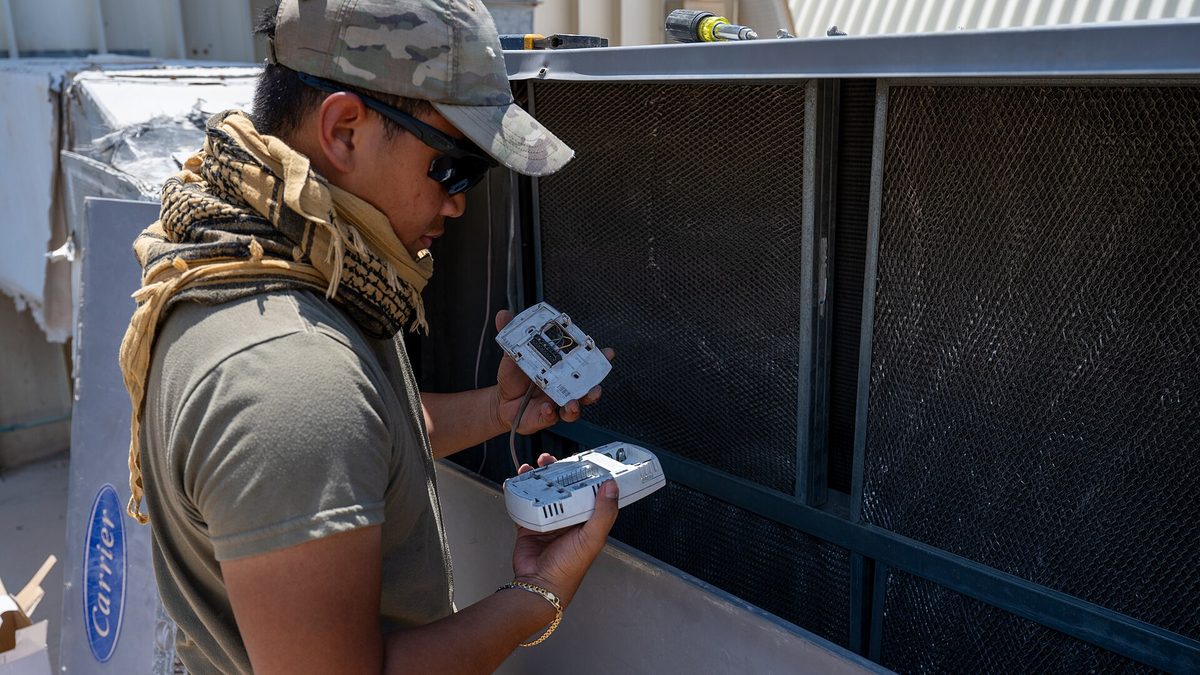
HVAC. The most accessible of the four. In the US many people take a short community college certificate first, get the EPA Section 608 certification (legally required to handle refrigerants), and join a contractor as a helper before formalizing an apprenticeship. In the UK the standard is the Level 3 refrigeration, air conditioning and heat pump engineer apprenticeship.
Welding. The odd one out. You can become a productive welder in months through a technical school, and employers care more about whether you can pass a specific weld test (to the American Welding Society D1.1 structural code, say, or a pipe test) than about how long you trained. Formal apprenticeships that include welding are usually in a related trade: pipefitter, boilermaker, ironworker or sheet metal worker. Go in through one of those if you want the union wage and pension; go to technical school if you want to weld quickly.
United States: registered, union and non-union
The US has three overlapping systems.
A Registered Apprenticeship is one approved by the Department of Labor’s Office of Apprenticeship or a state apprenticeship agency. Registration means the program meets minimum standards for on-the-job and classroom hours and wage progression, and you get a nationally recognized completion certificate. The finder at apprenticeship.gov lists registered programs by trade and zip code and is the most useful starting point.
Union apprenticeships are run by joint apprenticeship and training committees (JATCs) made up of the union and its signatory employers. For electricians, that is the IBEW and NECA through the Electrical Training Alliance. For plumbers, pipefitters and HVAC service, it is the UA. For HVAC installation and ductwork, the Sheet Metal Workers (SMART). For welding-heavy work, the Ironworkers and Boilermakers. Union programs generally pay more, come with health insurance and a pension early on, and place you with contractors so you are not hunting for an employer. The trade-off is a competitive, slow application process: you apply during an open window, sit an aptitude test (algebra and reading comprehension for the electrical alliance), interview with a panel, get a ranked score, and then wait to be called as places open. Waits of several months are normal; a year is not unusual in popular locals.
Non-union apprenticeships are run by trade associations such as the Associated Builders and Contractors (ABC), the Independent Electrical Contractors (IEC) and the Plumbing-Heating-Cooling Contractors Association (PHCC), or by individual contractors who register their own program. Entry is usually faster because an employer hires you first and then enrolls you. Pay and benefits vary more and are often below union scale, though large non-union contractors can be competitive.
Wages in all three systems are a percentage of the journeyman rate, commonly starting between forty and fifty percent and stepping up each period until full scale on completion. In a high-wage union local that can beat an entry-level office salary; in a rural non-union program it can be close to minimum wage. Every program publishes its schedule, so look it up before you apply.
United Kingdom: levels, standards and the levy
UK apprenticeships are organized by level. Level 2 is roughly GCSE standard, Level 3 is A-level standard, Levels 4 and 5 are higher apprenticeships and Levels 6 and 7 are degree apprenticeships. The trades you are likely to want sit at Level 3:
- Installation and maintenance electrician (Level 3). Around four years, ending with the AM2 practical assessment. Completing it qualifies you for the ECS gold card that most sites require.
- Plumbing and domestic heating technician (Level 3). Around four years. Gas work requires separate Gas Safe registration.
- Refrigeration, air conditioning and heat pump engineer (Level 3). Around three years.
- General welder (Level 2) and plate or pipe welder (Level 3). Eighteen months to three years.
Funding: employers with an annual pay bill above three million pounds pay the apprenticeship levy and draw on it for training; smaller employers pay a small share and the government pays the rest. Either way the classroom element costs you nothing.
The wage is the weak point. The apprentice rate of the National Minimum Wage, which applies to under-19s and to anyone in their first year, is well below the adult rate; after the first year, apprentices aged 19 and over must get the normal minimum wage for their age. Good employers pay above this, especially in electrical and gas, so ask. Find vacancies through the government’s Find an apprenticeship service, training providers such as JTL, and local colleges. In Scotland the equivalent is the Modern Apprenticeship through Skills Development Scotland, with different trade bodies (SECTT for electrical, for example).
Canada: provinces, blocks and the Red Seal
Apprenticeship in Canada is run by each province and territory, so the first step is your provincial authority (Skilled Trades Ontario, SkilledTradesBC, Alberta Apprenticeship and Industry Training, and so on). You need an employer willing to sponsor you, then you register with the province. Training alternates between long periods on the job and blocks of technical training at a college, commonly six to ten weeks a year. During those blocks you are usually eligible for Employment Insurance benefits, and the federal Canada Apprentice Loan provides interest-free loans for each block; check what other grants apply in the year you start, because federal apprenticeship grants have changed recently.
The Red Seal matters most for your long-term options: pass the Red Seal exam at the end of your apprenticeship and your qualification is recognized across the country. Construction electrician, plumber, steamfitter/pipefitter, refrigeration and air conditioning mechanic, and welder are all Red Seal trades. Some trades are compulsory in some provinces (in Ontario you cannot work as an electrician without being a registered apprentice or certified), worth knowing before anyone offers you cash-in-hand work.
If you cannot find a sponsor, pre-apprenticeship programs run by colleges and unions are the usual on-ramp. They give you basic skills, safety tickets and, most importantly, contacts with employers who take on apprentices.
Australia follows a similar model: usually four years to a Certificate III, with Group Training Organizations employing apprentices and placing them with host businesses if no small employer will take you directly.
How to actually get in
The most common reason people never start an apprenticeship is not rejection. It is that they never applied, because the process looked confusing and no closing date was pushing them. Treat it like a campaign.
- Sort the basics. A driver’s license (and, realistically, a vehicle) is close to mandatory in construction. A high school diploma or GED, or GCSEs in maths and English in the UK, is required by most programs. If your algebra is rusty, spend a month on it now; the aptitude tests are not hard, but they are timed.
- Get on a site. Six months as a laborer, helper or trades assistant proves you can handle the hours, gives you a contractor’s reference, and puts you in earshot when someone says “we’re taking on an apprentice.” Non-union employers in particular promote their existing helpers.
- Do a pre-apprenticeship if one is available. In the US, Job Corps, YouthBuild, Helmets to Hardhats (for veterans) and many union-run programs feed directly into apprenticeships; in the UK, a Level 2 college course does the same job; in Canada, provincial pre-apprenticeships often come with an employer placement.
- Apply to several programs, not one. Union windows, non-union programs and direct employer vacancies do not clash. Apply to all that fit.
- Prepare for the interview like a job interview. Panels ask why this trade, how you handle physical work and early starts, how you will get to site, and what you know about the program. Answer with specifics.
A useful shape for the “why this trade” answer:
“I’ve worked as a helper for a small electrical contractor for eight months. I’ve been doing rough-in and pulling cable, and I’ve started reading the code book on my own time. I want a proper apprenticeship because I want to be licensed, not just experienced. I can start immediately, I have a car and a clean license, and I’m used to being on site at six.”
Nobody expects you to know the trade. They want evidence that you will turn up, keep turning up, and learn.
Age myths and other myths
“Apprenticeships are for school leavers.” There is no upper age limit in the US, the UK or Canada, and a large share of apprentices are in their late twenties or thirties, many of them career changers. In the UK, some employers prefer younger candidates at Level 2 for funding reasons; at Level 3 in the trades, older applicants with a work record are often preferred.
“You need to know someone.” It helps, as in any hiring. But union programs score applicants on tests and interviews precisely to limit that, and non-union employers are chronically short of reliable people. Reliability is the connection.
“It’s all heavy labor.” The first year involves a lot of carrying and cleaning. By the third year an electrical or HVAC apprentice is doing skilled diagnostic work, and with the skilled trades shortage biting, employers increasingly offer lighter service and maintenance paths to keep qualified people.
“Women don’t do it.” Still a minority, but every major union and trade association now runs recruitment programs aimed at women, and the pay schedule does not know your gender.
What to do this month
Pick one trade. Find the next two application windows near you (union and non-union in the US; a college intake and an employer vacancy in the UK; a pre-apprenticeship and a sponsor in Canada). Write the dates down, then get a helper job, even a short one, so that when the window opens you are not applying cold.
This article is general information, not legal, financial or medical advice. Rules differ by country, state and employer; check the current position for your situation. See our editorial policy and disclaimer. Spotted an error? Tell us.