How to become a truck driver: CDL training, costs and pay
CDL classes and endorsements, company-paid training contracts versus private schools, what the first year on the road is really like, and what drivers earn.
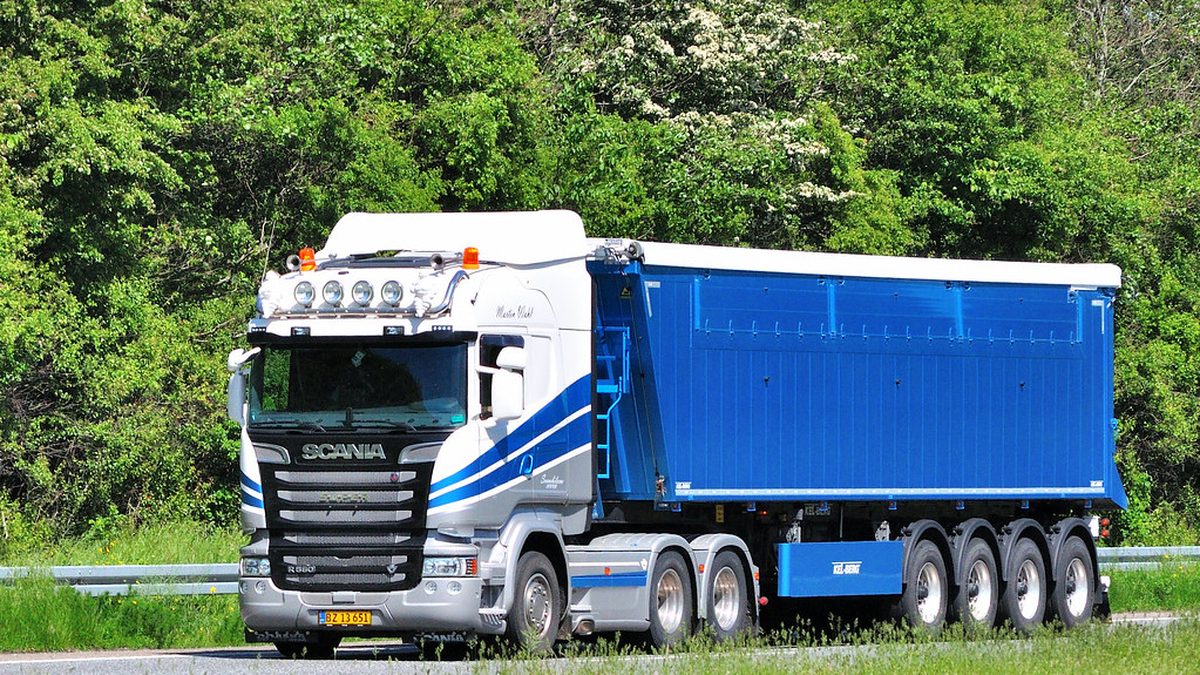
Trucking recruits harder than almost any other industry. The ads promise a commercial driver’s license in three weeks, no upfront cost, and a first-year income that sounds very good to someone earning hourly wages. Some of that is true. What gets left out is the contract you sign for the free training, the shape of the first year, and what the job does to your body if you let it.
This guide covers licensing, the three ways to train and what each costs, how to read a company training contract, what the first twelve months look like, and what drivers earn. The details are US-focused, with UK and Canadian equivalents at the end.
CDL classes and endorsements
A commercial driver’s license comes in three classes.
Class A covers combination vehicles with a gross combined weight rating of 26,001 pounds or more where the towed unit is over 10,000 pounds. That is a tractor-trailer, and it is the license almost everyone means when they say “getting my CDL.” It also lets you drive Class B and C vehicles.
Class B covers single vehicles of 26,001 pounds or more: dump trucks, straight trucks, cement mixers, city buses, garbage trucks. Class B jobs are usually local, home every night, and often trained by the employer. If you want to drive but not live in a truck, this is the class to look at first.
Class C covers smaller vehicles that carry sixteen or more passengers or placarded hazardous materials.
Endorsements are add-ons, each with its own written test and sometimes more. H (hazardous materials) requires a TSA security threat assessment with fingerprinting and opens up higher-paying tanker and chemical work. N is tank vehicles, X is tank plus hazmat combined, T is doubles and triples, P is passenger, and S is school bus. Air brakes are the reverse: a restriction that gets added if you test on a vehicle without them, so test on a truck with air brakes.
You can hold a CDL at 18 in most states for driving within the state, but federal rules require you to be 21 to drive interstate or to carry hazmat. Since most over-the-road (OTR) jobs are interstate, 21 is the practical starting age for long-haul work. You also need a Department of Transportation medical examination, covered below, and a driving record without recent DUIs or serious violations.
The entry-level training rule
Since February 2022, the Federal Motor Carrier Safety Administration’s Entry-Level Driver Training (ELDT) rule requires anyone getting a first Class A or B license, upgrading from B to A, or adding a hazmat, passenger or school bus endorsement for the first time, to complete theory and behind-the-wheel training from a provider listed on the federal Training Provider Registry before they can take the skills test. In practice this ended the route of borrowing a friend’s truck and teaching yourself. You will go through a school; the only question is who pays.
Three ways to train
Private or community college CDL school. Full-time programs run three to eight weeks. Cost varies a lot by region and school type, from a few thousand dollars at a community college to the high single-digit thousands at some private schools. Funding is often available: federal Workforce Innovation and Opportunity Act (WIOA) grants through your local American Job Center, state workforce programs, and the GI Bill for veterans all commonly cover CDL training. The advantage is simple: you own your license, owe nobody, and can take the best job offer rather than the one attached to your training.
Company-sponsored training. Several large carriers run their own schools and will train you for little or no money upfront. In exchange you sign a contract to drive for them for a set period, commonly around a year, sometimes up to eighteen months. Leave early, or get fired, and you owe the training cost, which is typically several thousand dollars and is sometimes deducted from your final pay. School-phase pay is usually low or nothing, and on-the-road training pay is often a flat daily or weekly rate rather than mileage. This route works for people who cannot get funding, cannot afford to be unpaid, and are prepared to spend a year with one carrier. It works badly for people who discover in month three that the carrier’s home-time policy is not what the recruiter described.
Employer-paid training for local Class B work. Waste companies, ready-mix concrete, transit agencies, school districts, construction firms and delivery companies frequently train drivers for Class B themselves, with no long contract or a much shorter one. These pay less than top OTR work but you sleep in your own bed, and they count as commercial driving experience, which most good jobs want one or two years of.
How to read a company training contract
Get the document before you travel to the school. Recruiters will say the details are in orientation. Ask for them by email, and check the following.
- Total repayable amount. What do you owe if you leave on day one, and does it decline each month you stay? A contract that forgives a proportion monthly is fairer than one that stays at full value until month twelve.
- Length of commitment. Twelve months is standard; anything longer needs a reason.
- What happens if they let you go. Some contracts make you liable even if the carrier ends the relationship. That clause matters.
- Pay during each phase. School, orientation, the weeks with a trainer, and the first solo weeks are often paid differently. Get each number.
- Trainer phase. How many weeks, whether you will be team driving (one sleeps while the other drives), and how miles are split.
- Home time. Written policy, not the recruiter’s summary. “Home every two to three weeks for two to three days” means what it says.
- Truck assignment. Whether you get an assigned truck or share (“slip seat”).
- Lease-purchase offers. Some carriers will pitch a truck lease so you become an owner-operator. As a first-year driver, decline; the economics are poor and the failure rate high.
If the recruiter will not send the contract in advance, that is the answer to your question about the company.
What the first year is really like
The school phase is short and intense: pre-trip inspections memorized to the word, backing maneuvers repeated until they are boring, and a skills test that a meaningful share of people fail once. Then, at a large carrier, you go out with a trainer for several weeks. That often means team driving, sleeping in a bunk while the truck moves, and living in a very small space with a stranger. People quit at this stage more than any other.
Then you go solo, usually OTR. You will be out for two to four weeks and home for a few days. Pay is per mile for most OTR roles, and miles depend on the dispatcher, the freight, the weather and how long you sit at a warehouse waiting to be unloaded. Detention pay for waiting exists at many carriers but often only after the first two hours, and it does not match driving pay.
Federal hours-of-service rules shape every day. You may drive up to 11 hours within a 14-hour window after 10 consecutive hours off, you must take a 30-minute break after 8 hours of driving, and you are limited to 60 hours in 7 days or 70 in 8. Electronic logging devices record all of it, so the old tricks are gone. Trucks at large carriers are also usually speed-limited.
New drivers are the riskiest drivers, and insurers know it, which is why most better-paying jobs want a year or two of experience and why the first year is about surviving without an accident, a ticket or a quit rather than about money. First-year turnover at large carriers is high; the drivers who get through have far more choice at month thirteen.
What drivers earn, in words
The Bureau of Labor Statistics puts the median annual wage for heavy and tractor-trailer truck drivers in the mid fifty thousand dollar range, meaning half earn more and half earn less. That median hides a wide spread.
First-year OTR drivers at large carriers usually earn below the median, partly because of low training-phase pay and partly because miles come slowly to new drivers. Experienced OTR drivers with clean records, and drivers who add tanker, hazmat or doubles endorsements, earn comfortably above it. The best-paid company drivers tend to be in specialized freight (tankers, oversize, hazmat), in less-than-truckload linehaul, at unionized carriers, or in private fleets run by retailers and manufacturers. Local Class B work generally pays less per year than good OTR work but comes with regular hours, and some local union jobs pay very well indeed.
Owner-operators can gross far more than company drivers, but after the truck payment, fuel, insurance, maintenance and downtime, net income is often not better and is far more volatile. That is a second-career decision, not a first-year one.
Pay structures matter as much as rates. Per-mile pay rewards drivers who get good freight. Hourly pay is common in local work and protects you from unpaid waiting. Percentage-of-load pay is common in flatbed and specialized freight and rewards experience.
Health and lifestyle realities
Nobody in a recruiting ad mentions this, and it decides whether you are still driving in five years.
The job is sedentary, the food available at truck stops is poor, and the sleep schedule is irregular. Weight gain, high blood pressure and sleep problems are common. The DOT medical exam is required at least every two years, and more frequently if you have a condition that needs monitoring. Drivers with high body mass index are commonly referred for sleep apnea testing, and uncontrolled diabetes, certain heart conditions and some medications can cost you the medical card, which means the license is useless. Take the physical before you pay for school; it is the cheapest filter in the process.
Relationships strain on OTR schedules, and many drivers move to regional or local work after a couple of years for that reason alone. Your first year is buying the experience to make that move, not setting your permanent life.
Practical habits that help: a cooler and a small cooking setup in the cab, walking at every stop, a fixed sleep window as far as the schedule allows, and treating the medical card as something to protect.
The UK and Canada
In the UK, the equivalent is a Category C licence for rigid lorries and C+E for articulated ones, plus the Driver Certificate of Professional Competence (Driver CPC), which needs an initial qualification and 35 hours of periodic training every five years. Training costs a few thousand pounds through private schools; government-funded Skills Bootcamps in HGV driving have covered this for many entrants since the 2021 driver shortage, so check what is currently funded. A medical is required.
In Canada, licensing is provincial: Class 1 in most provinces and Class A in Ontario for tractor-trailers, Class 3 or D for straight trucks. Most provinces now require Mandatory Entry-Level Training (MELT) with a minimum number of hours before the road test, which pushed costs up and closed the cheapest schools. Many carriers fund MELT under contracts like the US ones, and the same checklist applies.
The order to do things in
Book a DOT physical this week. If you pass, visit two schools in person, one company-run and one independent, and ask each for their contract or funding paperwork by email. Talk to a driver in the parking lot at each, not the recruiter. Then decide which of the three training routes fits your money and your life, knowing that whichever you pick, the first year’s job is to get through it clean.
This article is general information, not legal, financial or medical advice. Rules differ by country, state and employer; check the current position for your situation. See our editorial policy and disclaimer. Spotted an error? Tell us.