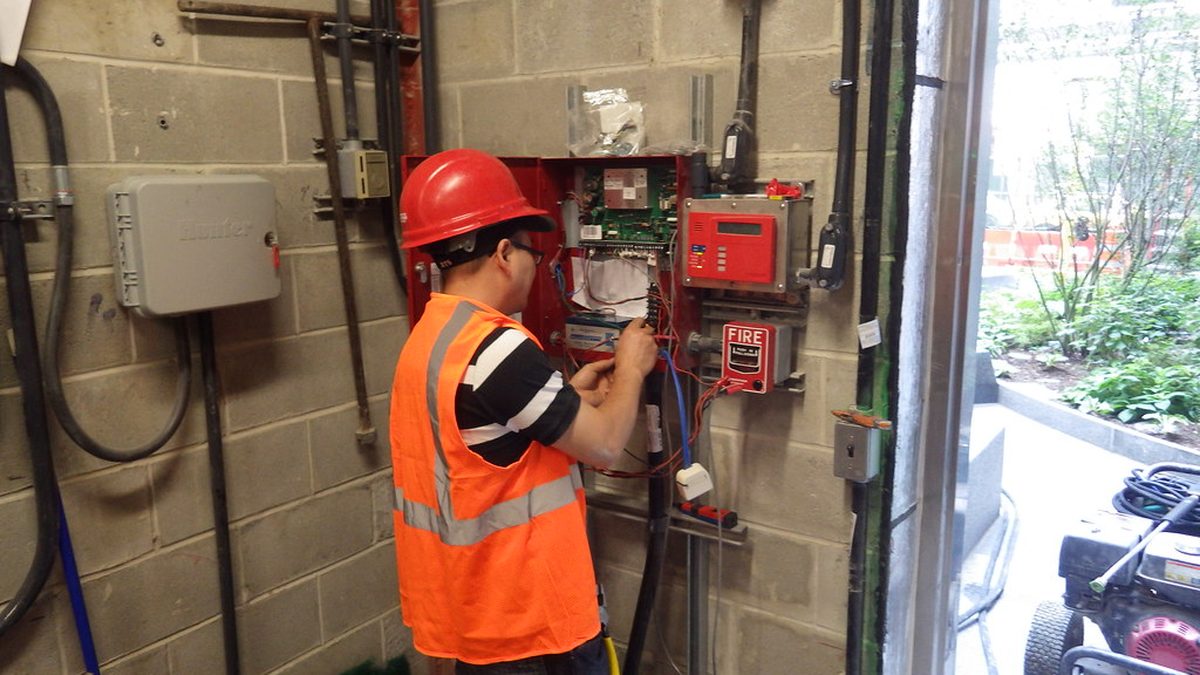
How to become an HVAC technician: training, EPA 608 and pay
The routes into HVAC work, what the EPA 608 test covers, how the seasons shape the workload, pay progression in plain words and what the first year is like.
Heating, ventilation, air conditioning and refrigeration is one of the few trades where the work cannot be offshored, cannot be automated in any near future, and gets more necessary every summer. The US Bureau of Labor Statistics projects faster-than-average growth for HVACR mechanics and installers through the early 2030s, and anyone who has tried to get a condenser replaced in July knows why the phones do not stop.
It is also a trade with a low barrier to entry and a high barrier to being good. You can be on a truck as a helper within weeks. Becoming the technician who can diagnose a heat pump that only fails on the third defrost cycle takes years. This guide covers the realistic ways in, the one federal certification you cannot skip, what the seasons do to your paycheck, and what the first year actually feels like.
What the job is, in practice
HVAC splits into two broad roles that most people drift between early on.
Installers put new systems in: rooftop units, split systems, ductwork, line sets, thermostats. Install work is physical, often outdoors or in attics, and tends to run in crews. You learn brazing, sheet metal, refrigerant charging and basic electrical quickly because you do it every day.
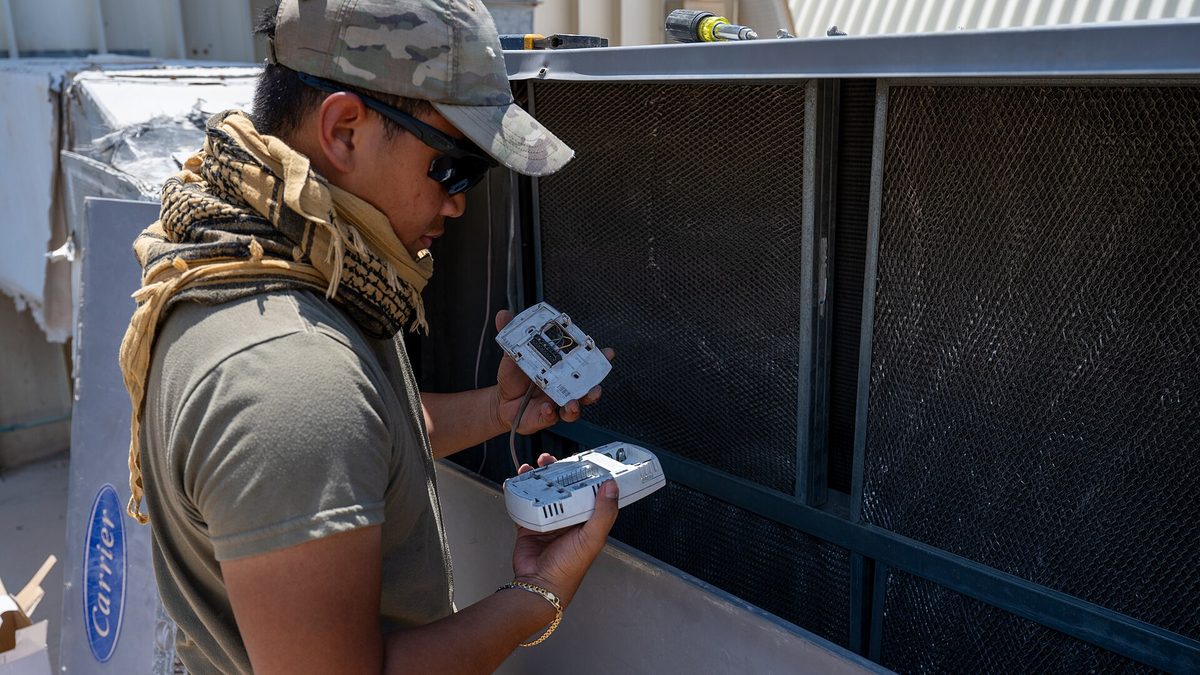
Service technicians diagnose and repair systems that already exist. Service work is more solitary, more mental, and more customer-facing. You are the person in a stranger’s basement at 6pm explaining why their furnace is throwing a pressure-switch code. Service techs need a stronger grip on electrical troubleshooting, refrigeration theory and, increasingly, the control boards and communicating thermostats that modern equipment runs on.
There is a third branch, commercial refrigeration (supermarket racks, walk-in coolers, ice machines), which pays well and has fewer people chasing it, partly because the on-call demands are heavier. A supermarket losing a rack at 2am on a Saturday is a phone call you will receive.
The three training routes
There is no single required path, and people succeed from all three of these. Which suits you depends on money, time and how you learn.
Trade school or community college
A certificate program typically runs six to twelve months; an associate degree runs two years. You will get classroom refrigeration theory, electrical fundamentals, hands-on lab time with real equipment, and usually preparation for the EPA 608 exam (more on that below). Costs vary widely: a community college certificate might cost a few thousand dollars, while a private for-profit HVAC school can charge several times that for a similar outcome. Ask any school for its job placement rate, who its employer partners are, and whether you sit the EPA 608 before you leave.
The advantage is that you arrive at your first employer already useful. The disadvantage is that you pay to learn things an apprenticeship would have paid you to learn.
Apprenticeship
Union apprenticeships in HVAC run through the United Association (plumbers, pipefitters and HVACR service technicians) and the Sheet Metal Workers (SMART), depending on the region and whether the work is service or installation. These are typically four to five years, combine paid on-the-job hours with evening or block classroom instruction, and lead to journeyman status. Pay starts as a percentage of journeyman rate and steps up every six or twelve months. Non-union apprenticeships also exist through contractor associations and larger employers, and many are registered with the US Department of Labor, which matters because a registered apprenticeship produces a credential that travels.
Applying to a union program usually means an aptitude test, an interview, and sometimes a wait list. Apply to more than one local if you can, and apply in the window they announce rather than assuming they take rolling applications. Our broader guide to trade apprenticeships covers the process in more detail.
Straight to an employer as a helper
Plenty of residential companies will hire someone with a clean driving record, the ability to lift equipment and a good attitude, then train them in the field. You will start on installs and learn by watching a lead. The pay is lower and the training is only as good as the company. Some firms run structured in-house programs with classroom time; others will keep you as a low-paid helper indefinitely if you let them.
If you take this route, set a checkpoint. If after twelve months you have not been given the chance to charge a system, wire a condenser, or run a service call with supervision, you are cheap labor rather than a trainee, and it is time to move.
EPA Section 608: the one certification you cannot skip
Federal law in the US requires anyone who buys, handles or works with refrigerants to hold EPA Section 608 certification. Without it, you cannot legally open a sealed refrigerant circuit, and no reputable employer will let you touch one.
The exam has a core section plus three type sections:
- Type I covers small appliances (window units, domestic refrigerators).
- Type II covers high-pressure systems, which is most residential and light commercial air conditioning.
- Type III covers low-pressure systems, mainly large chillers.
- Universal means you passed all three, and it is what most employers want to see.
The test is administered by EPA-approved organizations, including many trade schools, supply houses and online proctored providers. It is a multiple-choice exam covering ozone depletion, the Clean Air Act rules, recovery and recycling procedures, safety, and the specifics of each system type. The core and Type II sections are where most people fail on the first go, usually because they skipped the regulatory material and only studied the technical parts. Study both. The certification does not expire.
Two things worth knowing in 2026. First, the industry is in the middle of a refrigerant transition: under the AIM Act, new residential and light commercial equipment sold in the US now uses lower-global-warming-potential refrigerants, many of which are classed as mildly flammable (A2L). Employers increasingly expect new technicians to have A2L handling training on top of 608, and several manufacturers and industry bodies offer short courses. Second, EPA 608 is not a state license. Some states license HVAC contractors (Texas, Florida and North Carolina are examples), some license technicians, and some have no state-level licensing at all and leave it to cities and counties. Check your state before you assume you are done.
Outside the US, the picture is different. In the UK, anyone handling fluorinated refrigerants needs an F-Gas qualification, and working on gas boilers requires Gas Safe registration; the common training route is a Level 2 or Level 3 diploma in refrigeration, air conditioning and heat pump technology. In Canada, refrigeration and air conditioning mechanic is a Red Seal trade with provincial apprenticeship programs, and refrigerant handling requires an ozone depletion prevention (ODP) card in most provinces. In Australia, you need an ARCtick licence from the Australian Refrigeration Council to handle refrigerants, and the standard qualification is a Certificate III in air conditioning and refrigeration.
Voluntary certifications that actually help
After 608, the certification most employers recognize is NATE (North American Technician Excellence), which has specialty exams in areas like air conditioning, heat pumps and gas furnaces. It is not legally required, but it shows up in job ads and on the trucks of companies that want to charge premium rates. HVAC Excellence offers a parallel set of credentials. Manufacturer training programs are often free through a distributor and worth taking for brands you work on often.
Get a year on the truck before chasing these; a NATE certificate with no service hours behind it mostly signals that you are good at tests.
What the seasons do to the work
HVAC is seasonal in a way that catches new entrants out. In most of the US, summer is a sprint: ten and twelve hour days, six-day weeks, mandatory on-call rotations, and a company that cannot hire enough people. Late fall and winter bring heating calls, which in northern states are just as intense. The shoulder months (roughly April and October, depending where you are) can be quiet enough that some residential companies cut hours or lay off helpers.
The better companies sell maintenance agreements and schedule tune-ups in the slow months to keep technicians busy, and commercial contractors have steadier work year-round. If you interview with a residential company, ask directly: “What does a slow week in October look like for a first-year tech?” The answer tells you a lot about how they run the business.
The physical side is real. Attics in Texas in August are dangerous, not just unpleasant. Crawlspaces, rooftops in wind and lifting condensers that weigh as much as you do are ordinary Tuesday tasks. The technicians still working at 55 are the ones who used a dolly when a younger colleague would have carried it.
Pay, and how it climbs
Pay in words rather than numbers, because it moves by region and by year. A first-year helper or installer at a residential company typically earns a little above the local going rate for entry-level warehouse or delivery work.
Within two to three years, a competent service technician with a Universal 608 and some diagnostic confidence earns comfortably above the median wage for all US workers, and considerably more in high-cost metros. Union journeyman rates in large cities, with benefits and pension contributions, are higher still. Commercial refrigeration and controls specialists sit at the top of the range because fewer people can do the work.
Two things distort HVAC pay compared with other trades. First, overtime: summer hours can add a large slice to annual earnings, which is great until you burn out. Second, sales incentives: many residential service companies pay technicians a commission or “spiff” on equipment and add-ons they sell during a call. This can be lucrative and it can also be corrosive, because a tech under pressure to hit a number may recommend a replacement the customer does not need. When you interview, ask how much of a typical technician’s pay comes from commission. If it is most of it, you are being hired as a salesperson who can also fix things.
Longer term, the ladder runs from lead technician to service manager, estimator or project manager. Many technicians start their own companies after eight to ten years, which is where the trade’s real money is, along with the headaches of running a business.
What the first year is actually like
Expect to be tired, to feel slow, and to be corrected in front of customers. The lead you are paired with will do the diagnosis in four minutes while you are still finding the disconnect. That is normal. The useful first-year habits are simple:
- Carry a notebook or a phone note and write down every fault code, every fix and every question you did not want to ask out loud. Look them up that night.
- Learn to read a wiring diagram before you learn to replace parts. Parts-swapping is how helpers stay helpers.
- Ask to ride along on service calls even if you are hired as an installer. The transition from install to service is where pay and autonomy jump.
- Get your Universal 608 in the first three months if you do not already have it. Employers notice who bothered.
The technicians who get good fastest are the ones who treat every call as a small experiment: what did the system tell us, what did we assume, and were we right? That habit, more than any certificate, is what separates a ten-year technician from someone with ten one-year experiences.
If you are deciding between this and another trade, the case for HVAC is steady demand, a fast start and a clear ladder to running your own business; the case against is the summer grind and the physical wear. Talk to two working technicians, one residential and one commercial, before you enroll anywhere.
This article is general information, not legal, financial or medical advice. Rules differ by country, state and employer; check the current position for your situation. See our editorial policy and disclaimer. Spotted an error? Tell us.