How to become a welder: training, certification and pay
MIG, TIG and stick explained, training via community college, union apprenticeship or employer, how AWS certification really works, and pay in words.
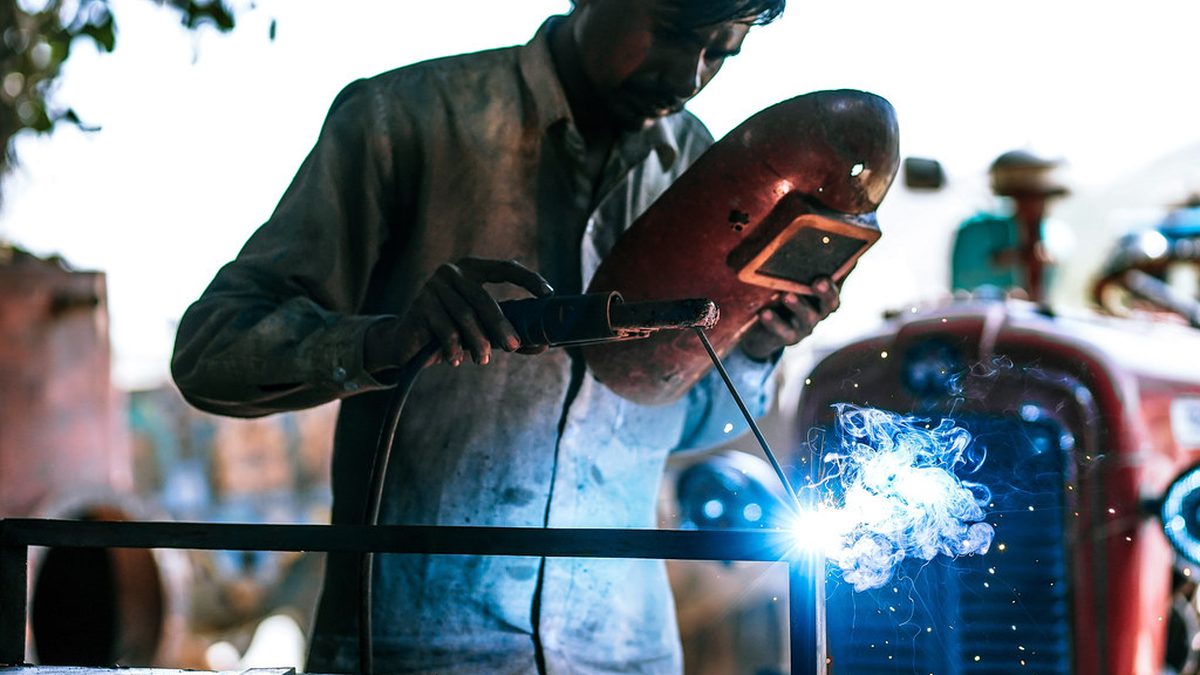
Welding is one of the few trades you can start learning on a Saturday for the cost of a used machine and a hood, and one of the few where a two-year commitment can put you in a job that pays more than many degrees. It is also physically hard, often dirty, sometimes dangerous, and the best-paid versions of it involve living out of a truck. Both of those things are true at once.
This guide covers the main welding processes and which to learn first, the realistic training routes in the US, UK, Canada and Australia, how certification actually works (it is not what most people assume), what pay progression looks like described in words rather than invented numbers, and the health and travel realities that decide whether you will still be doing this at fifty.
The processes, and which one to learn first
“Welder” covers several distinct skills, and employers hire for specific ones.
MIG (GMAW, wire feed). A spool of wire feeds through the torch and shielding gas protects the weld. It is the easiest process to learn, the fastest for production work, and the most common in fabrication shops, manufacturing, automotive and light structural work. A capable person can lay a usable MIG bead within a few hours and a good one within a few months. It is where most people start and where most factory welding jobs sit.
Stick (SMAW, arc). A flux-coated electrode, no gas, and a machine you can run off a generator. Stick works outdoors, in wind, on rusty or painted steel, and in awkward positions. It is the process of construction sites, pipelines, structural steel, shipyards, farm repairs and most field work. Harder to learn than MIG, and the harder positions (overhead, vertical up) take real practice.
TIG (GTAW). A tungsten electrode, a separate filler rod fed by hand, and a foot pedal controlling heat. Slow, precise, clean, and the hardest of the three to master. TIG is what you use on aluminum, stainless steel, thin material, aerospace parts, food-grade and pharmaceutical pipework, and high-end pipe. It is also where the highest hourly rates in the trade tend to sit, because good TIG welders are scarce.
If you want a shop job fast, learn MIG. If you want field and construction work, learn stick. If you want the top of the pay scale, learn TIG, but expect it to take longest. Most decent programs teach all three and let you specialize once you know what you enjoy.
Training routes
Community and technical college
In the US, a community college welding certificate typically runs from one semester to a year, and an associate degree in welding technology takes about two. Costs vary by state and residency, but in-state community college tuition is generally the cheapest booth time available anywhere, and financial aid applies. The single question to ask any program is how many hours a week you will actually spend under the hood. Programs that are heavy on classroom theory and light on arc time produce graduates who cannot pass a weld test. Twenty or more hours a week of practical welding is a good sign; under ten is a warning.
Look for programs that teach to the codes employers actually use (AWS D1.1 for structural, ASME Section IX for pipe) and that can tell you, without evasion, where last year’s graduates went. Private welding schools exist too, faster and several times the price; ask the same questions and be more skeptical of placement claims.
Union apprenticeship
If you want structural, pipe or industrial welding, a union apprenticeship is usually the best-paid route in and the one that ends with the strongest credentials. The relevant unions in the US are the United Association (plumbers, pipefitters and welders), the Ironworkers, the Boilermakers, and in some regions the Sheet Metal Workers. Apprenticeships are four to five years, you are paid from day one at a rising percentage of the journeyman rate, and the training is free or close to it.
Getting in means applying to your local when it opens applications, taking an aptitude test, passing a drug test, and interviewing. Our guide to how apprenticeships work in the trades covers the process, including the non-union alternatives through contractor associations.
Employer training
Many fabrication shops and manufacturers will hire someone with no welding experience as a helper or fitter and train them on MIG. Pay starts low, the training is narrow, and you learn one shop’s way of doing things, but you are earning while you learn and you find out quickly whether you like the work. The risk is getting stuck: three years of MIG on the same bracket does not make you a welder in the sense the wider market means. If you go this route, add a community college evening class in stick and TIG within the first year.
Outside the US
In the UK, the standard path is a Level 2 or Level 3 welding diploma at a further education college, or a welding apprenticeship (Level 2 General Welder, Level 3 Plate or Pipe Welder) with an employer, paid at least the apprentice minimum wage. Welder qualification to the BS EN ISO 9606 standard is the equivalent of American coding and is tested through approved bodies. In Canada, welder is a Red Seal trade: an apprenticeship of roughly three years with in-school blocks, ending in the interprovincial exam that makes your ticket portable across provinces, plus Canadian Welding Bureau (CWB) tickets that employers require for structural work. In Australia, the route is a Certificate III in Engineering (Fabrication Trade) through an apprenticeship with a TAFE component, with welder qualification to AS/NZS ISO 9606 for coded work.
How certification actually works
This is the part most beginners misunderstand. There is no general “welding license.” What exists is qualification testing: you weld a test piece in a specific process, position, material and thickness, an inspector bends it, cuts it up or x-rays it, and if it passes you are qualified for that process, position and material, on that employer’s or code’s terms.
The AWS Certified Welder program is the best-known independent version in the US. It is a performance test, not a course: you turn up at an AWS Accredited Test Facility, weld the test coupon to a specified procedure (say, a 3G vertical plate in stick, or a 6G pipe in TIG), and if it passes you are entered in the AWS registry. There is no prerequisite training, the fee is modest, and to keep it current you submit a maintenance form every six months confirming you are still welding that process. Let it lapse and you retest.
Positions are coded by number and letter. For plate, 1G is flat, 2G horizontal, 3G vertical and 4G overhead. For pipe, 5G is fixed horizontal and 6G is fixed at 45 degrees, which is the one that matters: pass 6G and you have covered every position at once, which is why it is the pipe welder’s gold standard.
One thing to know: most employers run their own weld tests to their own welding procedure specifications, regardless of what cards you hold. Your AWS certificate gets you the interview; their test gets you the job. Wherever you are, the practical advice is the same: qualify in the position and process your target employers actually use, and keep a folder of every test you have passed.
Pay progression, in words
The US Bureau of Labor Statistics puts the median annual wage for welders, cutters, solderers and brazers in the high $40,000s in its May 2023 figures, and that median hides a very wide spread. Here is what the spread looks like in practice.
Entry-level shop welding (MIG in a fabrication or manufacturing shop) pays a little above general warehouse and production rates, sometimes not by much. It is a starting point, not a destination.
Structural and construction welding (stick on sites, often through a union) pays considerably more, with overtime, and union scale in a major city can be double the shop rate once you are through the apprenticeship.
Pipe welding, particularly TIG root and stick fill on process pipe, refineries, power plants and pipelines, is the next step up. Certified pipe welders are in short supply, and employers pay for it.
Industrial travel work (shutdowns, turnarounds, new plant construction) pays the pipe welder rate plus per diem for living costs, with long weeks of overtime. Twelve-hour days, six or seven days a week, for a few months, then time off. This is where welders earn six figures, and it is why the trade has a reputation for high pay: the people earning it are working very long hours away from home.
Rig welding (your own truck and machine, hired out as a contractor to pipeline and oilfield work) has the highest day rates in the trade and the highest costs and risk. It is a business, not a job.
Beyond the hood, the routes up are welding supervisor, inspector (via the AWS Certified Welding Inspector credential), or running your own shop.
Health and travel realities
Welding is a career in which you can do serious damage to yourself if you are careless, and modest cumulative damage even if you are not.
Fumes. The International Agency for Research on Cancer classifies welding fume as carcinogenic to humans. Stainless steel produces hexavalent chromium; all steel welding produces manganese; galvanized metal gives off zinc fumes that cause “metal fume fever.” Ventilation and fume extraction are the employer’s responsibility, but a fitted respirator under the hood is yours, and the welders who last are the ones who wear it even when the older hands mock them.
Eyes and skin. Arc flash burns the cornea and the ultraviolet light burns exposed skin; a proper hood and covered forearms sort it out.
Body. Overhead and out-of-position work is hard on the neck, shoulders and back. Kneeling for hours wears knees. Grinding wrecks hearing without ear protection. Burns are routine. By forty, most welders have a list.
Travel. Shop welding is a regular-hours job near home. Field and industrial welding often is not. Shutdown and construction work means weeks or months away, motels or camps, and a family life organized around rotations. Plenty of welders love this and plenty burn out on it; be honest with yourself about which you are before you chase the travel money. Expect drug testing at hiring and randomly thereafter; failing it closes most of the industrial route.
A realistic first two years
Year one: get into a community college or apprenticeship program with heavy booth time, learn MIG and stick to the point of passing a 3G plate test, and take any helper or shop job you can get alongside the training. Year two: add TIG, take your first AWS or employer qualification test, and move to whichever employer will put you on the work you want next (structural if you want to travel, TIG if you want precision, pipe if you want the top of the scale). By the end of year two your pay should have moved well clear of where it started.
The demand side is real: a large share of the welding workforce is nearing retirement, and employers in most regions report difficulty filling coded welding roles. Our piece on what the skilled trades shortage means for you has the detail.
Where to start this month
Find the nearest community college or technical college welding program, go to an open evening, and ask two questions: how many hours a week are under the hood, and what test do graduates pass before they leave. If the answers are good, enroll. If you want to test yourself first, a used MIG machine, a hood and a stack of scrap steel will tell you within a weekend whether you can stand the work.
This article is general information, not legal, financial or medical advice. Rules differ by country, state and employer; check the current position for your situation. See our editorial policy and disclaimer. Spotted an error? Tell us.