How to get a forklift license and turn it into a warehouse job
How forklift certification works in the US, UK and Australia, cost and duration, what warehouse employers really hire for, and the pay ladder to supervisor.
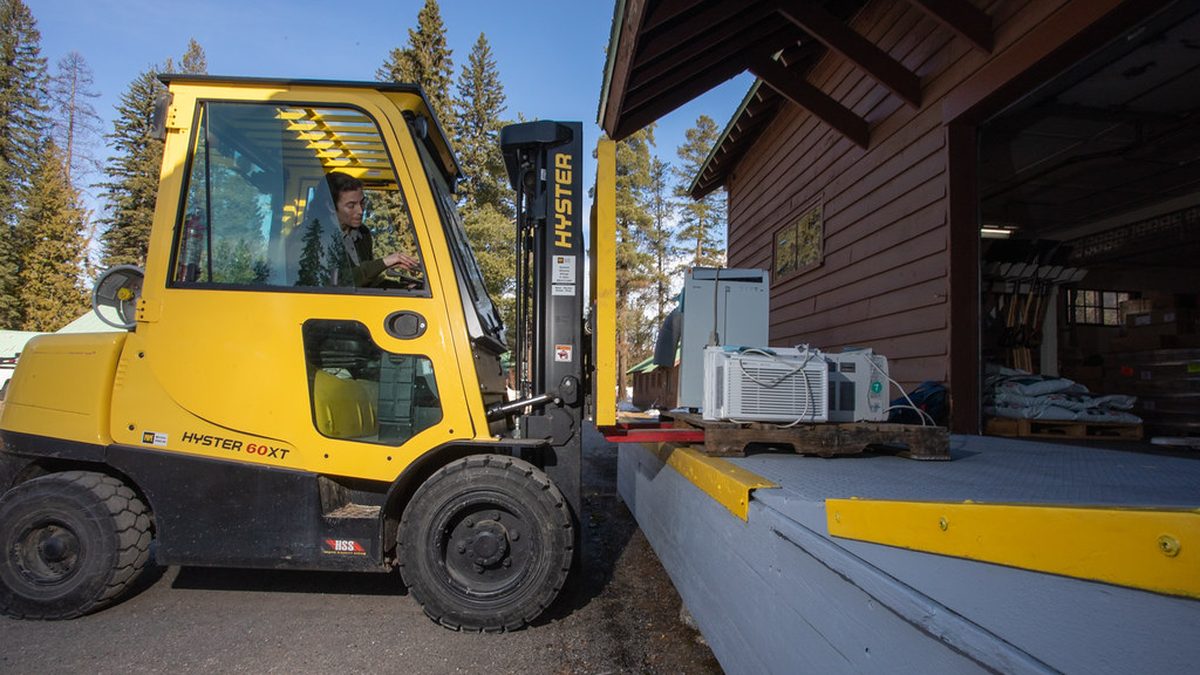
A forklift ticket is one of the cheapest, fastest credentials that moves your pay up in a real way. It takes between a day and a week depending on where you live, it often costs nothing because the employer pays, and it separates you from the general warehouse pool. It is also widely misunderstood: in the US and UK there is no such thing as a government forklift license, and a card from an online course is worth less than most people paying for one believe.
This guide explains how certification actually works in the US, UK, Australia and Canada, what it costs and how long it takes, the classes of truck and why one of them is worth more than the others, what warehouse employers are really screening for beyond the ticket, and the pay ladder from the floor to lead and supervisor.
The United States: OSHA certification, employer by employer
In the US, the relevant rule is OSHA’s powered industrial truck standard (29 CFR 1910.178). It requires the employer to make sure every operator has been trained and evaluated before running a truck, and to re-evaluate operators at least every three years or after an accident, near miss, or a move to a different type of equipment. There is no state or federal license. The certification belongs to the employer, and it is specific to the types of truck and the workplace conditions the operator was evaluated on.
That has two practical consequences. First, a training company or an online course can give you the classroom portion and a wallet card, but any new employer still has to evaluate you on their equipment before you operate. Cards from third parties are useful as proof that you know the theory and have driven before; they are not a passport. Second, many warehouse employers and staffing agencies train and certify from scratch, for free, because they have to do the evaluation part anyway. If you are starting out, this is usually the smartest route: apply to employers or agencies that advertise “will train,” get certified on their equipment, and you now have both the ticket and the experience.
Training must cover formal instruction, practical training with the truck, and an evaluation of you operating it in the workplace. An in-person course runs half a day to a full day and costs in the low hundreds of dollars from a training company; online-only “certifications” cover the classroom part only. You must be 18; federal child labor rules bar anyone younger from operating a forklift in non-agricultural work.
The classes of powered industrial truck matter because employers hire for them.
- Class 1: electric counterbalance (sit-down or stand-up). The standard warehouse forklift.
- Class 2: electric narrow-aisle trucks: reach trucks, order pickers, turret trucks. Used in high-bay racking. Harder to operate, fewer people certified, and a pay premium follows.
- Class 3: electric pallet jacks and walkie stackers. Entry-level.
- Class 4 and 5: internal combustion counterbalance trucks for yards and loading docks.
Get certified on a counterbalance truck and a reach truck and you are qualified for the bulk of distribution center work. Reach truck and order picker experience is what employers struggle to find.
The United Kingdom: accredited training, not a license
The UK position is similar to the US in law and different in practice. There is no statutory forklift license. Under the Provision and Use of Work Equipment Regulations 1998 and the Health and Safety Executive’s Approved Code of Practice on rider-operated lift trucks (L117), employers must ensure operators are adequately trained, and they must be able to prove it. The proof is almost always a certificate from a course accredited by one of the recognized bodies: RTITB, ITSSAR, AITT or NPORS. These sit under the Accrediting Bodies Association, and a certificate from any of them is accepted across the sector.
Courses are graded by experience. A novice course for a counterbalance truck typically runs three to five days; an experienced-operator or refresher course is one to two days; a conversion course to a new truck type is a day or so. The industry convention is a refresher every three years, and most employers enforce it. Costs for a novice course from a commercial training provider are in the low hundreds of pounds, sometimes more in London, and it is worth asking whether an agency or employer will fund it before paying yourself. Counterbalance and reach truck are the two categories that matter for warehouse work; most training centers offer a combined course. Unlike the US, a UK accredited certificate does transfer between employers in practice, though a new employer should still familiarize you with their trucks and site.
Australia: the LF high risk work licence
Australia is the country where “forklift licence” means what it says. Operating a forklift requires a High Risk Work Licence, class LF, issued by your state or territory regulator (SafeWork NSW, WorkSafe Victoria, Workplace Health and Safety Queensland and so on) under a nationally consistent scheme. A separate class LO covers order-picking forklifts where the operator is raised with the load.
To get it: be at least 18, complete training with a registered training organisation against the national unit of competency for forklift operation, pass a written and practical assessment with an accredited assessor, and apply to the regulator with photo ID within the deadline on your assessment paperwork. Courses run from two to three days for a beginner to a single day for someone with experience, and cost a few hundred dollars, with the licence application fee on top. The licence is valid for five years, renewable, and portable across employers and states.
Canada
Canadian provinces require employers to ensure operators are trained and competent, with the CSA B335 standard as the common reference. As in the US, certification is employer-specific, typically valid for three years, often provided free by employers and agencies, and third-party cards are helpful rather than mandatory.
Cost and duration at a glance
| Country | What you get | Time | Typical cost |
|---|---|---|---|
| US | Employer-specific OSHA certification (third-party card optional) | Half a day to a day | Free through employer or agency; low hundreds of dollars at a training company |
| UK | Accredited certificate (RTITB, ITSSAR, AITT, NPORS) | 3 to 5 days novice, 1 to 2 days refresher | Low hundreds of pounds; sometimes employer-funded |
| Australia | High Risk Work Licence class LF (and LO) | 2 to 3 days plus application | A few hundred dollars plus licence fee |
| Canada | Employer-specific certification to CSA B335 | Half a day to a day | Usually free through employer |
Whatever your route, keep a photo of every certificate and evaluation form; a folder of dated tickets is the fastest way to prove experience to the next employer.
What warehouse employers actually want
The ticket gets you past the first filter. It is not what gets you hired or promoted.
Attendance. The single biggest reason warehouse workers are let go is not turning up, or turning up late. A person with an average ticket and a perfect attendance record will beat a skilled operator with a pattern of missed shifts, every time. If you have nothing else on your resume, a reference who will confirm you were reliable is worth more than any certificate.
Passing the screens. Most large operators drug test and run background checks. If you have a conviction, ask the agency what their clients accept before you spend a day on an application that will fail at the last step.
Safety attitude. Forklifts kill and injure people every year, and a supervisor watching a new operator is looking for the horn at intersections, the seatbelt on, the load low, the pedestrian check. Speed comes later.
Basic literacy and numeracy. Almost every warehouse now runs on a warehouse management system with handheld scanners. You need to read a pick list, count accurately, and follow on-screen prompts. Experience with any WMS is a real plus and worth naming.
Shift flexibility. Nights, weekends and peak season (roughly August to December for retail, with heavy overtime) are where the money and the promotions are. Someone who can only do Monday to Friday days is competing for the most oversubscribed slots.
Reach truck or order picker experience. As noted above, this is what is scarce. If you are already certified on counterbalance, asking to be trained on reach is the fastest way to become more valuable to your current employer.
Getting the first job
If you need income quickly, staffing agencies that serve distribution centers are the shortest path, and many will certify you for free within your first week. Our guide to finding a job fast when you need money now covers the agency route in detail. Large operators (the big e-commerce and retail distribution networks, third-party logistics providers, grocery chains, parcel carriers) hire in volume before peak season and run on-the-spot hiring events. Smaller warehouses and manufacturers often hire by walk-in, and they are where reach truck experience is most valued because they cannot afford long training periods.
On the application, list every truck type you are certified on with dates, name the WMS if you have used one, and put your attendance record in words (“no unplanned absences in 18 months”) if it is good. Forklift pairs well with an OSHA 10 card in the US; both are in our roundup of free and cheap certifications employers actually recognize.
The pay ladder
Described in words, because rates vary too much by region and employer for a single figure to be honest.
General warehouse associate. Picking, packing, loading by hand. The base rate, usually a little above the local minimum, more at the large e-commerce operators.
Forklift operator. A premium over the base rate, larger on nights and larger again for reach truck and order picker. In many facilities this is the difference between a job and a living.
Specialist roles. Receiving clerk, inventory control, cycle counter, WMS super user. Similar pay to an operator, better hours, less wear, and a route toward office and systems work.
Lead or team lead. Runs a section of the floor on a shift, assigns work, handles the first line of problems. A modest premium, but the first real step off the floor.
Shift supervisor. Responsible for a shift’s output, safety and staffing. Salaried in many operations, with the pay jump that implies, and often the first role that comes with a bonus tied to throughput or safety. Operations manager is the step after that, usually needing a supervisory track record and sometimes a logistics qualification.
What moves people up is a short list: attendance, a clean safety record, cross-training on every truck class available, learning the WMS well enough to help others, volunteering for inventory counts, and being able to explain a problem clearly to someone above you. Becoming your employer’s certified forklift trainer is another route, and one that pays a premium in its own right. The habits in your first 90 days in a new job apply as much on a warehouse floor as in an office.
What to do this week
In the US or Canada, apply to two staffing agencies that serve distribution centers and ask directly whether they certify on counterbalance and reach; take the one that says yes. In the UK, ask the same question of agencies first and book a combined counterbalance and reach novice course with an accredited provider only if nobody will fund it. In Australia, book the LF course with a registered training organisation, take your photo ID, and lodge the licence application the day you pass. In all four countries, the ticket is the easy part; the reference that says you turned up every shift is what you are really building.
This article is general information, not legal, financial or medical advice. Rules differ by country, state and employer; check the current position for your situation. See our editorial policy and disclaimer. Spotted an error? Tell us.